
Radiofrequency (RF) treatment is not a reliable way to melt or remove filler, but it can affect hyaluronic acid filler under some conditions, so neither never nor always is the right answer. The study that a 2022 clinic post cited for its two-week advice tested 14 people and abdominal skin, not faces (Journal of Cosmetic Dermatology 2023). A practical rule: identify the filler, where it was placed and which RF handpiece is planned before anyone picks a waiting interval.
A visitor is planning a week in Seoul. She had chin filler placed some months ago at home and has two bookings saved on her phone: RF tightening at one clinic and an injectable consultation at another. One page tells her heat cannot touch filler, and another tells her to wait two weeks. This is an illustrative composite scenario, not a real patient. Before the calendar comes up, the useful questions are which filler was used, where it sits and which RF handpiece is planned.
Questions and answers
Does RF actually melt filler?
RF does not predictably melt filler, but it can damage hyaluronic acid (HA) filler in some settings. In a laboratory study on abdominal skin examined outside the body, RF microneedling left localized damage in HA filler along the needle tracks (Dermatologic Surgery 2019). A separate 2025 ex-vivo study found no immediate morphological HA changes under its tested conditions, including insulated RF microneedling, while leaving molecular integrity uncertain (Ge et al. 2025). Taken together, the two results show that the outcome depends on the filler and the treatment protocol.
The word melt hides several different things. One is a change seen under a microscope. Another is breakdown of the material. A third is a visible loss of volume in the face. The studies cited here examined tissue under a microscope. None of them measured a visible loss of filler in a treated face.
In December 2022 I wrote that RF has almost no effect on filler and that patients need not worry. The same post later acknowledged that RF immediately after injection could reduce HA filler. The opening reassurance was broader than the evidence. Damage is possible in some settings, and reliable removal has not been shown.
Are Thermage, InMode and RF microneedling the same when you have filler?
No. They deliver energy in different ways, and the evidence about filler is different for each. Some devices send RF through the skin surface. RF microneedling puts needles into the skin and delivers energy inside it. A brand or platform name does not tell you which handpiece or depth will be used.
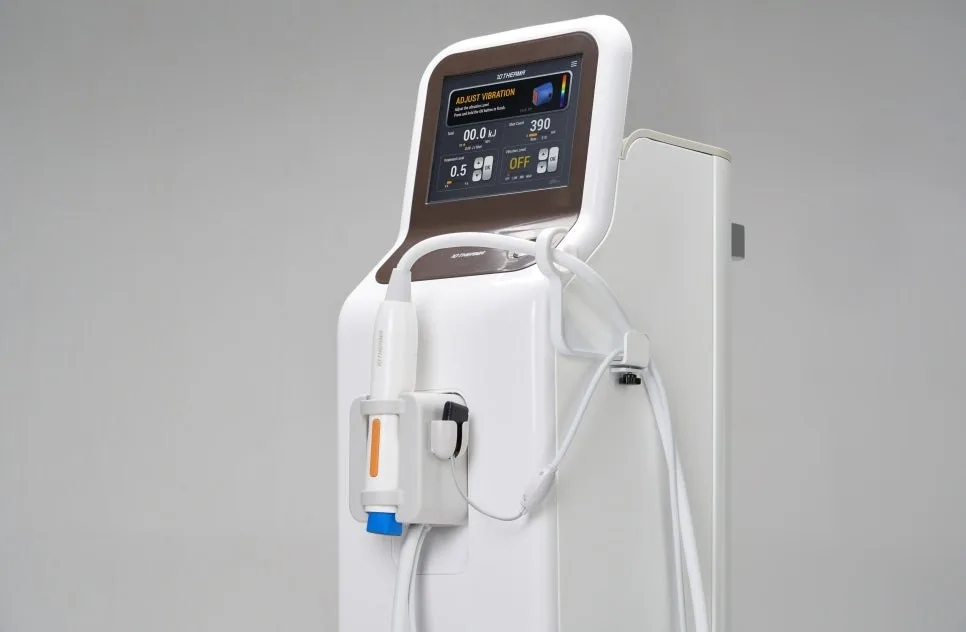
In the 2022 post I listed InMode, Thermage, TenTherma, Oligio, TuneFace and Potenza together and gave one answer for all of them. Surface RF and RF microneedling need separate answers.
| Delivery method | Example name | What the evidence says about filler |
|---|---|---|
| RF through the skin surface (monopolar) | Thermage | The manufacturer lists use over skin fillers among applications it has not studied (Solta Medical). Delivery-method evidence: a 14-person abdominal pilot tested a different monopolar device, Minnie from Quanta System (Journal of Cosmetic Dermatology 2023). It does not establish findings for Thermage. |
| RF delivered by needles inside the skin | Potenza | Delivery-method evidence: localized HA damage along needle tracks in ex-vivo skin (Dermatologic Surgery 2019), and no immediate morphological change in a 2025 ex-vivo study (Ge et al. 2025). Neither establishes findings for Potenza. |
| Platform with several handpieces | InMode | The name alone does not identify delivery or depth. Ask which handpiece is planned. |
| Microfocused ultrasound (not RF) | Various | A separate pilot with its own findings (Journal of Cosmetic Dermatology 2023). |
Regulatory clearance is a separate question from filler compatibility. The US FDA record for Potenza clears it as a Class II device for electrocoagulation and hemostasis in dermatologic and general surgical procedures (FDA 510(k)). That record does not establish a safe interval over filler. Not studied, in the Thermage safety information, is not the same as forbidden, but it is also not proof of safety. Clearance in one country does not tell you the status in another.
What did the study cited for the two-week advice actually test?
It tested one monopolar RF protocol over HA filler in the abdominal skin of 14 volunteers. The filler was Belotero Balance, injected into the dermis. RF was applied immediately, at day 14 or at day 28, with untreated control sites, and biopsies were taken at day 56 (Journal of Cosmetic Dermatology 2023).
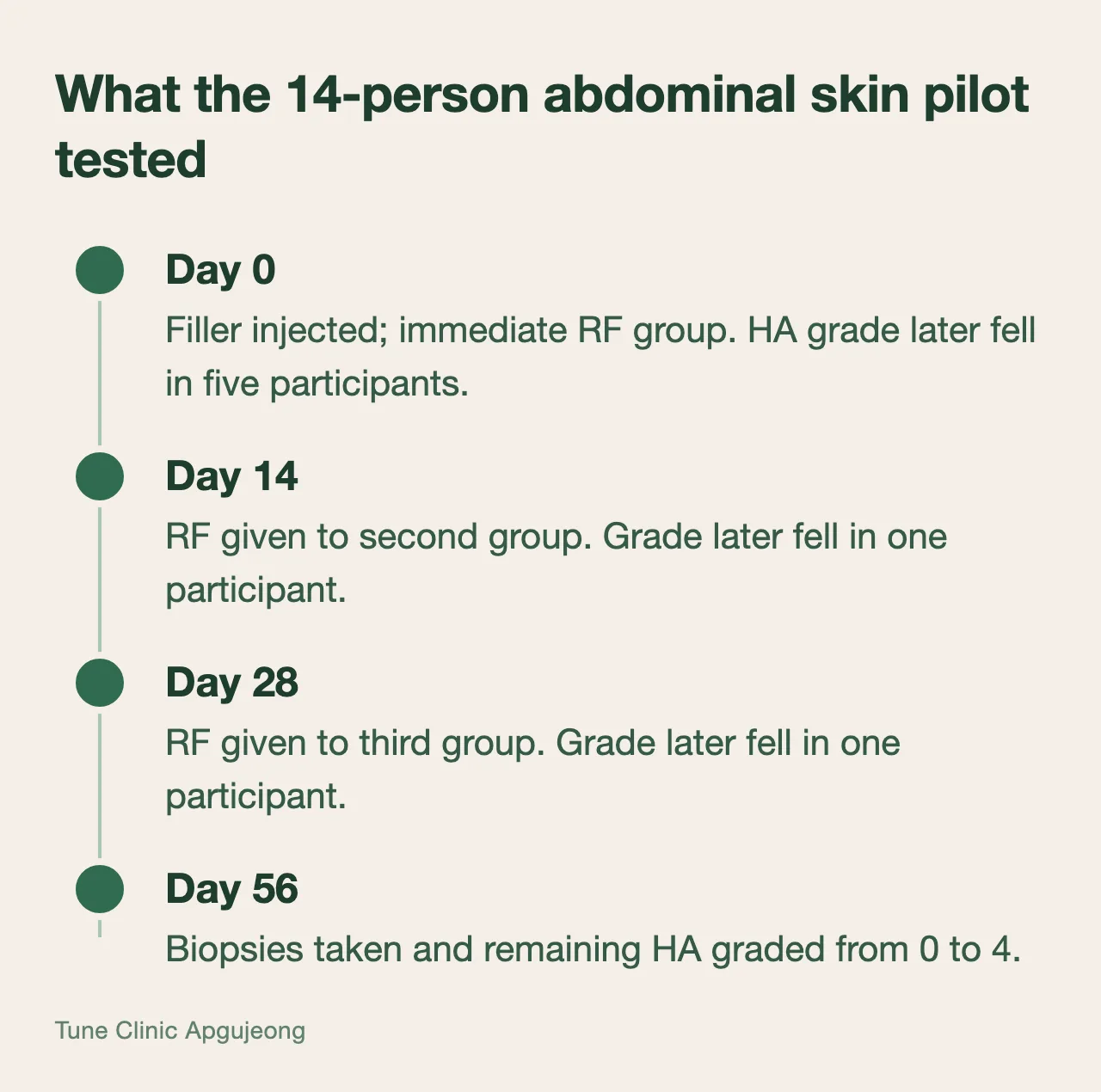
Pathologists graded the remaining HA from 0 to 4. Grade 0 meant no HA. Grade 1 meant 1 to 25 percent, grade 2 meant 26 to 50 percent, grade 3 meant 51 to 75 percent, and grade 4 meant 76 to 100 percent. The grade fell in five participants when RF was given immediately, and in one participant in each of the delayed groups. Only the immediate group showed a statistically significant decrease.
The limits matter. These are tissue grades, not a measured percentage of facial filler dissolved. The study is small. It used one product, one injection plane and one RF protocol. A result that is not statistically significant does not prove there is no effect.
In that post I set my own clinical results aside, because they differ from doctor to doctor, and relied on published papers. In 2022 I called this study the latest paper. It appeared online on November 14, 2022 and in the March 2023 journal issue, and it is no longer the newest evidence.
Does waiting two weeks make RF safe over filler?
No universal waiting period has been established. In the 2022 post I wrote that once two weeks have passed RF has almost no effect on filler, and that anyone who had filler first should wait about two weeks. The post used the pilot's day-14 findings to support that recommendation, and one participant in the day-14 group still showed a lower HA grade (Journal of Cosmetic Dermatology 2023).
Two-week advice is also older than the pilot. In a public clinician Q&A, a 2018 answer suggested two weeks so that swelling or bruising could settle, while other answers ranged from broad reassurance to much longer waits (public Q&A). Conflicting advice of that kind is not clinical proof.
Two other facts block a blanket rule. The Thermage manufacturer says use over skin fillers has not been studied (Solta Medical). The laboratory studies of RF microneedling did not test waiting times (Dermatologic Surgery 2019). Long-term, device-specific evidence on older filler is thin.
The day-14 result does not establish a minimum safe interval. The clinician must assess the specific device, filler and treatment area.
Does the filler material or its depth change the decision?
Yes. The question is whether the energy and the filler end up in the same place, and what the filler is made of.
Needles that enter the skin can physically reach filler in their path, which is where the 2019 laboratory damage was seen (Dermatologic Surgery 2019). Filler placed deeper, or in an area the handpiece will not cross, raises a different level of concern. This is practical reasoning, not a validated scoring system.
Material matters too. Fillers are made from different substances, some temporary and some long-lasting (FDA). Most of the direct evidence is about HA. Animal studies of monopolar RF over soft-tissue fillers found no harm to filler persistence but did find changes in the tissue response around the filler (England et al. 2005, Part 2, 2006). HA findings cannot be transferred to collagen stimulators or permanent fillers, and the evidence for those is thin.
Should RF or filler come first?
When both are appropriate, energy treatment first and filler second is the usual planning order. Expert recommendations on combining HA filler with energy treatment support this order and advise against manipulating freshly injected filler (Aesthetic Plastic Surgery 2019). That paper focuses on laser, so applying it to RF is a planning principle, not a tested rule.
In the 2022 post I wrote that when the two are combined, RF usually comes first and filler after. I gave two reasons: the study suggested fresh filler could be reduced, and RF over fresh filler might change its shape. Direct evidence measuring shape change is still insufficient.
Order is not permission. A 2026 study of 128 participants reported short-term local reactions for specific combination protocols through day 18 (Aesthetic Medicine 2026). It does not show long-term filler persistence, and it does not validate any combination a traveler happens to book. People planning short Seoul visits ask about stacking several devices and filler (public discussion), and the answer depends on the individual plan.
For readers visiting two clinics on one day, I wrote in 2022 to go to the RF clinic first and have filler afterward. Sequence alone is not enough. Both clinicians need your full treatment history, and each must decide whether combining is appropriate.
Can RF remove filler I no longer want?
No validated method uses RF to selectively remove filler. People do argue about this online, and public clinician answers separate contour treatment from filler removal (Q&A thread). Evidence that RF can damage HA is not evidence that it removes a chosen amount from a chosen spot.
In 2022 I answered requests to dissolve a patch of filler with RF with a firm no, and wrote that RF could not dissolve filler in a chosen area. The evidence supports declining such requests, for a narrower reason than the post gave: RF may affect HA, but not in a controlled way, and extra heat adds its own risk.
The first step is a diagnosis: what the material is, and why the area looks wrong. For HA filler, a physician may use an enzyme called hyaluronidase. That use is off-label in the United States, and the enzyme does not dissolve every filler type (AADA presentation, FDA panel 2025).
My face looks thinner after RF. Did the filler melt, or is it fat loss?
Appearance alone cannot tell you which tissue changed. A thinner look after treatment could reflect less swelling, tightening, loss of facial fat or a change in filler.
In 2025 the FDA reported serious complications with certain uses of RF microneedling, including burns, fat loss and nerve injury (FDA). That communication does not say how often filler is lost, and it does not prove that any one person's change is filler breakdown. Guessing wrong can lead to reinjection too early or to repeating the wrong treatment, so an examination comes before any correction.
Does the FDA warning mean all RF treatment is unsafe?
No. The communication concerns certain uses of RF microneedling. It is not a ban, and it does not cover every RF delivery method (FDA).
Two US professional societies responded that RF microneedling remains appropriate with trained physicians and suitable settings, and that patients should be told about the reported serious risks (ASLMS and ASDS). Professional confidence is not the same as zero risk, and no reliable complication rate is available.
Does the same advice apply to ultrasound lifting?
No. Ultrasound is a different kind of energy with its own evidence. A separate pilot of microfocused ultrasound over HA filler found lower HA grades when treatment was given about one hour after injection and also at day 14 (Journal of Cosmetic Dermatology 2023). It also used abdominal skin, so it has the same limits.
A waiting interval taken from one type of device should not be copied to another. For ultrasound itself, see the Ultherapy guide.
What should I tell a clinic in Korea before I book RF?
Tell the clinic everything about your filler before you book, not on the day. Useful details:

- Product name and material, with the injection record if you have one
- Date of each injection and the areas treated
- Any information on injection depth
- Past problems after filler or energy treatment
- Other procedures planned on the same trip, including at other clinics
If you had filler in Japan, Thailand, China or elsewhere, bring the record from that clinic. If you do not know what was injected, say so. That is a reason for assessment, not for a calendar rule. The same device name in two countries does not mean the same tips or settings.
When should I seek medical attention after treatment?
After RF treatment, get prompt assessment for worsening pain, burns, or new numbness or weakness (FDA).
During or shortly after filler injection, seek immediate medical attention for unusual pain, white, gray or blue skin near the injection site, any vision change, or stroke symptoms such as sudden facial drooping, weakness or difficulty speaking (FDA).
Plan your trip so that follow-up is possible before you fly home.
What should I ask at my consultation?
- Which exact device and handpiece will you use, and how deep does it deliver energy?
- Will the treatment area overlap with my filler, and can you avoid it if needed?
- What evidence exists for this device over my type of filler?
- Given my filler material and injection date, what interval do you advise, and why?
- If I also want filler on this trip, in what order and on which days?
- If my contour changes afterward, how will you work out the cause?
- Who do I contact after I fly home, and how?
The evidence on this topic is incomplete, and no single rule covers every device and every filler. The physician's responsibility is to lay out what is known and what is not, to put a name to the advice, and to stay reachable after treatment. With that information in hand, the decision about whether and when to combine RF and filler belongs to you.
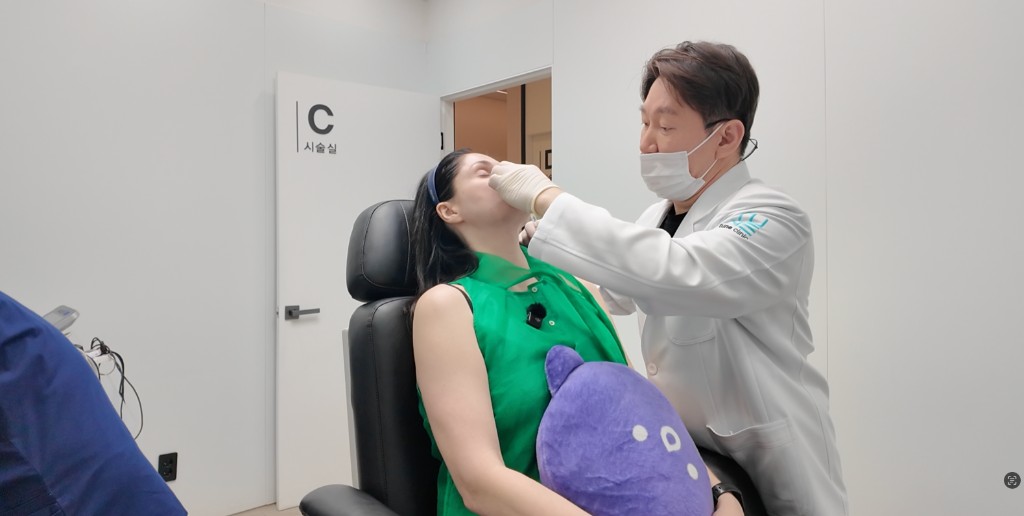
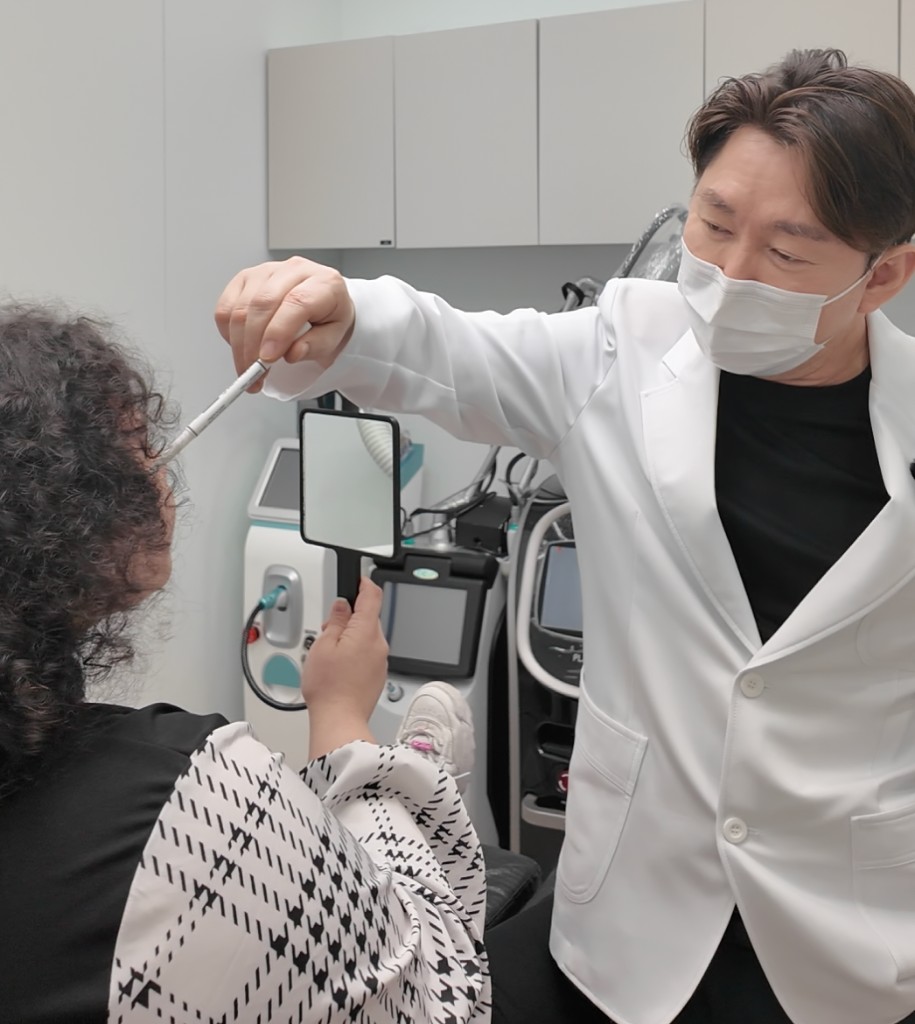
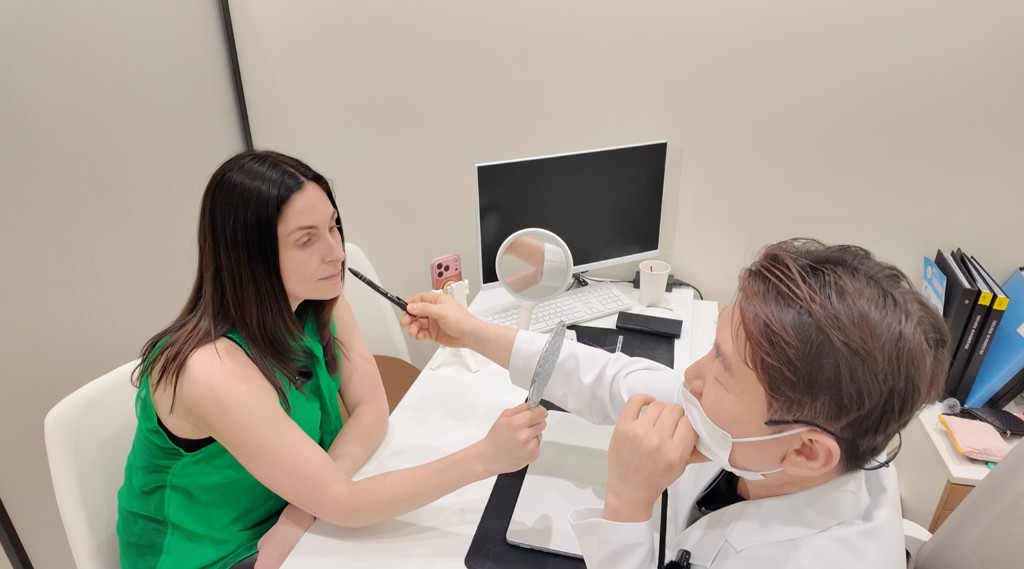
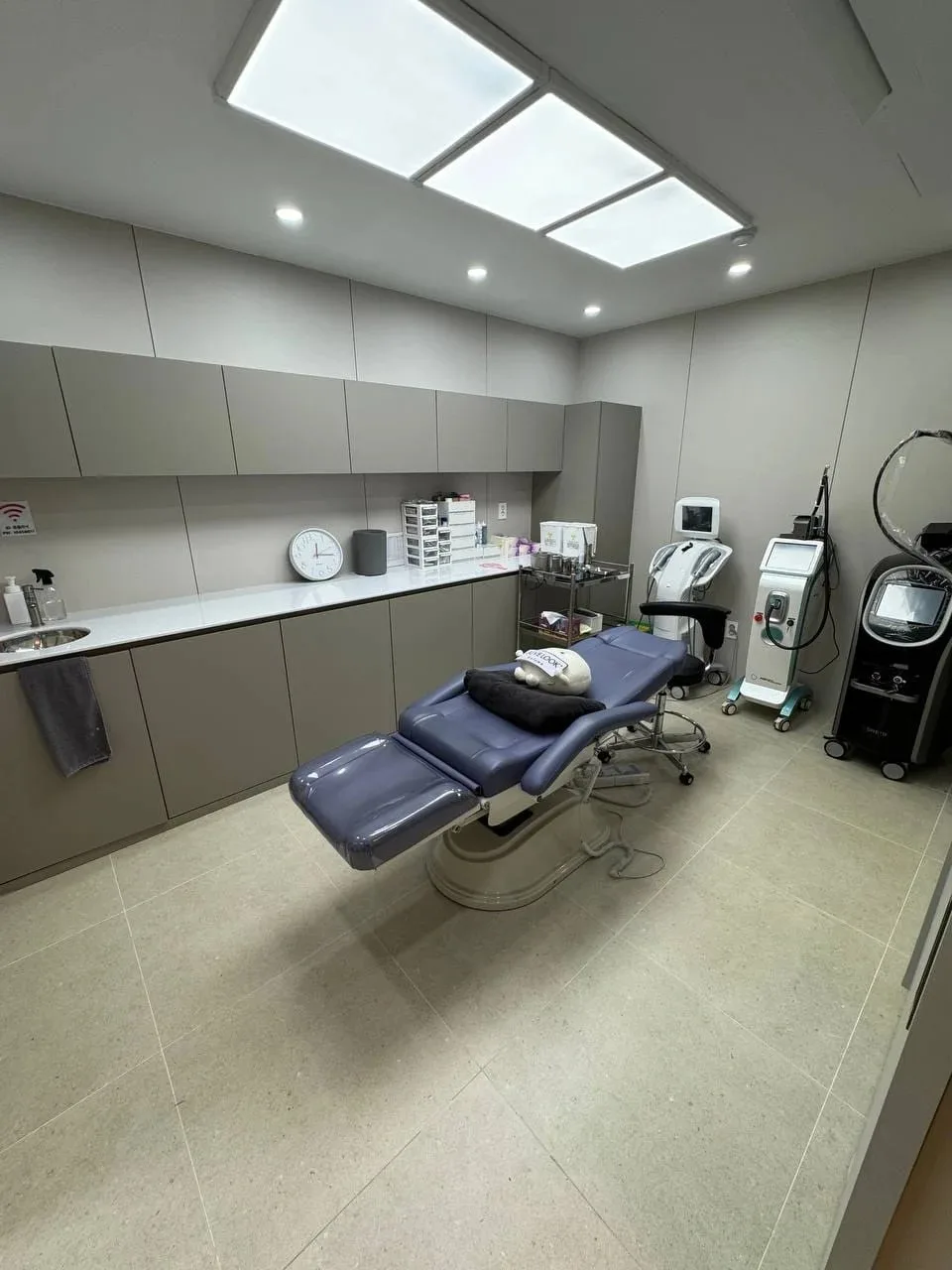
Tune Clinic Apgujeong today: the lobby, waiting areas and treatment rooms where consultations and treatments take place.




Sources
- Journal of Cosmetic Dermatology (Wiley). The effect of combined hyaluronic acid filler injection and radiofrequency treatment: A clinic histological analysis. 2022 online, 2023 issue. Human pilot of 14 volunteers, abdominal HA filler, RF timing groups, HA grading and its limits
- Lasers in Surgery and Medicine. Effects of monopolar radiofrequency treatment over soft-tissue fillers in an animal model. 2005. Animal study by England and colleagues, cited in the 2022 post, and the limits of its conclusions
- Dermatologic Surgery (PubMed). Histologic Effects of Fractional Laser and Radiofrequency Devices on Hyaluronic Acid Filler. 2019. Localized HA damage along RF microneedle tracks in ex-vivo abdominal skin
- Lasers in Surgery and Medicine (Wiley). Effect of monopolar radiofrequency treatment over soft-tissue fillers in an animal model: Part 2. 2006. Animal evidence of altered tissue responses around fillers after RF
- Solta Medical. Thermage System Indications and Important Safety Information. Accessed 2026. Manufacturer lists use over skin fillers among applications not studied
- FDA. Potential Risks with Certain Uses of Radiofrequency (RF) Microneedling. Safety communication 2025. Reported serious complications of RF microneedling, including burns, fat loss and nerve injury
- ASLMS and ASDS. FDA Safety Communication on RF Microneedling, joint response. 2025. Professional society position on continued supervised use and risk disclosure
- RealSelf. Can radio frequency skin tightening treatment be done after dermal filler? Public Q&A 2014 to 2018. Shows conflicting public advice, including two-week advice that predates the 2022 pilot, not clinical proof
- RealSelf. Belotero Volume filler in jowls, what can I do about it? Public Q&A including a 2025 answer. Public discussion separating contour treatment from filler removal
- Aesthetic Plastic Surgery (PMC). Concomitant Use of Hyaluronic Acid and Laser in Facial Rejuvenation. 2019. Expert sequencing recommendations and limits of combination evidence
- American Academy of Dermatology Association presentation hosted by FDA. General and Plastic Surgery Devices Panel presentation. 2025. HA reversal with hyaluronidase and its off-label status in the United States
- FDA. Dermal Fillers (Soft Tissue Fillers). Accessed 2026. Filler materials, risks and urgent warning symptoms
- FDA. Potenza 510(k) K231216. 2024. Device class, clearance and labeled intended use
- Reddit r/koreanskincare. Recommended Seoul Clinics for Thermage / Ultherapy, I'm so confused. 2026. Shows travel-related uncertainty about stacking devices and filler, not evidence
- Aesthetic Medicine (Mattioli 1885). Evaluation of the short-term safety of protocols combining dermal fillers, energy-based devices and cosmetic products. 2026. Preliminary short-term safety of specific combination protocols in 128 participants
- Journal of Cosmetic Dermatology (Wiley). The effect of combined hyaluronic acid dermal filler and microfocused ultrasound treatment: A clinicopathological study. 2022 online, 2023 issue. Separate ultrasound pilot showing why timing advice does not transfer between modalities
- PubMed record. Ge et al. Ex-vivo study of energy-based devices over hyaluronic acid filler. 2025. No immediate morphological HA changes under the tested conditions, including insulated RF microneedling; molecular integrity uncertain