The gap between what you've read and what you're about to book
Before booking Ultherapy in Korea, confirm the exact device, who will perform treatment, the proposed areas and scope, and the follow-up arrangements. The country or shot count alone cannot establish suitability or quality; your anatomy, goals and travel plans need assessment.
You've done your research. You've seen the clinical summaries, the before-and-after photography on Instagram, the phrase "FDA-cleared for lifting" repeated enough times that it starts to feel like a guarantee. You've noticed that Ultherapy clinics in Seoul quote protocols that sound different — more shots, more depth combinations, a physician in the room rather than a nurse — and you're wondering whether the difference matters or whether it's just marketing.
It matters. But the way it matters is more specific than most of the content you've read will tell you.
This article is for patients who are genuinely ready to book Ultherapy in Korea and want to understand what they're choosing — not a promotional summary, but a working guide to the variables that actually affect your outcome.
Why has Korea become a destination for Ultherapy specifically?
Korea's aesthetic medicine sector has developed a distinct clinical culture around energy-based devices. Several factors converge to explain why patients travel here for Ultherapy in particular.
Ask about the treating clinician’s training and experience with the proposed treatment and your concern. A district address or a claim of high procedure volume does not establish the outcome for your case.
Shot-count packages and individualized plans can exist in different markets. Compare the proposed treatment areas and rationale instead of assuming that country of practice determines the protocol.
Confirm who will assess you and operate the device. Staffing and supervision should be verified with the individual clinic rather than inferred from a national comparison.
What actually differs between US/EU and Korean Ultherapy practice?
Ultherapy is a specific device platform, not a generic name for every focused-ultrasound treatment. Confirm the model, local authorization and proposed indication with the clinic.
Treatment scope. Ask which areas are being treated, why the proposed line count fits your assessment and what alternatives were considered. More lines do not by themselves establish a better result or a universal minimum.
Depth strategy. Transducer selection and placement depend on the area and individual anatomy. Ask how the clinician uses imaging and assessment to choose the protocol rather than assigning one tissue layer to a fixed depth for every face.
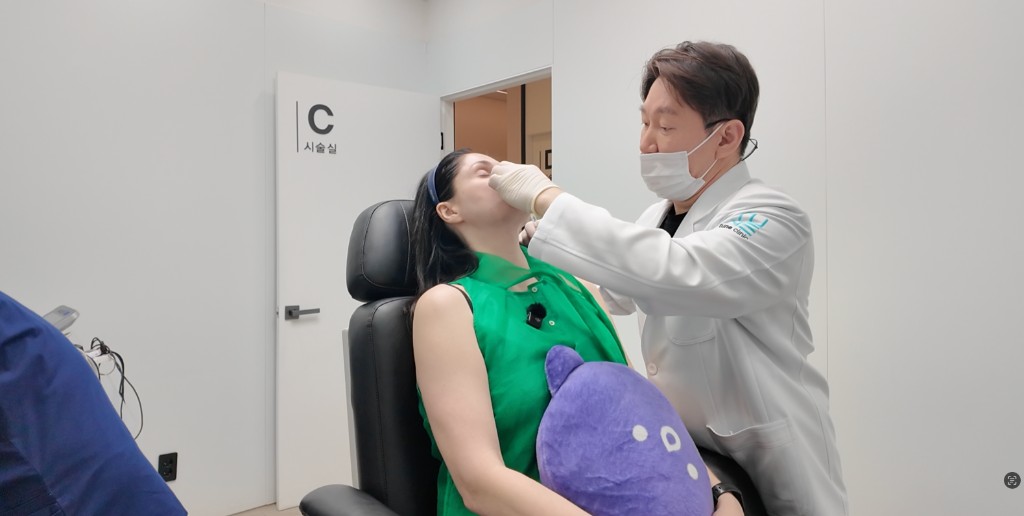
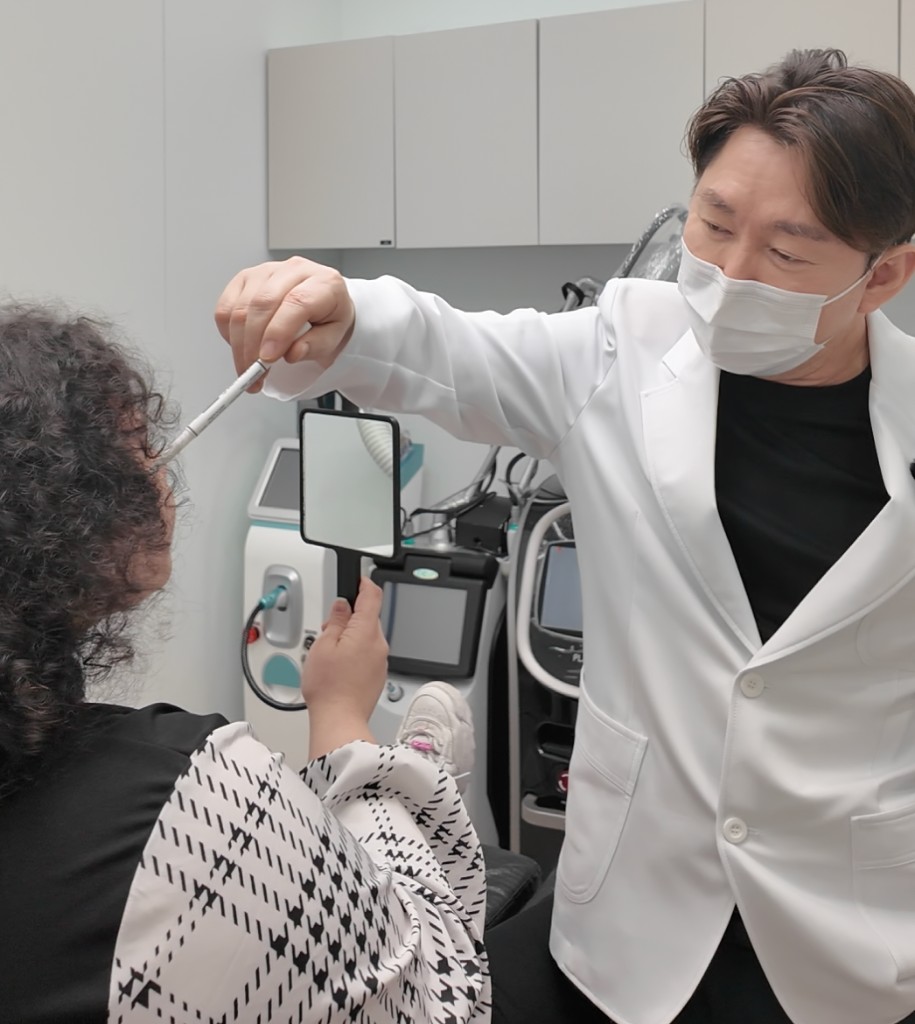
Physician versus operator. The question worth asking directly: "Will the physician operate the handpiece for my treatment, or is the physician reviewing the plan while a technician performs the session?" Both arrangements exist in Korean clinics. Which you prefer is partly a matter of comfort, but if you're flying to Seoul for the procedure, you likely have a preference.
How do I know if I'm getting genuine Ultherapy?
This question surfaces more often than it should, which tells you something about the market.
Genuine Ultherapy uses transducers certified and distributed through Merz Aesthetics' verified network. Counterfeit or gray-market devices exist across Asia, and they may look similar from the outside. The practical check: ask the clinic to show you the transducer packaging or the device's service certification. A clinic that uses genuine equipment will not find this question unusual.
Second-generation HIFU devices — and there are many good ones — are not Ultherapy. HIFU is the underlying physics. Ultherapy is a specific implementation, with a specific clinical evidence base. If a clinic describes their device as "Ultherapy-style" or "similar to Ultherapy," take that literally. It may be a good device; it is not the same device.
The cartridge integrity question also matters for a different reason: the imaging guidance that Ultherapy provides is one of its distinguishing features. The device shows the tissue layer being targeted in real time, which allows the operator to confirm depth before delivering energy. A device that looks like Ultherapy but lacks the imaging component is operating without that verification layer.
What should I verify before I book?
Five questions worth asking any clinic directly — before payment, before travel:
1. What is the exact shot count for my protocol, and at which transducer depths? A clinic that can answer this specifically is thinking about your anatomy rather than a package.
2. Will a physician operate the device during my session? Not "will a physician be available" — will they be in the room, operating the handpiece.
3. Can you confirm that your Ultherapy device is licensed and serviced through Merz Korea's certified network? Any legitimate clinic will confirm this without hesitation.
4. What is your protocol for significant discomfort during the session? This matters practically — SMAS-layer energy is intense, and clinics differ substantially in their approach to intraoperative comfort, from topical anesthesia only, to nerve blocks, to IV sedation options.
5. What is your follow-up process for international patients? You will not be in Seoul for your three-month results check. How does the clinic handle questions or concerns after you've returned home?
Where does Ultherapy fit — and where doesn't it?
Ultherapy works well for a specific anatomical scenario: structural laxity at the SMAS level that is presenting as early-to-moderate jawline descent, jowl formation, or submental looseness. Brow ptosis in the right patient. Upper-face support where the skin still has reasonable quality to follow the deeper lift.
It works less well — and this part is often omitted from promotional content — when the dominant cause of visible aging is not structural laxity. Volume loss that produces mid-face hollowing does not respond to Ultherapy; it requires volume restoration. Fat redistribution that changes contour without true ligamentous laxity may respond better to other approaches. Very thin skin that lacks the dermal substrate to produce a collagen response can underperform expectations.
A treatment plan that begins by identifying whether the problem is structural laxity, volume loss, skin quality, or some combination of the three helps explain whether the proposed device matches the concern, without guaranteeing the outcome. At Tune Clinic, this is the first question in every consultation — anatomy before protocol. Our Signature Lifting protocol is built around a specific shot-count and depth strategy derived from that anatomical assessment, and our full comparison of the major lifting devices — Ultherapy, Thermage, Oligio — is covered in Korean Lifting Guide and Ultherapy vs Thermage.
For a broader overview of how the three devices differ in mechanism and indication, see Lifting Devices Compared.
What is the realistic results timeline?
This is the section most clinics underemphasize, because the honest timeline is slower than patients hope.
The immediate effect — the "wow" that some patients notice on the treatment table or within the first few days — reflects acute thermal contraction and some temporary tissue edema. It looks good. It is not the result.
Ultrasound-triggered collagen remodeling develops over time rather than on a fixed weekly schedule. The degree and timing of visible change vary, so follow-up timing should be set for the individual instead of promising a week-eight or month-four milestone.
A short trip may end before the eventual result can be assessed. Early redness, swelling or tenderness and their duration vary, so agree on how follow-up will work after you leave Seoul.
What about the flight home?
Travel timing after Ultherapy depends on the treatment, symptoms, medical history, flight length and access to follow-up. The treating physician should review these factors before advising on departure.
Practical considerations for the flight include swelling, tenderness, altered sensation and access to follow-up, all of which vary in duration. Ask the physician about positioning, aftercare and which symptoms should delay travel rather than assuming a travel pillow or hydration makes flying appropriate.
There is no universal minimum interval between Ultherapy and a long-haul flight. Unexpected discomfort, swelling or questions are easier to address while local, so the treating physician should review the actual itinerary and response.
How do I prepare for a consultation in Seoul?
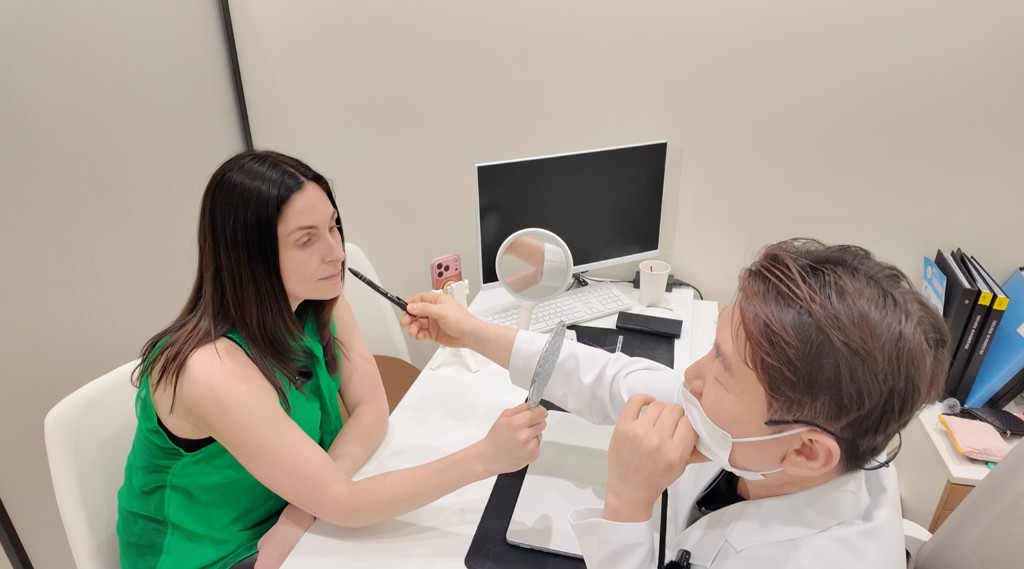
The most useful thing to bring is not a screenshot of a treatment you've seen online. It is a clear articulation of what bothers you about your face — specifically, anatomically, in your own words. "The corners of my jaw have softened." "My neck doesn't look taut anymore." "My brow feels heavy." These observations give a physician something to work with.
Photos in consistent lighting, front and three-quarter, taken over the past year or two if you have them, help more than they might seem. Aging is a process, not a static condition, and seeing how a face has changed over time informs a different kind of plan than seeing a single set of photographs.
For international patients arriving at Tune Clinic, we offer a pre-visit remote consultation — a chance to go through your goals and medical history before you arrive, so that the in-person session is used for examination and protocol finalization rather than starting from the beginning. Details on this process are on our International Patients Guide.
What is the right frame for this decision?
Ultherapy is a tool. In the right anatomical context, with the right protocol and an experienced operator, it produces structural improvement that no topical or superficial treatment can replicate. In the wrong context, or with a protocol that doesn't fit your specific anatomy, it produces disappointment and a bill.
The decision isn't really about Ultherapy versus anything else. It is about whether your clinical picture — your tissue depth, your pattern of laxity, your skin quality, your timeline — makes Ultherapy the right tool for this specific job. That question deserves a proper answer before you book anything.
A 20-person prospective pilot study followed customized microfocused ultrasound for one year. It supports further discussion of the method, but the open-label design and small sample cannot predict an individual degree or duration of change.
FAQ
How many days should I stay in Korea after Ultherapy before flying home?
This page cannot rule out a contraindication to flying after Ultherapy or assign a universal 24-hour interval. The physician should review the protocol, symptoms, medical history, flight length and access to follow-up before advising on travel.
Does Ultherapy hurt and what is done for the pain during treatment?
Ultherapy can cause discomfort. Ask what comfort measures are appropriate for the proposed treatment and what should happen if pain is difficult to tolerate. Do not assume that a particular anesthesia method is included or appropriate for every patient.
How long does Ultherapy last and when will I need it again?
The response develops over time and varies between patients. Agree on when it will be reviewed and what would justify a repeat treatment rather than using a fixed month as a universal milestone.
Is Ultherapy or Thermage better for jawline tightening?
These devices address different problems and are not strictly interchangeable: Ultherapy uses microfocused ultrasound to act on structural laxity at the SMAS layer, while Thermage is a radiofrequency device working primarily on skin tightening. Which is appropriate depends on whether your concern is deeper structural descent, surface skin quality, or a combination. A proper assessment of your anatomy should precede the device choice, and the distinction is covered in detail in our Ultherapy vs Thermage and Korean Lifting Guide resources.
Can I wear makeup or work out right after Ultherapy?
Ask for individualized instructions about makeup, exercise, heat exposure and pressure on the treated area. Redness, swelling or discomfort can affect the plan; an article cannot confirm immediate return to every activity.
This article is intended for educational purposes for patients researching Ultherapy abroad. It is not a treatment guide and does not replace direct physician consultation. Protocol decisions should always be individualized based on a clinical assessment of your anatomy.
Ready to plan your treatment?
Tune Clinic Apgujeong offers English-language consultations with Dr. Ju and Dr. Cha — a structured assessment, not a sales call.
→ Book an appointment to pick a time that fits your Seoul itinerary.
→ Message us on WhatsApp to ask in English before you commit.