
Prescription obesity medicines and slimming IV drips are different treatments: the medicines are supported by controlled trials and the Korean obesity guideline (Korean guideline), while a slimming drip's effect on weight has not been established. A meta-analysis of arginine supplements, the ingredient a 2022 clinic post emphasized for its drip, found no significant effect on body weight or BMI and did not test IV mixtures (arginine meta-analysis). Before starting anything in Korea, confirm the exact product and route, the medical reason for it, and who will monitor you after you fly home.
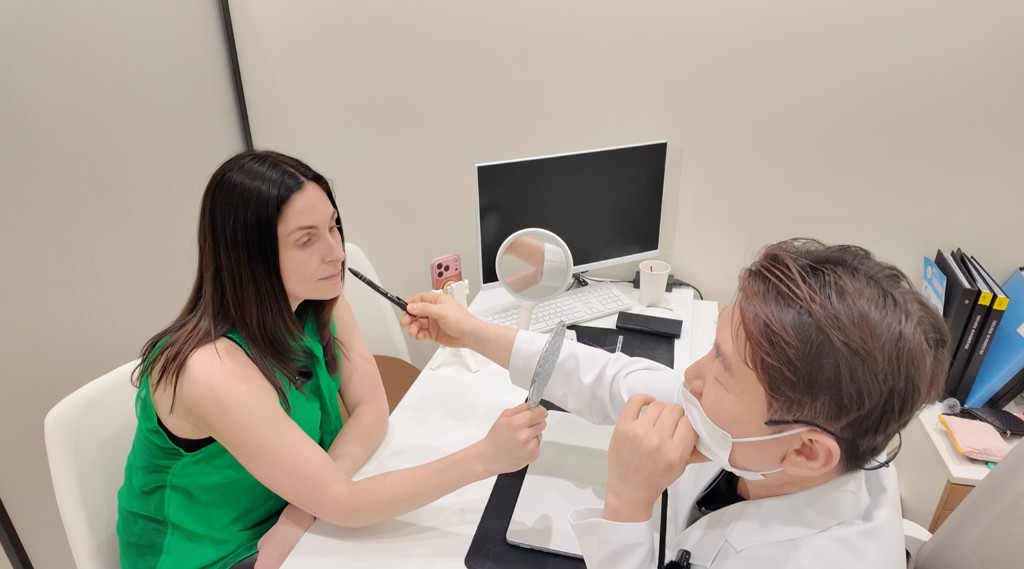
A visitor planning a week in Seoul has saved three listings on her phone: an appetite-control injection, a prescription tablet and a slimming drip. All three sit under the same weight management menu. She cannot tell whether they treat the same problem, or who would look after the treatment once she is home. This is a composite scene built from common questions, not a real patient.
Questions and answers
Are all treatments called weight-loss injections the same?
No. In Korea the word injection covers several different treatments, and the evidence for one does not transfer to another.
| Treatment | Route | What it acts on | Evidence for weight loss |
|---|---|---|---|
| Prescription obesity medicine, such as a GLP-1 receptor agonist | Under the skin, or tablet | Depending on class, appetite and fullness signals or dietary fat absorption | Controlled trials and regulator-reviewed labels (Korean guideline) |
| Slimming IV drip | Into a vein | Claimed effect on metabolism | Not established; arginine supplements showed no significant change in weight or BMI, and IV mixtures were not tested (meta-analysis) |
| Liposuction | Surgical removal of fat under the skin | Shape of one area | Does not treat obesity or reach visceral fat (ISAPS) |
| Local contouring injection | Into fat under the skin | Varies with the product | Products differ, so check the ingredients, approved indication and evidence for the exact product |
I used to do a great deal of liposuction, and the area that suction surgery cannot reach is the visceral fat inside the abdomen.
What BMI do I need for weight-loss medication in Korea?
There is no single number, because a guideline threshold and a product label can differ. The Korean guideline, which defines obesity in Korean adults from a BMI of 25, recommends considering medicine at that level when diet, activity and behavioral measures have not been enough, and from 23 when an obesity-related condition is present (Korean guideline). Medicine is added to those measures and does not replace them. The current US liraglutide weight-management label describes adults with obesity, or overweight with at least one weight-related condition (liraglutide label).

The Korean thresholds were written for Korean adults and should not be applied automatically to a visitor of another background. The label of the exact product must also be checked. BMI is only the start: the assessment also covers the heart, blood pressure, blood sugar, other medicines and pregnancy plans.
In 2022 I wrote that people with diabetes or other illnesses need a more detailed assessment. If you use insulin or a sulfonylurea, your clinician should review doses and arrange glucose monitoring, because low blood sugar can occur (liraglutide label).
Pregnancy plans change the choice. The UK regulator advises against GLP-1 medicines in pregnancy. It also warns that tirzepatide, a dual GIP/GLP-1 medicine, can make oral contraceptives less effective, and advises a non-oral method or an added barrier method for four weeks after starting and after each dose increase (MHRA). The phentermine and topiramate combination must not be used during pregnancy. Its label calls for a pregnancy test before treatment and every month, plus effective contraception (FDA label). Ask for preconception advice specific to your product.
How do the injections differ from appetite-suppressant tablets?
They act on different systems, so they carry different risks, and neither is the better choice for everyone.
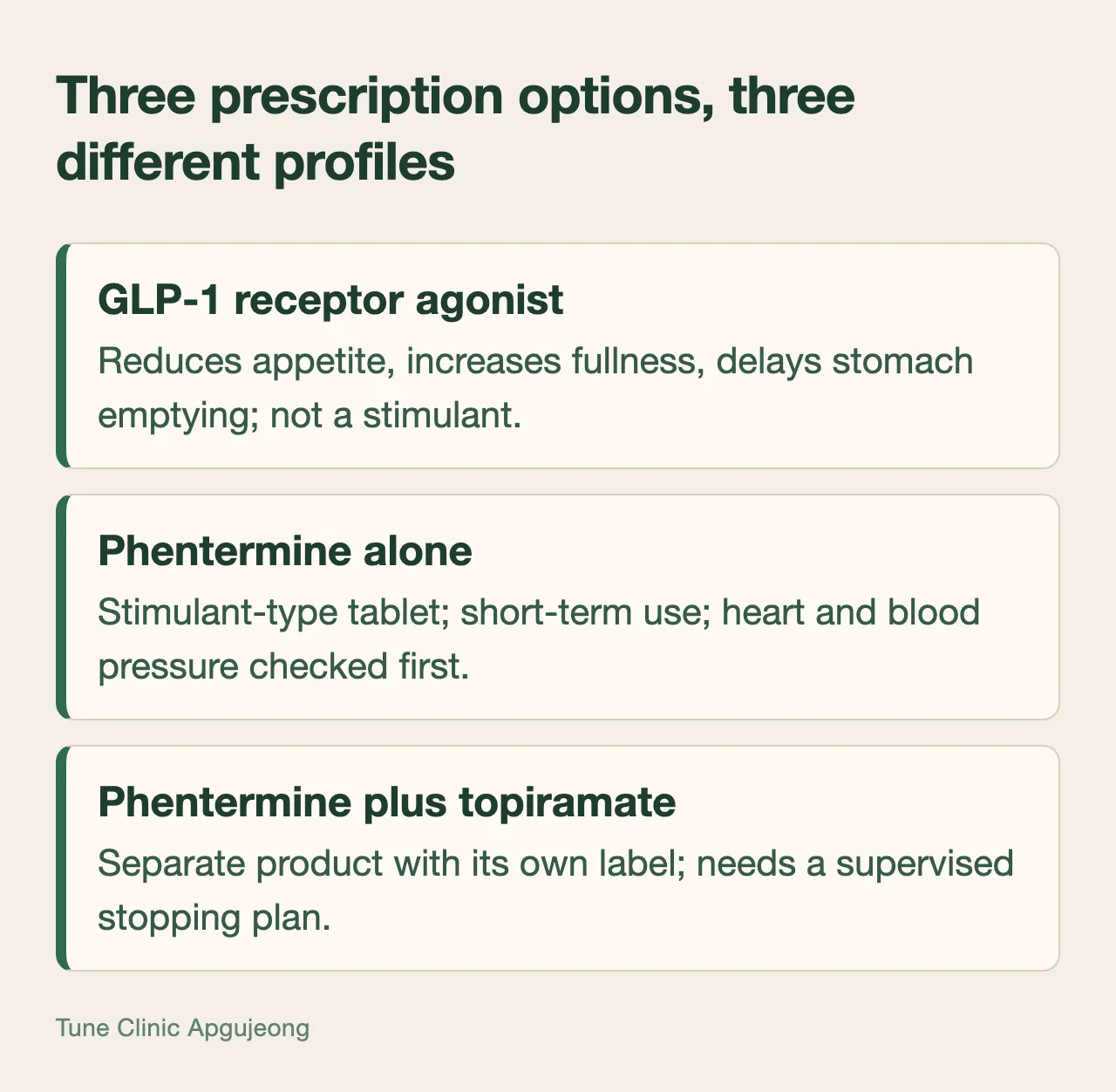
GLP-1 receptor agonists reduce appetite, increase fullness and delay stomach emptying (liraglutide label).
Phentermine is a stimulant-type medicine. Its US label lists dry mouth, insomnia, tremor and mood changes, and limits it to short-term use. The label also rules it out for people with cardiovascular disease, including uncontrolled high blood pressure, so heart and blood pressure history is checked before a stimulant tablet is prescribed (phentermine label). That label covers phentermine taken alone. The fixed combination of phentermine with extended-release topiramate is a separate product with its own label, approved in the US for long-term weight management (FDA label). A ranking of average weight loss is not a prescribing decision for one person.
Does an arginine drip reduce belly or visceral fat?
The evidence does not show that it does. The arginine meta-analysis reported a reduction in waist circumference, which is not proof of visceral fat loss, and it did not study IV mixtures or fasting around a drip (meta-analysis).
An ingredient's role in fat metabolism is a mechanism, and a mechanism is not a clinical result. Body-composition printouts do not close the gap. Bioimpedance estimates depend on hydration and on the model inside the machine, so a series of printouts cannot show what a drip did (Nutrition Journal 2008).
If a clinic cannot tell you every ingredient and dose, or the only support is mechanism language and clinic images, the drip's effect on weight has not been established. An IV line is also an invasive step.
Are Korean diet pills addictive or controlled drugs?
Some are controlled medicines and some are not, so the answer depends on the exact drug. In the US, phendimetrazine is Schedule III and phentermine is Schedule IV (DEA list). GLP-1 medicines are not stimulants. A schedule is a legal category based on accepted medical use and potential for abuse or dependence (DEA). It is not a safety score, and US schedules do not replace Korean law or the import rules of your home country.
The phentermine label describes misuse, and fatigue and depression when the drug is stopped abruptly after prolonged high doses (phentermine label). This does not happen to everyone.
When I prescribed appetite suppressants, the side effects I emphasized were those related to mood. In 2022 I advised people who noticed a lift in mood or focus to cut down or stop the tablet and switch to another medicine. I also wrote that anyone with a mood change must come to the clinic. Labeling favors the clinic visit over stopping alone: topiramate stopped abruptly can trigger seizures, so a mood change calls for clinical review and a supervised taper (FDA label). The same label advises avoiding alcohol.
Which side effects need urgent medical attention?
Seek immediate medical attention for sudden vision loss or severe, persistent abdominal pain, especially pain spreading to the back. Persistent vomiting that prevents drinking also needs urgent assessment. As I wrote in 2022, no medicine is free of side effects.
With GLP-1 medicines, nausea, vomiting, constipation and indigestion are the common effects. The liraglutide label also warns about pancreatitis, gallbladder disease and dehydration. If pancreatitis is suspected, the medicine is stopped and you need urgent clinical review. The label contraindicates use with a personal or family history of medullary thyroid carcinoma, or with multiple endocrine neoplasia syndrome type 2 (liraglutide label). Check the exact product's contraindications.
On November 9, 2026, the FDA required label changes for a potential increased risk of NAION, a rare eye condition that can cause permanent vision loss (FDA). Rare means it is not a prediction for you.
With phentermine, the label says to stop the medicine and be evaluated for new unexplained breathlessness, chest pain, fainting or leg swelling (phentermine label).
Mental-health warnings differ by class. In January 2026 the FDA asked for the suicidal-thoughts warning to be removed from GLP-1 obesity medicines after finding no increased risk (FDA). The phentermine and topiramate combination keeps its own mood and cognitive warnings, along with restrictions for glaucoma, hyperthyroidism and MAOI medicines (FDA label).
Will I regain weight when I stop a weight-loss injection?
Many people regain some weight, but neither full regain nor lasting maintenance is certain. In the STEP 1 extension, participants regained about two-thirds of their earlier loss on average in the year after semaglutide and structured lifestyle support were both withdrawn (Wilding 2022). That is a group result under trial conditions, and it is not a sign of stimulant-type addiction.
The Korean guideline treats obesity as a chronic disease (Korean guideline). The maintenance plan therefore belongs before the first dose, most of all when treatment starts abroad.
Can I stop and restart my medicine around a trip or a procedure?
Get product-specific instructions before you interrupt treatment or restart after missed doses. Do not assume you can resume your previous dose. The liraglutide label, for example, says that after more than three days without a dose, treatment restarts at the starting dose and is increased again step by step, to limit stomach and bowel side effects (liraglutide label). Topiramate-containing treatment needs a supervised stopping plan (FDA label). Ask for these instructions in writing before you travel.

Before sedation or surgery, stopping is not automatic. The older blanket rule has given way to individual plans. Australia's regulator warns of aspiration risk under general anesthesia and deep sedation because these medicines slow stomach emptying (TGA). A 2025 multidisciplinary consensus supports continuing the medicine in suitable patients, with modified fasting and a check for stomach symptoms (SPAQI 2025). Protocols differ between countries. Tell every team which medicine you take and when the last dose was, and follow the plan of the anesthesia team treating you.
Will the medicine hollow my face or cost me muscle?
Facial change can follow any substantial weight loss, and how much is specific to the drug is not known (AAD). Skincare cannot be promised to prevent it, and filler is not an automatic next step. If the face does change, a separate assessment of volume and laxity comes first.
On muscle, some of the weight lost can be lean tissue as well as fat. In a DXA body-composition substudy of the SURMOUNT-1 trial, adults with obesity or overweight who took tirzepatide lost both fat mass and lean mass (trial substudy). That result comes from one medicine under trial conditions, and no single percentage applies to everyone. Lean mass is also not the same as skeletal muscle, and a bioimpedance printout estimates it from a model that is sensitive to body water (Nutrition Journal 2008). Because the Korean guideline keeps diet and activity in place alongside medicine (Korean guideline), ask who will check your strength, everyday function and food intake, protein included, during treatment.
What has changed since the 2022 posts?
The four original posts date from August and September 2022. Newer evidence changes several points in them.
- I wrote that the phentermine and topiramate combination was said to be the most effective approved obesity medicine, and I ranked four medicines by weight loss. That order resembles estimates from a 2016 network meta-analysis, which did not include newer medicines (Khera 2016). The Korean guideline now includes semaglutide and tirzepatide (Korean guideline).
- I described two IV mixtures, called arginine the key ingredient of the one aimed at visceral fat, and advised fasting before the drip and for about two hours afterward. The supplementation review does not establish that these IV mixtures reduce weight or visceral fat, or that fasting improves their effects (meta-analysis).
- I told readers that diet drugs are not narcotics and that a higher US schedule number means a relatively safer drug. Some appetite suppressants are controlled medicines, and a schedule does not measure safety (DEA). I also said I usually prescribed phentermine first, though not in every case, because its Schedule IV listing pointed to somewhat lower misuse potential. A schedule cannot replace an assessment of the heart, mood and other risks.
- I listed lorcaserin among the appetite suppressants people commonly think of. The FDA had requested its withdrawal in February 2020 after a cancer signal (FDA), and Korean sales were suspended the same month (safety notice).
What must be arranged before I leave Korea?
A short trip can start a medicine, but it cannot provide complete obesity care. Before the flight home, four things should be in place:
- a written record of the exact product, dose and dates
- a clinician at home who has agreed to monitor you
- a contact for side effects
- a realistic plan for supply
Travelers often ask about carrying pens, vials and needles (r/koreatravel). Another traveler's experience is not customs permission. Check your destination's official import rules and the storage instructions for your exact product.
The same ingredient can have different approved uses in another country. Japan's health ministry, for example, warns against cosmetic use of diabetes medicines (MHLW). A same-name product at home may also differ in concentration or device.
Be careful with substitutes. The FDA reports quality problems, dosing errors and counterfeits among unapproved GLP-1 products (FDA).
What should I ask at my consultation?
- What exactly is this product, what is the dose, and is it given under the skin, into a vein or by mouth?
- What is the medical reason for treating me, and does my case fit the product's approved use?
- What controlled trial evidence supports it for weight loss, and what does that evidence not show?
- Which of my conditions, medicines or pregnancy plans change the choice?
- Which symptoms need immediate care, and whom do I contact?
- Who will adjust the dose and monitor me after I return home, and what do I do after missed doses or if I stop?
- If I have a procedure with sedation, who decides how my medicine and fasting are managed?
Weight treatment is a medical decision that continues long after a trip ends. The doctor's part is to lay out the whole picture, including what is uncertain and what the doctor would not recommend, to put a name to that advice, and to stay reachable after you decide. Your part is to weigh it against your own health, plans and home situation.
Tune Clinic Apgujeong today: the lobby, waiting areas and treatment rooms where consultations and treatments take place.






Sources
- Korean Society for the Study of Obesity. 2024 Clinical Practice Guidelines for the Diagnosis and Pharmacologic Treatment of Overweight and Obesity. Journal of Obesity & Metabolic Syndrome 2025. Korean assessment, obesity definition and medication thresholds for Korean adults, medicine added to diet, activity and behavioral measures, chronic disease framing, medicine categories
- DailyMed, US National Library of Medicine. Liraglutide weight-management prescribing information. 2026. Mechanism, current US indication wording, side effects, hypoglycemia with insulin or sulfonylureas, warnings and contraindications, restarting at the initial dose after more than three days without treatment
- FDA. Phentermine and topiramate extended-release prescribing information. 2024. Fixed combination, chronic indication, pregnancy contraindication and testing, mood and cognitive effects, alcohol, tapering
- Khera et al. Association of Pharmacological Treatments for Obesity With Weight Loss and Adverse Events. JAMA 2016. Older network comparison that predates newer medicines
- DailyMed, US National Library of Medicine. Phentermine hydrochloride capsule prescribing information. 2026. Short-term labeling, stimulant side effects, cardiovascular contraindications and warning symptoms, misuse and withdrawal
- L-arginine supplementation and obesity-related indices, systematic review and meta-analysis. International Journal for Vitamin and Nutrition Research 2021. No significant effect on body weight or BMI; waist circumference finding; does not test IV mixtures or fasting
- Is bioelectrical impedance accurate for use in large epidemiological studies? Nutrition Journal 2008. Hydration and modeling limits of body-composition printouts; used only for measurement limitations
- SURMOUNT-1 DXA substudy. Body composition changes during weight reduction with tirzepatide in adults with obesity or overweight. 2025. Reductions in both fat mass and lean mass measured by DXA during tirzepatide treatment
- International Society of Aesthetic Plastic Surgery. Liposuction. Patient information, accessed 2026. Liposuction treats fat under the skin and does not reach visceral fat
- US Drug Enforcement Administration. Drug Scheduling. Accessed 2026. What the five US schedules mean
- DEA Diversion Control Division. Lists of Scheduling Actions, Controlled Substances, and Regulated Chemicals. 2026. US schedules of phentermine and phendimetrazine
- FDA. FDA requests withdrawal of the weight-loss drug lorcaserin from the market. Drug Safety Communication 2020. Lorcaserin withdrawal after a cancer signal
- Ewha Womans University Medical Center pharmacy department. Lorcaserin sale suspension, recall and disposal notice. 2020. Archived account of the Korean regulator's February 2020 action
- FDA. FDA requests removal of suicidal behavior and ideation warning from GLP-1 medicines. Drug Safety Communication 2026. January 13, 2026 update
- FDA. FDA requires safety labeling changes for GLP-1 receptor agonists due to potential NAION risk. Drug Safety Communication 2026. November 9, 2026 rare eye-condition warning
- Reddit r/koreatravel. Traveling with GLP1 injections. 2026. Shows the travel question people ask; not legal or medical advice
- Wilding et al. Weight regain and cardiometabolic effects after withdrawal of semaglutide, the STEP 1 trial extension. Diabetes, Obesity and Metabolism 2022. About two-thirds of lost weight regained on average in the year after semaglutide and lifestyle support were withdrawn
- FDA. FDA's concerns with unapproved GLP-1 drugs used for weight loss. 2026. Quality, dosing and counterfeit concerns
- American Academy of Dermatology. How can GLP-1 drugs affect my skin, hair, and nails? Accessed 2026. Facial and skin changes with weight loss; uncertainty
- Therapeutic Goods Administration. Medicines containing GLP-1 and dual GIP/GLP-1 receptor agonists. Safety update 2025. Aspiration risk under general anesthesia and deep sedation
- SPAQI multidisciplinary consensus. Perioperative management of patients taking GLP-1 receptor agonists. British Journal of Anaesthesia 2025. Individual plans, modified fasting, symptom assessment
- MHRA. Women on weight-loss injections must use effective contraception. 2025. Pregnancy and product-specific contraception advice, including oral contraceptives with tirzepatide
- Japan Ministry of Health, Labour and Welfare. Warning about cosmetic use of type 2 diabetes medicines. 2026. Appropriate-use warnings in Japan