
Under-eye filler helps only when the main problem is a true hollow; a bulging fat pad, loose skin, dark color or swelling needs a different plan, which may be fat repositioning, lower eyelid surgery, skin treatment or no procedure. The working rule is to assess the hollow, the bulge, the color and the fluid separately before choosing anything (Aesthetic Surgery Journal 2024).
You stand at the bathroom mirror, then check again with your phone camera. In one light there is a hollow. In another, a small bag sits above it, and the darker color stays either way. Your saved list for Seoul says filler, fat repositioning and a skin booster. This fictional composite illustrates how hollows, bags, discoloration and swelling can be confused; it does not describe a real patient.
Questions and answers
Are under-eye hollows, bags and dark circles the same thing?
No. They are three different findings that often appear together. A tear trough is a depression at the inner junction of the lower eyelid and the cheek (EyeWiki). A bag is a forward bulge, usually of the fat that sits around the eye. Dark circles describe an appearance, and that appearance can come from pigment in the skin, from blood vessels and muscle showing through thin skin, from the shadow of a hollow, or from fluid (Aesthetic Surgery Journal 2024).
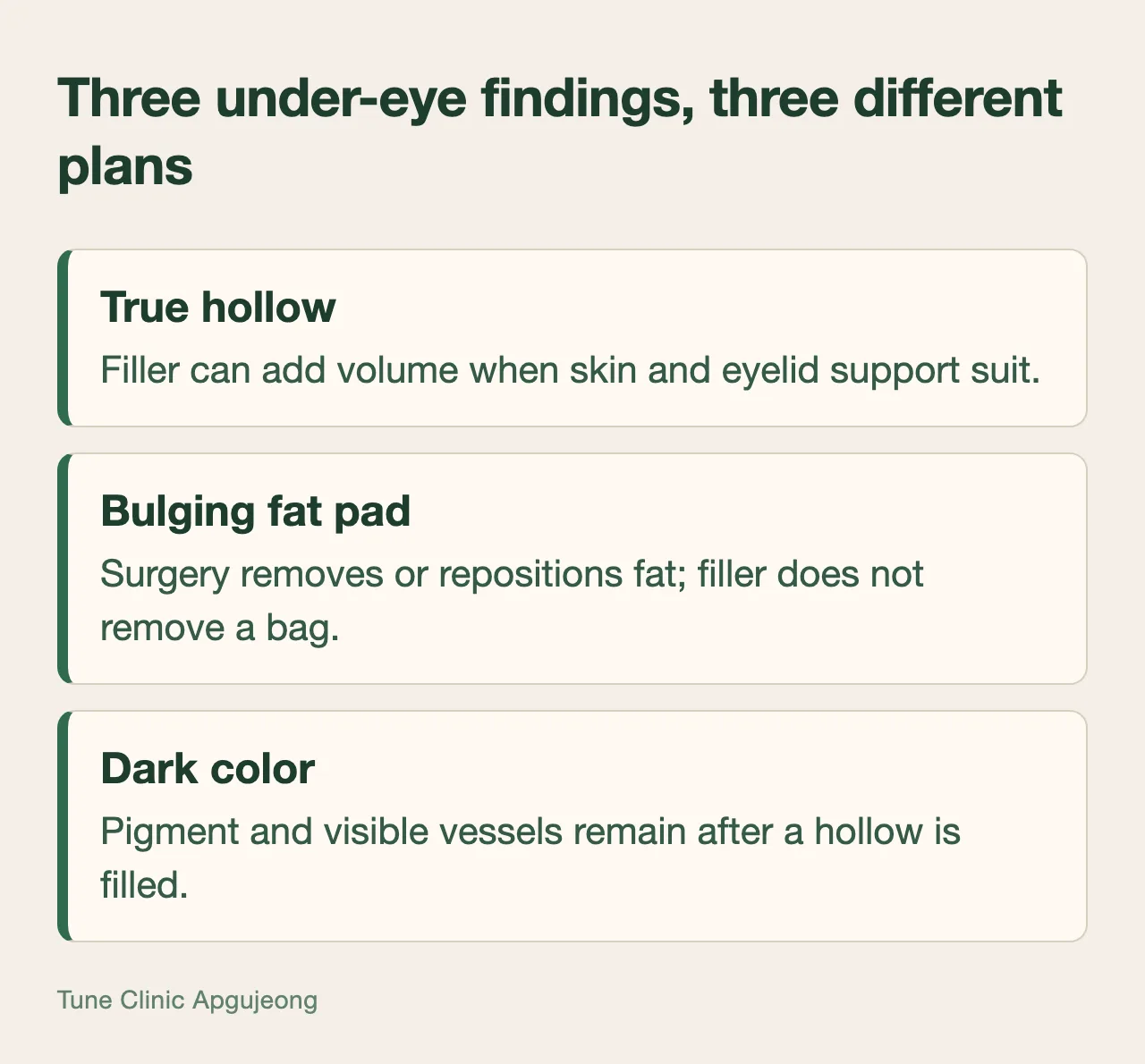
This matters because each cause has a different treatment. A hollow can cast a shadow that makes the area look darker, so filling it may reduce that shadow. It does not remove pigment or hide vessels.
Why do I have hollows when I am young or well rested?
Often because of the anatomy you inherited. A tear trough can be present from early adulthood and is not a sign of poor sleep (EyeWiki). With age, other changes add to it. Orbital fat can push forward above a ligament and make the groove below look deeper (Seminars in Plastic Surgery 2007). Bone, soft-tissue volume and the attachments of the skin also change, and a hollow can exist without any visible bag (EyeWiki).
Age alone does not tell you which treatment fits. A 25-year-old and a 55-year-old can both have a hollow for different reasons.
What does the physician need to examine first?
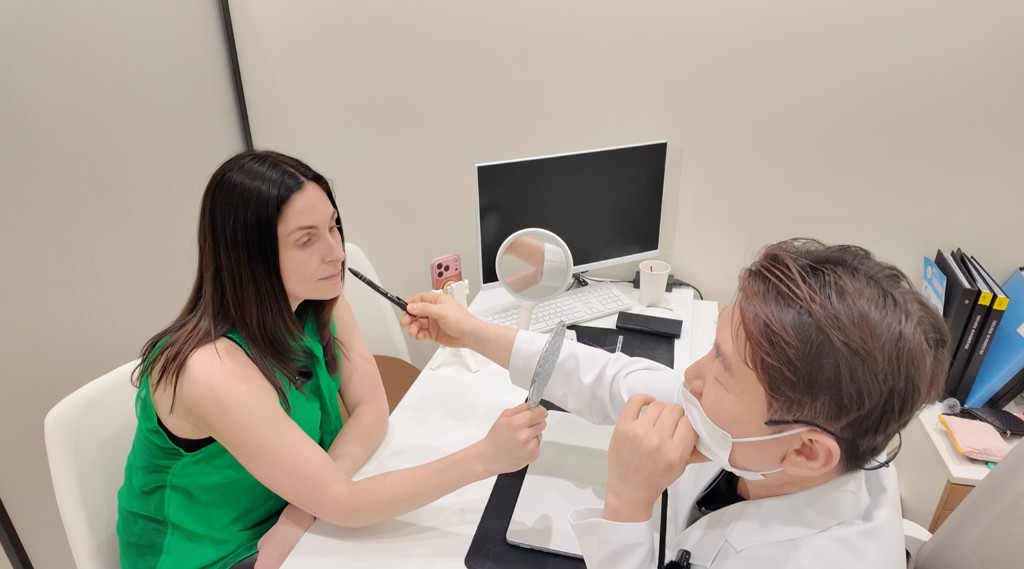
The examination should cover contour, skin thickness and laxity, color, how well the lower eyelid is supported, any tendency to swell, and every earlier procedure in the area (Aesthetic Surgery Journal 2024; Turkish Journal of Ophthalmology 2025). Mention any dry-eye symptoms as well, because dry eye is a recognized risk of eyelid surgery (ASPS). A selfie cannot show these things, because lighting changes both the hollow and the color.

Severity grades exist, and several classification systems are in use (Aesthetic Surgery Journal 2012). A grade helps describe what is there. It does not choose the treatment.
Visitors to Korea also meet treatment names on booking apps, such as dark-circle filler, under-eye filler and front-cheek filler (Gangnam Unni listings). These are marketing categories and say nothing about your diagnosis. Ask which structure is being treated and with what.
Will tear-trough filler fix my dark circles, or can it make me puffier?
Whether filler helps depends on whether the darkness comes from a hollow, pigment, visible underlying structures or swelling (Aesthetic Surgery Journal 2024).
Filler is a reasonable option for a true depression when the skin and eyelid support are suitable and fat protrusion is limited (Aesthetic Surgery Journal 2026). It has limits for pigment, and it does not remove a bag (ASJ Open Forum 2023). Hyaluronic acid attracts water, and the lower eyelid is prone to fluid retention. Reviews of periocular filler describe persistent or late swelling, visible irregularities and a bluish discoloration as recognized complications (Turkish Journal of Ophthalmology 2025). If you already wake up puffy, say so before any injection.
How do fat removal, fat repositioning and lower blepharoplasty differ?
Removal takes fat away, repositioning moves it into the hollow, and lower blepharoplasty is the broader operation that may include either one plus skin and support work. Fat grafting, which adds fat from elsewhere, is different again (Aesthetic Surgery Journal 2012).
| Option | What it does | What it does not do |
|---|---|---|
| Hyaluronic acid filler | Adds volume to a depression | Remove a bag, tighten skin or clear pigment |
| Transconjunctival fat removal | Takes out bulging fat through the inside of the eyelid | Fill a hollow; too much removal can deepen it |
| Fat repositioning | Moves the bulging fat down over the groove | Treat excess skin by itself |
| Lower blepharoplasty | May combine fat work, skin removal and eyelid support | Change skin color |
| Fat grafting | Adds your own fat from another site | Reduce a bulge |
Fat-preserving techniques developed partly because removing too much fat can leave the area hollow later. The approach through the inside of the eyelid leaves no skin scar, but it does not address excess skin or weak eyelid support by itself (Seminars in Plastic Surgery 2007).
Surgery carries its own risks. Lower eyelid surgery can cause dry eye, difficulty closing the eyes, changes in eyelid position, bleeding, infection and, rarely, vision loss (ASPS). Sudden vision changes, severe eye pain or rapidly increasing swelling after surgery require immediate emergency assessment (ASPS; AAO).
Online videos can make fat repositioning look like a minor procedure. It is surgery, and recovery varies with the operation and the person. The sources reviewed for this guide give no reliable universal timetable, so plan your trip around your surgeon's advice for your case.
Can cheek filler, lasers, skin boosters or blood-derived injections do the same job?
Sometimes they help a different part of the problem, but they are not substitutes for each other. Support in the front of the cheek can soften the lid-cheek junction in some faces, and the midface should be assessed together with the under-eye (ASJ Open Forum 2023). That does not make cheek filler enough for everyone.
Skin boosters, energy devices and blood-derived injections are aimed at skin quality or color. The evidence reviewed for this guide does not show that an unspecified booster, laser or blood-derived product reliably replaces missing volume or repositions fat. The stepwise framework treats skin, color and contour as separate targets (Aesthetic Surgery Journal 2024). A natural origin does not mean a product is proven to work or free of risk.
How much filler is needed, and which product is approved?
There is no standard volume, and approval depends on the exact product and the country. The amount depends on the depth of the hollow, the skin, the product and whether the cheek is treated in the same session. A number taken from someone else's case or photograph is not a dose.
In the United States, the FDA approved one hyaluronic acid filler, Restylane Eyelight, for infraorbital hollowing in 2023, with labeling for patients over age 21 (FDA; FDA labeling). The manufacturer of Juvéderm Volbella XC announced a similar indication in 2022 (AbbVie). These are examples. They do not form a complete list, and approval does not mean a product suits every patient.
Other regions differ. Korea's MFDS tells patients to check each product's authorized purpose and patient information (MFDS). An archived 2015 Japanese label for one filler excluded eyelid use (PMDA). China classifies volume-adding hyaluronic acid products as Class III devices, which does not establish a tear-trough indication for a given product (NMPA). In Europe, check the CE marking and conformity documents (HPRA). Ask for the product name and its labeled use where you are treated.
How long does under-eye filler stay, and can it be dissolved?
It can stay longer than the visible effect suggests, and dissolving is possible but is not a guaranteed reset. The common belief is that filler is gone within a year. In a 2024 MRI series, residual hyaluronic acid was found in the midface of all 33 selected participants at least two years after injection, and one interval reached 15 years (PRS Global Open 2024). This was a selected group and the midface, so it does not predict how long tear-trough filler lasts in you.
How long the result is visible, how long material remains, migration and swelling are four different things. Fullness that appears years later may be old filler holding water, and it cannot be diagnosed from appearance alone (Turkish Journal of Ophthalmology 2025). Tell the physician about every earlier injection before anything is added.
Hyaluronidase, an enzyme that breaks down hyaluronic acid, is used off-label to dissolve filler, and protocols differ between physicians (Journal of Clinical Medicine 2025). A retrospective series of 54 patients with periocular filler complications supports its use, and the authors note that dosing is not standardized (Aesthetic Plastic Surgery 2025). More than one session may be needed. Dissolving removes filler; it does not treat the hollow or loose skin underneath, so a return to any particular appearance cannot be promised.
Hyaluronidase can itself cause swelling and allergic reactions, occasionally severe. Tell the treating physician about previous reactions to hyaluronidase and severe insect-sting allergies before elective dissolution (Journal of Clinical Medicine 2025).
Can filler cause blindness even with a cannula?
Yes, the risk is rare but real, and no instrument or level of experience removes it. Product labeling and regulators recognize that filler can enter or compress a blood vessel and cause skin injury or vision loss (FDA labeling; TGA; ASPS). The available sources do not give a precise probability for tear-trough injection.
Any sudden vision change, unusual pain, white or mottled skin, or stroke symptoms such as facial drooping, arm weakness or difficulty speaking during or after filler injection require immediate emergency assessment. Do not wait for pain to become severe or for a routine review (FDA labeling).
Has advice about treating under-eye hollows changed since 2022?
Yes, in ways that affect how treatment is chosen. When I wrote about this in 2022, I said treatment could be chosen by severity and by your schedule. Newer reviews make suitability the deciding factor: a schedule cannot make filler appropriate for an eyelid with marked swelling, excess skin or weak support (Aesthetic Surgery Journal 2026).
I also wrote that a hollow moving toward the most severe grade means surgery is needed. The evidence supports a narrower reading. A grade informs the assessment, and it does not oblige anyone to have surgery. No treatment is also a valid choice.
I listed skin boosters, tightening lasers and collagen injections next to filler as nonsurgical options. Without a named product and target, those treatments should not be read as corrections for a structural hollow.
I showed individual cases with the filler volume used in each. This guide leaves those cases and numbers out, because one person's amount is not a recommendation for another.
The 2022 posts also discussed surgery followed by filler as a possible sequence. Current treatment planning should depend on anatomy, with reassessment of any remaining hollow after healing and without a fixed two-stage plan (ASJ Open Forum 2023).
What follow-up should I arrange before leaving Korea?
Arrange a review plan that fits your procedure, and leave with written details. Ask for the filler product and amount in writing, or the exact operation performed. MFDS separately advises checking a filler's authorized purpose, labeling and product information (MFDS). Late swelling can appear after you are home (Turkish Journal of Ophthalmology 2025), so agree in advance how to reach the clinic and who can examine you locally. There is no universal safe-to-fly interval; the clinic's flight-planning guide lists the questions to ask.

What should I ask at my consultation?
- Which of these do I have: a hollow, a bulge, pigment, visible vessels, swelling, or a mixture?
- If you recommend filler, which product is it, and what is its labeled use in Korea and in my home country?
- Do my skin, eyelid support or tendency to swell make filler a poor choice for me?
- If you recommend surgery, will fat be removed, repositioned or grafted, and will skin be removed?
- I had filler before. How will you check what remains before adding more?
- What complications are possible with this plan, and what is your emergency pathway for vision symptoms?
- What happens if I choose no treatment, and who will follow me after I fly home?
A good consultation gives you the whole picture, including the option of doing nothing and the risks that are rare but serious. The physician who advises you should put a name to that advice and stay reachable after you decide, at home as well as in Seoul. With that in place, the decision is yours to make, at your own pace.
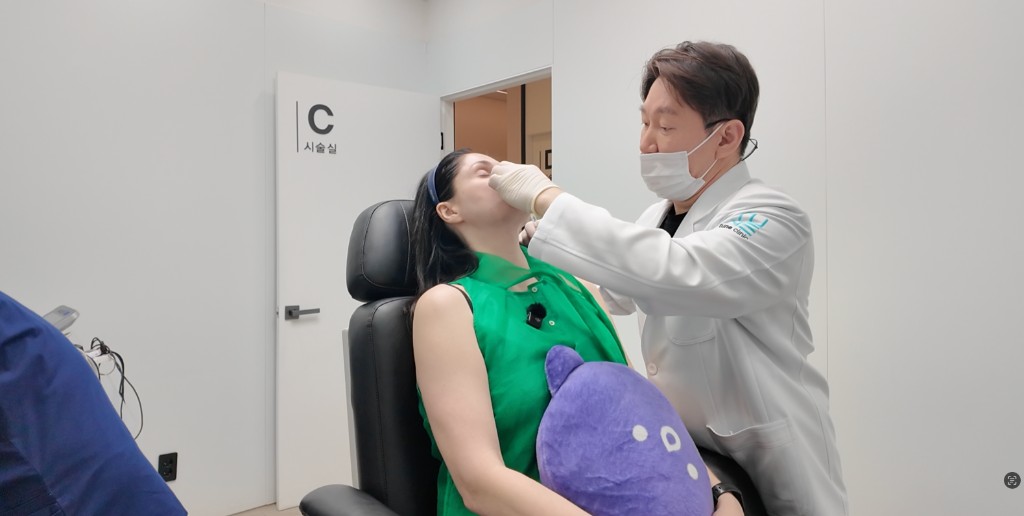
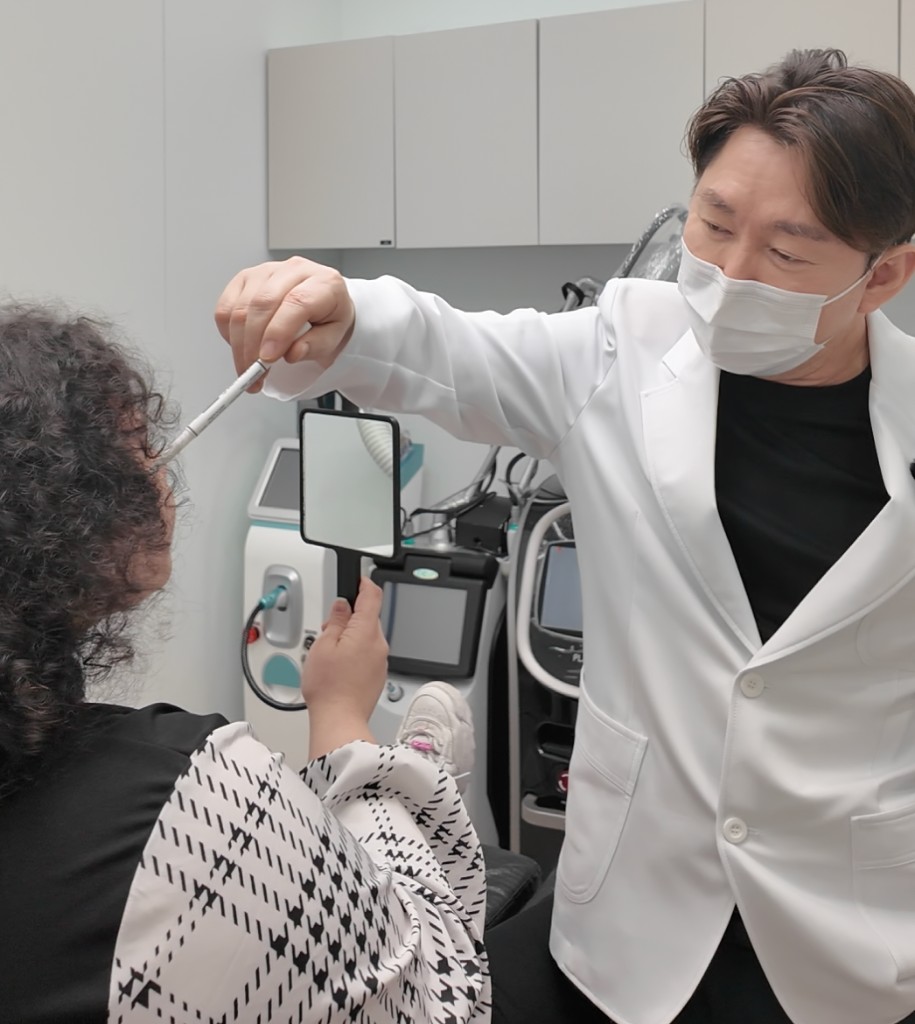
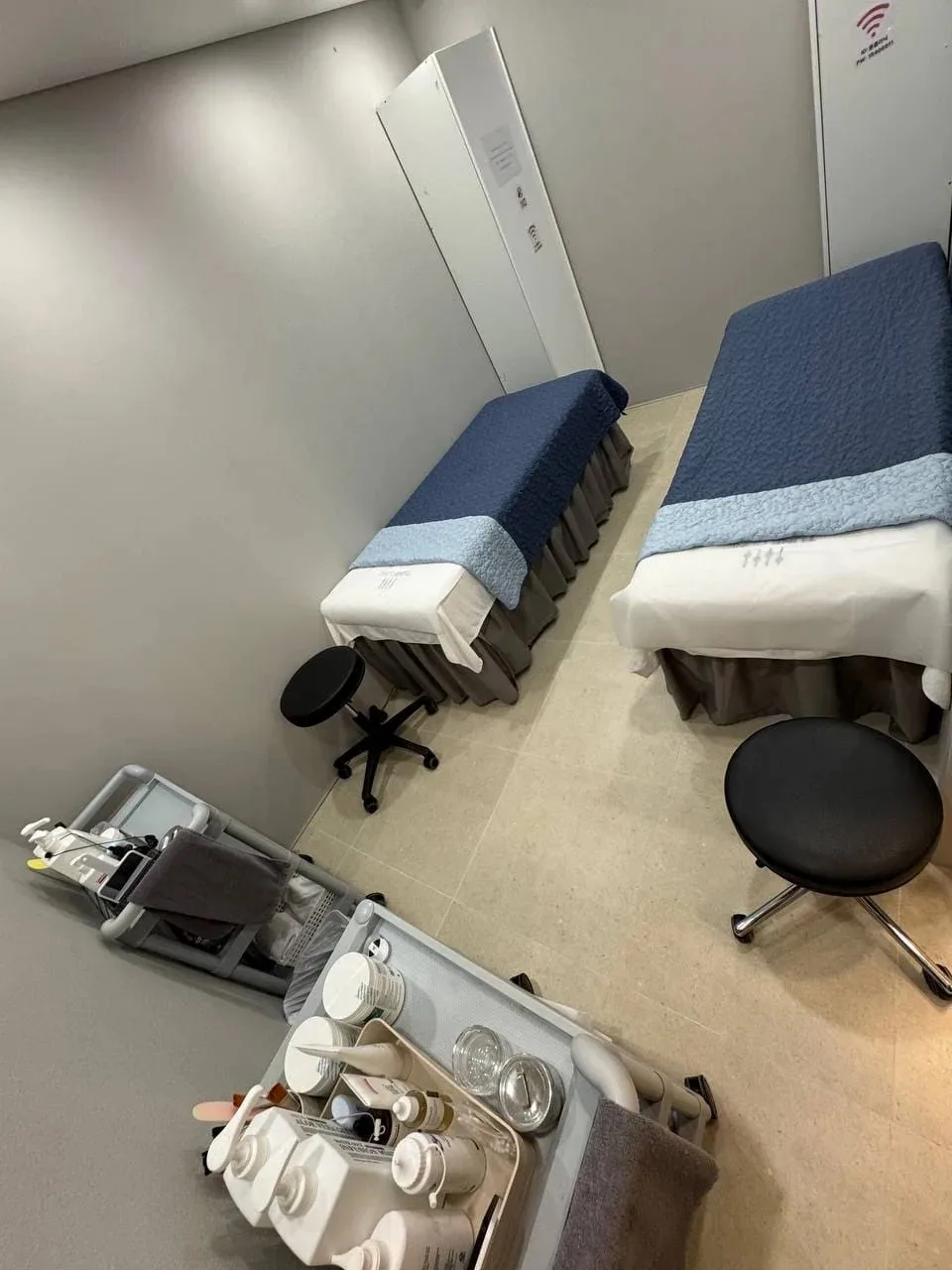
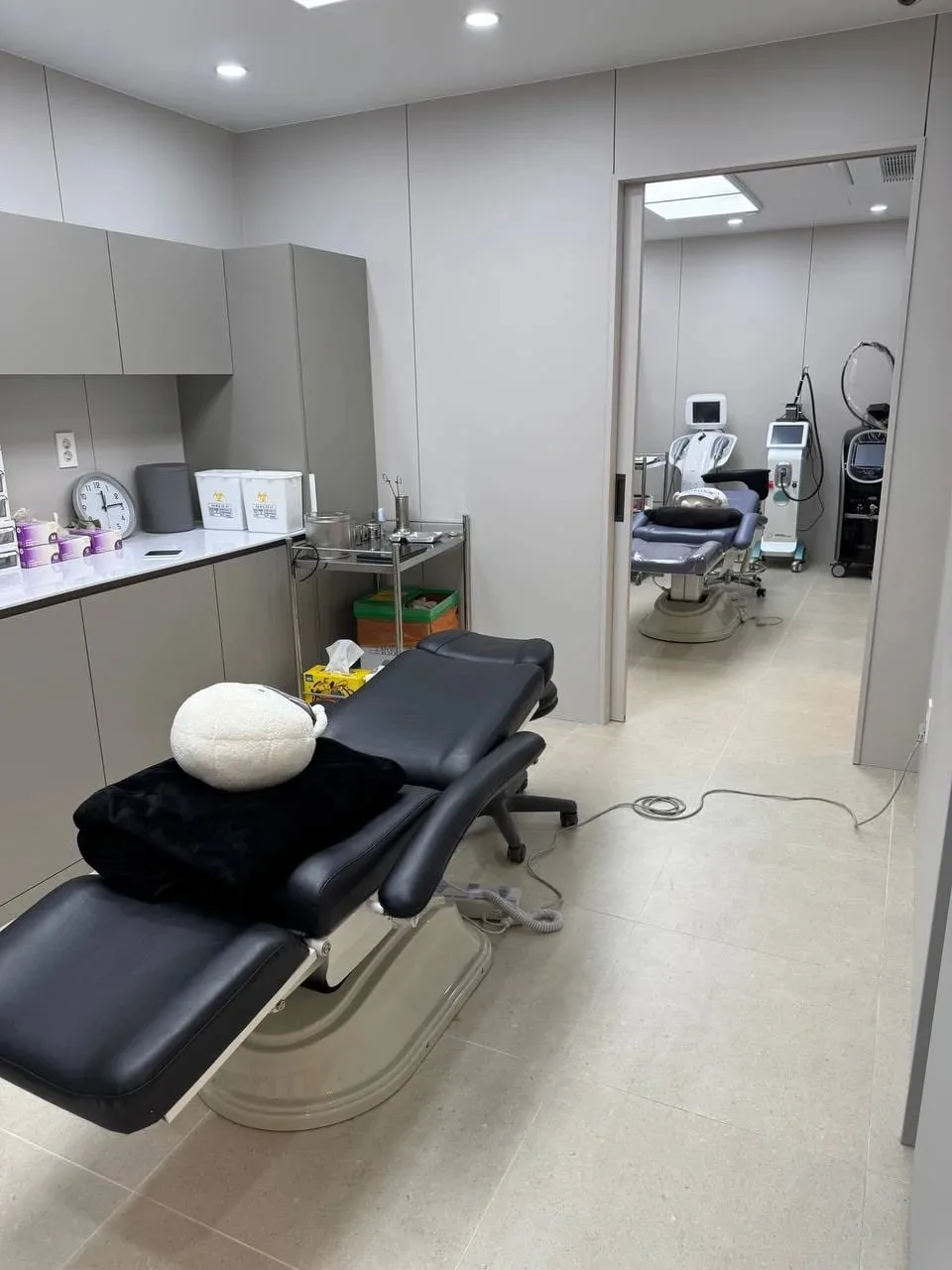
Tune Clinic Apgujeong today: the lobby, waiting areas and treatment rooms where consultations and treatments take place.




Sources
- Aesthetic Surgery Journal. Tear Trough Deformity, Update on Anatomy and Clinical Management. PubMed record 2026. Current selection principles for surgical and nonsurgical treatment
- Aesthetic Surgery Journal. Tear trough deformity, review of anatomy and treatment options. PubMed record 2012. Multiple classification systems; fat removal, augmentation and transposition as distinct options
- Seminars in Plastic Surgery. Evaluation and Treatment of the Tear Trough Deformity in Lower Blepharoplasty. PMC 2007. Anatomy, transconjunctival approach, conservative fat management
- Aesthetic Surgery Journal Open Forum. Infraorbital Hollow Rejuvenation, Considerations, Complications, and the Contributions of Midface Volumization. PMC 2023. Candidate selection, pigment limits, midface support, filler after surgical healing; industry-associated narrative review
- US Food and Drug Administration. Restylane Eyelight P040024/S135. FDA 2023. Product-specific US approval for infraorbital hollowing
- US Food and Drug Administration. Restylane Eyelight Clinician Labeling. FDA 2023. Indication for patients over 21, vascular warnings, emergency symptoms
- AbbVie. FDA Approves JUVEDERM VOLBELLA XC For Undereye Hollows. Manufacturer news release 2022. Manufacturer announcement of a US infraorbital indication
- Plastic and Reconstructive Surgery Global Open. Hyaluronic Acid Filler Longevity in the Mid-face, A Review of 33 Magnetic Resonance Imaging Studies. PMC 2024. Residual midface filler on MRI at two years or more; selected sample
- Aesthetic Plastic Surgery. Single-Session High-Dose Hyaluronidase for Managing Periorbital Hyaluronic Acid Filler Complications. PubMed record 2025. Retrospective series of 54 patients; no standardized dosing
- Turkish Journal of Ophthalmology. Complications of Periorbital Cosmetic Hyaluronic Acid Filler Injections, A Major Review. PMC 2025. Persistent and late swelling, irregularities, risk factors, management limits
- Journal of Clinical Medicine. Hyaluronidase Use in Aesthetic Medicine, Formulations, Safety, and Clinical Practice. PMC 2025. Off-label use for dissolving filler, varied protocols, hypersensitivity and other safety points
- Ministry of Food and Drug Safety, Republic of Korea Policy Briefing. Precautions for cosmetic filler procedures. korea.kr 2019. Check each product's authorized purpose, labeling and patient information
- Therapeutic Goods Administration. Be alert when considering cosmetic injections. TGA 2019. Serious vascular and visual risks of cosmetic injections
- PMDA. Restylane Lid Japanese package insert, first edition. PMDA archive 2015. Archived label excluding eyelid use; shows regional, product-specific differences
- Gangnam Unni. Under-eye filler marketplace listings. unni.app, accessed 2026. Korean marketing category names only; not clinical guidance
- American Society of Plastic Surgeons. Dermal Fillers, Risks and Safety. plasticsurgery.org, accessed 2026. Professional-society patient information on filler risks
- Aesthetic Surgery Journal. Lower Eyelid Dark Circles (Tear Trough and Lid-Cheek Junction), A Stepwise Assessment Framework. PMC 2024. Separating the causes of dark circles before choosing treatment
- American Academy of Ophthalmology. Tear Trough Deformity. EyeWiki, reviewed 2026. Definition, inherited anatomy, aging, coexistence with fat prolapse
- Tune Clinic. Planning Aesthetic Treatment Before a Flight, Questions to Ask 72 Hours Out. tuneclinic-global.com 2026. Clinic travel-timing guide; no automatic flight clearance
- NMPA, reproduced by Shanghai Medical Products Administration. Announcement on management categories of medical sodium hyaluronate products, No. 103. 2022. Chinese Class III classification of volume-adding hyaluronic acid products
- Health Products Regulatory Authority, Ireland. Dermal filler risks. hpra.ie, accessed 2026. CE marking and conformity-document checks
- American Society of Plastic Surgeons. Eyelid Surgery, Risks and Safety. plasticsurgery.org, accessed 2026. Professional-society patient information on eyelid surgery risks
- American Academy of Ophthalmology. Lower Eyelid Blepharoplasty. aao.org, accessed 2026. Patient guidance including urgent warning signs after surgery