The complaint that sounds simple and isn't
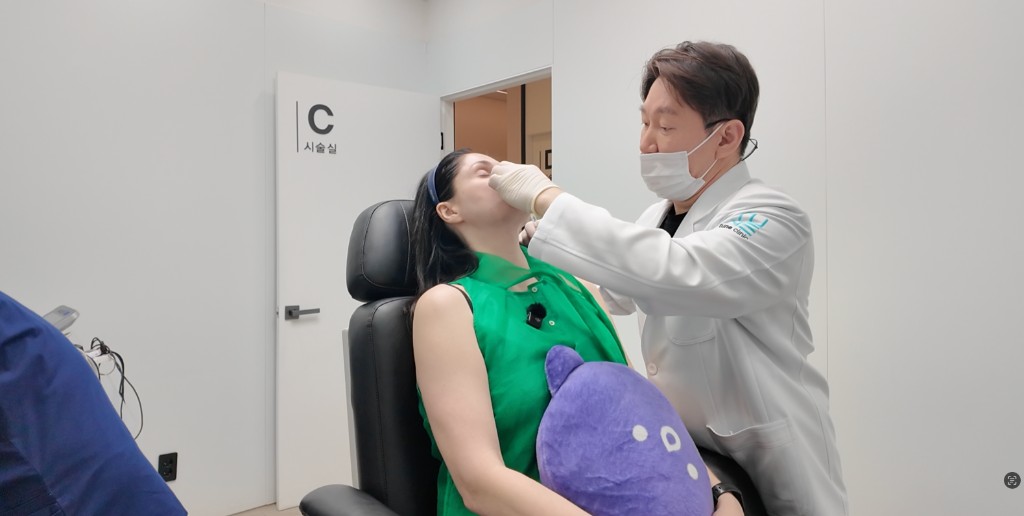
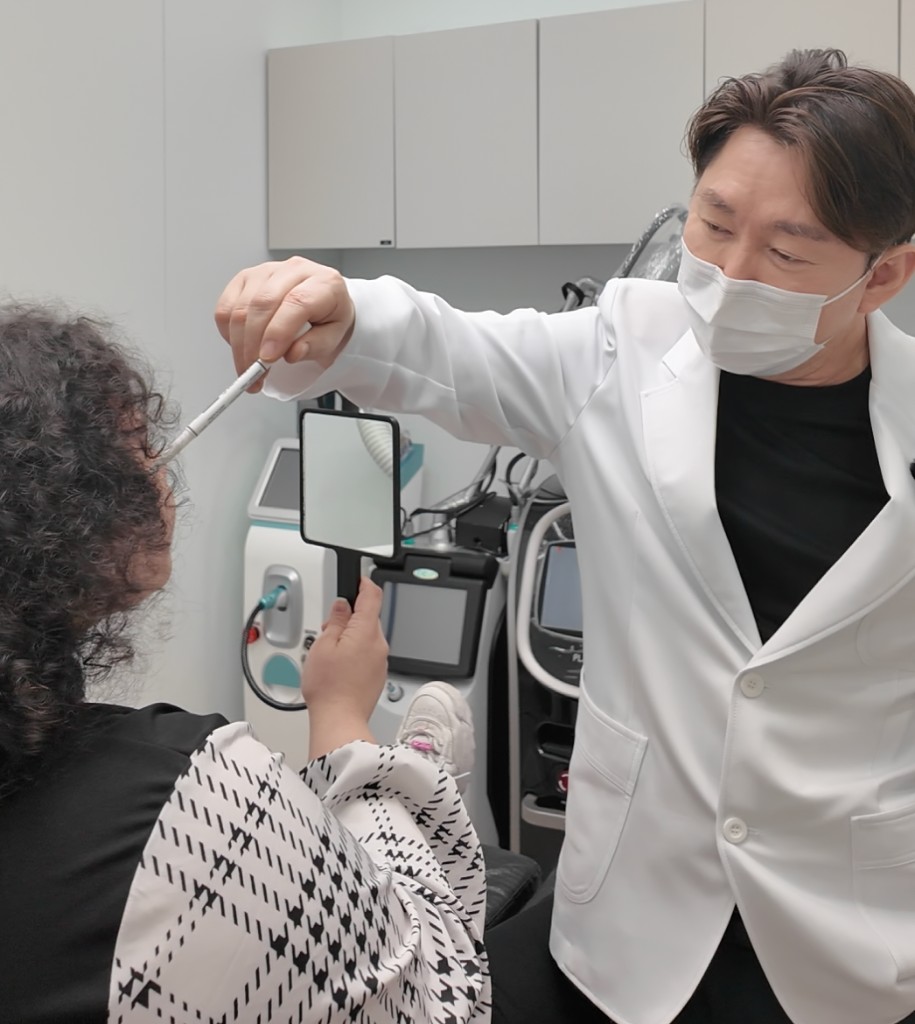
A double chin or a change in the lower-face contour can involve fat, skin laxity, muscle activity or structural features. These need assessment before choosing a device or injection.
It is one of the most common concerns we hear in consultations — and one of the most deceptive, because the sentence sounds like it describes a single problem. In practice, it almost never does.
The lower third of the face is a region where at least four distinct anatomical processes contribute to the changes patients describe. Fat accumulation, skin laxity, muscle changes, and skeletal resorption can all produce a version of "my jawline is softer than it used to be" or "I have a double chin now" — but they require completely different treatments. A device selected without knowing which of these is driving the change has a meaningful chance of producing underwhelming results, because it is solving the wrong problem.
This is not a criticism of any device in particular. It is a structural property of the lower face: it is where multiple aging mechanisms converge, and where confident-sounding treatment recommendations are most likely to be mismatched to the actual anatomy.
What actually causes a double chin?
The answer is not always fat — and this matters more than it might seem.
Submental adipose tissue is the most commonly assumed cause. There is a defined fat compartment beneath the chin and above the platysma muscle, and in some patients this compartment is genuinely enlarged — either constitutionally, from weight gain, or from the downward migration of facial fat with age. When this is the primary driver, treatments targeting fat have a rationale.
Skin laxity is the second, frequently underweighted cause. As the dermis thins and collagen architecture degrades, the skin of the neck and submental area loses its tension. Even patients with relatively modest submental fat can develop the appearance of a double chin purely because the skin no longer holds its position. In these patients, fat-targeting devices do nothing useful — and can occasionally worsen the appearance by softening the tissue without addressing the overlying laxity.
Platysmal banding is a third mechanism that tends to be overlooked entirely in device-centered discussions. The platysma is a broad, flat muscle running from the chest up across the anterior neck. With age, the medial edges of this muscle separate and become visible as vertical bands. This is a muscular phenomenon and responds to different interventions than either fat or skin laxity.
Mandibular bone resorption is the fourth driver, and the one least often discussed in non-surgical settings. The angle of the mandible resorbs with age; the chin region narrows and loses definition; and the soft tissue that once draped over a more defined skeletal frame no longer has the support it once did. You cannot tighten bone into existence with any device. What you can do — in some cases — is restore the structural relationship between the bone and the overlying tissue through careful filler work, accepting that the "lifting" complaint is actually partly a structural deficit problem.
Why does this breakdown matter clinically?
Because the treatment implications diverge almost completely depending on which mechanism is primary.
A patient whose lower face concern is driven predominantly by submental fat benefits from a treatment that addresses that compartment: injectable deoxycholic acid, targeted body contouring devices, or in more pronounced cases, surgical liposuction. The skin envelope matters, but it is secondary.
A patient whose concern is driven primarily by skin laxity and collagen loss needs a treatment that remodels the dermis and tightens the skin — not one that removes fat. Removing fat from a face where the skin is already lax tends to worsen the appearance of ptosis.
A patient with platysmal banding may benefit from neuromodulator injection to relax and partially flatten the bands — a very different intervention from any lifting device.
And a patient with significant mandibular resorption needs a structural conversation about whether the frame can be partly reconstituted before any lifting makes visual sense.
In most patients we see, more than one of these mechanisms is active. But they are rarely present in equal proportion, and identifying which one is dominant changes the treatment hierarchy completely.
What does Ultherapy actually do in the lower face?
Ultherapy uses focused ultrasound, while other lifting devices use different forms of energy. Treatment planning depends on the device, area and individual anatomy; a fixed numerical depth is not a universal tissue-layer map.
Focused-ultrasound treatment may be discussed for selected laxity concerns. The degree and timing of change vary, and a general mechanism does not establish a structural result for an individual.
Ask which finding makes focused ultrasound a reasonable option and what it is not expected to address. A description of sagging alone does not establish suitability.
Related reading: Why Lifting Comparisons Mislead Patients.
Suitability depends on the specific device and transducer, treatment area and assessment. Do not assume that every ultrasound protocol bypasses the dermis or addresses the same concern.
What does Thermage FLX do in the lower face?
Thermage is a radiofrequency treatment. Ask how the proposed protocol relates to your concern and what evidence and limitations apply; an immediate or fixed-duration effect should not be promised.
The clinical implication for the lower face: Thermage is primarily a skin-envelope treatment. It addresses the dermal layer where collagen architecture lives. In patients with genuine skin laxity — where the skin surface itself has lost its tensile properties — Thermage produces visible improvement in the quality and tightness of the skin envelope.
For patients with submental fullness driven primarily by fat, Thermage addresses the skin layer but does not meaningfully reduce the fat compartment. For patients with structural SMAS descent, it addresses a shallower plane than the problem. The indication, again, determines whether the device is relevant.
For a more complete picture of how Thermage and Ultherapy target different anatomical planes, Lifting Devices Compared remains a useful reference.
What about devices targeting fat and skin simultaneously?
Devices marketed for contour and tightening can differ in technology, delivery and intended use. Do not treat ONDA, RF microneedling and other named systems as one interchangeable mechanism.
Ask what the specific device is intended to address in your case and whether another approach would better fit the findings. A broad category label cannot establish a responder profile.
We observe a pattern in consultations where patients have been told a combined-mechanism device will "take care of everything" — the double chin, the sagging, and the skin quality simultaneously. This is rarely the full picture. Combined-mechanism devices are genuinely useful tools in the right hands, applied to the right indication. But the marketing framing around them tends to overstate the breadth of what any single device can accomplish, which is why the diagnostic step matters so much before any device is chosen.
What about thread lifts?
Threads deserve an honest characterization. A polydioxanone (PDO) or PCL thread inserted into the submental or lower-face region can produce visible improvement in the contour — sometimes dramatically so in the first weeks after treatment. The lifting vector is mechanical, and when the thread is placed correctly, the initial result reflects genuine tissue repositioning.
Thread materials, technique and individual response affect expectations. Ask about evidence, possible adverse effects and follow-up rather than assuming a universal period of visible lifting.
Thread lifts are a legitimate option for patients who want a visible short-term improvement in lower-face contour, understand the durability profile clearly, and are not candidates for or interested in energy device protocols or surgery. They are poorly suited as a long-term strategy. Framing them as a permanent alternative to either devices or surgery is one of the more persistent oversimplifications in this category.
When should surgical referral be on the table?
This is a question that non-surgical clinics sometimes avoid, which is itself a clinical problem.
When the severity of structural descent — the degree of platysmal laxity, the extent of jowling, the depth of submental ptosis — exceeds what energy devices can reasonably address in a patient's timeline and budget, surgery is not a failure mode. It is the appropriate treatment.
The threshold for that conversation varies by patient and by how aggressively they want to address the concern. But a few patterns suggest that a surgical consult is the more honest recommendation: substantial submental fat that is not responding to non-surgical approaches, significant platysmal banding that neuromodulators cannot adequately address, and jowl descent severe enough that multiple rounds of HIFU have produced diminishing returns.
We hold to a principle that the boundaries of non-surgical treatment should be declared honestly — not because surgical patients are not our patients, but because patients who spend eighteen months pursuing non-surgical results on a problem that needed surgery are poorly served by the avoidance of that conversation.
How do combined cases get sequenced?
When more than one concern is present, ask which is most relevant to the appearance and why the proposed sequence fits. There is no universal deeper-first order for every combination.
A plan may be staged so that the response to one treatment can be assessed before another is considered. The need for staging depends on the specific procedures and patient.
Combining devices requires an explanation of the intended benefit, interactions and recovery. A different target layer is not by itself proof that two procedures should occur in the same visit.
The Korean Lifting Guide offers additional orientation for international patients approaching this category for the first time, and How to Choose the Right Lifting Treatment walks through the decision framework in more accessible terms.
The lower face as a diagnostic challenge
The lower face is not a simple target. It is where the face's four major aging mechanisms — fat, skin, muscle, and bone — converge in a small anatomical region, and where the appearance of a single complaint can emerge from very different structural stories.
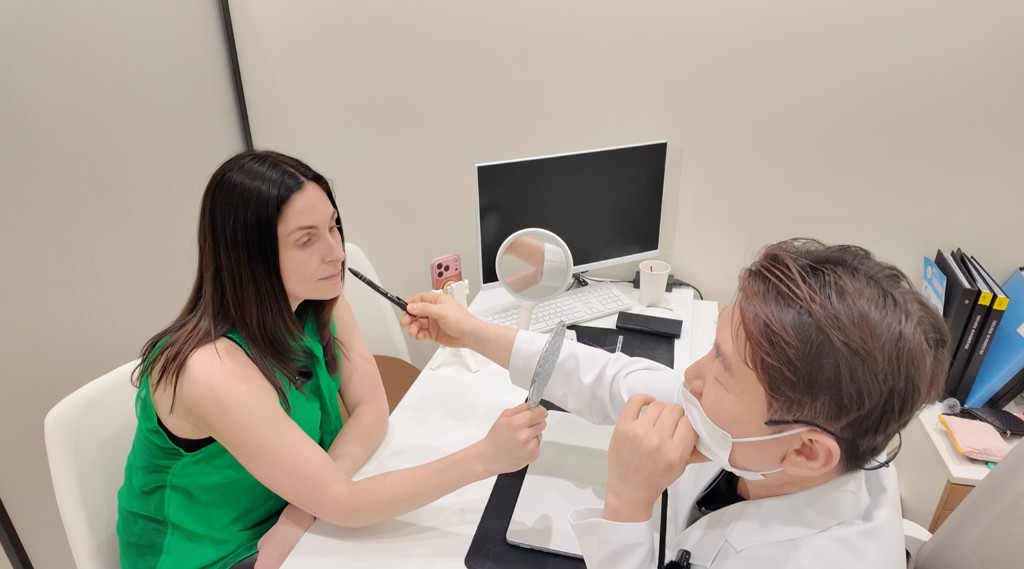
The consequence for treatment planning is that the lower third deserves a more careful diagnostic conversation than most other areas of the face. Not because the treatments are more complicated, but because the cost of a diagnostic mismatch is highest here. A mismatched treatment in this region produces a result that looks wrong in a way that is difficult to characterize — not dramatically bad, but not quite right, and hard to explain without reference to the underlying anatomy.
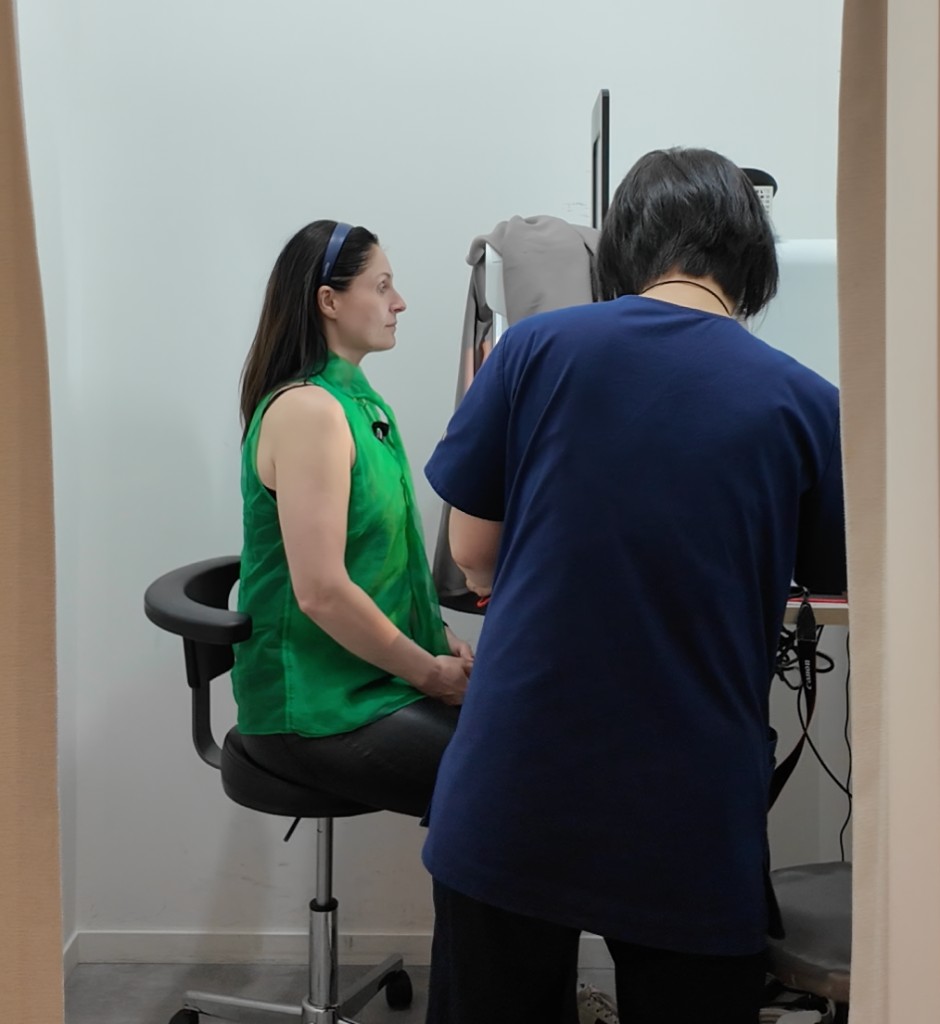
Understanding what is driving the change, before choosing how to address it, is the most important step in the lower-face consultation. The Tunemaka-se design method begins there and works forward. The device is the last decision, not the first.
What the evidence can tell us: a small prospective study of focused ultrasound for neck and lower-face laxity reported improvement in selected patients with minor sagging. Its size, patient selection and device protocol limit how far the finding can be generalized.
FAQ
how do I know if my double chin is fat or just sagging skin?
The distinction usually requires an in-person assessment, because submental fat and skin laxity can look similar but respond to opposite treatments. A physician evaluates how the tissue behaves under tension and at rest, since fat-targeting treatments can worsen the appearance when laxity is the real driver. Identifying which mechanism is dominant is the step that determines whether any device is appropriate at all.
is Ultherapy or Thermage better for a sagging jawline?
Neither is universally better; they target different anatomical planes and address different problems. Ultherapy reaches the deeper SMAS layer and suits structural descent along the jawline, while Thermage delivers monopolar radiofrequency to the dermis and suits skin-envelope laxity. The right choice depends on which layer is driving your specific concern, which is why the diagnosis precedes the device.
how long does it take to see results from HIFU on the lower face?
HIFU works by inducing a thermal response that triggers collagen remodeling, so the structural effect develops gradually rather than immediately. In clinical experience the change typically becomes visible over roughly three to six months as the deeper tissue reorganizes. Patients expecting an instant result are often the most disappointed, so the timeline should be discussed before treatment.
do thread lifts for a double chin last permanently?
No. PDO threads are typically absorbed within about six months and PCL threads last somewhat longer, so threads are best understood as a short-term contour improvement rather than a permanent solution. They generate some collagen during absorption, but the result at six months is often meaningfully less than at four weeks, and framing them as a permanent alternative to devices or surgery is misleading.
can fillers help a sagging lower face from bone loss?
In some cases, yes. When part of the lower-face change comes from mandibular bone resorption, no device can tighten bone into existence, but carefully placed filler can in some patients restore the structural relationship between the bone and the overlying tissue. This is a structural deficit conversation distinct from skin tightening, and it requires assessment of how much of the concern is truly skeletal.
This article is intended for educational purposes. It does not constitute a clinical recommendation or treatment guide. Individual treatment plans for lower-face concerns should be determined through direct physician consultation, which includes assessment of your specific anatomy, prior treatment history, and expectations. Contact Tune Clinic to discuss your situation.
Ready to plan your treatment?
Tune Clinic Apgujeong offers English-language consultations with Dr. Ju and Dr. Cha — a structured assessment, not a sales call.
→ Book an appointment to pick a time that fits your Seoul itinerary.
→ Message us on WhatsApp to ask in English before you commit.