
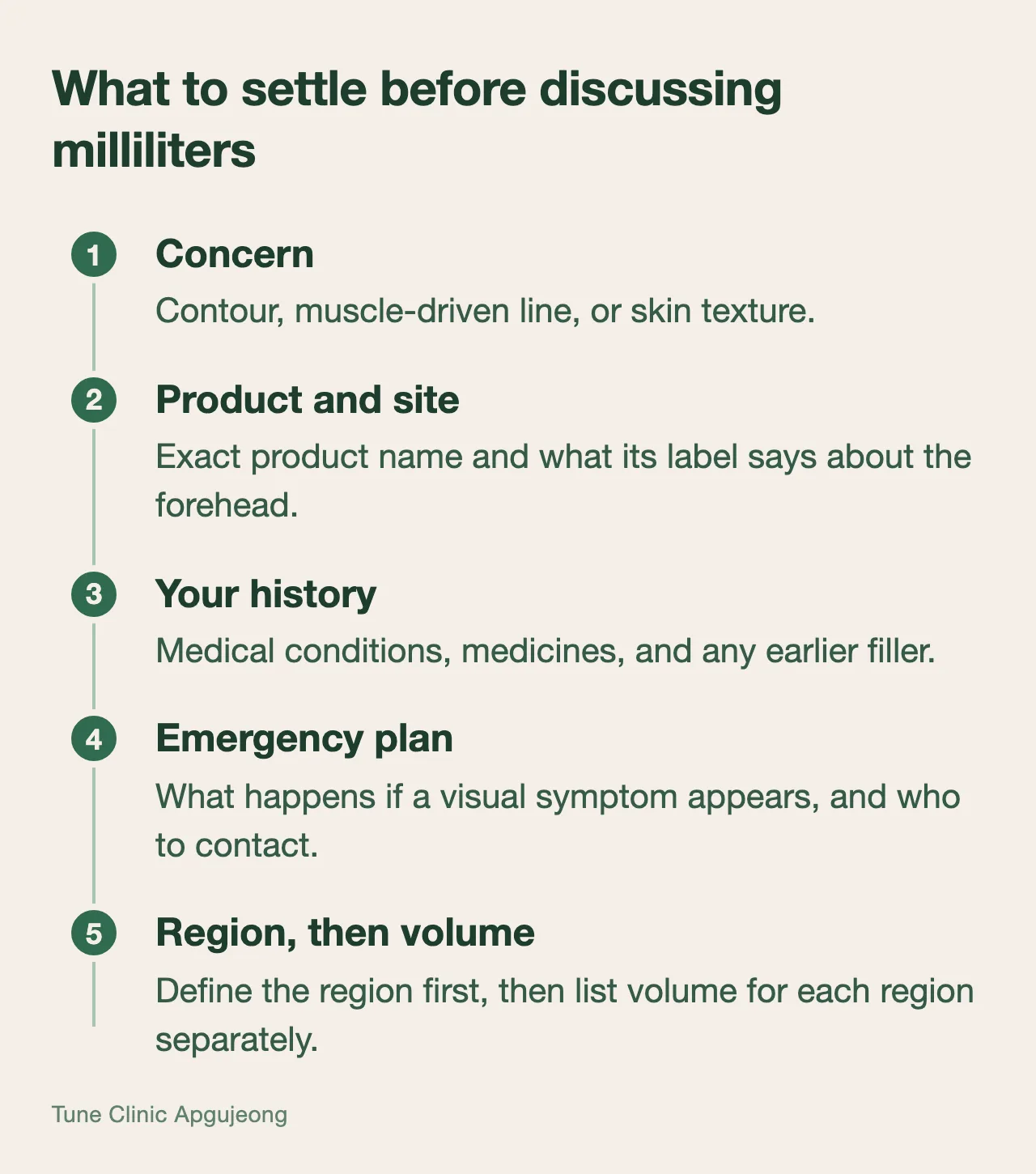
Whether forehead filler is worth its risks depends on your goals and an individual assessment; there is no standard dose, and permanent vision loss is a rare possible complication. A 2025 American Academy of Ophthalmology assessment identified 198 published cases of vision loss after soft tissue fillers, which is a case count and not a rate per injection (AAO 2025). Before talking about milliliters, settle the concern, the exact product and site, your medical and filler history, and the emergency plan. If any of these is unclear, defer.
A visitor is preparing for a consultation in Seoul. She has saved a milliliter number on her phone, taken from several forehead filler pages. Then she notices that one page counted only the forehead, another counted the temples too, and neither explained the risk to the eyes. This illustrative composite describes no individual patient. Her questions run in a sensible order, so this guide follows them.

Questions and answers
What can forehead filler change?
Forehead filler changes contour. Material is placed in the soft tissue over the frontal bone to add projection or to fill a local hollow, often the dip above the brow bone. Forehead augmentation with hyaluronic acid is described in clinical research, although the study cited here enrolled only 10 people (Five-step approach 2024).
It does not treat every forehead problem. Lines that appear when you raise your brows come from muscle movement, and muscle-relaxing injections work by a different mechanism than fillers (FDA 2025). Fine surface texture is a third question. A flat or sloping forehead is also a normal shape, and leaving it alone is always an option.
Can forehead filler cause blindness?
Yes, rarely, and the loss can be permanent. Arteries of the face connect with the circulation of the eye. If filler enters an artery, it can travel and block the blood supply to the retina. Ophthalmology guidance treats the upper face as high-concern anatomy for this reason (RANZCO 2024).
The forehead appears among the injection sites in the 198 published cases reviewed by the AAO (AAO 2025). Nobody knows how many injections were given in total, so that count cannot be turned into a percentage. The UK consensus also describes the true incidence as uncertain (UK consensus 2026). The event is rare, the size of the risk is unknown, and the outcome is severe.
The 2022 posts behind this guide discussed volume and did not explain this risk. Their only safety note was one line saying side effects vary with individual skin characteristics.
Why do some doctors refuse to inject the forehead, and is it approved?
Some doctors decline because of the vision risk and because the forehead is often outside a product's approved use. In the United States, the FDA lists forehead injection among unapproved uses of dermal fillers and recommends against it (FDA). That is US guidance. It is not a statement of Korean law.
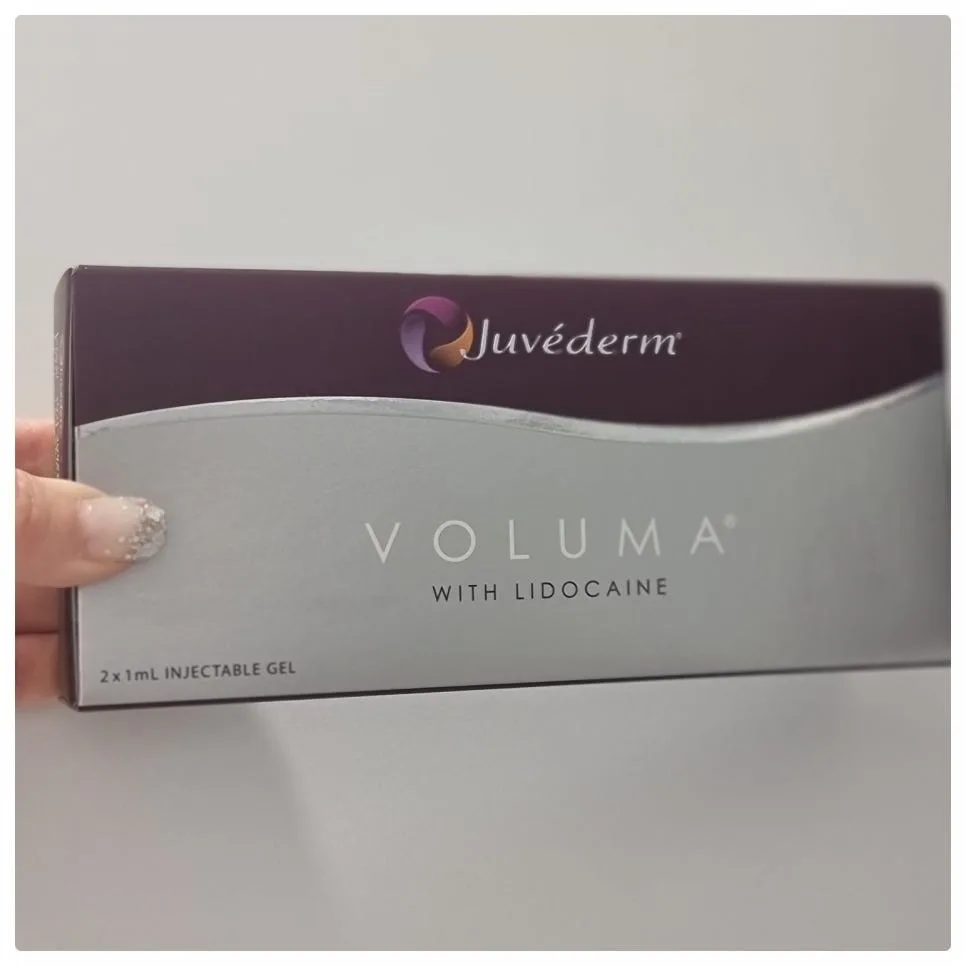
A filler brand being approved does not mean the forehead is an approved site for it. Approval attaches to one product, one indication and one country. One Japanese label, for Juvéderm Vista Voluma XC, lists the midface, lower jaw and temples as intended treatment regions; it does not list the forehead. Separately, it states that comparative clinical trials have not established safety and efficacy outside the midface (PMDA label). That applies to that product only.
In Korea, the regulator warned in 2016 about following product labels and about blindness from injection into a vessel (MFDS 2016). It revised its filler review guidance in 2025, which is not an approval of any product or site (MFDS 2025). Ask for the exact product name and what its current Korean label says about the forehead. Wide availability in Seoul does not establish suitability or lower risk.
How many mL of forehead filler do I need?
No single amount fits every forehead, and a selfie cannot settle it. In 2022 I wrote that there is no fixed amount and that it differs with each forehead. Current expert consensus also supports individual planning (HA consensus 2026).
I also gave numbers: about 3 cc for a common shape treated subtly, and 7 to 10 cc, sometimes more, for a sloping or wide forehead or a request for more volume. Those figures are not established dosing standards. The posts did not provide a dataset establishing them as general recommendations, and published forehead technique studies are small and do not establish a standard dose or a maximum safe amount (Five-step approach 2024). This guide does not replace the old numbers with new ones.
A useful proposal defines the region first and the volume second. It should account for your anatomy, any earlier filler, the product, and how much change you want. In the same post I wrote that the precise amount is best discussed in person, with the face examined directly, because both the shape and the degree of change wanted differ between people. Individual planning does not mean that any requested volume is appropriate.
I wrote in 2022 that communication between the person injecting and the person being treated is very important, and that the shape can be checked together at intervals during treatment. Consensus guidance supports that kind of communication (HA consensus 2026). It does not prevent complications, and it is not a reason to keep adding volume.
Why does the proposal include my temples?
The forehead and temple form one continuous curve, so a physician may assess them together. A combined approach has been studied, in three cadavers and two volunteers (forehead and temple study 2024). That shows the two can be planned as one region. It does not show that they must be.
In 2022 I wrote that when a hollow runs from the tail of the brow to the temple, treating the forehead alone leaves the temple poorly connected, so both need treatment. That wording overstated the need for combined treatment. Treating only one area, waiting, or doing nothing are all valid choices.
A combined forehead-and-temple total cannot be compared directly with a forehead-only proposal. Ask for each region's planned volume separately, in writing.
Does a cannula or ultrasound remove the risk of blindness?
No. A blunt cannula, ultrasound imaging and experience are parts of technique and assessment. None of them is proof of zero risk. Imaging can document where material was placed, but the anatomical study available involved two volunteers, far too few to show prevention of a rare event (forehead and temple study 2024).
The sources cited here do not establish a forehead-specific comparative risk reduction for any tool, and the ophthalmology literature continues to report serious vascular complications (AAO 2025). If a clinic describes its equipment as the reason the treatment is safe, ask what risk remains.
How long does forehead filler really last?
There is no established duration for forehead filler. Residual material and visible cosmetic effect are different measures. A 2024 MRI series found residual hyaluronic acid in all 33 selected participants at least two years after midface injection (MRI review 2024).
That study looked at the midface in a selected group, so it cannot predict how long material stays in a forehead. It does show that losing the visible effect is different from the material being gone. Before any repeat treatment, tell the physician what was injected before, where and when. A top-up should not assume the earlier filler has disappeared.
Can forehead filler migrate or become uneven?
Yes, both can happen. The FDA lists movement of filler away from the injection site, lumps or nodules, inflammation and infection as separate possible problems (FDA). The sources cited here do not establish how often any of these occurs in the forehead. Migration is neither inevitable nor impossible.
A lump cannot be diagnosed from its appearance. It may be swelling, filler, inflammation or infection, and these call for different responses. Have a new or persistent lump examined in person. If it comes with pain, skin color change or any eye symptom, follow the emergency section below.
Can forehead filler always be dissolved?
No. An enzyme called hyaluronidase breaks down hyaluronic acid filler (RANZCO 2024), but removal has limits and carries its own risks (FDA 2025). It does not act on other injected materials.
Elective reduction of a contour you dislike is one problem. A blocked artery to the eye is a different one. The UK consensus finds limited evidence that hyaluronidase treatment around the eye restores sight, and it puts immediate emergency transfer first (UK consensus 2026). A filler being dissolvable does not make vision loss reversible.
Is fat grafting better than filler for my forehead?
There is no evidence for a general winner. Fat is your own tissue, but injecting it does not remove vascular risk, and autologous fat appears among the materials in the AAO review of vision loss. Some observational evidence discussed by the AAO suggests greater ocular risk and worse visual outcomes with fat than with hyaluronic acid, but it does not establish a reliable forehead-specific risk estimate or a universally preferable treatment (AAO 2025).
Guidance separates hyaluronic acid from other injected materials because the options for treating a blockage differ (RANZCO 2024). The cited sources also do not support a predictable percentage of fat that stays. The fair comparison includes a third option, no treatment.
What symptoms after forehead filler need emergency care?
New eye pain, any change in vision, or stroke-like symptoms during or after injection require immediate emergency assessment. Vision changes include blurring, a dark area, double vision or loss of sight. Stroke-like symptoms include facial droop, weakness or trouble speaking (RANZCO 2024). Go to an emergency department at once. Do not wait for a clinic to answer a message. Guidance puts rapid transfer ahead of anything else (UK consensus 2026).
Unusual or increasing pain, or skin that turns pale, blotchy or dusky, requires immediate clinical assessment for impaired blood supply. If the injector cannot assess you immediately, seek emergency care. Delayed assessment of an adverse effect can lead to permanent injury (HPRA). Lumps or swelling that appear weeks later should also be examined, because delayed reactions occur (FDA 2025).
Can I get forehead filler during a short trip to Seoul?
It is possible, but it needs a follow-up plan. Filler injection is invasive, and regulators advise asking about aftercare before treatment (HPRA). The sources cited here establish no evidence-based interval to wait before flying, so this guide gives no number of days.

Before treatment, arrange:
- A written record of the product, with volumes listed by region.
- An emergency contact that works while you are still in Korea.
- A named person who will assess a late problem after you are home.
Tune Clinic's guide on planning treatment before a flight covers the itinerary side.
Questions to bring to your consultation
Start with your own history. Tell the physician about medical conditions such as bleeding disorders, allergies, medicines you take, pregnancy or breastfeeding, active skin problems near the site, and previous procedures (FDA 2025). Suitability and contraindications must be checked against the exact product label. One label, for example, excludes infected or inflamed sites and known hypersensitivity to its ingredients (PMDA label). Not every item you disclose rules treatment out, but each one belongs in the assessment.
- Is my concern a contour problem, a muscle-driven line or skin texture, and how did you decide?
- Which exact product would you use, and what does its current Korean label say about the forehead?
- What region does the proposed volume cover, and how much is planned for the forehead and for the temples separately?
- I have had filler before. How does that change the plan?
- What risk to my vision remains with your technique, and what happens in this clinic in the first minutes if I report a visual symptom?
- If I dislike the contour, what can dissolving realistically do, and what can it not do?
- Who do I contact after I fly home, and what record can I take to a doctor there?
Forehead filler is an elective change to a normal feature at a site where a rare complication can cost sight. The physician's responsibility is to lay out the product, the region, the remaining risk, the follow-up plan and the reasons to wait or decline; the decision is yours, and declining is a reasonable outcome of a good consultation.
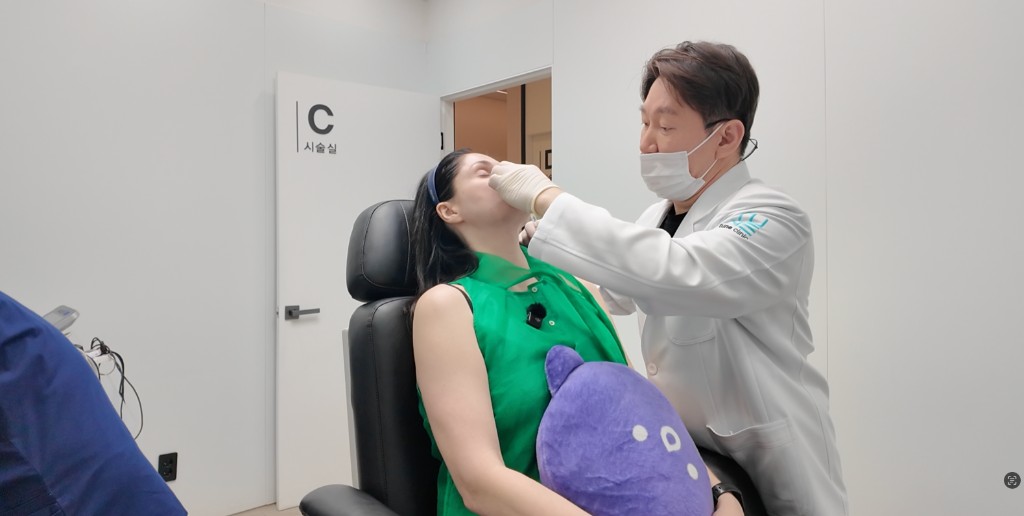
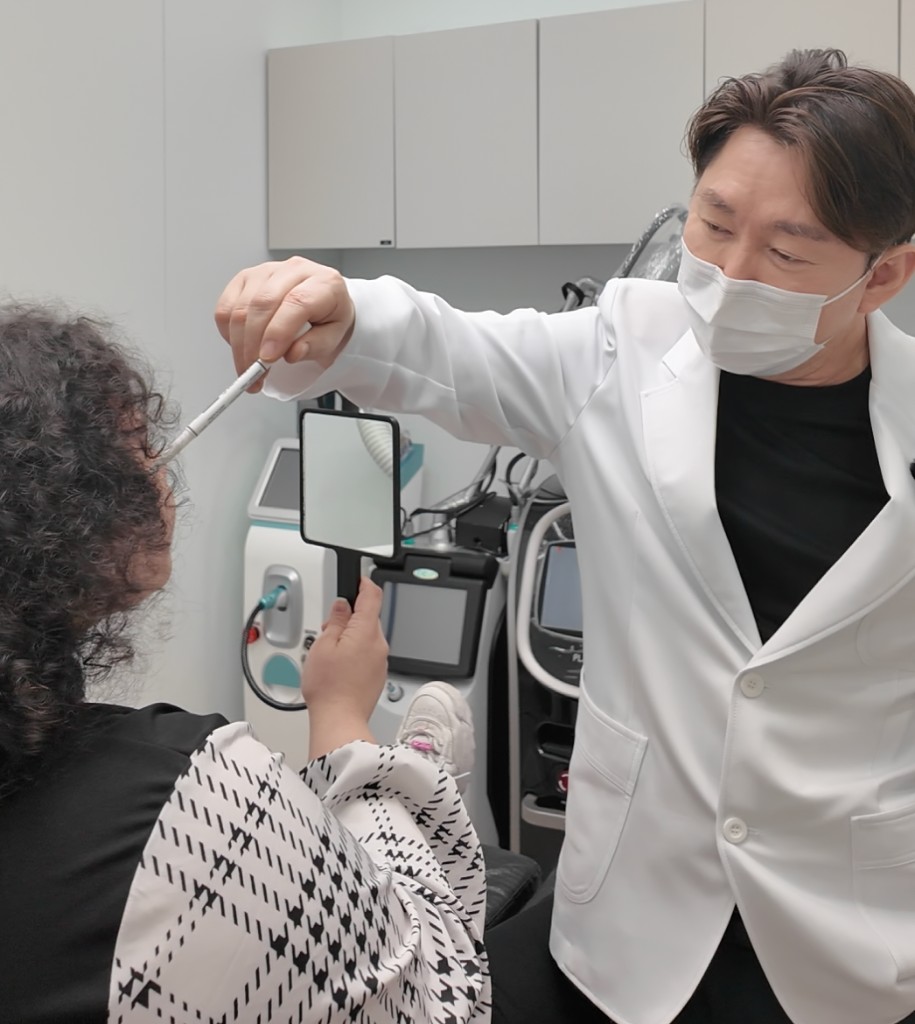
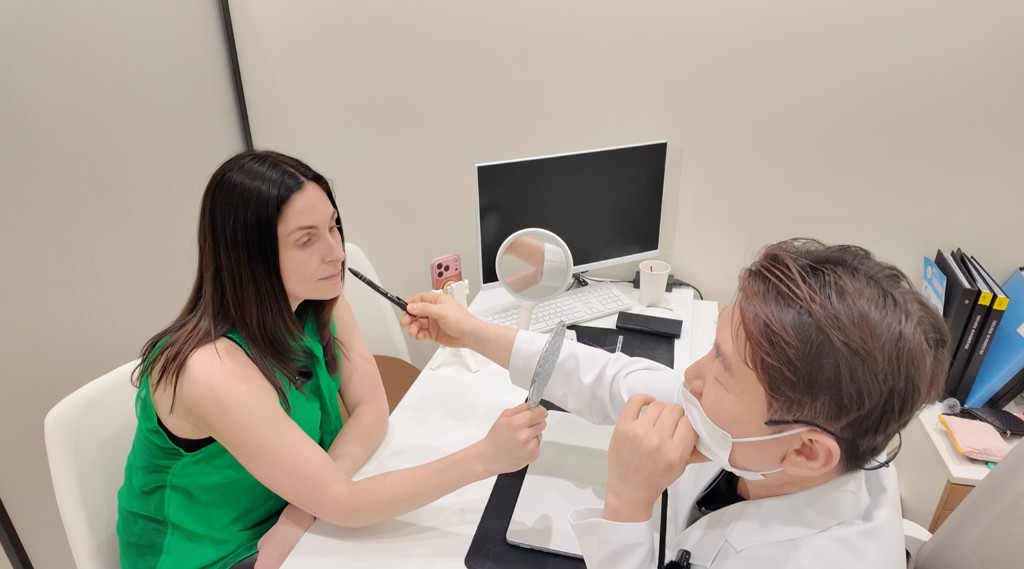
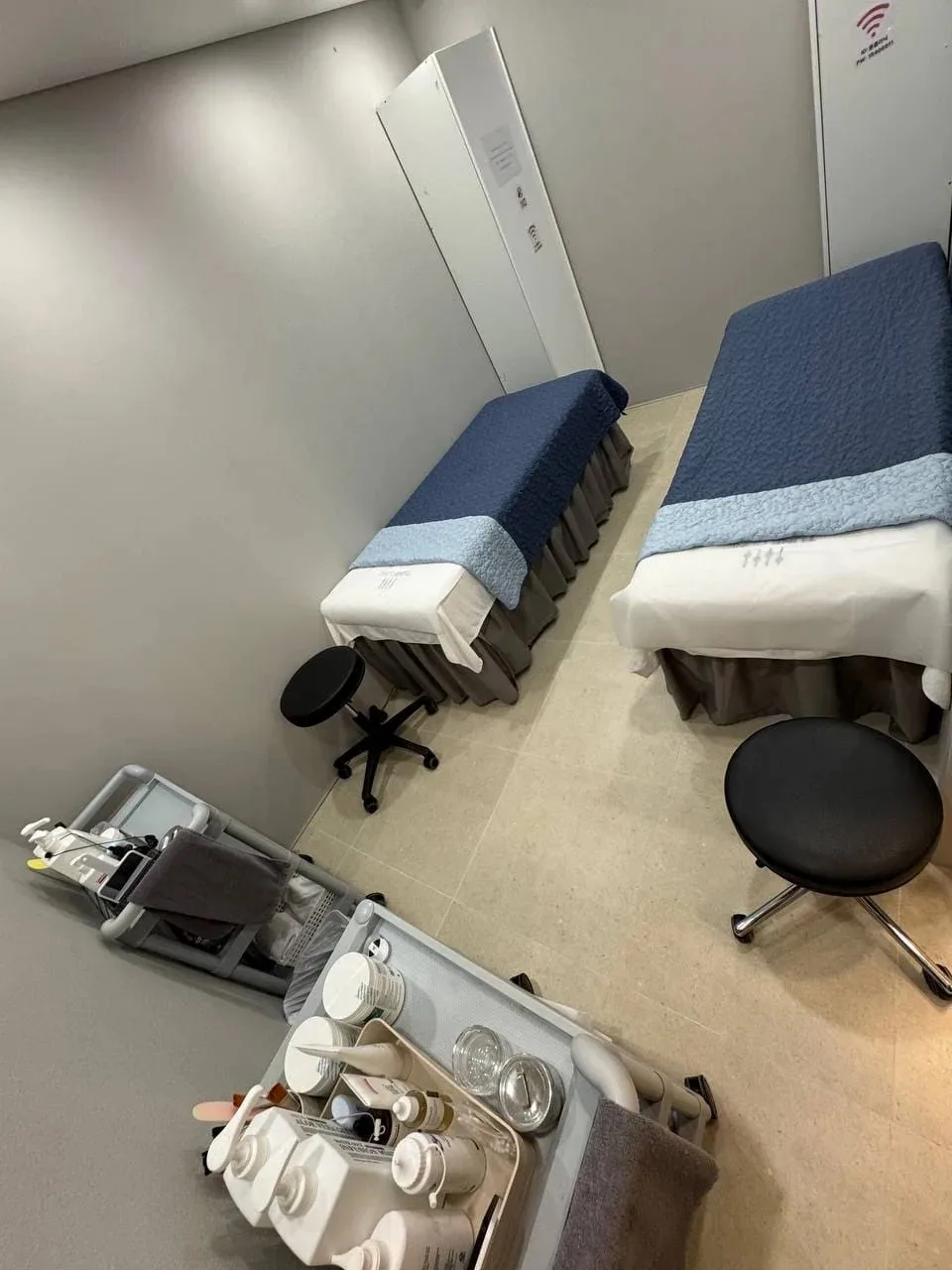
Tune Clinic Apgujeong today: the lobby, waiting areas and treatment rooms where consultations and treatments take place.





Sources
- US FDA. Dermal Fillers (Soft Tissue Fillers). Current page, accessed 2026. Forehead injection listed among unapproved uses in the US; product approval versus site approval; migration, nodules, inflammation and infection as possible problems
- US FDA. Dermal Filler Do's and Don'ts for Wrinkles, Lips and More. Consumer update 2025. Complications, delayed reactions, limits of removal, suitability concerns, difference from muscle-relaxing medicines
- American Academy of Ophthalmology. Vision-Threatening Complications of Soft Tissue Fillers. Ophthalmology 2025. 198 published vision-loss cases, sites and materials involved including forehead and fat, observational comparison of fat and hyaluronic acid, limits of treatment evidence
- Consensus Guidelines for the Management of Tissue Filler-induced Vision Loss in the United Kingdom. Aesthetic Surgery Journal 2026. Immediate emergency transfer, limited evidence for eye rescue treatment, uncertain incidence
- Royal Australian and New Zealand College of Ophthalmologists. RANZCO Guideline for Filler Blindness. 2024. High-concern anatomy, emergency symptoms including eye pain, hyaluronidase and hyaluronic acid versus other injected materials
- Evolving Forehead Augmentation, A Five-step Approach with High G Prime Hyaluronic Acid. Plastic and Reconstructive Surgery Global Open 2024. Forehead contouring is described in research; study enrolled 10 participants
- Singular entry point technique for forehead and temple filler augmentation. Journal of Cosmetic Dermatology 2024. Forehead and temple planned together; three cadavers and two volunteers
- See, Touch, Feel, and Express, Achieving Safe and Natural Outcomes With HA Fillers, An International Consensus. Journal of Cosmetic Dermatology 2026. Individualized planning and communication; expert consensus with disclosed industry ties
- Hyaluronic Acid Filler Longevity in the Mid-face, A Review of 33 Magnetic Resonance Imaging Studies. Plastic and Reconstructive Surgery Global Open 2024. Residual filler seen at two years or more in a selected midface sample
- Korean Hospital Association relaying MFDS. Medical device safety information, cosmetic fillers. 2016. Historical Korean warning on label compliance and blindness from intravascular injection
- MFDS announcement hosted by KDI. Revised cosmetic filler authorization and review guidance. 2025. Updated Korean review guidance; not an approval of any product or site
- PMDA-hosted labeling. Juvéderm Vista Voluma XC, approval 22800BZX00338000. 2023. Product-specific Japanese label; intended regions are midface, lower jaw and temples; comparative clinical trials have not established safety and efficacy outside the midface; excludes infected or inflamed sites and ingredient hypersensitivity
- Ireland Health Products Regulatory Authority. Dermal fillers, information for consumers and clinics. Current page, accessed 2026. Filler injection is invasive; prompt assessment of adverse effects and aftercare questions