
A fat-dissolving injection in Korea is not one standard medicine: the name covers approved bile-acid drugs such as deoxycholic acid and cholic acid, and also clinic mixtures whose ingredients vary from place to place (ASPS 2019). Two Korean labels checked in 2026 are approved only for fullness under the chin in adults, cap a session at 10 mL and require at least one month between sessions (MFDS, deoxycholic acid, MFDS, cholic acid). If a clinic cannot name the ingredient, concentration, treatment site and follow-up plan, wait until it can.
Here is a composite scene, built from common questions and not from a real patient. A visitor planning a short stay in Seoul opens three clinic menus. One offers a contour injection, one a fat-dissolving injection, one an unlimited slimming injection. The descriptions sound alike, and none says whether the syringe holds an authorized medicine or a house mixture. Before choosing an area or a date, that visitor needs an ingredient name, an intended use and a plan for follow-up.
Questions and answers
Is fat-dissolving injection the name of one treatment?
No. It is an umbrella term for several different products. Contour injection, slimming injection and clinic brand names describe a goal. They do not tell you the formula.
The American Society of Plastic Surgeons describes wide variation between mixtures and weak evidence for many of them (ASPS 2019). A public Korean marketplace listing shows the practical result: a clinic answering patient questions states that its contour injection contains no deoxycholic acid at all (marketplace listing). Two treatments with similar names can therefore be different substances with different evidence.
Which ingredients have verified approvals in Korea?
Two bile-acid ingredients have Korean authorizations that can be read in the public register of the Ministry of Food and Drug Safety (MFDS): deoxycholic acid and cholic acid. Both are prescription medicines for moderate-to-severe fullness under the chin in adults.
| Ingredient | Strength | MFDS authorization checked | Approved use | Label limits |
|---|---|---|---|---|
| Deoxycholic acid | 10 mg/mL | August 6, 2021 (MFDS) | Adult submental (under-chin) fullness | Up to 10 mL per session, at least one month apart |
| Cholic acid | 15 mg/mL | September 19, 2025 (MFDS) | Adult submental (under-chin) fullness | Up to 10 mL per session, at least one month apart; liver-function monitoring recommended |
This table is not a full list of products. A March 2026 market report describes further deoxycholic acid authorizations in Korea (March 2026 market report), so any fixed count of approved products goes out of date quickly.
Approval is tied to one product, one country and one use. A Korean authorization does not mean the same product is approved in Japan, China, Thailand or elsewhere. Check your own national medicines register. A CE mark is a European conformity mark for products. It is not a medicine approval (European Commission).
Does evidence for the chin apply to cheeks, arms or the abdomen?
No. The evidence is strongest for fat under the chin, and it does not carry over to other areas. A 2025 review of deoxycholate found the studies behind under-chin treatment stronger and called for better studies in larger areas (Dermatologic Surgery 2025).
This is one of the live arguments in patient forums, where people ask for injections in the arms, abdomen, flanks and cheeks. In September 2026 the US FDA added label warnings about adverse reactions when deoxycholic acid is used outside the under-chin area, including nerve and muscle problems and visual problems, and it recommends against such use (FDA 2026). Those reports do not show how often the problems occur. They do show that an approved ingredient does not make every site an approved use. Jowl treatment also sits close to nerves that move the mouth, as a 2024 paper on serious adverse events describes (ASJ Open Forum 2024).
Will it help me lose weight, treat cellulite or tighten loose skin?
No. These are separate problems from a small local pocket of fat. The Korean indication is improvement of under-chin fullness, and it says nothing about weight reduction (MFDS, deoxycholic acid).
For cellulite, the evidence for injected mixtures is thin, and ASPS lists many such uses as poorly supported (ASPS 2019).
Loose skin is the second argument people have online: does removing fat tighten the area or show the laxity more? Individual accounts disagree and cannot settle it. ASPS names loose skin and poor skin tone as reasons a person may not be a suitable candidate (ASPS). If laxity is the main issue, a lifting or surgical opinion may fit better than an injection. The guide to lifting options for the double chin and lower face covers that assessment.
Does more volume or a steroid-free label mean a better treatment?
No to both. Volume alone says little, because 10 mL of one formula and 10 mL of another can contain very different amounts of active drug. No injectable medicine has an unlimited safe dose, and the Korean labels set a maximum per session (MFDS, cholic acid).
Korean booking platforms often separate steroid and non-steroid contour injections (marketplace listing). The distinction matters, because a corticosteroid is an active drug with its own dose-related effects. Still, steroid-free only tells you what is absent. You need to know everything that is present.
The same applies to viral products. Swissmedic advised against one widely shared lipolysis solution, Lemon Bottle, and reported problems with sampled contents (Swissmedic 2024). Korean news in 2025 reported cosmetic products being supplied for injection (2025 report on cosmetic injections). A cosmetic label or Korean origin does not make a product suitable for injection.
Is the newer cholic acid injection proven better than deoxycholic acid?
Not yet. A 2026 phase II trial compared cholic acid with placebo. Some measures favored cholic acid, but not all prespecified primary endpoints reached statistical significance, and the MRI difference between groups was not significant. Local reactions were reported. The trial had short follow-up, the manufacturer took part, and it made no direct comparison with deoxycholic acid (Aesthetic Surgery Journal 2026).
Newer does not mean safer, and neither does a naturally occurring ingredient. The cholic acid label carries its own precautions, including recommended liver-function monitoring, so it cannot be used on a deoxycholic acid protocol (MFDS, cholic acid).
How much swelling should I plan for, and does more swelling mean it is working?
Plan for visible swelling, and do not read swelling as a score. In pooled trials of the US deoxycholic acid product, swelling occurred in 87% of treated participants (FDA label 2026). That figure belongs to that product and cannot be moved to another formula. Nothing in the sources reviewed here supports using the amount of swelling as a measure of success.
There is no single recovery deadline that fits everyone. The FDA now warns that nodules or masses can persist and may need treatment (FDA 2026). If you have photos, an event or a flight soon after, tell the physician before treatment.
Can I finish treatment during one short trip?
Usually not, if more than one session is planned. Travelers ask online about two rounds within a week (Reddit 2026). Both Korean labels checked here require at least one month between sessions.
Whether one session is enough depends on the product, the site and the person. Forum claims that everyone needs a fixed course are not supported. For a short stay, the question to settle first is who looks after you once you are home.
Who should postpone treatment or have further assessment?
Postpone treatment if the injection area is infected. The Korean deoxycholic acid label recommends avoiding use during pregnancy, and it states there is not enough information on use during breastfeeding (MFDS, deoxycholic acid). Tell the physician about breastfeeding and about any current or previous swallowing difficulty. The US deoxycholic acid label advises avoiding treatment in patients with that swallowing history (FDA label 2026).
Previous surgery in the area also requires assessment of altered anatomy, because nerves and other structures lie close to the treatment site (ASJ Open Forum 2024). Bring a list of your medicines. Having recently given birth, or having a wedding date, is not a medical reason for treatment.
How does the February 2024 post compare with current evidence?
When I wrote about this in February 2024, the post presented a clinic-named slimming injection as an unlimited-volume treatment for any area with fat. It called the treatment safe and comfortable, described it as a way to lose weight, and recommended it to people who wanted no disruption to daily life. It named no ingredient, no concentration and no dose limit, and it listed no side effects.
Set against the evidence available now:
- Weight loss. Local fat treatment is not weight management, and the Korean indication is under-chin fullness only.
- Unlimited volume. The labels checked here set a maximum per session, and volume means little without the concentration.
- Any area. For deoxycholic acid injection, the FDA recommends against treatment outside the under-chin area. The 2024 post does not identify its formula, so its proposed treatment sites cannot be assessed against a product label.
- Daily life. Swelling was very common in trials of an identified medicine, and it can be visible.
- Cellulite, weddings and postpartum care. The post recommended the injection for cellulite and tagged it for wedding and postpartum care. The evidence does not support those uses.
- The formula. Because the post does not identify its contents, evidence for a named medicine cannot be credited to it.
Two developments came after the post. Korea authorized a cholic acid product in 2025. Korean reporting of a 2024 national health technology assessment described mixed and insufficient evidence across 38 studies of fat-dissolving injections (2024 reporting on the national assessment). The original report was not available, so treat that summary with care.
What records and help should I have after returning home?
Leave with a written record of the substance, amount, sites and date, plus a way to reach the treating clinician. A treatment nickname does not identify the substance. Bring the full record if possible, but seek medical care for concerning symptoms even if you do not have it.
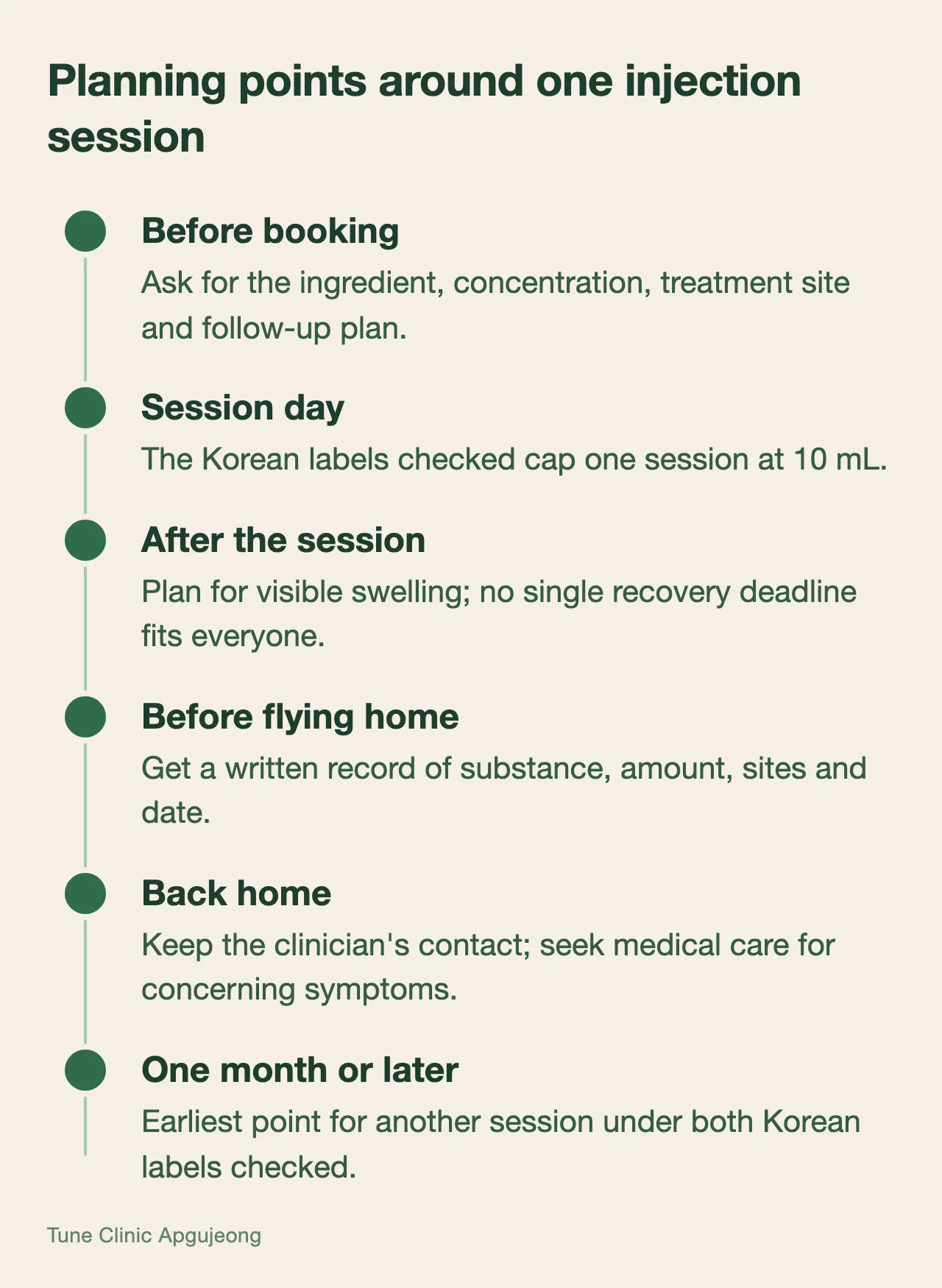
Seek emergency care for breathing difficulty, inability to swallow, or sudden vision changes. Contact a clinician promptly for a new uneven smile, worsening pain or redness, open sores, drainage, or persistent troublesome lumps (FDA label 2026, FDA 2026). Do not wait until you return home. Unapproved products have also been linked to reported harms, which is one more reason to know what was injected (FDA 2023).
What should I ask at my consultation?
Ask for the formula first, then the plan. Without the ingredient and dose you cannot check approval status, allergies or published evidence, and ASPS treats disclosure and a written record as part of proper care (ASPS 2019). This guide explains ingredients and labels in general. It is not a description of any particular clinic's mixture.
- What is the medicine name, or the full ingredient list, and what is the concentration?
- Is this product authorized in Korea, and for which body area?
- Is my treatment area inside that approved use, and if not, what evidence supports it?
- How much will you inject in one session, and what is the label maximum?
- Is my main issue fat, loose skin or both, and would another approach fit better?
- What swelling or lumps should I expect, and what would make you want to see me again?
- Who do I contact after I fly home, and what written record will I receive?
An informed choice needs two parts. The physician's part is to give the whole picture, including the limits and the risks, to put a name to the advice, and to stay reachable after the decision. Your part is to decide with that information in hand, and deciding to wait or to decline is a sound outcome too.
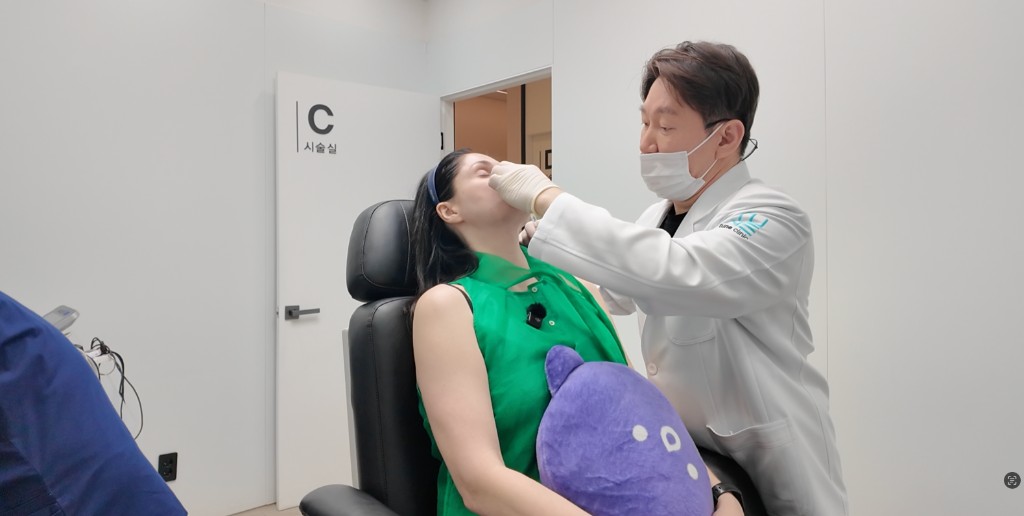
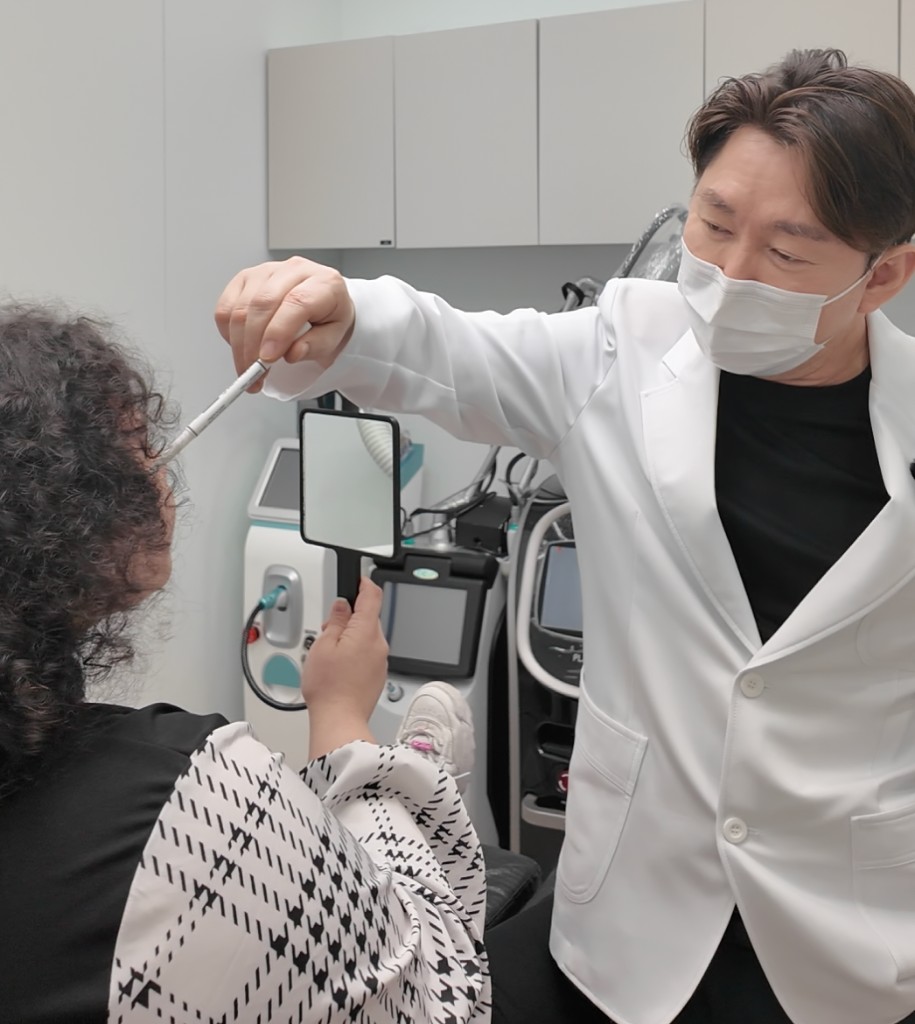
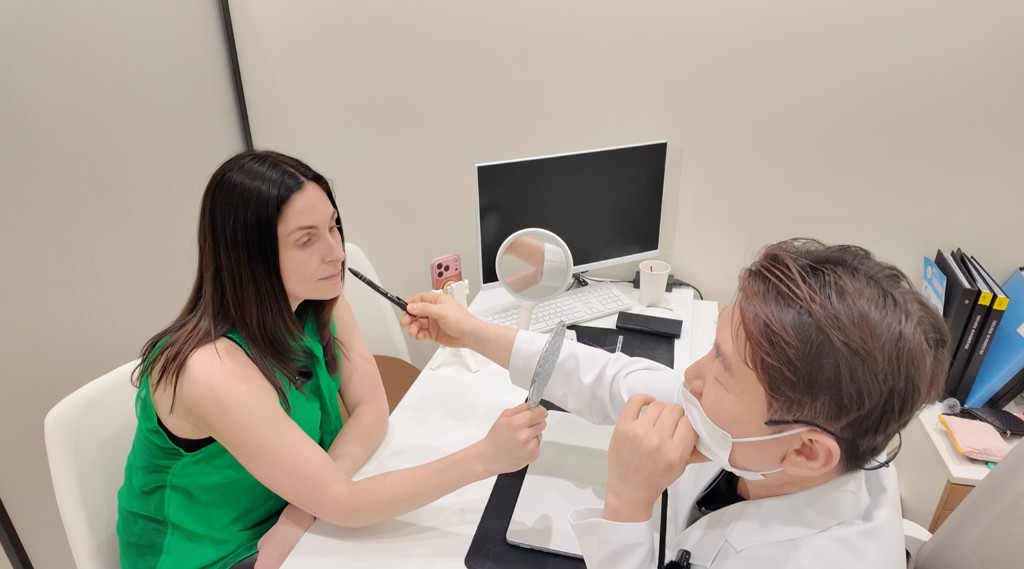
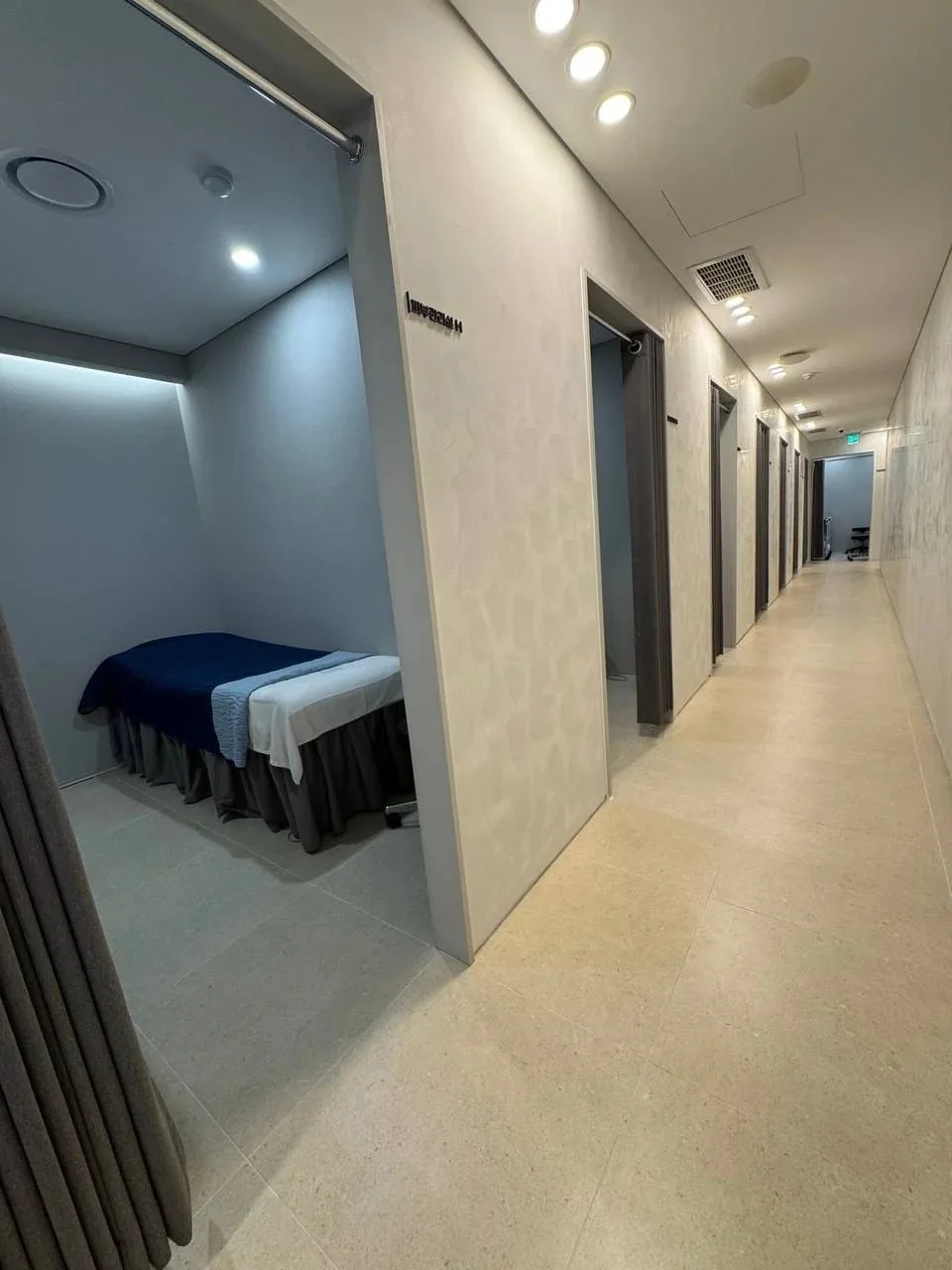
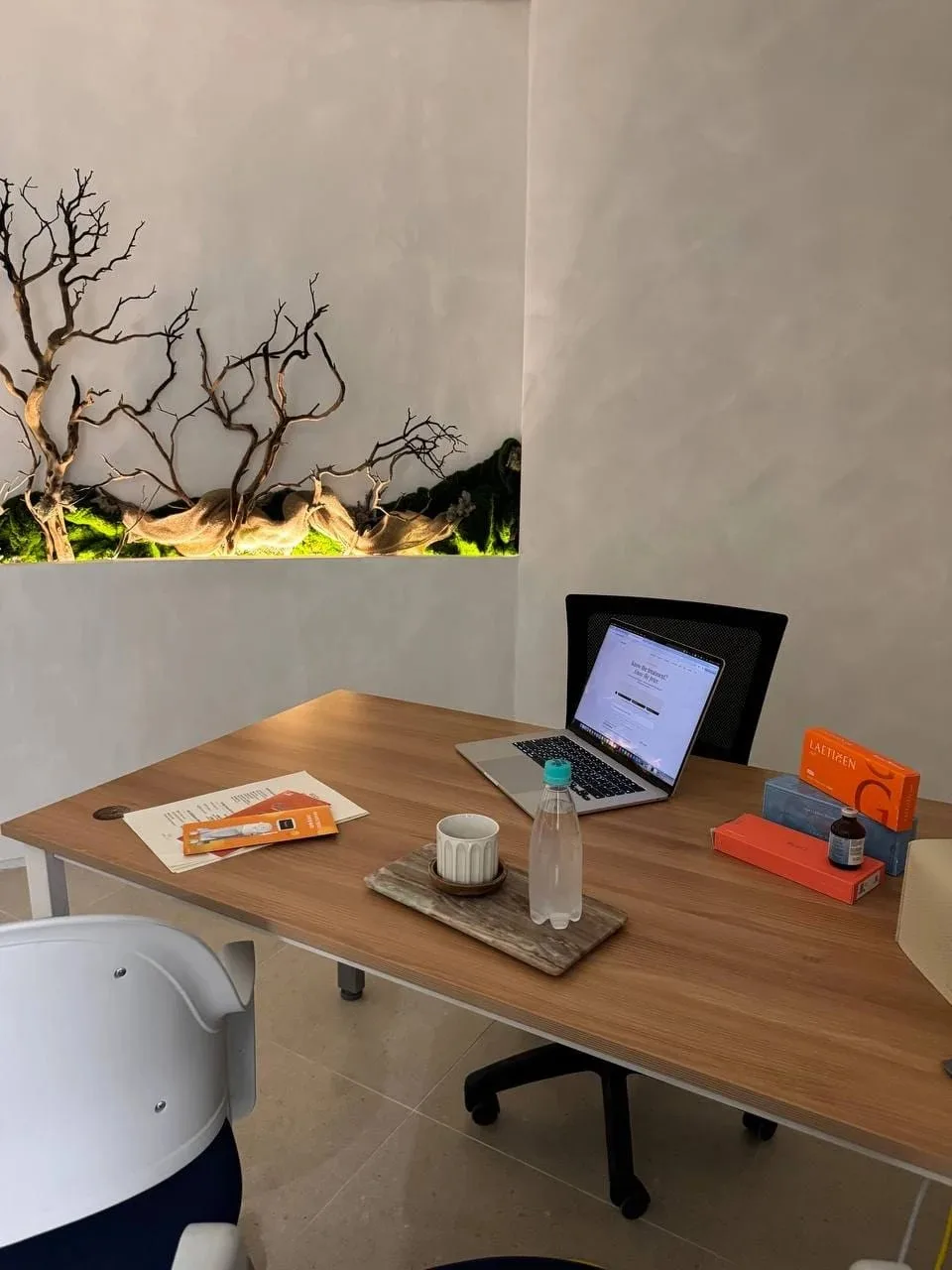
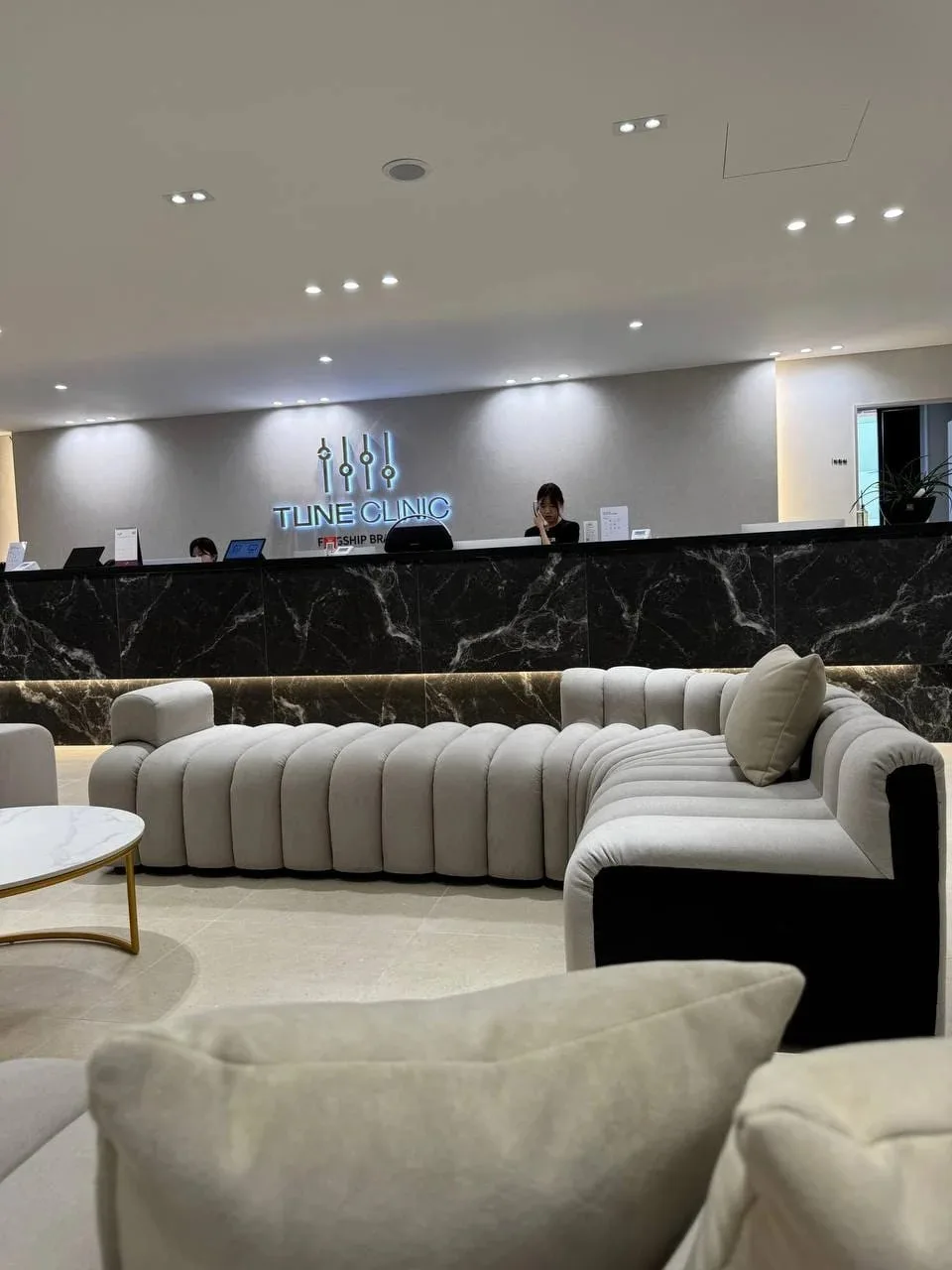
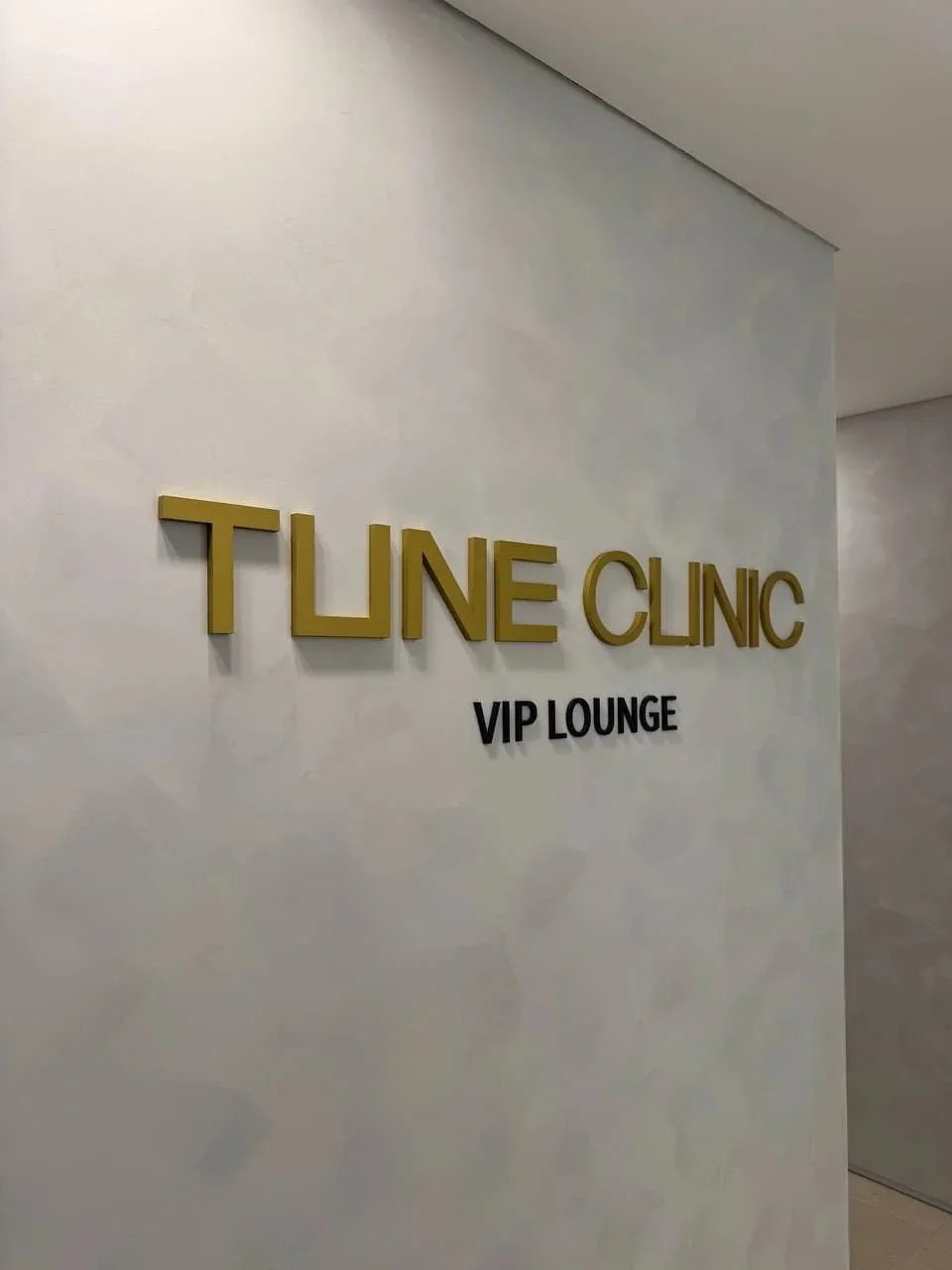
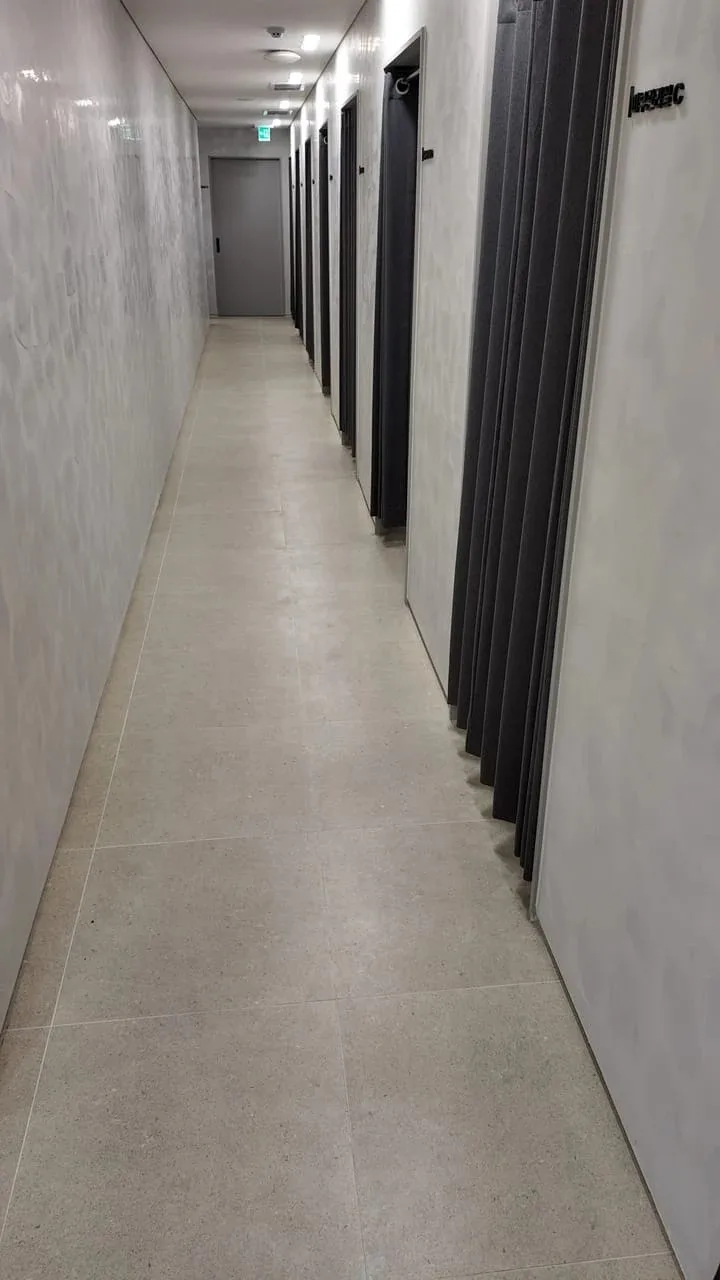
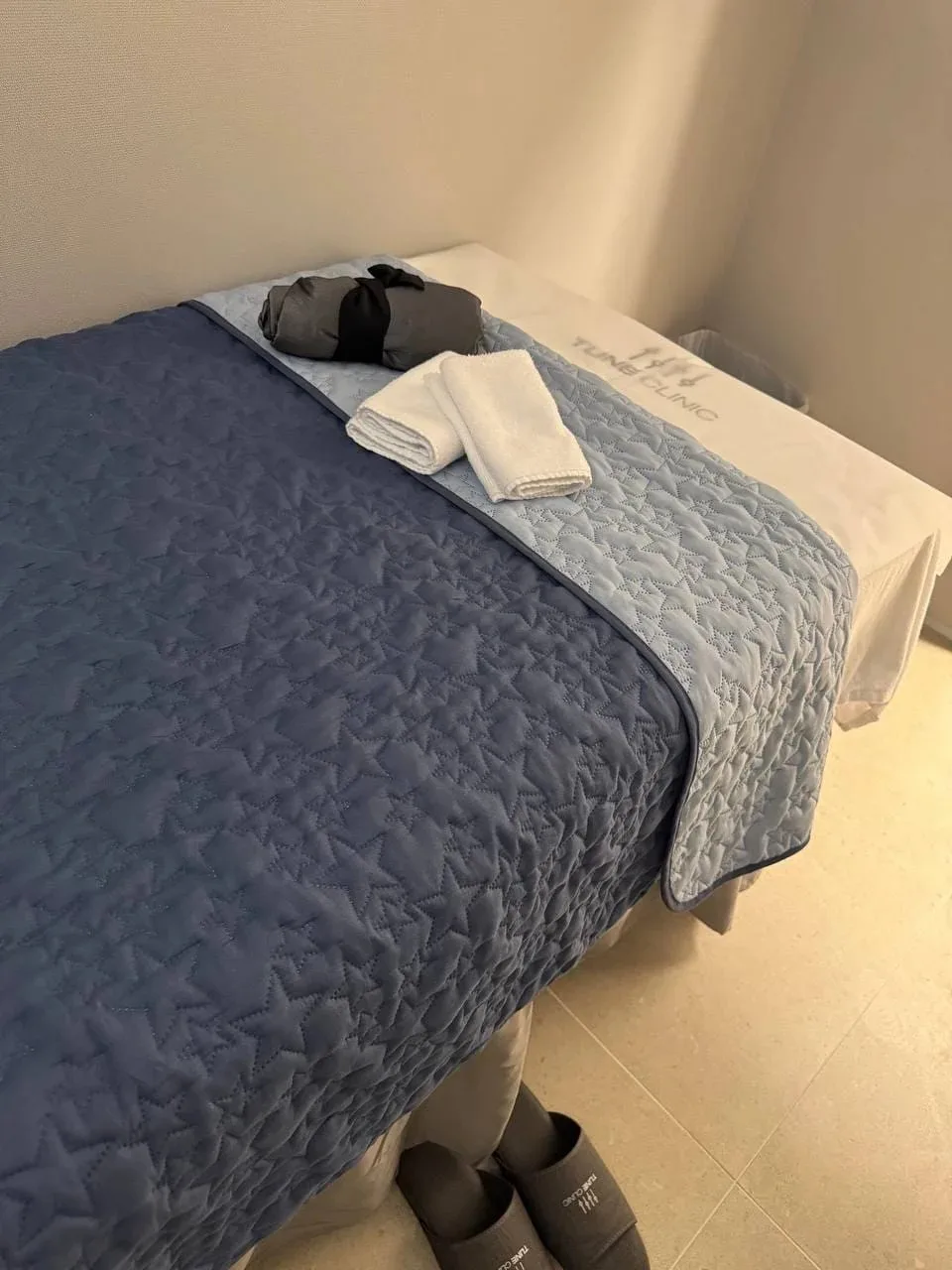
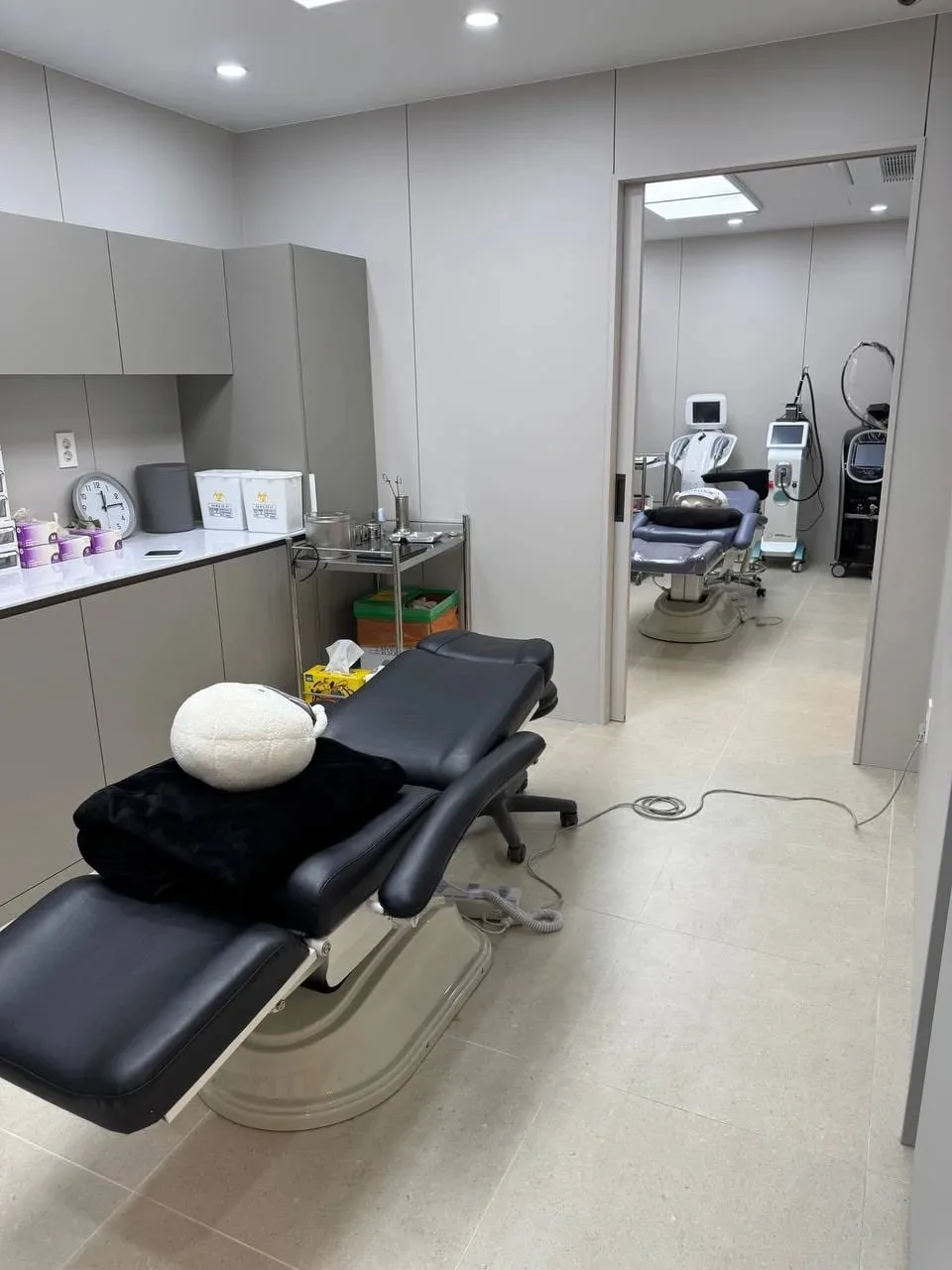
Tune Clinic Apgujeong today: the lobby, waiting areas and treatment rooms where consultations and treatments take place.

Sources
- FDA. FDA Approves Additional Information in Labeling for Kybella Warning of Adverse Reactions Associated with Unapproved Use. Drug Safety Communication 2026. September 2026 warning against use outside the area under the chin, persistent nodules, symptoms needing assessment
- FDA. Kybella prescribing information, revised September 2026. Drugs@FDA 2026. Swelling in 87% of treated participants in pooled trials, swallowing-history warning, skin ulceration and infection warnings
- FDA. Using Fat-Dissolving Injections That Are Not FDA Approved Can Be Harmful. FDA consumer page 2023. Reported harms from unapproved fat-dissolving products
- American Society of Plastic Surgeons. Injection Lipolysis. ASPS procedure page. Patient selection, loose skin and poor tone as reasons a patient may be unsuitable
- American Society of Plastic Surgeons. Policy Statement on Mesotherapy/Injection Lipolysis. ASPS 2019. Mixtures vary widely, weak evidence for many uses, disclosure and recordkeeping
- MFDS. V-OLET (deoxycholic acid) product authorization and labeling. Nedrug 2026. Korean authorization date, strength, indication, session limit, interval, pregnancy and lactation statements
- MFDS. NUVIJU (cholic acid) product authorization and labeling. Nedrug 2026. Korean authorization date, strength, indication, session limit, interval, liver-function monitoring. Record did not load at independent review, so reconfirm every detail against the current label before publication
- Aesthetic Surgery Journal Open Forum. Management of Serious Adverse Events Following Deoxycholic Acid Injection for Submental and Jowl Fat Reduction. ASJ Open Forum 2024. Anatomical risks and assessment of serious adverse events
- Dermatologic Surgery. Deoxycholate for Subcutaneous Fat Reduction, A Review of Current Literature and Potential New Delivery Systems. Dermatol Surg 2025. Evidence is stronger under the chin; larger areas need better studies
- Aesthetic Surgery Journal. A Randomized, Double-Blind, Placebo-Controlled, Dose Ranging, Parallel, Multicenter, Phase II Study of MT921. Aesthet Surg J 2026. Cholic acid versus placebo, mixed primary endpoint results, short follow-up, no comparison with deoxycholic acid
- Korean medical news report on the national health technology assessment of fat-dissolving injections. 2024. Secondary reporting of a 38-study assessment with mixed, insufficient evidence
- Reddit r/KoreaSeoulBeauty. Is only one fat dissolving injection worth it? Or, is it possible to do 2 rounds in less than a week? Reddit 2026. Shows the short-trip question people ask; not evidence of outcomes
- Korean booking marketplace. Public listing and treatment inquiries for fat-dissolving and contour injections. 2026. Shows that a contour injection may contain no deoxycholic acid, and steroid or non-steroid labels; commercial listing only
- Swissmedic. Warning concerning Lemon Bottle lipolysis solution. Swiss federal administration 2024. Regulator advice against a viral product and concerns about sampled contents
- Korean news report on cosmetic products supplied for injection as fat-reduction treatment. 2025. Reported enforcement concern in Korea; not proof about any clinic
- Korean trade report on new and generic fat-dissolving injection launches. March 2026. Additional Korean deoxycholic acid authorizations; the product list keeps changing
- European Commission. CE marking. European Commission web page. What CE marking means and does not mean