
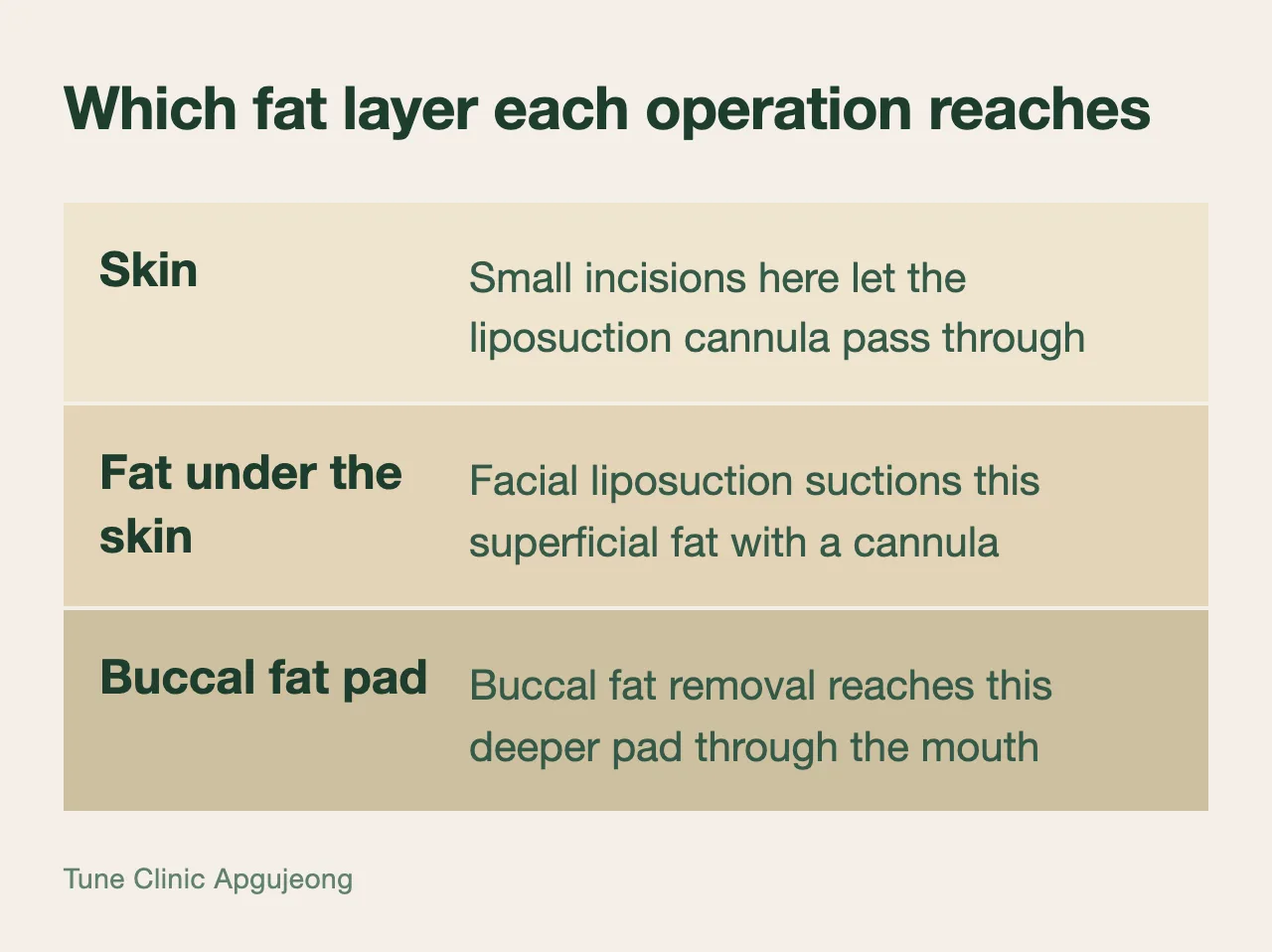
Facial liposuction and buccal fat removal are different operations: facial liposuction suctions fat that lies just under the skin through small skin incisions, while buccal fat removal takes out part of a separate, deeper cheek fat pad, usually through an incision inside the mouth (ASPS, Johns Hopkins Medicine). The decision rule is to identify the tissue before choosing the operation, because a surface bulge or a package name cannot show which fat is responsible. A 2026 systematic review covered 10 studies and 1,123 patients and still found long-term outcomes poorly assessed (systematic review 2026).
A visitor planning a consultation in Seoul has written cheek fat on a note, with two different procedure names beside it. One worry is a rounded lower cheek. The other is fullness under the chin. This scene is a composite written for explanation and does not describe a real patient. In my 2022 post I wrote that many people still confuse these two operations. The useful first step is a diagram, because those two areas may involve different tissues, and the question to settle is which structure is responsible.

Questions and answers
Are facial liposuction and buccal fat removal the same thing?
No. They remove fat from different layers and reach it by different routes. Facial liposuction uses a thin tube called a cannula, passed through small cuts in the skin of the face or neck, to suction fat under the skin (ASPS). Buccal fat removal reaches a deeper fat pad in the cheek through a cut inside the mouth, and the surgeon may reduce the pad instead of taking all of it (Johns Hopkins Medicine).
In Korean, the first is usually written 얼굴지방흡입 and the second 심부볼 지방제거. In English marketing, both can appear under the loose label cheek fat removal. That label does not tell you the method. Ask whether the proposal is suction, surgical excision, an injection or an energy device, and which tissue it targets.
Which parts of the face does each operation target?
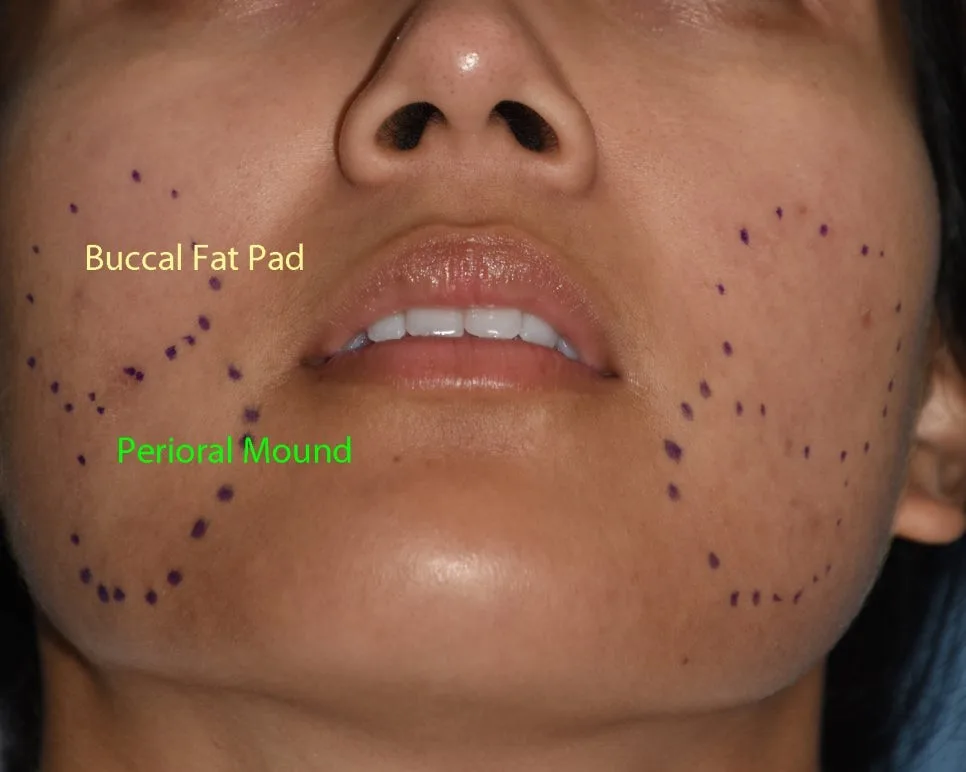
Facial liposuction targets superficial fat, and buccal fat removal targets one deep compartment in the cheek. The buccal fat pad is a distinct structure with several extensions. It sits close to branches of the facial nerve, blood vessels and the duct of the parotid salivary gland (Plastic Surgery Key, Pocket Dentistry). Any diagram of these layers is a simplification, because the layers of the face differ from one area to the next.
| Facial liposuction | Buccal fat removal | |
|---|---|---|
| Fat targeted | Fat under the skin (subcutaneous) | Buccal fat pad, a deeper cheek compartment |
| Usual access | Small skin incisions and a cannula | Incision inside the mouth |
| Areas usually discussed | Lower cheek, jawline, under the chin, neck | Cheek |
| Site-specific risks | Contour depressions, irregularity, scarring | Facial nerve or salivary duct injury, asymmetry, unwanted hollowing |
| Can it be undone? | No, removed fat is not put back | No, later volume correction is a separate procedure |
The table draws on patient information from ASPS, Johns Hopkins Medicine and a scoping review of under-chin liposuction. Neither operation treats every cause of a wide lower face.
How do I know whether my cheek fullness is buccal fat or superficial fat?
You cannot know from a selfie or a pinch test. It takes an in-person examination. Fullness in the same spot can come from superficial fat, the buccal pad, loose skin or other structures. Johns Hopkins describes candidate assessment in terms of facial structure, weight change and skin laxity, and the location of a bulge alone does not settle it (Johns Hopkins Medicine).
In that post my personal opinion was that a bulge confined to one marked cheek area, in someone who wants only that fat gone, was a reason to try buccal fat removal first. I wrote that sagging fat beside the mouth, a double chin and heavy fat toward the neck, where removal is needed overall, were reasons to do facial liposuction first. I labeled both as personal opinion at the time. They were illustrated with pictures, and no validated rule lets a surface location pick the operation.
People also ask whether removing cheek fat will improve jowls. Hanging tissue near the mouth may reflect laxity more than fat, and removing fat is not a lift. If laxity is the cause, removing volume may leave the concern unchanged or add hollowing (Johns Hopkins Medicine).
Will buccal fat removal make me look older in ten years?
Nobody can promise either way, because neither inevitable early aging nor lifetime safety has been established. The 2026 systematic review included 10 studies and 1,123 patients, yet long-term assessment was limited (systematic review 2026). A 2021 systematic review had already described the evidence as low quality, with gaps in long-term follow-up (systematic review 2021).
What is known is simpler. The removed tissue is not readily restored, and both faces and beauty preferences change over time. The British plastic surgery association BAPRAS publicly urged caution about the cheek fat removal trend in 2023 (BAPRAS). A 2026 ASPS article raised similar concerns about how social media face trends age (ASPS). Both are professional commentary, not trials. If your face is already slim, or you are weighing this later in life, ask the surgeon how the plan accounts for future change.
Is partial buccal fat removal safer, and can it be reversed?
Partial removal is still surgery, and it cannot simply be reversed. Surgeons may reduce the pad instead of removing all of it (Johns Hopkins Medicine). Partial removal still carries surgical risks, including asymmetry and a need for revision (ASPS), and the amount proposed should be explained in relation to your anatomy.
Filler or fat transfer afterward is a separate procedure with its own risks. It adds volume. It does not rebuild the original pad.
What complications should I understand before consenting?
Each operation has its own risks, and a small incision does not make either one risk-free. For buccal fat removal, ASPS lists injury to facial nerve branches, injury to the salivary duct, asymmetry, prolonged swelling and possible revision surgery (ASPS). Bleeding and infection are possible with any surgery. For liposuction under the chin, a scoping review documented contour depressions, scarring and other adverse events (scoping review). That review collected reported complications, so it cannot tell you how often they happen. It also does not support the travel-forum idea that deeper or more extensive fat removal is a better operation.
Risks also depend on the anesthesia used and your health. Discuss anesthesia complications with the team and disclose all medical conditions, medicines, supplements and smoking before surgery (ASPS, Johns Hopkins Medicine).
General liposuction guidance also notes bruising, swelling and the chance that more surgery is needed (NHS). Much of that guidance is written for body liposuction, so its figures and timelines should not be copied onto a small facial procedure.
Why do published complication rates disagree?
They disagree because the studies count different things in different groups of patients. A 2025 meta-analysis of 12 studies and 308 patients reported a pooled complication prevalence of 25%, with a 95% confidence interval of 4% to 46% and high variation between studies (meta-analysis 2025). Its events included swelling, pain and restricted mouth opening. The 2026 systematic review reported 39 complications among 921 procedures, or 4.2% (systematic review 2026).
These numbers cannot be compared directly. If a study counts expected early symptoms such as swelling as complications, its rate rises. Neither figure is your personal risk, and the lower, newer number is not proof that the operation became safer.
Are fat-dissolving injections or energy devices a safer substitute?
Not automatically. Each alternative needs its own diagnosis, product check and approved-use check. On September 15, 2026, the US FDA issued a safety communication on deoxycholic acid injection, a medicine that breaks down fat cells. In the United States, approved deoxycholic acid injection products are indicated to improve the appearance of moderate to severe fullness associated with fat under the chin in adults. The FDA recommends against using them outside that area and warns of persistent nodules or masses (FDA).
That US status says nothing about Korean authorization. In Korea, the term contour injection covers different formulations, so it is not one standardized treatment. Ask for the exact ingredients and the area each product is authorized for.
Energy devices work by different mechanisms and carry device-specific indications for particular body areas (FDA). A brand or platform name does not show that a device suits cheek fat. Massage and facial exercises are a separate matter. ASPS commentary distinguishes temporary changes in fluid puffiness from permanent contour change and finds limited support for lasting effects from facial exercises (ASPS).
What does recovery involve, and when is the contour settled?
Recovery has two parts, the early swelling and the later settling. Bruising and swelling are expected after liposuction, and recovery varies between people (NHS). After buccal fat removal the wound is inside the mouth, so oral care and diet follow the surgeon's instructions. The final buccal contour is usually visible within a few months, with individual variation (ISAPS). A photo taken a few days after surgery shows early healing only.
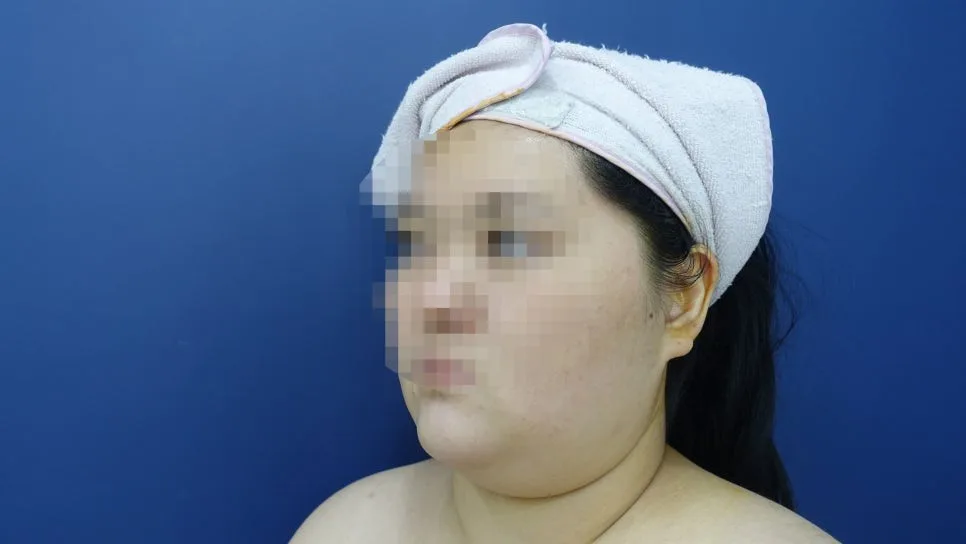
Small incisions are still incisions. Whether they are stitched, and whether a compression garment is used, depends on the technique, so ask. The sources used here give no reliable timeline for firm areas after facial liposuction, and body liposuction timelines should not be borrowed. Contour irregularities are among the reported complications (scoping review), so a firm or lumpy area that persists, grows or becomes painful should be examined.
Some symptoms are emergencies. Seek emergency care immediately for breathing difficulty, rapidly expanding neck swelling, chest pain or an unusual heartbeat; do not wait for the clinic to reply (Johns Hopkins Medicine, scoping review). In Korea the emergency number is 119. At home, use your local emergency number. Contact the surgical team promptly for worsening pain or swelling, fever, redness, pus or bleeding.
How long should I stay in Korea before flying home?
Long enough for a wound check and a personal clearance from the surgeon who operated, which no general rule can replace. NHS guidance for surgery abroad suggests waiting 5 to 7 days before flying after liposuction and 7 to 10 days after facial cosmetic procedures (NHS). Those are general intervals from a page last reviewed in December 2022. They are not written for facial liposuction specifically.
Before you book, get a named follow-up plan. It should say who reviews the wound, how to reach the team after you leave and where you would go for urgent care at home. Japan's health ministry gives similar advice to patients, including understanding the risks and seeking a second opinion (MHLW). Being presentable for photos is a different thing from being fit to fly.
Which claims in the older posts does the evidence no longer support?
The 2022 post explained the two operations by layer and route, and current sources describe them the same way. Three other points need updating.
The 2022 post used illustrations to describe two patterns of fullness and offered personal opinions about treatment selection. Those illustrations cannot establish an individual diagnosis.
In 2022 I listed contour injections as the lightest of the available options. The FDA's 2026 communication on one fat-dissolving medicine shows that an unspecified injection cannot be assumed to be minor (FDA).
A 2023 clinic post promoted a branded facial liposuction technique. It said one session would complete the contour, that no stitches were needed and that swelling and downtime were minimal, and it showed photos from day five. Those promotional claims are not substantiated by the evidence cited here. Contour irregularity and further surgery are possible after liposuction (NHS, scoping review), and day five is an early healing stage. The same post said nonsurgical treatments have only short-term effects. That is too broad, since effects depend on the treatment and some destroy fat cells (FDA).
What should I ask before agreeing to either operation?
- Which tissue is causing my fullness: superficial fat, the buccal fat pad, loose skin or something else?
- Is your proposal suction, excision, an injection or an energy device, and why that one?
- If you recommend two procedures together, what is the separate reason for each?
- How much do you plan to remove, and what would hollowing or asymmetry look like if it happened?
- What anesthesia will be used, and what are its risks for me?
- Do you perform this operation here, who will operate, and who manages complications after I fly home?
- Which symptoms are emergencies, and whom do I call at night?
- What exactly is in any injection you propose, and what area is it authorized for in Korea?
- What would you advise if I decided to wait or to do nothing?
Removing fat is hard to undo, and the long-term evidence is limited. The physician's responsibility is to examine before recommending, to explain the whole picture, including the option of doing nothing, and to stay reachable after the operation. The decision is then yours, made with full information, and postponing or declining is a sound outcome too.
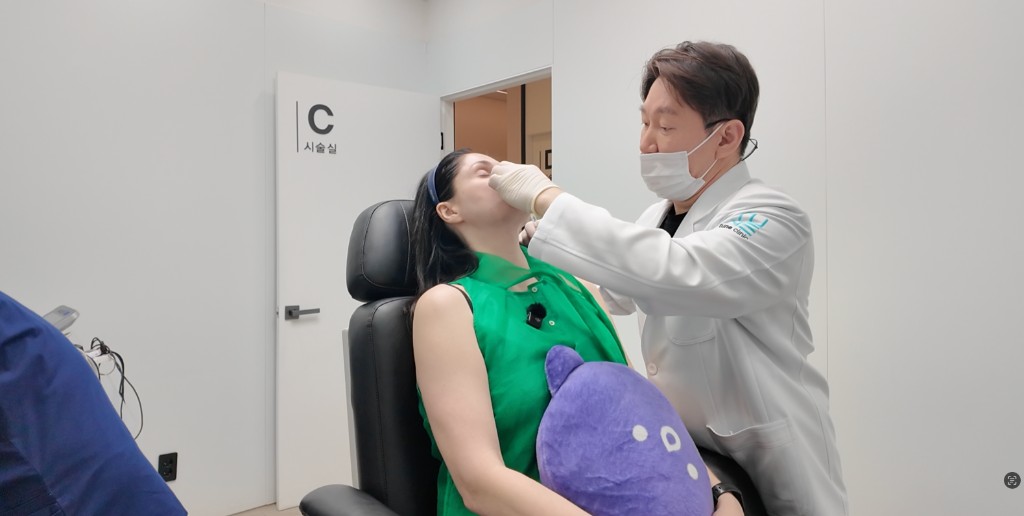
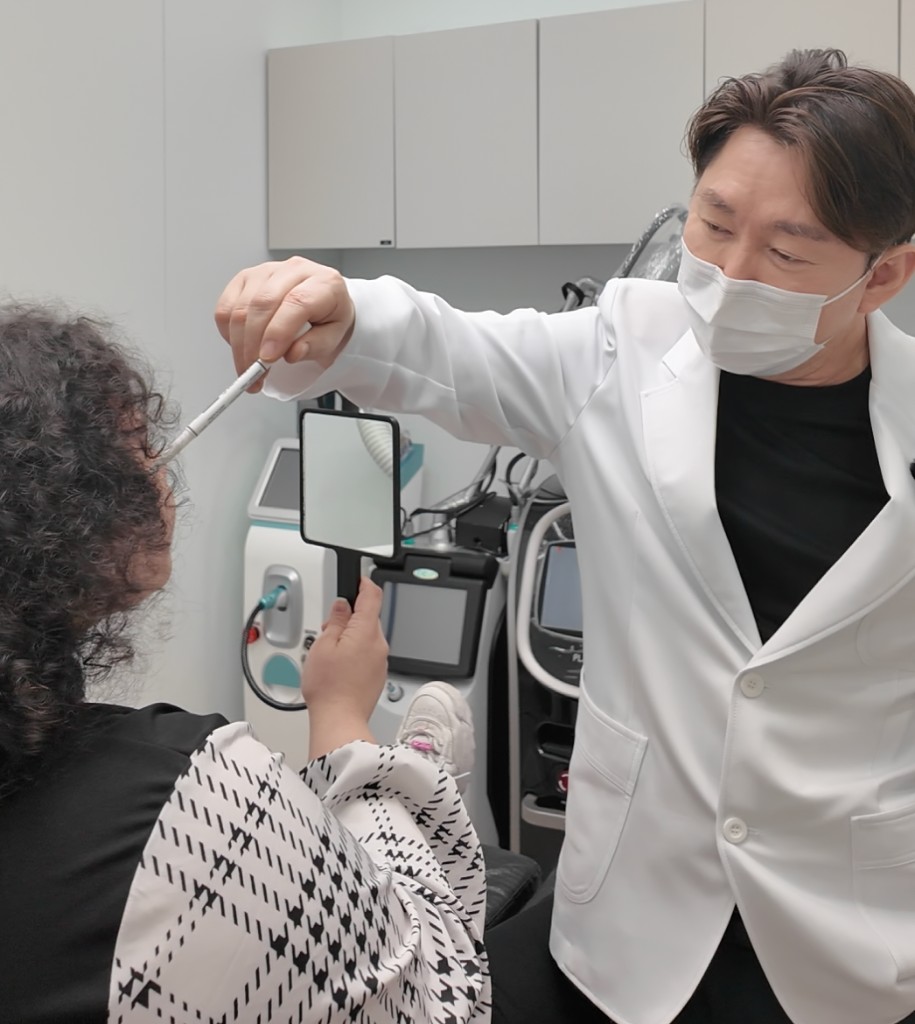
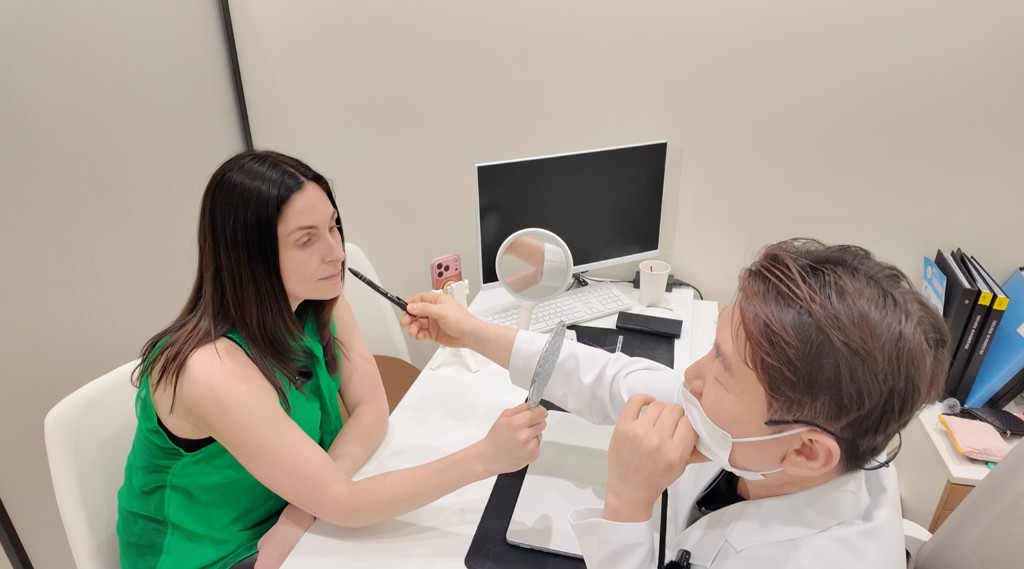
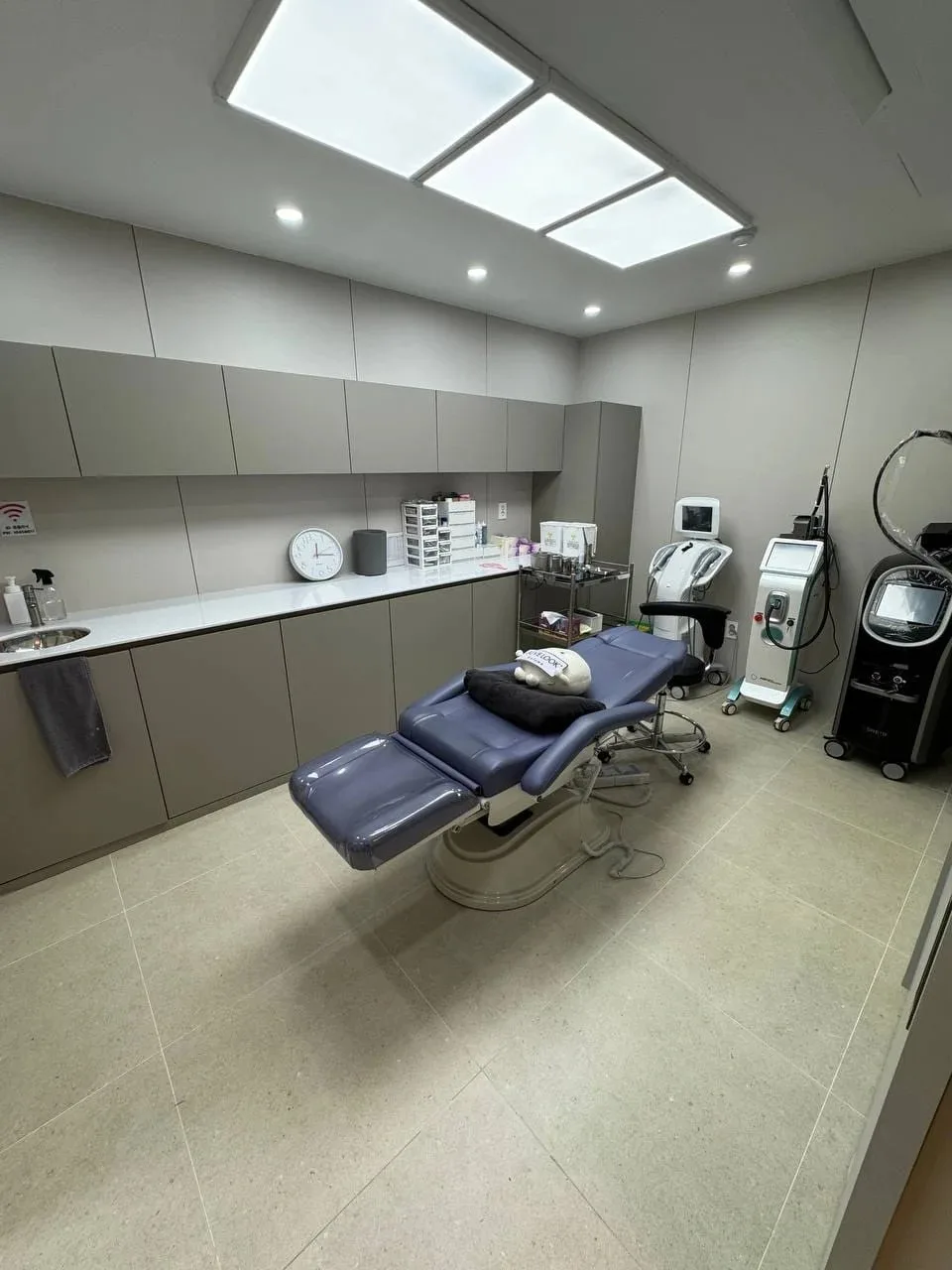
Tune Clinic Apgujeong today: the lobby, waiting areas and treatment rooms where consultations and treatments take place.




Sources
- Thieme, PubMed record. Aesthetic Outcomes, Complications, and Reported Long-Term Effects of Buccal Fat Pad Reduction: A Systematic Review. 2026. 10 studies and 1,123 patients; 39 complications in 921 procedures; limited long-term assessment
- Journal of Cranio-Maxillofacial Surgery, PubMed record. Prevalence of complications of buccal fat removal: A systematic review and meta-analysis. 2025. 12 studies and 308 patients; pooled prevalence 25% with 95% confidence interval 4% to 46%; event definitions
- Johns Hopkins Medicine. Buccal Fat Removal. Expert Q&A 2026. Intraoral access, partial reduction, candidate assessment by facial structure, weight change and laxity; anesthesia complications; symptoms needing emergency care
- American Society of Plastic Surgeons. How do laser- and ultrasound-assisted liposuction work? Patient information. Cannula suction of fat under the skin through small incisions
- NHS. Liposuction. Patient guidance. Incisions, bruising, swelling, variable recovery, possible further surgery; general liposuction guidance
- International Society of Aesthetic Plastic Surgery. Cheek Reduction Surgery: Buccal Fat Removal. Patient information. Intraoral approach, oral-care recovery, final contour usually visible within a few months
- American Society of Plastic Surgeons. Buccal Fat Removal Risks and Safety. Patient information. Nerve and salivary duct injury, asymmetry, swelling, revision, anesthesia risks
- Medicina Oral, Patologia Oral y Cirugia Bucal, PMC. Complications associated with submental liposuction: a scoping review. 2022. Contour depressions, scarring, hematoma with airway obstruction and other reported complications; cannot estimate incidence
- Medicina Oral, Patologia Oral y Cirugia Bucal, PMC. Buccal fat pad excision for cheek refinement: A systematic review. 2021. Low-quality evidence and long-term follow-up gaps
- British Association of Plastic, Reconstructive and Aesthetic Surgeons. Stay well padded: surgeons urge caution on cheek fat removal craze. Press release 2023. Professional caution about trend-driven cheek fat removal
- American Society of Plastic Surgeons. Is viral beauty aging well? Plastic surgeons on the face trends filling your feed. News 2026. Commentary on lasting effects of face trends; limits of massage and facial exercises
- US Food and Drug Administration. Drug safety communication on deoxycholic acid injection and adverse reactions with unapproved use. 2026. September 15, 2026 communication; submental indication in adults; advice against use outside that area; persistent nodules or masses
- US Food and Drug Administration. Non-Invasive Body Contouring Technologies. Consumer information. Different mechanisms, risks and device-specific indications by body area
- NHS. Cosmetic surgery abroad. Patient guidance, last reviewed 2022. Follow-up planning and general no-flying intervals
- Plastic Surgery Key. Indications and Techniques for Buccal Fat Pad Excision. Educational chapter. Buccal fat pad as a distinct deep compartment and its neighboring structures
- Pocket Dentistry. The Buccal Fat Pad Flap. Educational chapter. Distinct buccal fat pad anatomy
- Japan Ministry of Health, Labour and Welfare. Patient caution site on aesthetic medicine. Patient advice on understanding risks and seeking a second opinion