
Scalp micropigmentation (SMP) in Korea can suit thinning hair when your goal is camouflage and not regrowth, because it is a cosmetic tattoo that places pigment dots in the scalp to reduce the contrast between hair and skin, and it does not create hair follicles. Long-term evidence is thin: a 2025 case series enrolled 10 people and tabulated six-month follow-up for only five (Wiley 2025). A simple rule helps. If you want hair to grow, look into hair-loss diagnosis and treatment. If you want less visible scalp, confirm the diagnosis and scalp stability first, then discuss how long pigment stays.
A visitor planning a trip to Seoul has saved two photos. One shows a closely shaved head with a sharp hairline. The other shows long hair with a less visible part. Both are labeled SMP. This is a composite scene, not a real patient. In the consultation room, the first task is to separate the wish for more hair from the wish for less visible scalp. Only then does pigment enter the discussion.
Questions and answers
Is scalp micropigmentation a tattoo, or does it grow hair?
It is a tattoo, and it does not grow hair. Pigment is placed as small dots in the upper dermis of the scalp, where it imitates short stubble or darkens the skin between existing hairs (Karger 2022). The International Society of Hair Restoration Surgery states plainly that SMP is a form of tattooing, whatever name a provider uses for it (ISHRS).

What changes is an optical effect. The number of follicles, the thickness of each hair and the real density of your hair stay the same. The 2023 posts listed SMP beside hair-loss treatment terms, which could suggest that it treats hair loss. It does not. Names such as scalp art makeup or semi-permanent scalp tattoo are marketing choices, so ask what pigment is used, how deep it is placed and what effect is intended.
Is covering a widening part different from a shaved-head hairline?
Yes, these are two different uses of the same technique. In the shaved-head design, dots imitate stubble across the scalp and the hair is kept very short. In density camouflage, pigment is placed between existing longer hairs to reduce the pale scalp showing through a part or crown (ISHRS).
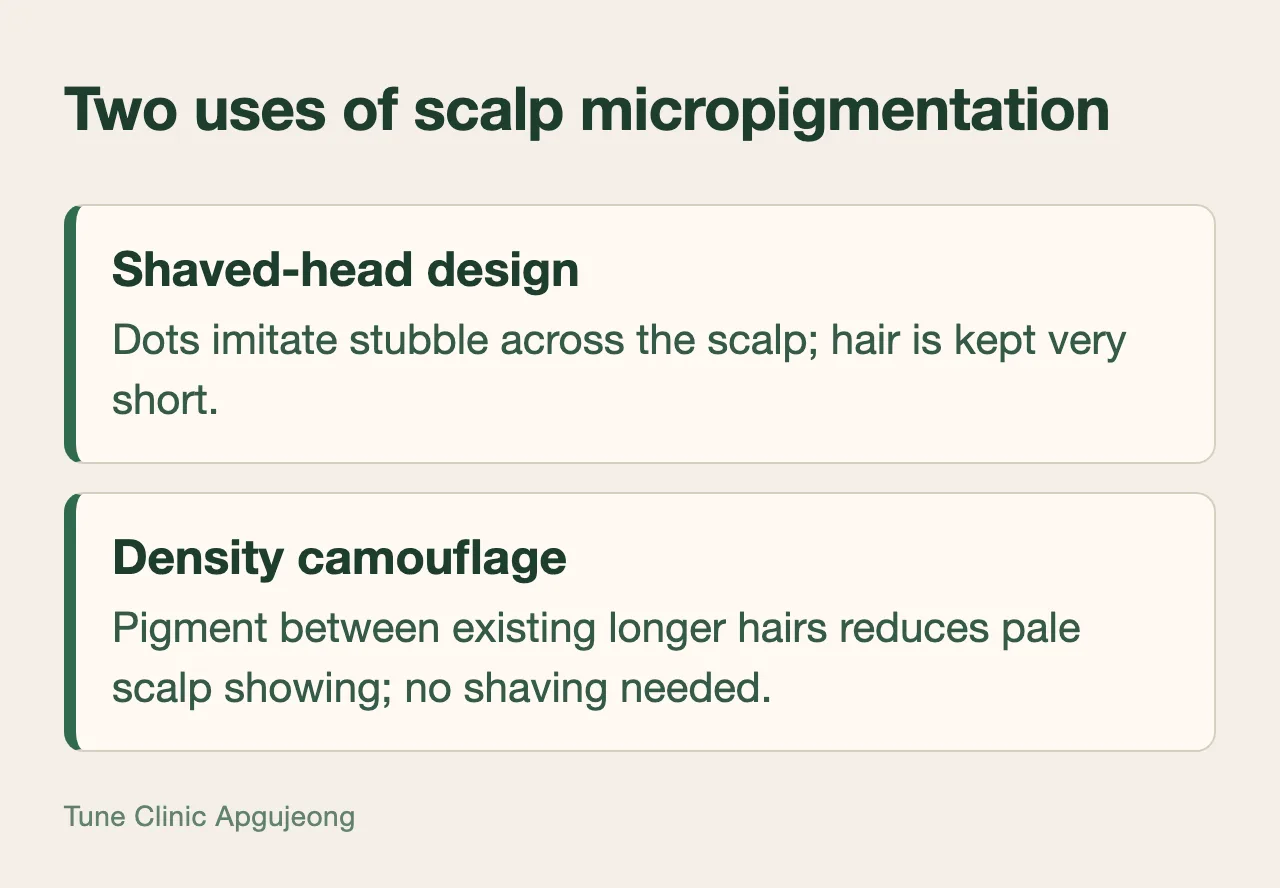
Density camouflage can be considered for a widening part beneath longer hair, and the hair does not need to be shaved. Pigment cannot supply length, movement or texture. It works only while enough hair remains over it. If thinning continues, the pigment stays where it was placed and may become more visible. A design should plan for the hair you may have in ten years, as well as the hair you have today.
Do I need a hair-loss diagnosis before SMP?
Yes. A widening part is a sign, and it does not tell you the cause. Age-related and hereditary thinning are common, but hair loss can also come from autoimmune disease, inflammatory scalp conditions, traction from hairstyles and other causes (AAD). Some of these can be treated. Some get worse if they are covered and ignored.

In my 2023 post I recommended an in-person consultation before SMP. A current assessment should establish the cause of the hair loss and examine the scalp for disease and scarring. It should also look at the remaining hair and the hairstyle you intend to wear.
When should SMP be postponed or avoided?
SMP should wait when the scalp is actively inflamed or infected, or when hair loss is unexplained. ISHRS patient guidance treats active inflammatory scalp disease as a reason to defer and advises a long period of stability before tattooing in scarring alopecia (ISHRS).
Published criteria for that stable period differ. A 2026 study in scarring alopecia accepted patients whose disease had been inactive for at least six months. It enrolled only 18 people, excluded active disease, and still reported color change and pigment diffusion in some participants (JCAS 2026). There is no universal waiting period, and scarred skin holds pigment less predictably than normal scalp (JCAS 2017).
A related worry online is that repeated needling could cause shedding. Forum reports cannot show cause or frequency, and no study in the sources reviewed here settles the question.
Does semi-permanent mean it will fade away completely?
No. The word semi-permanent does not promise that the pigment will disappear. In 2023 I described the service as semi-permanent, and the posts named no pigment or technique. ISHRS notes that persistence varies with both (ISHRS). Pigment may fade and still remain visible for a long time.
Fading and spreading are separate problems. Pigment placed too superficially tends to fade early. Pigment placed too deep can diffuse, so that dots blur or merge (JCAS 2017). Color shift over the years is reported, but the evidence supports neither the claim that it always happens nor the claim that it never does. Your hair may also turn gray while the pigment keeps its color (JCAS 2017). No dependable expiry date exists. Treat the decision as accepting a lasting tattoo that may need maintenance or correction.
Will it look the same in daylight as in clinic videos?
Not necessarily. Fresh pigment, a chosen hairstyle, studio lighting and selected cases can all make results look stronger than healed pigment looks outdoors. News coverage in September 2026 described how social media frames SMP as a quick fix (September 2026 reporting). In public forums, people ask openly whether the content they see comes mostly from providers (Reddit 2026).
This shows a problem with information quality. It does not show how often results disappoint. Ask to see healed examples, months after the last session, in ordinary daylight and at the hair length you plan to wear.
Should I choose SMP, a hair transplant or medical treatment?
Choose by goal, because the three options do different things. A transplant moves living follicles and involves surgical recovery and postoperative care (ASPS). SMP adds pigment only (Karger 2022). Medical treatment depends on the diagnosis (AAD).
| Option | What it changes | What it cannot do |
|---|---|---|
| SMP | Visible contrast between scalp and hair | Add hair, stop hair loss, fade on a set date |
| Hair transplant | Moves living follicles to a new area | Stop ongoing loss elsewhere, avoid recovery time |
| Medical treatment | Targets the cause, where one is found | Work the same for every diagnosis |
In 2023 the posts under my name presented SMP as a natural and simple way to fill in thinning hair without a transplant. They also said that most people who have a transplant go on to add SMP, and that very many people are satisfied with SMP alone. The sources reviewed here do not establish how commonly transplant recipients add SMP or how many people are satisfied with SMP alone. Pigment camouflage and transplanted follicles are not equivalent, and neither procedure replaces the other. Some people combine them, and some choose a conservative haircut and neither.
ISHRS patient guidance recommends waiting at least a year after hair transplantation before SMP, to allow graft growth and healing (ISHRS). Discuss the intended treatment area and any special circumstances with your transplant physician.
How many sessions will I need during a trip to Korea?
Expect more than one session, and do not assume a short trip is enough. When I wrote about this in 2023, the schedule listed for hairline SMP was a second session at two weeks and a third at one month. That was one clinic's arrangement at the time. It is not a clinical standard or a statement of what the clinic offers now. The 2025 case series used weekly sessions (Wiley 2025), and published protocols vary.

Healing and reassessment should set the interval. Aftercare rules for washing, exercise, swimming and hats also differ by pigment and technique, and the evidence for any single timetable is thin. Before you book flights, get the staged plan in writing, including who checks healing and who handles follow-up once you are home.
Who can legally perform SMP in Korea, and is the ink approved?
As of November 12, 2026, the rules are in transition. In May 2026 the Supreme Court changed its earlier view that ordinary tattooing by non-doctors is unlicensed medical practice (Supreme Court of Korea). A November 6 news report describes an SMP acquittal that applied this change (November 2026 court reporting). The Tattooist Act takes effect on October 29, 2027. Ministry guidance says this does not mean unrestricted practice, and that tattoo removal remains a medical act (Ministry of Health and Welfare). A private academy certificate is not the future national license.
On ink, be careful with approval badges. In the United States, no color additives are approved for injection into the skin, so a claim of FDA-approved pigment is not reliable (FDA). In Korea, tattoo dyes came under hygiene-product management on June 14, 2025 (MFDS). The EU restricts certain substances in tattoo inks, which is different from approving a treatment (EUR-Lex). Status in Japan, China and Thailand depends on the specific product and is unverified here.
A new needle does not settle ink safety either. Contamination has been found in sealed bottles (FDA guidance), and a May 2025 alert named specific contaminated lots of one ink brand (FDA alert). The original posts do not identify the clinic's pigments, so this alert cannot establish whether any product used here was affected. Ask for the pigment name, manufacturer, importer and lot number.
What are the risks of SMP, and when should I seek medical help?
Tattooing carries risks of infection, allergic reaction and scarring (FDA). The 2023 posts called the service safe and professional but gave no adverse-event data, so that description cannot be checked. Cosmetic disappointment, such as dots that blur or a line that no longer suits your hair, is a separate risk from these medical ones.
Seek prompt medical assessment for a new or worsening rash, red bumps, spreading redness, increasing pain, pus, fever or a wound that is not healing after SMP. Infection and allergy can look alike at first (FDA alert). Do not wait for the next cosmetic follow-up or assume the reaction is normal healing. If you need an MRI later, tell the imaging team about the tattoo (FDA).
Can unwanted SMP be removed?
Sometimes, but removal is not a simple fallback. The FDA warns that complete tattoo removal may not be possible and that removal can leave scars (FDA). Do not attempt removal with creams, ointments or DIY kits. The FDA warns that these products can cause rashes, burns and scars. Seek medical assessment for removal options.
A Korean retrospective series described 120 people who sought correction of unsatisfactory SMP and used several approaches, with no single standard fix (PubMed). These people were already unhappy with their results, so the series cannot give a failure rate for SMP. It does show that correction can be complicated.
What should I ask at an SMP consultation?
Bring these questions, and ask for written answers where you can.
- What is the cause of my thinning, and has active scalp disease been ruled out?
- Is the plan a shaved-head design or density camouflage, and how will it look if I lose more hair or go gray?
- Which pigment will be used, by which manufacturer, importer and lot, and what compliance documents can I see?
- Who will perform the procedure, and what is their legal authorization in Korea today?
- How many sessions do you expect, at what intervals, and who checks healing after I fly home?
- Can I see healed examples in daylight, at my planned hair length?
- If I dislike the result, what correction options exist and what are their limits?
SMP is a lasting change to the scalp. The physician's responsibility is to set out the limits and unknowns before you choose, to put a name to that advice, and to remain reachable afterwards. The choice itself is yours.
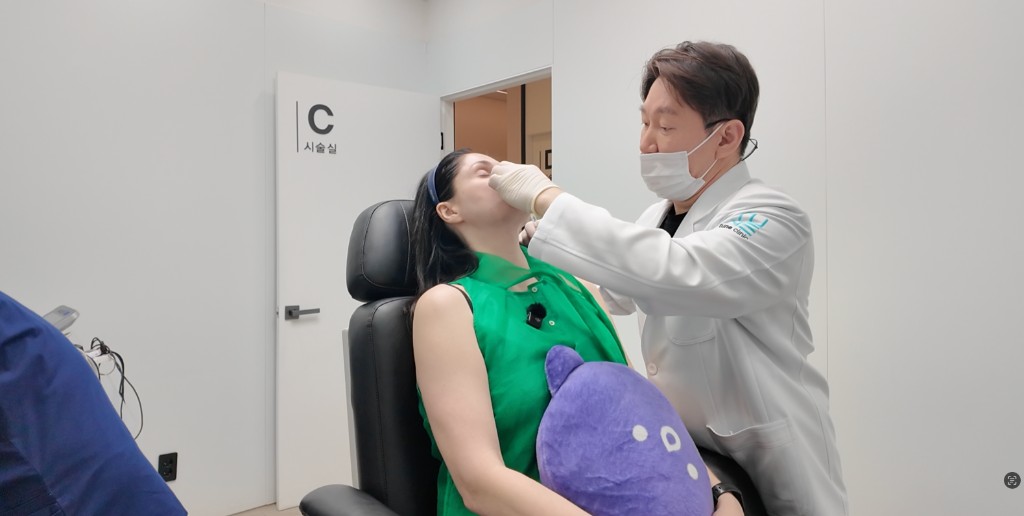
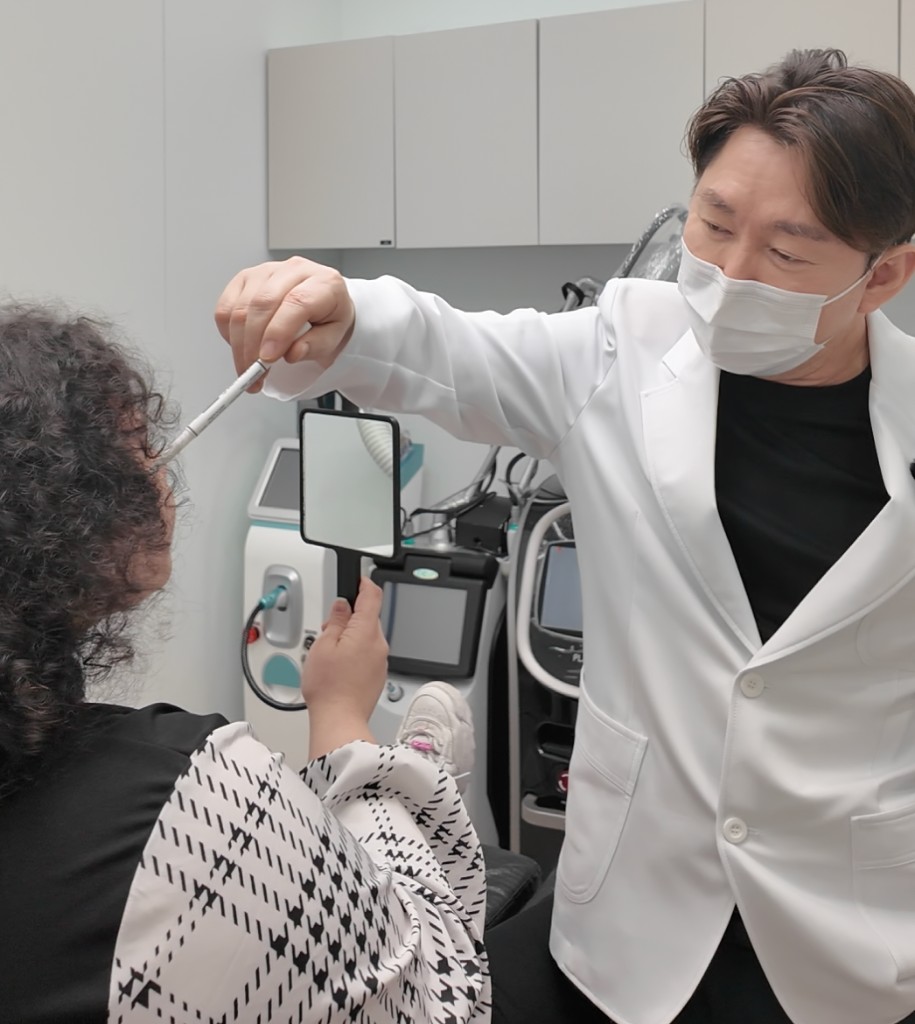
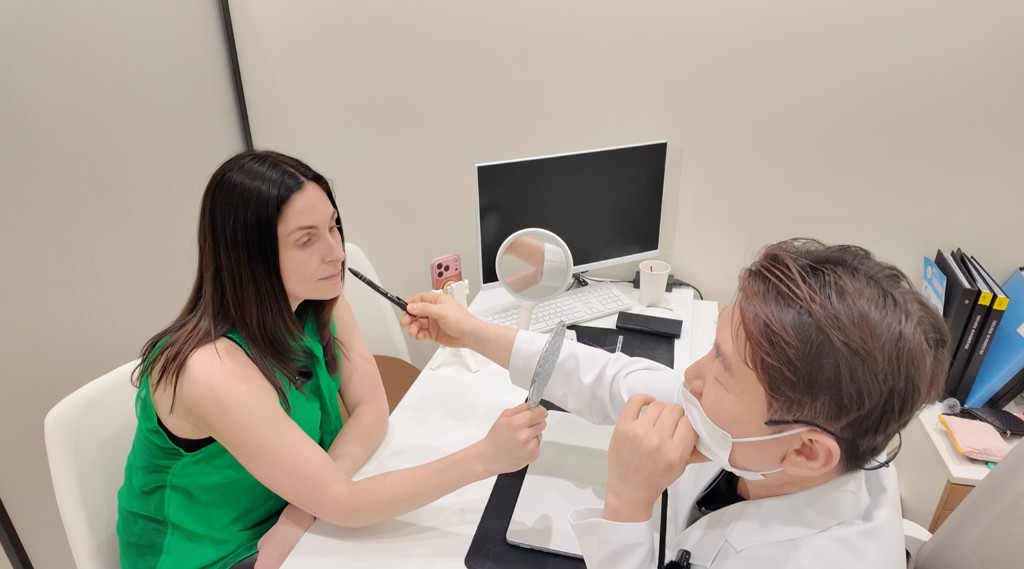
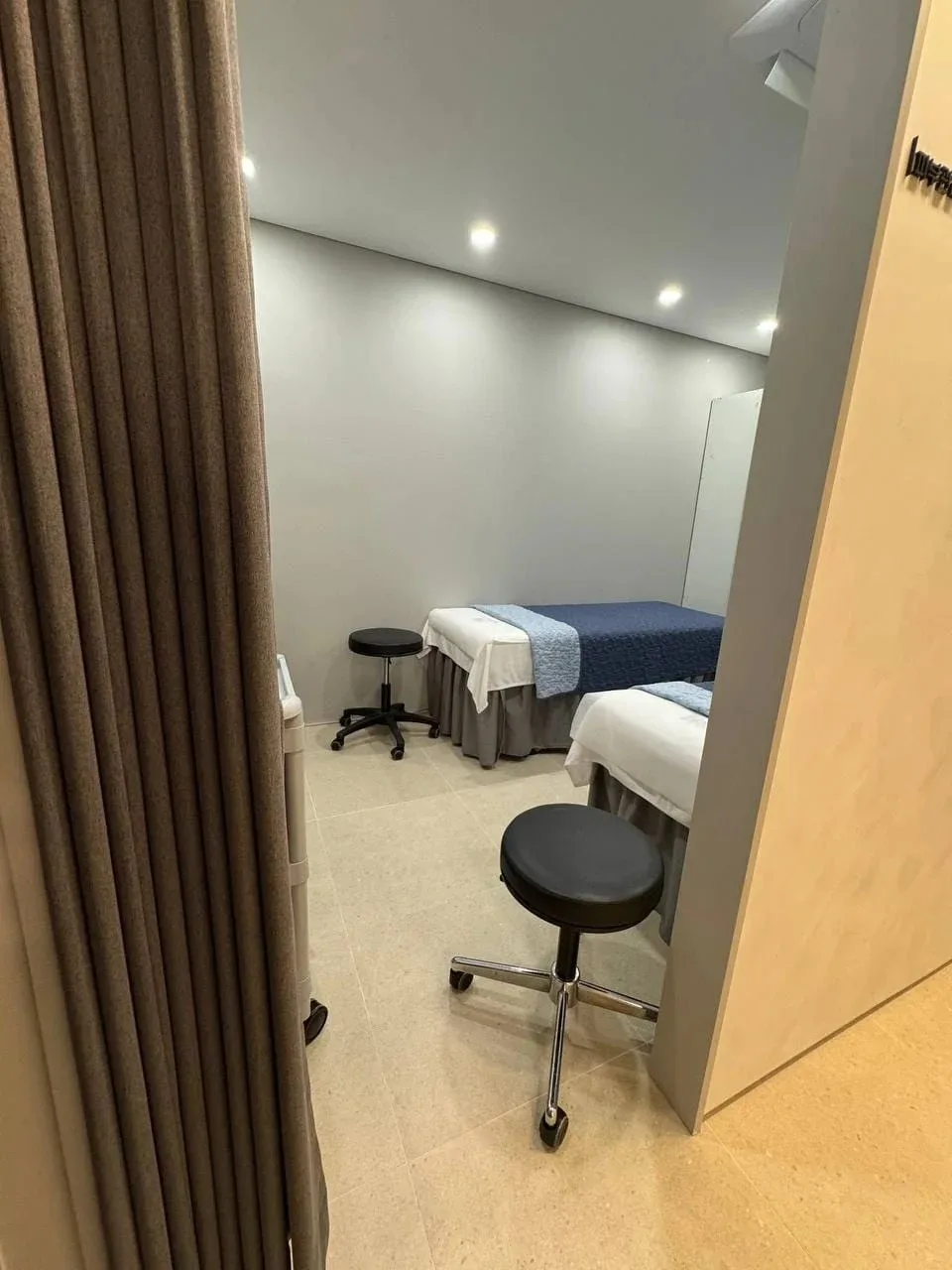
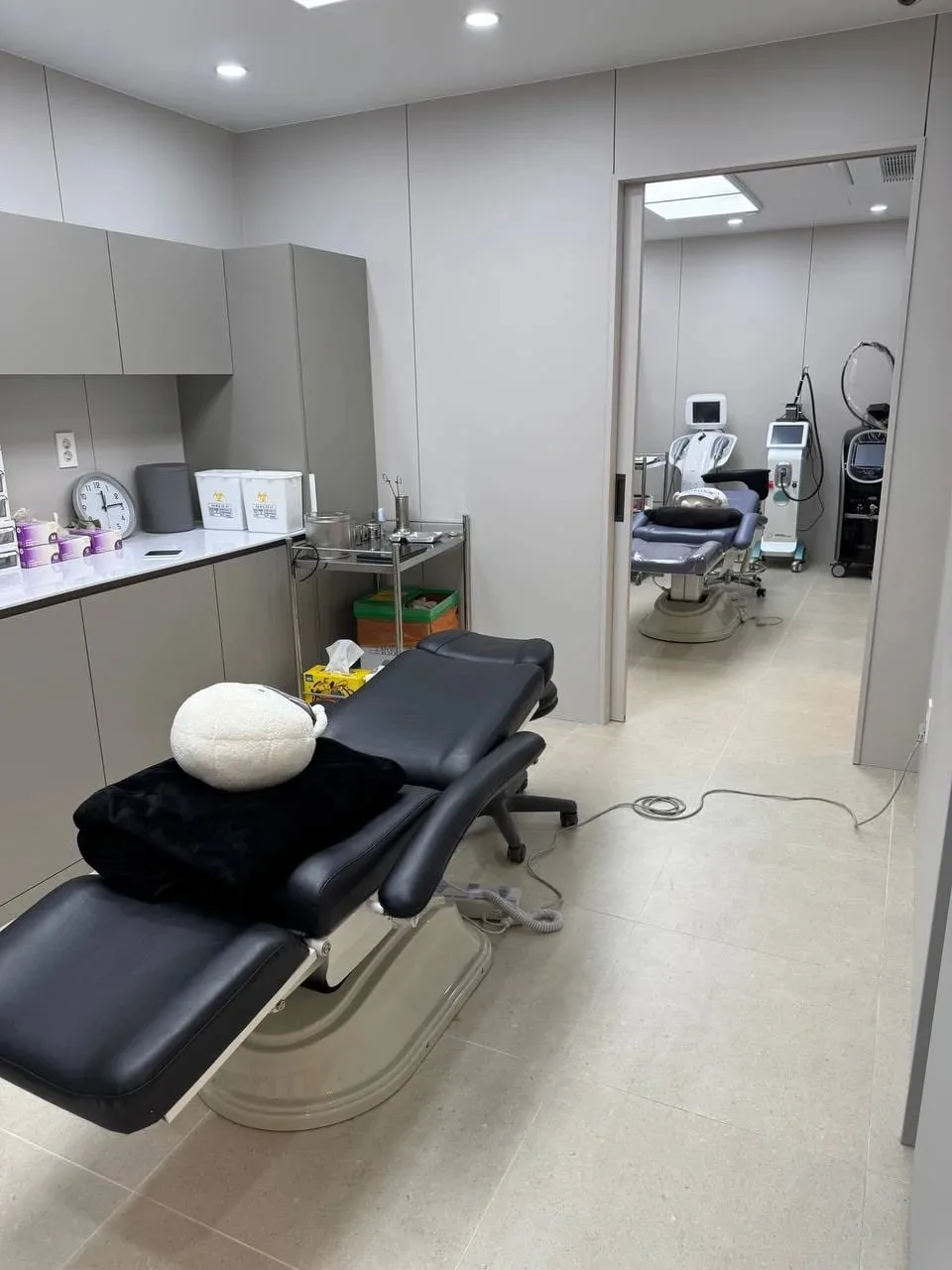
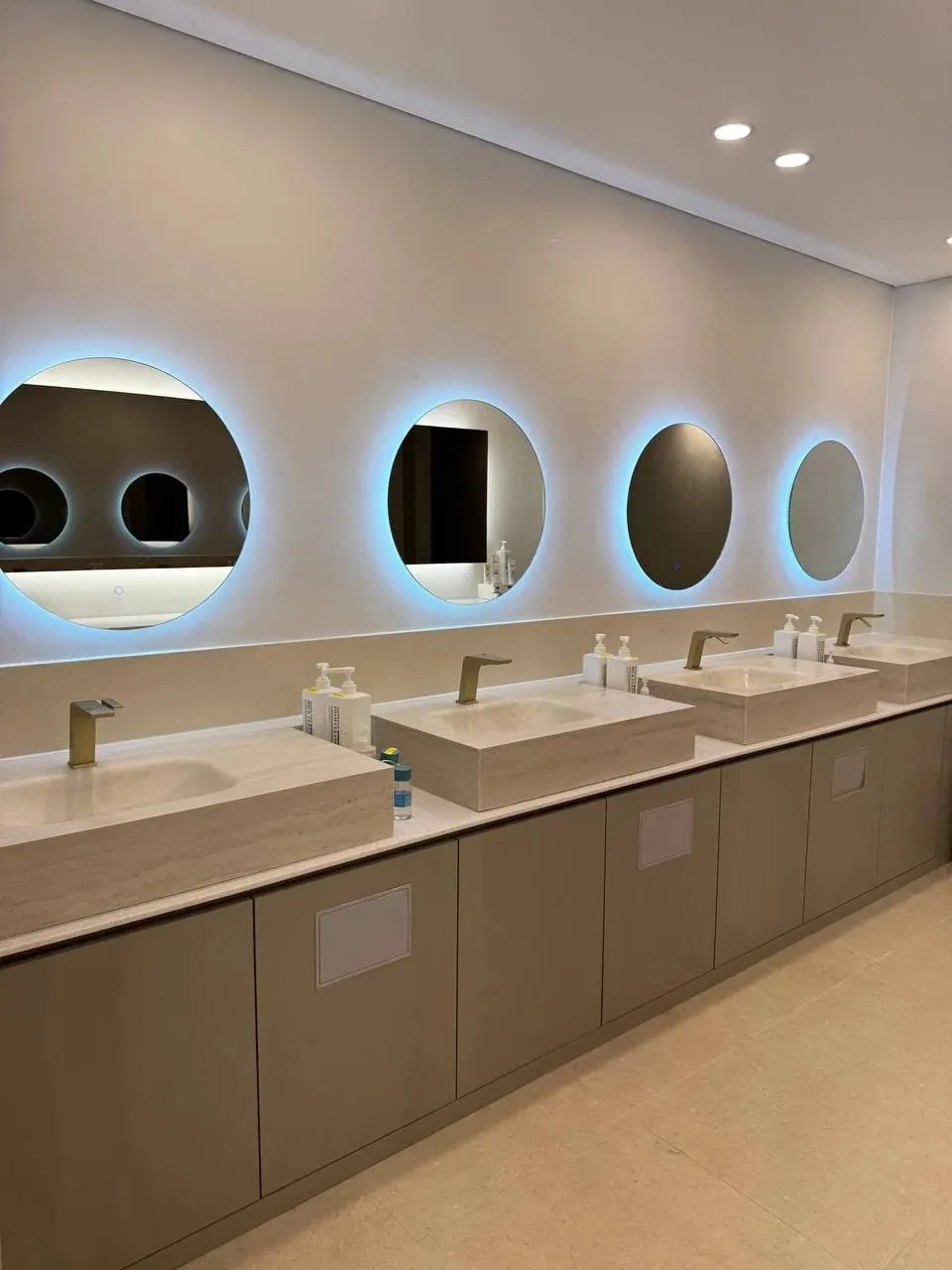
Tune Clinic Apgujeong today: the lobby, waiting areas and treatment rooms where consultations and treatments take place.



Sources
- Skin Appendage Disorders. Scalp Micropigmentation, A Clinicopathologic Correlation. Karger / PMC 2022. Pigment sits in the dermis; camouflage is distinct from actual hair.
- International Society of Hair Restoration Surgery. Scalp Micropigmentation, Semantics, Terminology, and Standards. ISHRS 2019, updated 2024. SMP is tattooing; stubble and density applications; variable pigment persistence.
- International Society of Hair Restoration Surgery. Scalp Micropigmentation, All You Need to Know. ISHRS. Patient selection, inflammatory scalp disease, waiting at least a year after transplantation.
- Journal of Cutaneous and Aesthetic Surgery. Standardization of SMP Procedure and Its Impact On Outcome. PMC 2017. Depth affects fading and diffusion; technique variation; hair color considerations.
- Journal of Cosmetic Dermatology. Scalp Micropigmentation Is an Effective Treatment for Localized Alopecia, a Series of Ten Case Reports. Wiley 2025. Ten cases, six-month data for five, weekly staged sessions.
- International Journal of Dermatology. Revision for unsatisfactory outcomes of scalp micropigmentation. PubMed 2025. 120 selected revision patients; several correction approaches; not a failure rate.
- Journal of Cutaneous and Aesthetic Surgery. Efficacy, safety, and patient-reported outcomes of scalp micropigmentation in scarring alopecia. 2026. Eighteen patients, at least six months of inactive disease, color change and diffusion reported.
- American Academy of Dermatology. Hair loss, Who gets and causes. AAD. Hair loss has many causes besides age.
- American Society of Plastic Surgeons. Hair Transplant Recovery. ASPS. Transplantation moves grafts and needs recovery and postoperative care.
- US Food and Drug Administration. Tattoos, Temporary Tattoos and Permanent Makeup. FDA 2024. No color additives approved for injection into skin; tattoo risks; MRI disclosure.
- US Food and Drug Administration. FDA Issues Final Guidance on Tattoo Inks. FDA 2024. Microbial contamination can occur in sealed ink bottles.
- US Food and Drug Administration. FDA Advises Consumers, Tattoo Artists, and Retailers to Avoid Certain Sacred Tattoo Ink Products. FDA 2025. Lot-specific contamination alert from May 2025; describes skin reactions; not evidence about this clinic's materials.
- US Food and Drug Administration. Tattoos and Permanent Make-up. FDA. Complete removal may not be possible; removal can scar; removal creams and DIY kits can cause rashes, burns and scars.
- Ministry of Food and Drug Safety, Korea. Notice on import inspection of oral-care products and tattoo dyes. MFDS 2025. Tattoo dyes under hygiene-product management from June 14, 2025.
- European Commission. Commission Regulation (EU) 2020/2081. EUR-Lex 2020. REACH substance restrictions for tattoo and permanent-makeup inks.
- Supreme Court of Korea. En banc decision 2022do13370, May 21, 2026. Changed interpretation of ordinary tattooing as unlicensed medical practice.
- Ministry of Health and Welfare, Korea. Tattooist Act misconceptions explained. Korea Policy Briefing 2026. Act takes effect October 29, 2027; no unrestricted practice; removal stays medical.
- Korean news report. Beautician charged over scalp tattooing acquitted after four years. 2026. November 6, 2026 report of an SMP acquittal applying the new precedent; a news report, not the judgment text.
- Reddit r/SMPchat. Has any real person here actually tried SMP? 2026. Shows the public concern about provider-heavy content; not outcome evidence.
- Lifestyle news feature. Scalp micropigmentation can make thinning hair look fuller, but is it really a good quick fix? 2026. September 2026 reporting on social-media interest and quick-fix framing.