
Small bumps and swelling can follow neck filler, but a lump that persists or gets worse should be examined, and hyaluronic acid filler cannot always be dissolved cleanly. The largest pooled analysis of filler for horizontal neck lines covers 11 studies and 379 participants, which is too few to show how often rare complications happen (2026 meta-analysis). Unusual or increasing pain, a change in skin color, vision changes, or neurological symptoms need immediate medical attention (FDA).
Picture a traveler in Seoul with two longstanding neck creases. This is a composite scene, not a real patient. She stops at the consent form, at the line that says the filler can be dissolved. It sounds reassuring, but it does not tell her how a normal bump differs from a nodule, who would examine it, or what happens once she is back home. This guide starts with those questions.

Questions and answers
What can a lump after neck filler mean?
A lump after neck filler is a finding, not a diagnosis. It can be one of several things:
- Swelling or a bruise from the injection.
- The product itself, visible because too much was placed or it sits too close to the surface.
- An infection, which the FDA lists among filler complications (FDA).
- A nodule that stays for a long time, which has been documented on the neck after a hyaluronic acid injection (2025 case report).
These can look alike in a photo. What separates them is timing, symptoms such as pain or warmth, an in-person examination, and knowing exactly which product was injected. A photo sent by message can start the conversation, but it cannot settle the diagnosis.
Which symptoms should not wait for a routine appointment?
Seek immediate medical attention for any of these after filler (FDA):
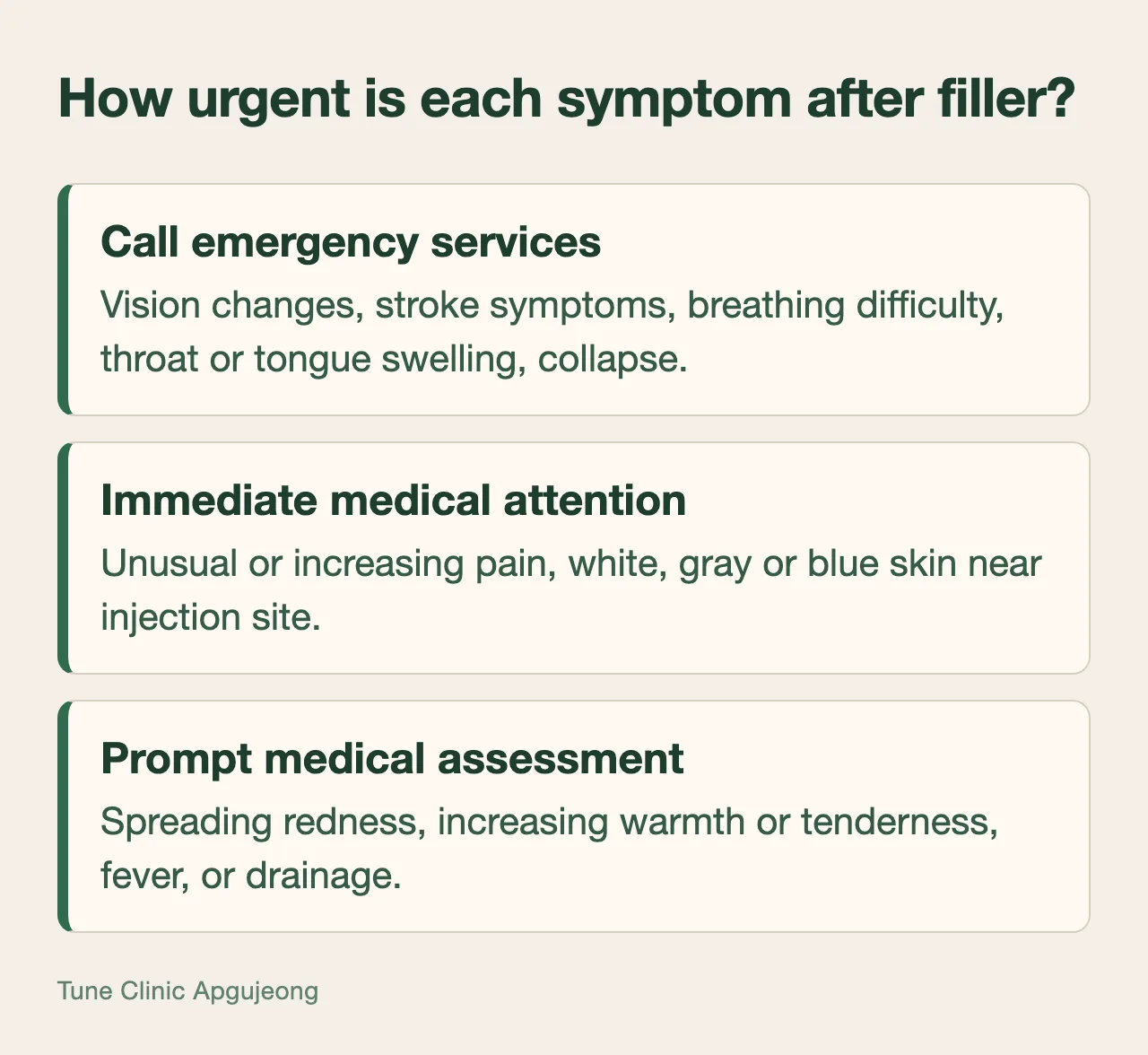
- Unusual or increasing pain
- White, gray or blue skin near the injection site
- Any change in vision
- Sudden neurological symptoms, such as weakness, numbness or difficulty speaking
For vision changes or stroke symptoms, call emergency services immediately. Do not wait for a clinic reply, least of all from another time zone.
Breathing difficulty, throat or tongue swelling, or collapse after any injection requires emergency care, whether or not botulinum toxin was used. If your neck was also treated with toxin, difficulty swallowing, speaking or breathing is an emergency too. These effects are listed as serious warnings on the US label for this drug class (DailyMed label).
Spreading redness, increasing warmth or tenderness, fever, or drainage needs prompt medical assessment. Do not assume these symptoms are ordinary settling.
Why do bumps show so easily on the neck?
Neck skin is thin, so product that would stay hidden in the cheek can show as a ridge on the neck. A case series of filler for horizontal neck wrinkles makes the same point about thin skin and product choice (2019 case series).
When I wrote about neck lines in 2022, I warned that neck skin is thin and must never be overcorrected. I also wrote that a soft filler and careful placement matter, because the alternative can be a raised horizontal band. Overfilling and superficial placement are still the described routes to persistent visible lumps (2025 case report). A soft product alone does not make treatment suitable or safe. Depth, amount and the patient's own anatomy matter as much. For the anatomy in more detail, see why neck filler needs a different approach than the face.
How long can ordinary swelling and bruising last?
There is no single number, and the evidence is thin. In 2022 I told readers that most people bruise on the neck. That post gave no count to support it. One published series reported bruising in 14 of 32 women, and that figure should not be treated as a universal rate either (2019 case series). Plan for bruising, but do not expect it as a certainty.
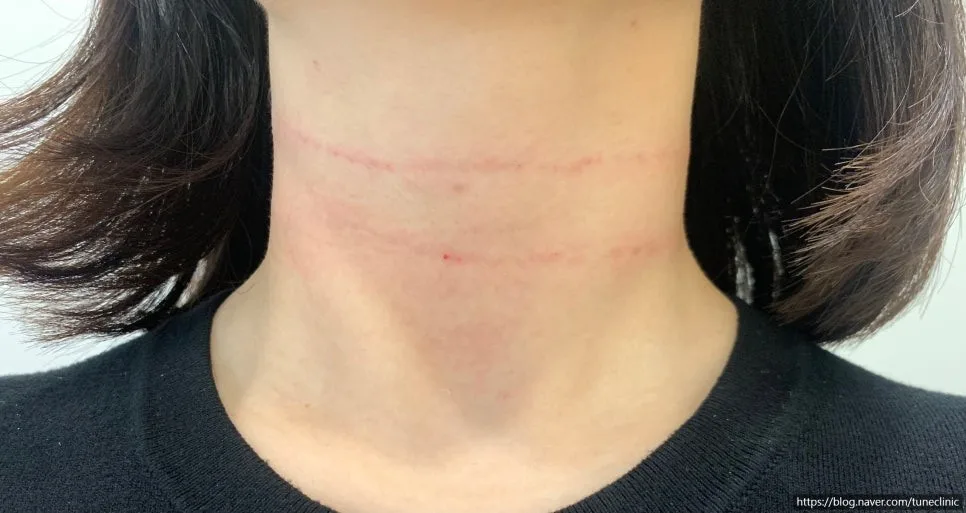
In the same series, recorded redness, itching, bruising and localized swelling resolved within 14 days. This is a study observation, not a deadline for waiting out symptoms.
A calendar alone cannot tell benign swelling from a complication. A bump that is shrinking, painless and soft is a different situation from one that is growing, firm, red or tender. If a lump is not improving, or you have any of the symptoms in the section above, ask to be examined now.
Can a skin booster cause lumps too?
Yes. I called skin boosters nutrition treatments in the 2022 post. Skin booster is a marketing category that covers a mixed group of products, and nutrition does not describe how any of them work. The label does not protect against nodules. The 2025 case of prolonged neckline nodules followed an injection of a hyaluronic acid skin booster (2025 case report). One case shows that this can happen. It does not show how often.
This matters for readers who meet local nicknames for neck-line injections. In China, injectable hyaluronic acid products for filling and for skin hydration are regulated as medical devices or combination products, depending on the product (NMPA policy explanation). A nickname does not identify a product. Ask for the exact name and manufacturer.
Can neck filler always be dissolved?
No. Hyaluronic acid filler can often be reduced with an enzyme called hyaluronidase, injected by a clinician, but this is not a guaranteed or risk-free reset. The FDA's 2025 review of dermal fillers discusses the limits of filler removal and adverse-event reports linked to it, and hyaluronidase is not FDA-approved specifically for dissolving dermal fillers (FDA 2025 summary).
Persistent nodules may require further specialist assessment and treatment. The 2025 case report supports uncertainty about dissolution protocols. It does not establish that such nodules cannot be dissolved (2025 case report).
Online arguments about dissolving are often drawn from facial filler, and they cannot give a neck-specific risk. Read the word dissolvable on a consent form as meaning that an option exists. It does not promise that the treatment can be simply undone.
Should I massage the lump or get another injection?
Get it assessed first. Swelling, misplaced product, infection and an inflammatory nodule do not call for the same response, and the right one depends on what was injected. Pressing hard on a lump, or adding more product nearby to even things out, can make the picture harder to read.
Do not attempt dissolving at home or through a non-medical provider. Regulator checklists for cosmetic injections stress a qualified practitioner, a known product and a clear follow-up plan (TGA checklist).
Does an approved filler mean approved neck treatment?
No. Approval belongs to a specific product, for a specific body area, in a specific country.
- United States: the FDA states that filler injection in the neck is not approved and recommends against it (FDA).
- Korea: a 2015 safety notice from the Ministry of Food and Drug Safety described filler use on the face and warned about use elsewhere (MFDS). That notice is historical. A product's current status has to be checked on its own Korean authorization and instructions for use.
- European Union: a CE mark shows product conformity under the device framework and is not a blanket approval of neck treatment (MDCG 2023-5).
- Japan: the package insert for one hyaluronic acid volume filler lists facial indications and does not list horizontal neck lines (PMDA).
So neck filler is often an off-label use. Off-label means outside the product's authorized indication. Ask the treating physician to explain the applicable Korean requirements, the evidence for the proposed use, and its alternatives and risks.
How long does it last, and how sure is the research?
Nobody can give you a reliable duration. The pooled studies followed patients for 12 months at most (2026 meta-analysis). A second review rated the evidence for results lasting beyond six months as very low certainty (2026 review). No universal maintenance schedule exists.
| Evidence type | What it can tell you | What it cannot tell you |
|---|---|---|
| Pooled clinical studies (11 studies, 379 participants) (S01) | Whether selected lines improve in the short term | How often rare problems occur, or results past one year |
| Case reports (S04) | That a problem such as persistent nodules can happen | How likely it is |
| Regulator adverse-event reports (S10) | What kinds of problems get reported, including after removal | Rates, or neck-specific risk |
None of these gives a dependable risk figure for one person. If a study reports no serious events in a few dozen patients, that does not mean the risk is zero.
Is filler the right treatment for my neck lines?
It depends on which structure is causing the concern, and age does not answer that. My 2022 post was organized by age: filler for simple creases in the twenties and thirties, toxin and skin treatments added from the forties when bands appear, and surgery for marked sagging after fifty. Current evidence supports assessing anatomy and skin quality, with no automatic age threshold (2024 review). Treatment of ordinary creases is optional. Marked laxity is a reason for a surgical consultation at any age, and filling a crease does not tighten loose skin (ASPS).
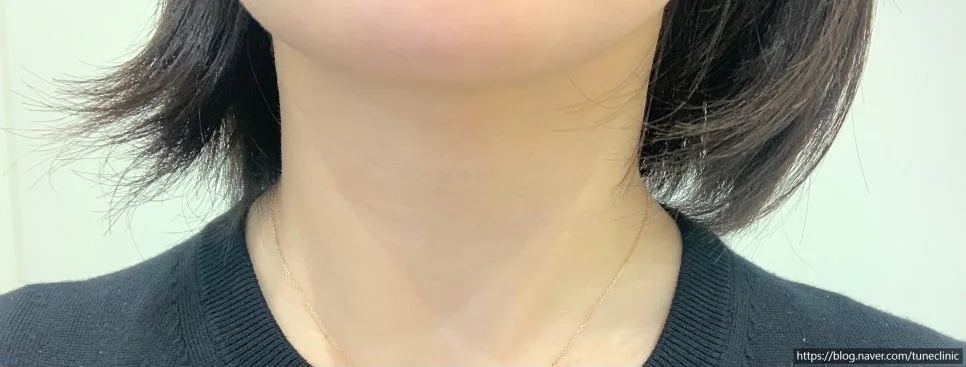
I wrote in the same post that horizontal lines, vertical bands and sagging have to be considered together. Current reviews organize assessment the same way (2024 review).
I wrote that toxin must be added once bands appear. The evidence supports it as an option for selected muscle-related bands, with no requirement to add it. A US label added moderate to severe platysmal bands in October 2024, which does not cover horizontal creases (DailyMed label). Of 12 studies in a 2026 review, 10 tested hyaluronic acid and two tested neuromodulators, with few direct comparisons (2026 review).
Energy devices are not a risk-free substitute. In 2025 the FDA reported burns, scarring and fat loss with certain uses of RF microneedling (FDA). That warning does not apply to every laser or ultrasound device.
What if I leave Korea before a second visit or follow-up?
Treat access to follow-up as part of the treatment decision. I described a two-visit schedule at the clinic in the 2022 post, with the second visit 2 to 4 weeks after the first, so that the neck is not overcorrected. Staged reassessment is reasonable, and touch-ups appear in published protocols (2019 case series). No comparative trial shows that this exact schedule prevents overcorrection, and it is not a universal requirement.

A short trip may not leave room for a second visit or for review of a delayed problem. If nobody can reassess you before you fly, and there is no practical way to be examined at home, postponing is a reasonable choice. For timing, see planning treatment before a flight.
If you go ahead, take a written record that a doctor at home can use. Regulator checklists point to the same items (TGA checklist):
- Product name, manufacturer and lot number
- Amount injected and where
- Treatment date and the treating physician's name
- Written aftercare instructions
- A named contact for review, and how to reach them
What should I ask at my consultation?
- Is my concern a horizontal crease, a vertical muscle band, loose skin, or a mix?
- Which exact product would you use, and is the neck within its approved use in Korea?
- What would you do if I develop a lump, and what are the limits of dissolving this product?
- Do I need a second visit, and what happens if I cannot return for it?
- Which symptoms should send me to an emergency department at home?
- What written record will I receive before I leave?
- Is leaving these lines untreated a reasonable option for me?
Neck creases are normal anatomy for many people, and treating them is a choice. The physician's part is to give you the whole picture, including the off-label status, the thin evidence on duration and the uncertainty around dissolving. The physician should put a name to that advice and stay reachable after you decide. The decision itself is yours, and it should be made with that information in hand.
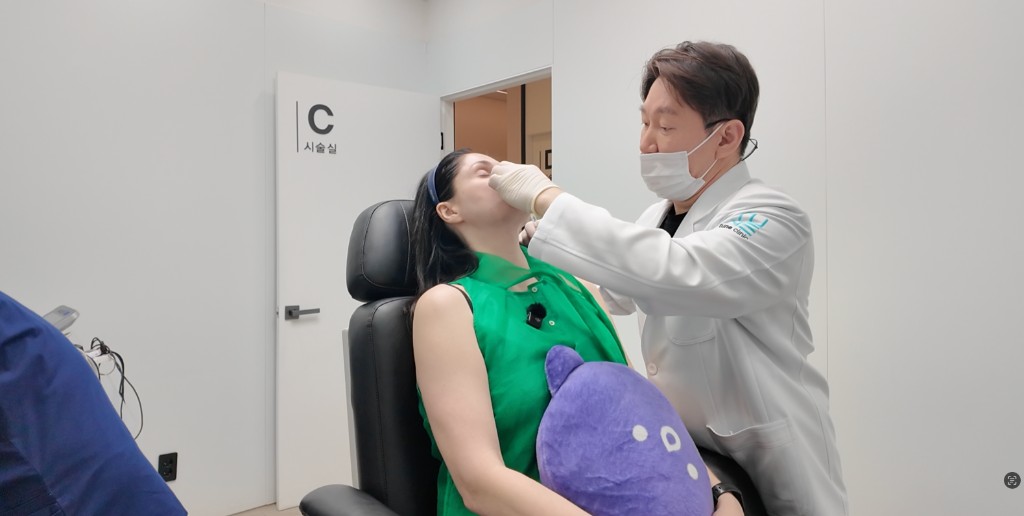
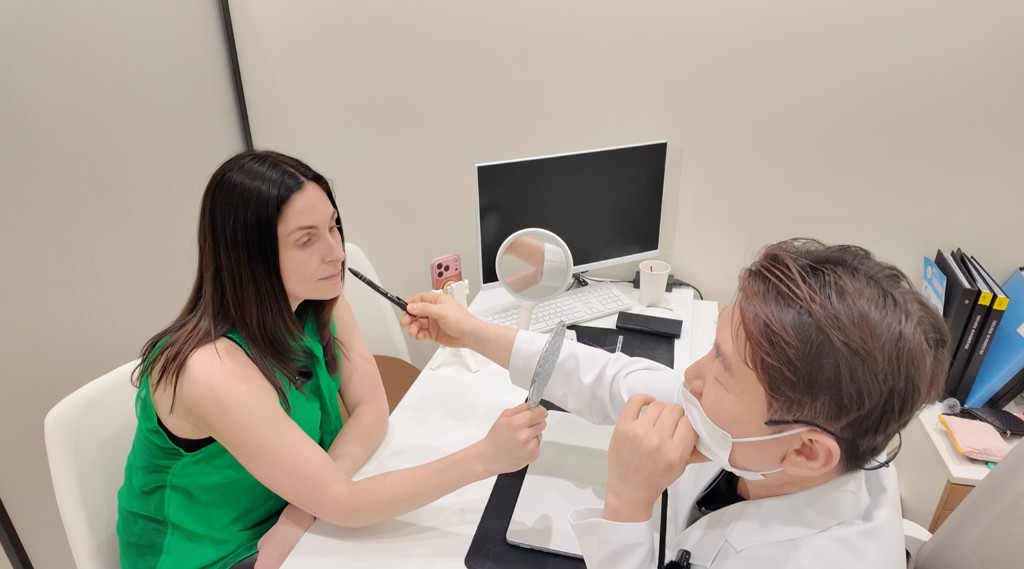
Tune Clinic Apgujeong today: the lobby, waiting areas and treatment rooms where consultations and treatments take place.





Sources
- Oxford University Press / The Aesthetic Society. Efficacy and Safety of Hyaluronic Acid Fillers for Horizontal Neck Lines, A Systematic Review and Meta-Analysis. PubMed record 2026. 11 studies, 379 participants, mixed protocols, follow-up no longer than 12 months
- Journal of Cosmetic Dermatology. A Systematic Review of Injectable Treatment Options for Horizontal Neck Rhytides. Wiley 2026. 12 studies, few direct comparisons, very low certainty for durability beyond six months
- Plastic and Reconstructive Surgery Global Open. Treatment of Horizontal Neck Wrinkles with Hyaluronic Acid Filler, A Retrospective Case Series. 2019. Thin neck skin, product choice, touch-ups, bruising in 14 of 32 participants, recorded adverse effects resolved within 14 days
- Journal of Cosmetic Dermatology. Persistent Nodules on Necklines Following Hyaluronic Acid Filler, A Case Report. Wiley 2025. Persistent neck nodules after an HA skin-booster injection; uncertainty about dissolution protocols; no incidence estimate
- Allergan / DailyMed. OnabotulinumtoxinA cosmetic prescribing information. US National Library of Medicine 2024. US platysmal band indication added October 2024; warnings on swallowing, speech and breathing
- Dermatological Reviews. Neck Aging and Rejuvenation, A Balanced Approach to Assessment and Treatment. Wiley 2024. Neck changes have several causes; assess by anatomical concern
- American Society of Plastic Surgeons. Fix tech neck, Surgical and nonsurgical treatment options. 2026. Separating skin, fat and laxity concerns; surgical and nonsurgical options
- US FDA. Executive Summary, General Issues Panel Meeting on Dermal Fillers. 2025. Adverse-event surveillance and the limits of filler removal; reports cannot give rates
- US FDA. Dermal Fillers (Soft Tissue Fillers). Live page checked 2026. Neck filler injection is unapproved in the US; filler risks, infection, allergic reactions and urgent symptoms
- Korean Ministry of Food and Drug Safety. Dermal filler medical device safety information. 2015. Historical guidance describing facial use and warning about nonfacial use
- US FDA. Potential Risks with Certain Uses of Radiofrequency (RF) Microneedling. Safety communication 2025. Reported burns, scarring and fat loss with certain RF microneedling uses
- Therapeutic Goods Administration. Cosmetic injections checklist. Live page checked 2026. Checking practitioner, product identity and follow-up
- Medical Device Coordination Group. MDCG 2023-5, Guidance on qualification and classification of Annex XVI products. 2023. EU framework for aesthetic filling products
- PMDA-hosted manufacturer labeling. Japanese package insert for a hyaluronic acid facial volume filler. 2023. Example of product-specific facial indications in Japan
- Shanghai Medical Products Administration. Interpretation of the medical sodium hyaluronate product classification announcement. 2022. Chinese classification of injectable HA filling and hydration products