On this page
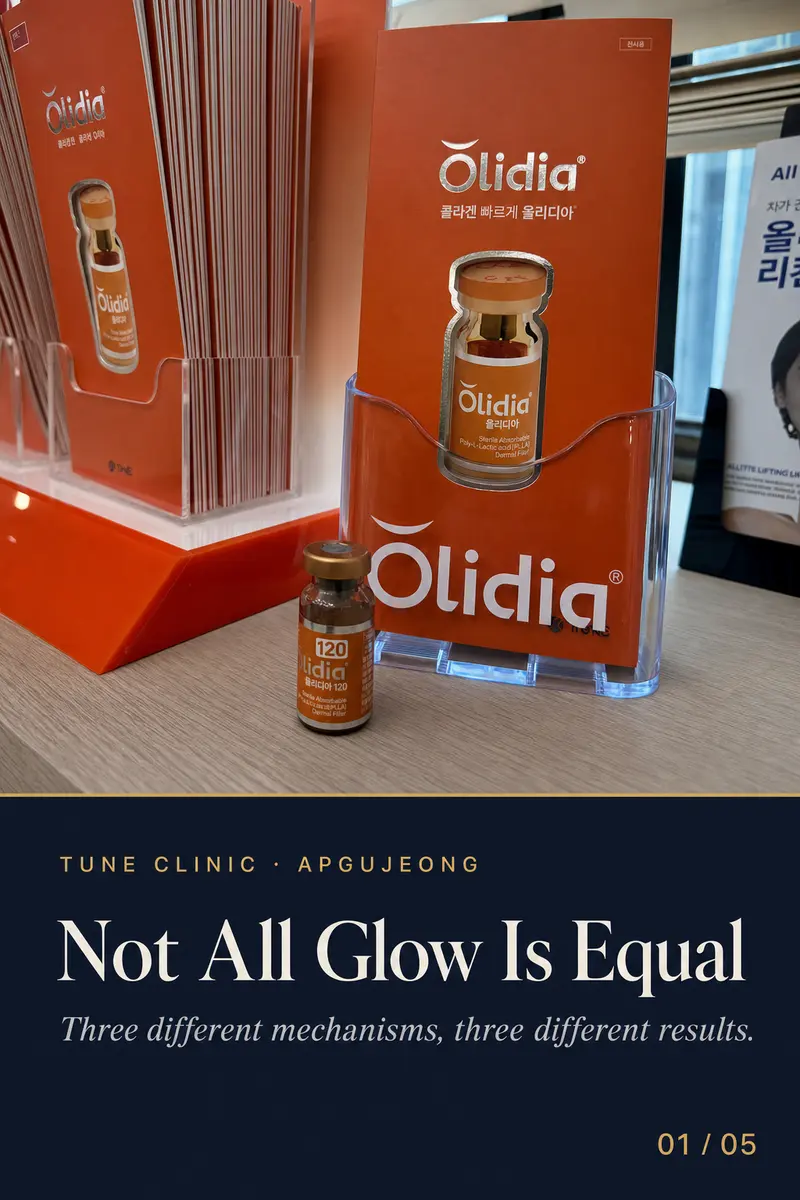
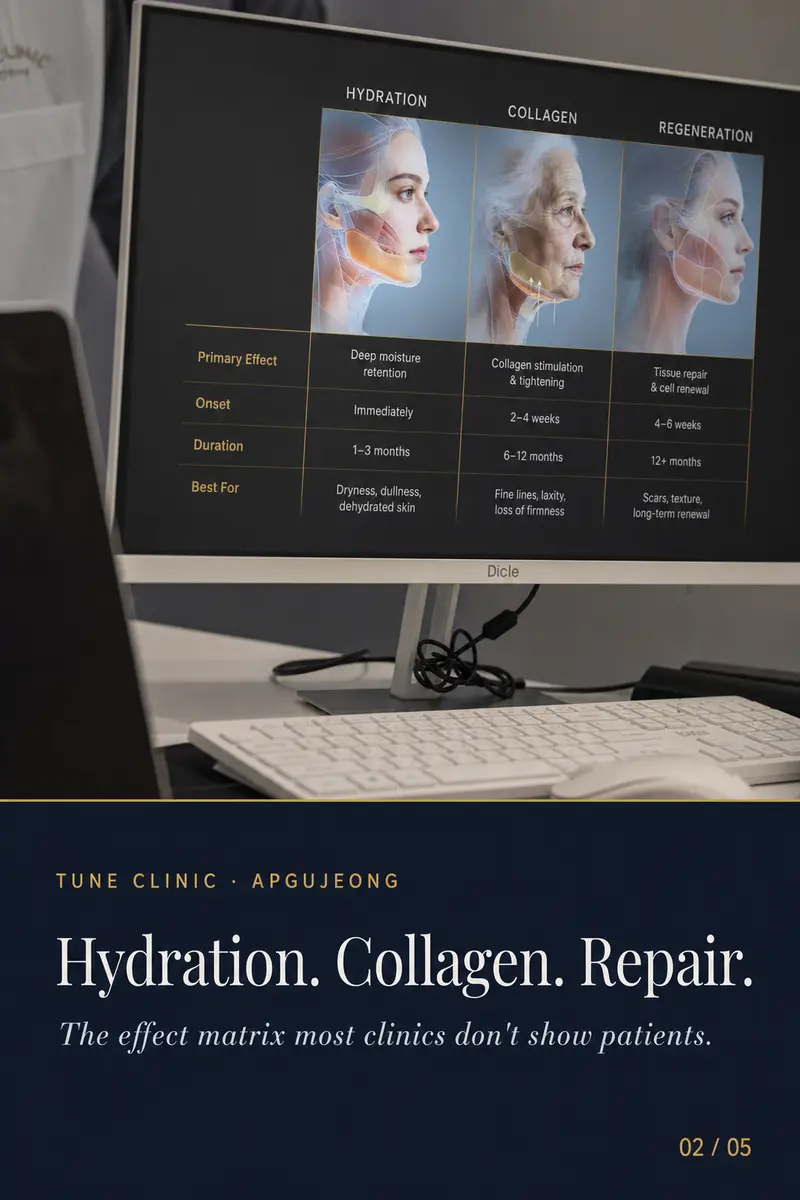
Skin boosters are not interchangeable. Juvelook Skin stimulates collagen through a PDLLA scaffold, Rejuran Healer drives cellular repair via polynucleotides, and products formulated primarily around hyaluronic acid address hydration — three distinct biological mechanisms that produce three distinct categories of result. Matching the mechanism to the concern is the clinical decision most patients never see made.
What Does Each Skin Booster Actually Do?
The word “glow” obscures more than it reveals. In practice, skin booster effects cluster around three mechanisms:
- Hydration — Hyaluronic-acid-based products draw water into the dermis, plumping superficial texture and creating a surface luminosity that is visible quickly but does not rebuild structural collagen.
- Collagen stimulation — Juvelook Skin (and its sibling Juvelook Volume) contains poly-D,L-lactic acid microparticles combined with cross-linked HA. The PDLLA fraction triggers a fibroblast response over weeks to months, gradually thickening the dermis.
- Cellular regeneration — Rejuran Healer and Rejuran S are built around polynucleotides (PN/PDRN) derived from salmon DNA. Rather than adding volume or instructing fibroblasts to produce collagen, they work at a repair level — supporting cell turnover, reducing chronic low-grade inflammation, and improving the skin’s baseline resilience.
Olidia Skin, a newer entry in the booster category, sits closer to the collagen-stimulation end of the matrix and is selected when the clinical picture calls for dermis-level remodelling without the same degree of immediate volumising that Juvelook Volume provides.
A physician reviewing a patient for skin boosters is not simply choosing a product — they are choosing a mechanism. The skin concern determines the mechanism; the mechanism determines the product. That sequence rarely runs the other way.
Why Using the Wrong Booster for Your Concern Is a Real Clinical Risk
This is not a matter of marginal preference. A patient with a compromised skin barrier and reactive redness who receives a high-concentration collagen-stimulating injection may see an inflammatory response that temporarily worsens the very texture they came in to address. Conversely, a patient whose primary concern is dermal thinning — the kind that makes skin look translucent and delicate with age — will not find meaningful correction from a product that only replenishes surface hydration.
Stacking products without a protocol compounds the issue. Multiple injections on the same session are sometimes appropriate; the rationale for each must be clear before the first needle is placed. When the reasoning is “more is more,” the results are typically uneven and harder to assess.
The Depth Question
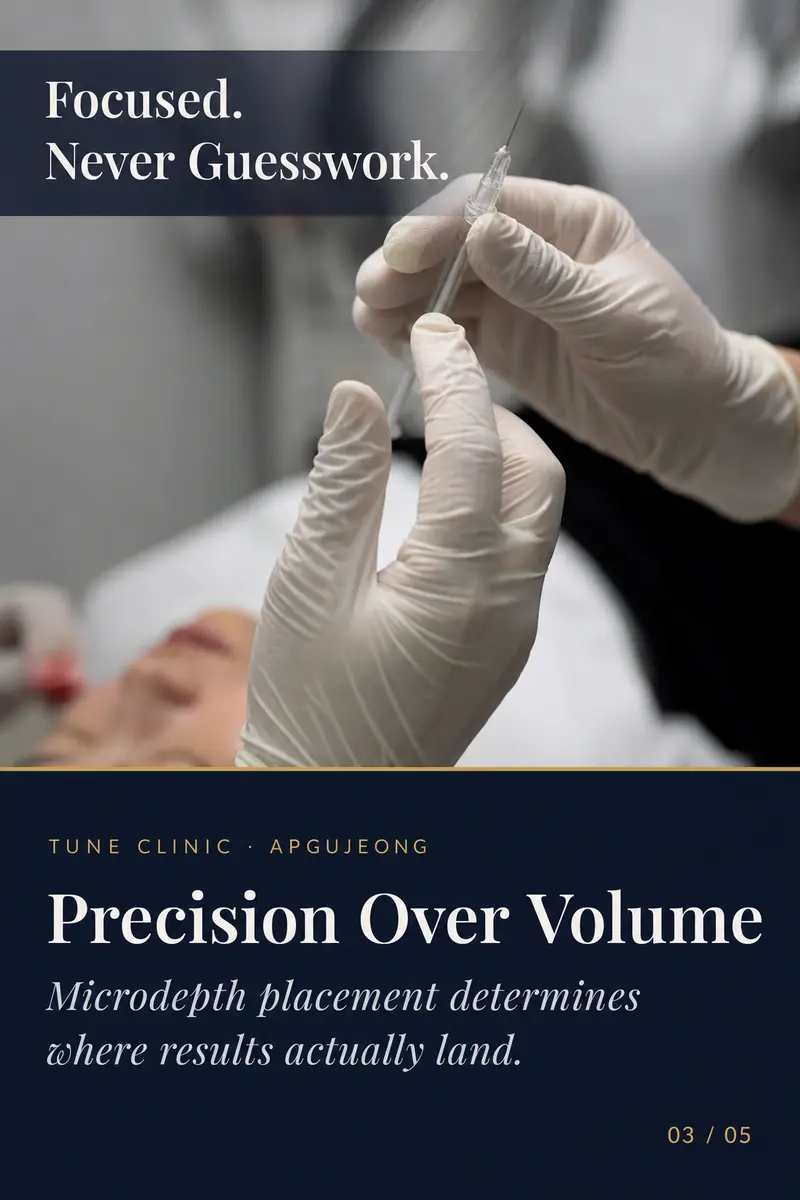
Injection depth is as consequential as product selection. Polynucleotide products like Rejuran are typically placed in the superficial dermis, where their regenerative effect is most relevant. Juvelook Skin with its PDLLA component requires placement at a depth where fibroblasts are active and where the slow biostimulation process can proceed without surface irregularity. Microdepth placement — controlled by both technique and needle gauge — is not a detail; it is the variable that determines whether the product reaches the tissue layer where its mechanism applies.
What Does an Effect Matrix Actually Look Like in Practice?
At Tune Clinic, patients are assessed along three axes before a booster protocol is built:
- Primary concern — texture, luminosity, elasticity, barrier integrity, fine lines, or a combination
- Skin age and baseline condition — including how much collagen infrastructure is already present
- Timeline and tolerance — collagen stimulation produces results over months; hydration is visible sooner; some patients require the faster visible feedback, others can invest in a longer trajectory
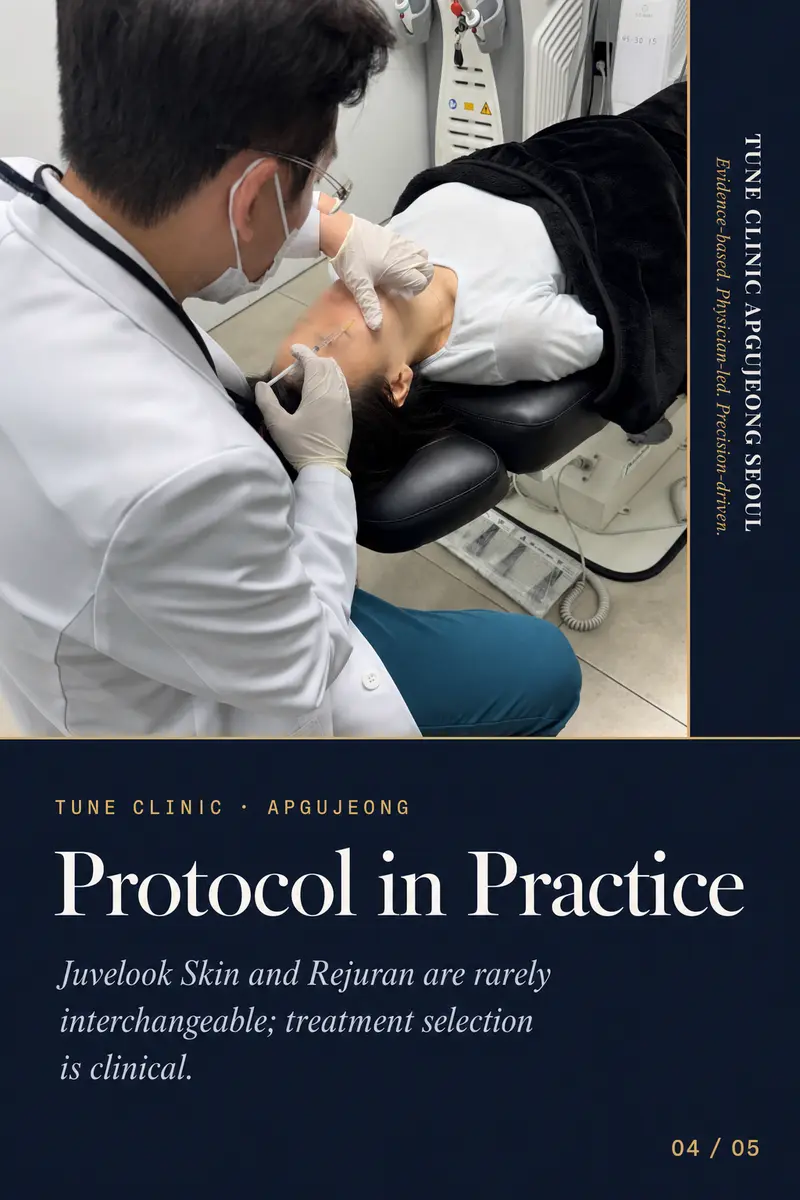
This matrix approach means Juvelook Skin and Rejuran are not interchangeable defaults. A patient with post-inflammatory hyperpigmentation and sensitivity is more likely to start on a PN-based protocol. A patient with early volume loss and dull but otherwise stable skin may begin with Juvelook Skin as the primary driver and support it with a hydration layer. The combination, when used, is deliberate — not reflexive.
For patients exploring how skin boosters fit alongside structural concerns, the physician-led design method used at Tune Clinic considers injectables as one layer within a broader treatment architecture, not as a standalone answer.
Is There a Right Order to Layering Skin Boosters?
When combination protocols are appropriate, sequencing matters. In clinical experience, it is generally more productive to address barrier stability first — particularly with Rejuran — before introducing stimulating agents that create a controlled inflammatory response. Introducing a strong biostimulator into compromised skin tends to produce unpredictable outcomes. Once the skin is in a more stable baseline state, collagen-stimulating products are better tolerated and their results are more legible.
This is not a universal rule; individual skin history, prior treatments, and degree of sensitivity all adjust the decision. The point is that the order of operations in a multi-product protocol is a clinical choice, not an arbitrary one.
For patients who are also considering energy-based collagen remodelling alongside injectable boosters, the filler and injectable options page outlines how these tools are positioned relative to each other at Tune Clinic.
FAQ
What is the difference between Juvelook Skin and Rejuran?
Juvelook Skin contains poly-D,L-lactic acid microparticles combined with hyaluronic acid and works primarily by stimulating fibroblasts to produce new collagen over several weeks to months. Rejuran is a polynucleotide-based product that supports cellular repair and reduces inflammation at the dermal level. They address different concerns and are selected based on the patient’s skin condition, not used interchangeably as generic “glow” treatments.
How many sessions of skin booster are needed to see results?
The number of sessions depends on which product is being used and what the treatment is targeting. Hydration-focused products often show visible results after a single session. Collagen-stimulating products like Juvelook Skin typically require a series — commonly three sessions spaced several weeks apart — because the PDLLA-driven fibroblast response builds gradually. Your physician will outline an expected timeline based on your skin’s baseline condition at consultation.
Can Juvelook Skin and Rejuran be done at the same appointment?
In some protocols, yes — but only when there is a clear clinical rationale for combining them at that session. The decision depends on skin sensitivity, treatment goals, and which tissue layers are being targeted. Combining products without a protocol reason adds procedural stress without proportional benefit. A physician-led assessment determines whether same-session stacking is appropriate for a given patient.
Is there downtime after skin booster injections?
Most patients experience small injection papules and mild redness that resolve within a few hours to a day. Bruising is possible depending on the patient’s skin, the product, and the technique used. Social downtime is typically minimal, though it varies. Collagen-stimulating products occasionally produce slightly more initial reactivity than pure PN protocols, which is factored into session planning.
What skin concerns are skin boosters not suited for?
Skin boosters address quality — texture, luminosity, early fine lines, barrier health — not structural volume loss or significant laxity. A patient with substantial mid-face volume loss or pronounced jowling needs a different category of intervention, such as structural filler, biostimulators like Sculptra, or lifting devices. Skin boosters are most effective when the structural foundation of the face is stable and the goal is refinement of the skin layer itself.
Ready to plan your treatment?
Tune Clinic Apgujeong offers English-language consultations with Dr. Ju and Dr. Cha — a structured assessment, not a sales call.
→Book an appointmentto pick a time that fits your Seoul itinerary.
→Message us on WhatsAppto ask in English before you commit.