On this page
Why the face in the mirror feels different
Facial aging is structural before it is visible: collagen density declines, fat compartments shrink and descend, and bone support gradually resorbs — and wrinkles are a late symptom of those deeper changes, not the starting point. That is why treating the surface alone has limits, and why an assessment of your structural status matters more than your age.
“I look in the mirror and something has changed — but I can’t quite say what.”
This is one of the most common things patients say during consultations. No sudden burst of wrinkles. No dramatic shift. Just a quiet sense that the face they see no longer matches the one they remember.
Most people interpret this as “I’m getting wrinkles.” So the first instinct is to look for treatments that smooth the surface.
But in most cases, the real cause is somewhere else entirely.
Skin aging does not begin at the surface. The visible changes you notice are almost always the end result of structural shifts happening beneath the skin — long before a single wrinkle appears.
Skin is not just a surface
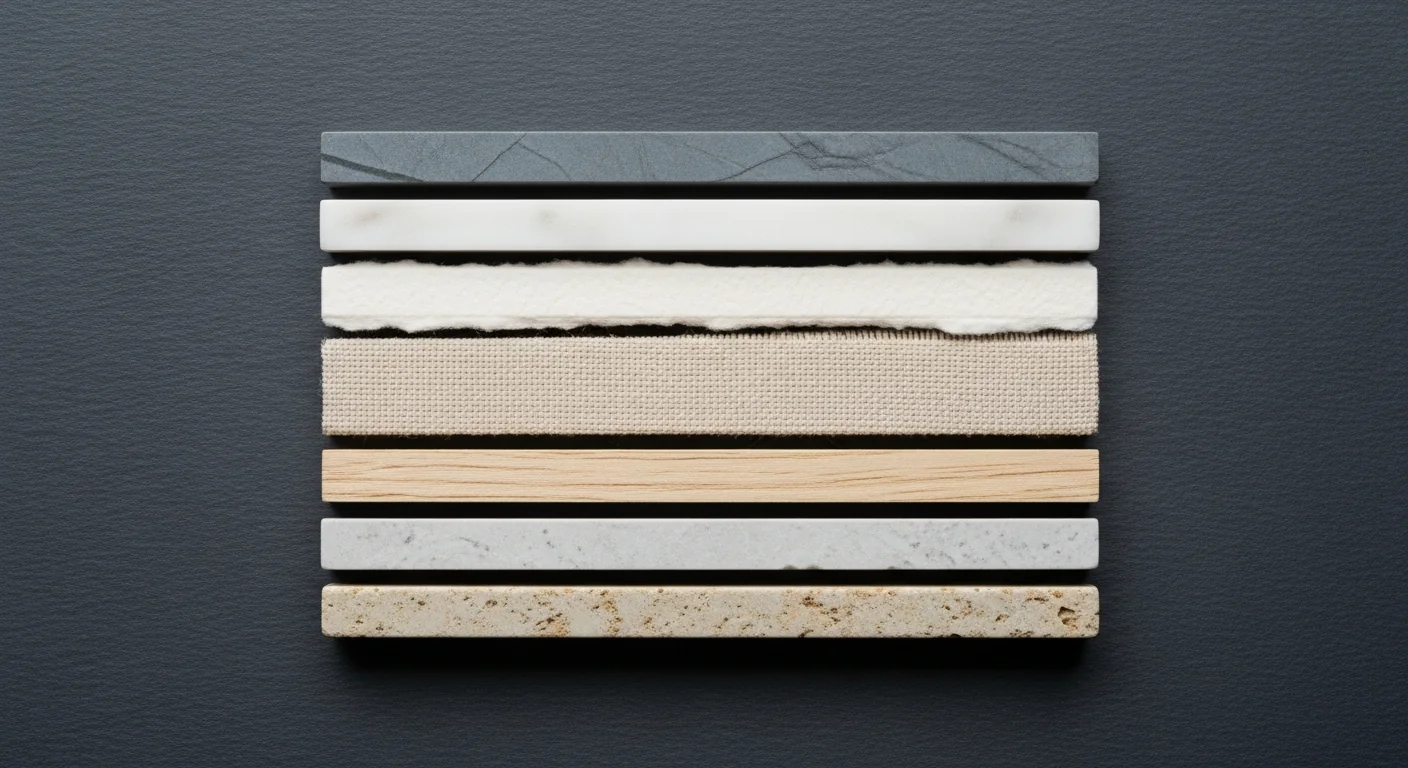
It is easy to think of skin as a flat, external covering. In reality, it is a layered architectural system:
- Epidermis — the outermost barrier
- Dermis — the structural core, where collagen and elastin live
- Subcutaneous fat — the volume and cushion layer
- Deep structures — fascia, ligaments, and bone
These layers are not independent. They are mechanically and biologically connected. When one layer changes, the others respond.
This is why surface-level changes — a deepened fold, a shadow under the eye, a softened jawline — are almost never caused by the surface itself. They are downstream effects of deeper architectural change.
Why does the face deflate and descend with age?
As years pass, the face does not simply “get wrinkled.” Multiple structural processes happen simultaneously:
- Collagen degradation — the dermis thins, losing its scaffolding
- Elastin fragmentation — skin loses its ability to snap back
- Fat pad atrophy and migration — volume shifts downward and inward
- Ligamentous laxity — support structures stretch and weaken
- Bone resorption — the skeletal frame literally shrinks in key areas
The combined effect is not “wrinkles.” It is a global shift in facial geometry — deflation, descent, and loss of convexity.
The wrinkles that appear are not the cause. They are a consequence — surface creases formed because the underlying support has changed.

Why does treating wrinkles alone fall short?
When the structural framework has already shifted, smoothing the surface produces limited results.
Consider: if the scaffolding beneath a tent has collapsed, ironing the fabric does not fix the shape. You can make the surface perfectly smooth, and the structure will still look wrong.
The same principle applies to facial aging. If deep support has weakened and volume has redistributed, surface-level treatments — even excellent ones — cannot fully address the perception of aging that patients describe.
In some cases, smoothing the surface of a structurally compromised face actually creates a more unnatural result. The skin looks “done” but the proportions still read as aged.
This is why, in anti-aging medicine, the question is not “what should we do?” but “where should we look first?”
Reading the structure before choosing the treatment
A rational approach to facial aging follows a specific diagnostic sequence:
-
Has the overall facial balance shifted? — Proportions, symmetry, and convexity change before individual wrinkles become prominent.
-
Where is the deflation or descent originating? — The midface, jawline, temple, and periorbital areas age at different rates and through different mechanisms.
-
Is this a texture problem, a structural problem, or both? — Surface quality (texture, tone, fine lines) and structural integrity (volume, support, position) require fundamentally different interventions.
When this assessment is done properly, the treatment plan does not start with “what device should we use?” It starts with understanding what the face actually needs — and often, the answer is simpler than expected.
Anti-aging is the art of doing less
One of the most important principles in aesthetic medicine is restraint.
Repeated surface treatments without addressing structure lead to diminishing returns — or worse, accumulating unnaturalness. The face begins to look “treated” without looking “better.”
The opposite approach — understanding the structural foundation first, then intervening minimally and precisely — produces results that feel natural because they are natural. The correction follows the anatomy rather than fighting it.
Anti-aging is not about how much you do. It is about how accurately you do less.
Age is not the metric — structural status is
Patients often frame their concerns around age: “I’m 45, what should I be doing?”
But aging does not follow a universal timeline. Two people of the same age can have dramatically different structural profiles based on genetics, lifestyle, sun exposure, and prior treatment history.
The relevant question is not “how old are you?” but “what is the current state of your structural support?”
- Is this primarily a surface change?
- Is this a structural change?
- Are both happening simultaneously?
This distinction determines the direction of treatment. Without it, even technically excellent procedures may not address what the patient actually sees in the mirror.
Start with structure, not surface
Skin aging does not start with wrinkles. It starts with invisible changes in the architecture beneath.
That is why the starting point of any anti-aging plan should not be “how do we remove wrinkles?” but “how do we understand the structure?”
When you look only at the surface, every decision feels complicated. When you understand the structure, what the face needs becomes surprisingly clear.
The most important question in aesthetic medicine is not “what should we do?” It is “where should we look first?”
When that question is answered correctly, the results take care of themselves.
This is the structural philosophy behind Structural Reset Elite — a program designed for patients whose aging trajectory is being driven by deep architectural change rather than surface texture — and behind The Collagen Builder, which addresses the matrix degradation layer specifically. For a closer look at one of the tools used to restore structural density, see Juvelook Volume Clinical Applications. The underlying anatomical evidence — fat pad redistribution, bone resorption, and ligamentous laxity — is well documented in the PubMed literature on facial aging.
FAQ
how do I know if my face is aging on the surface or structurally?
Surface aging shows up as texture changes, tone irregularity, and fine lines, while structural aging shows up as deflation, descent, and a shift in overall facial proportions. The two often occur together, which is why a physician assessment looks at volume and support position separately from skin quality. Identifying which is dominant determines the direction of treatment rather than the device.
can fillers fix sagging caused by loss of facial support?
Fillers can restore lost volume, but sagging that originates from ligamentous laxity, fat pad migration, or bone resorption may not be fully corrected by volume alone. In clinical experience, replacing volume without accounting for where support has weakened can read as unnatural. A structural assessment helps determine whether the issue is primarily volume loss, descent, or a combination.
is it too early to start anti-aging treatment in my 30s?
Age is not the most useful metric, because two people of the same age can have very different structural profiles based on genetics, sun exposure, and prior treatment history. The more relevant question is the current state of your structural support rather than a number. A consultation focused on structure can clarify whether anything is needed at all, since restraint is often the appropriate answer.
why do my results from skin treatments fade or look less natural over time?
Repeated surface treatments without addressing the underlying structure tend to produce diminishing returns and can accumulate an unnatural, treated appearance. When deep support has shifted, smoothing the surface alone does not correct the proportions that read as aged. Addressing the structural foundation first, then intervening minimally, generally yields results that look more natural.
what does a structural aging consultation actually involve?
A structural consultation assesses whether overall facial balance has shifted, where deflation or descent is originating across the midface, jawline, temple, and periorbital areas, and whether the concern is a texture problem, a structural problem, or both. This diagnostic sequence comes before any discussion of specific devices or procedures. The goal is to understand what the face actually needs rather than to start from a treatment menu.
This article is intended for educational purposes. Individual treatment plans should be determined through direct physician consultation. Results vary based on individual anatomy, tissue quality, and treatment history.
Ready to plan your treatment?
Tune Clinic Apgujeong offers English-language consultations with Dr. Ju and Dr. Cha — a structured assessment, not a sales call.
→Book an appointmentto pick a time that fits your Seoul itinerary.
→Message us on WhatsAppto ask in English before you commit.