On this page
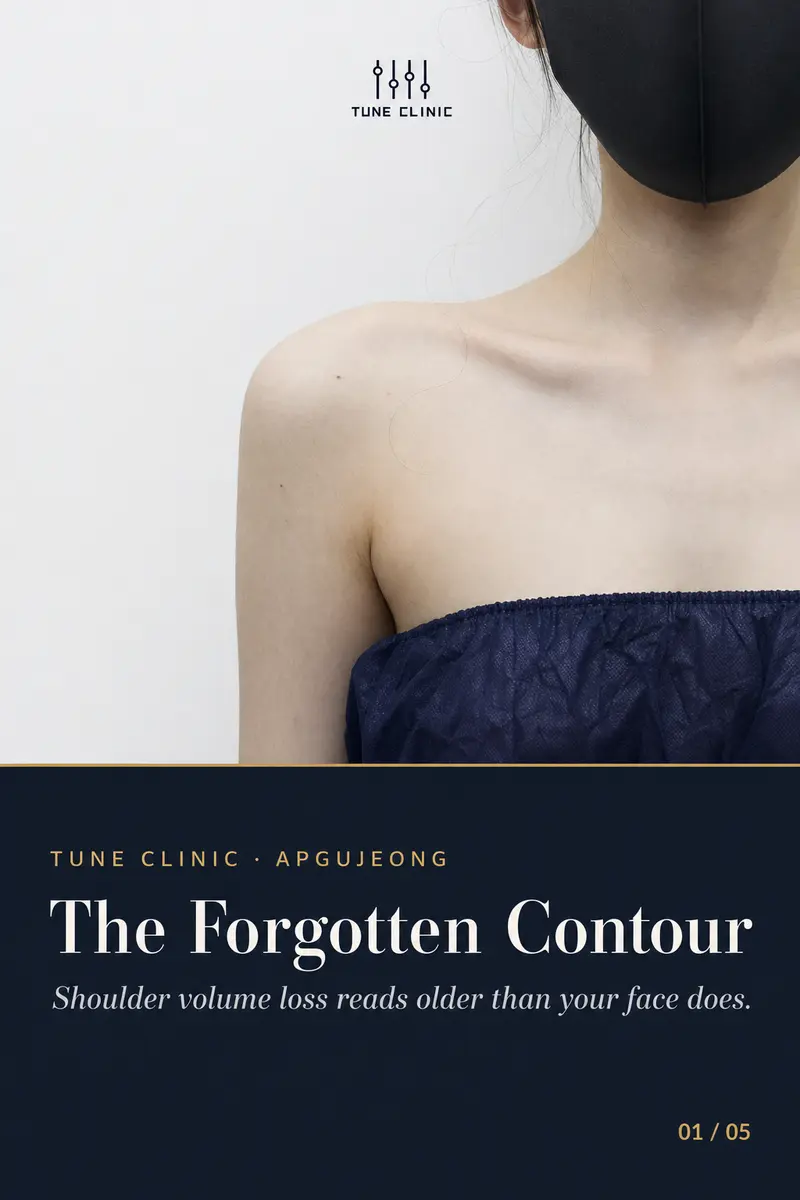
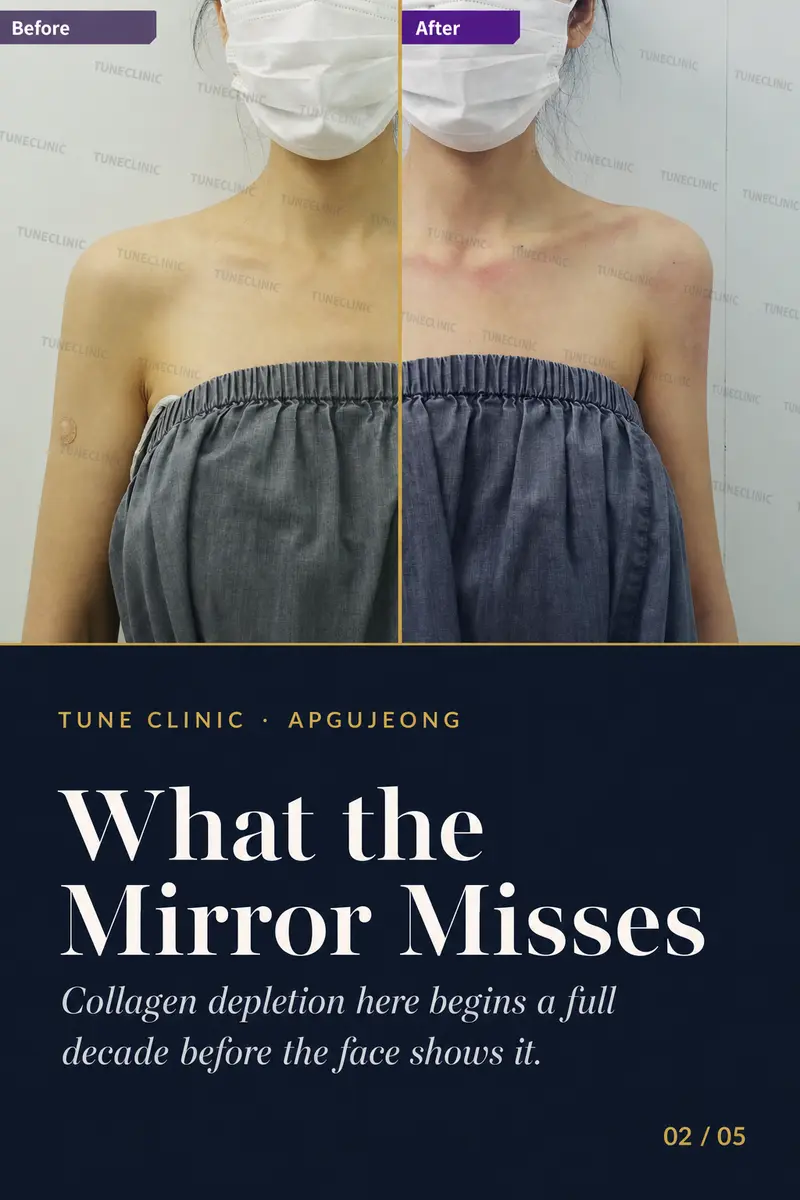

Volume loss in the shoulder-neck line produces visible structural decline — a sharpened trapezius ridge, a hollowed deltoid, a silhouette that reads older even when the face looks well-maintained. The tissue here loses collagen earlier than facial skin does, yet it is almost never included in a patient’s aesthetic treatment plan. Addressing it requires understanding two anatomically distinct zones and selecting injectables matched to tissue depth at each one.
Why Does the Shoulder Line Age Faster Than the Face?
Facial aging receives the most clinical attention, and the face has something the shoulder does not: a dense network of retaining ligaments and overlying fat compartments that slow the visual impact of collagen loss for years. The shoulder-neck region lacks this structural redundancy. The dermis over the deltoid and posterior trapezius is relatively thin, the subcutaneous fat is minimal, and the collagen matrix bears mechanical stress from daily movement. When collagen density drops — which small studies suggest begins in this region a full decade before equivalent facial changes become visible — there is little compensatory structure to mask it.
The result is a silhouette change that is read socially as weight loss, illness, or simply age. Patients rarely connect it to treatable tissue loss because the conversation in most clinics stops at the jawline.
The shoulder contour tells the story of the body’s collagen age, not just its chronological age. When I assess a patient for full-body contouring, the posterior shoulder line is as diagnostically relevant as the midface volume — and it is far more commonly overlooked.
What Happens in the Two Zones — Deltoid Hollow and Trapezius Ridge?
These zones are anatomically adjacent but biomechanically and structurally different, which is why a single-protocol approach underserves both.
Deltoid hollow: The lateral shoulder loses its rounded convexity as the muscle thins with age and disuse, and as the overlying dermis loses collagen support. What remains is a concavity that creates shadow and interrupts the smooth line from neck to upper arm. The tissue here is relatively mobile, and product placement must account for that movement.
Trapezius ridge: The posterior and superior trapezius responds differently. Volume loss here sharpens the bony and muscular outline in a way that reads as gauntness rather than definition. The ridge becomes prominent not because tissue has grown but because the soft tissue buffer around it has thinned.
Each zone responds best to a product and depth selection suited to its specific tissue quality — which is why a full assessment before any injection is not optional.
How Sculptra and Juvelook Work in This Context
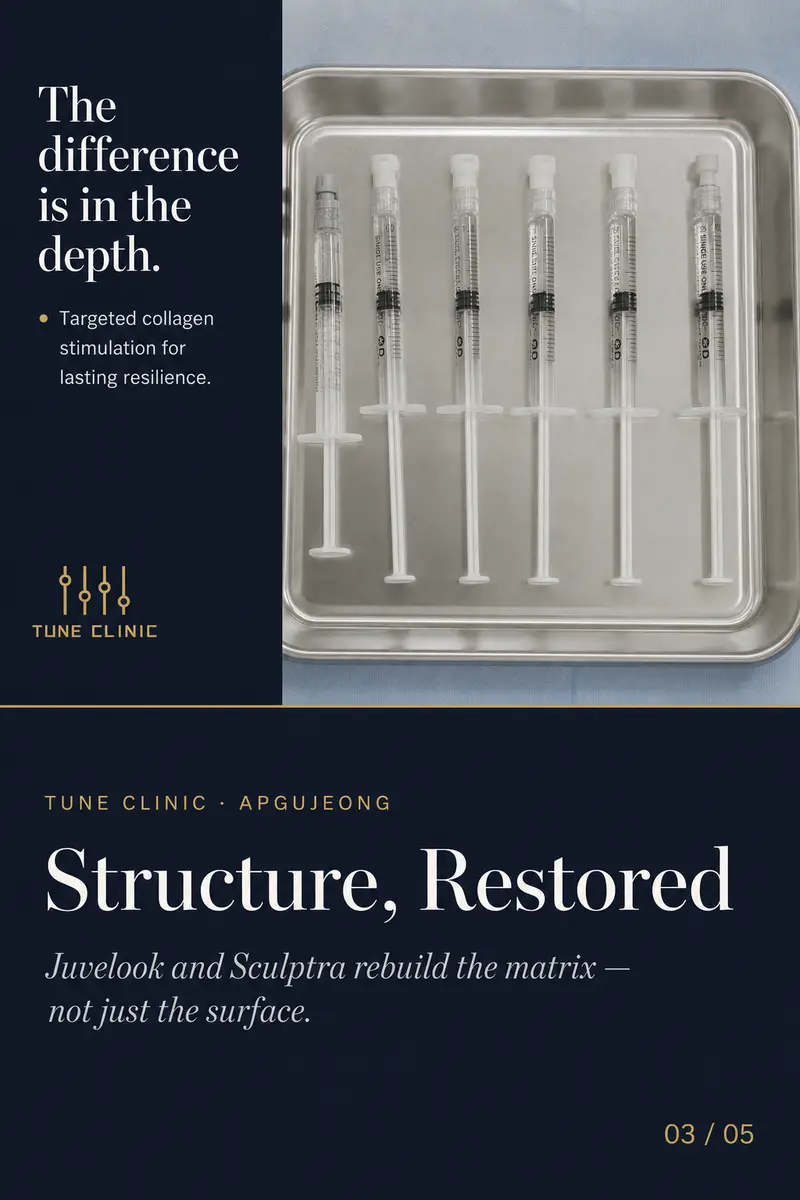
Sculptra — poly-L-lactic acid — is a biostimulator. It does not add volume directly; it triggers a fibroblast response that produces new collagen over several weeks to months. For areas requiring broad matrix restoration, it is typically the primary tool. Results build gradually and are proportionate to the patient’s own regenerative capacity.
Juvelook (available in Volume and Skin formulations) combines PDLLA microspheres with hyaluronic acid, offering both immediate hydration and progressive collagen stimulation. In the shoulder zone, the Volume formulation is generally more relevant, providing structural support in the dermis and subdermis while the biostimulatory effect matures. Used in combination with Sculptra, it allows the physician to address both immediate appearance and long-term matrix quality within a single protocol.
Neither product is filler in the conventional sense. Neither is used to simply inflate a hollow. The goal is tissue quality restoration — a distinction that matters clinically and in the patient’s experience of results.
Is Shoulder Contouring Right for You?
Not every patient who notices shoulder volume loss is a candidate for injectable biostimulators in this area. Physician assessment considers skin laxity, tissue depth, the degree of muscle atrophy versus dermal thinning, and the patient’s overall health and treatment history. In some cases, the presenting concern is better addressed through body composition changes, physical therapy, or a combination approach.
For patients who are candidates, the protocol is typically staged — Sculptra sessions spaced to allow collagen remodeling, with Juvelook layered in where appropriate. The number of sessions depends on the baseline tissue quality and the degree of volume deficit. Clinical experience suggests that visible improvement is often apparent after the second or third Sculptra session, with continued refinement over the following months.
For context on how biostimulatory injectables are selected and sequenced in a physician-led treatment plan, the design method used at Tune Clinic outlines the assessment framework.
FAQ
Can filler be used in the shoulder instead of Sculptra or Juvelook?
Conventional hyaluronic acid filler is not typically the appropriate choice for shoulder contouring. The area requires matrix rebuilding rather than simple volume displacement, and the mechanical stress of shoulder movement makes dense HA filler placement in this region less predictable. Biostimulators like Sculptra and Juvelook are better suited because they work with the tissue rather than sitting within it.
How many sessions are needed for shoulder contouring with Sculptra?
Most protocols involve two to four sessions spaced six to eight weeks apart, though the exact plan depends on the degree of volume loss and the tissue’s response. Sculptra works by stimulating collagen production over time, so results are not immediate — final outcomes are typically assessed three to six months after the last session. Your physician will assess progress and adjust the plan accordingly.
Is shoulder contouring painful, and what is the recovery like?
The injection process involves mild discomfort typical of any subcutaneous injection; topical anaesthetic can reduce this. Post-treatment, patients may notice temporary swelling, redness, or bruising at the injection sites, which typically resolves within a few days. There are no activity restrictions specific to this area beyond avoiding pressure or massage at the sites immediately after treatment.
At what age does shoulder volume loss typically begin?
Collagen density in the shoulder-neck region can begin declining in the mid-to-late thirties, and in some individuals earlier depending on sun exposure, body composition changes, and genetic factors. Because this area lacks the structural redundancy of the face, the visual impact of collagen loss often becomes apparent sooner than equivalent facial changes — which is why patients in their forties frequently present with significant shoulder line change even when their faces appear well-maintained.
Can shoulder contouring be combined with other body or facial treatments?
Yes, and in a comprehensive aesthetic plan it often is. Shoulder and neck assessments can be integrated with facial biostimulator protocols, and in some patients the shoulder line is treated at the same visit as other body zones. The sequencing and combination depend on the overall treatment load and each product’s post-injection requirements — your physician will design a schedule that allows adequate recovery between sessions.
Ready to plan your treatment?
Tune Clinic Apgujeong offers English-language consultations with Dr. Ju and Dr. Cha — a structured assessment, not a sales call.
→Book an appointmentto pick a time that fits your Seoul itinerary.
→Message us on WhatsAppto ask in English before you commit.