On this page


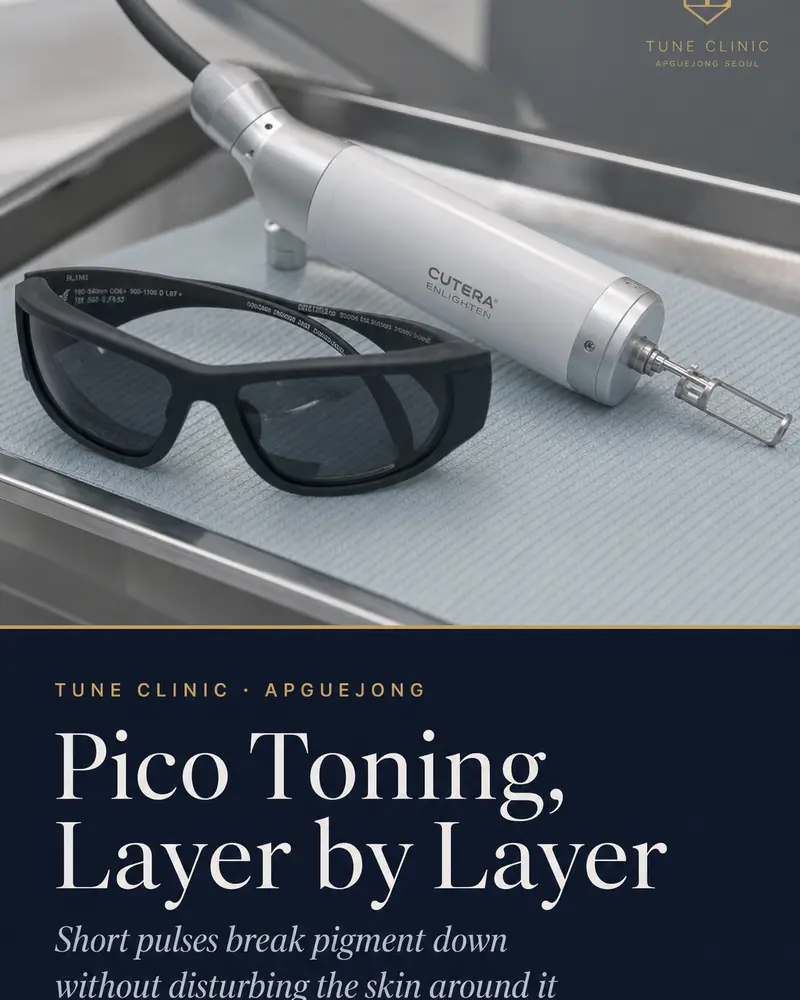
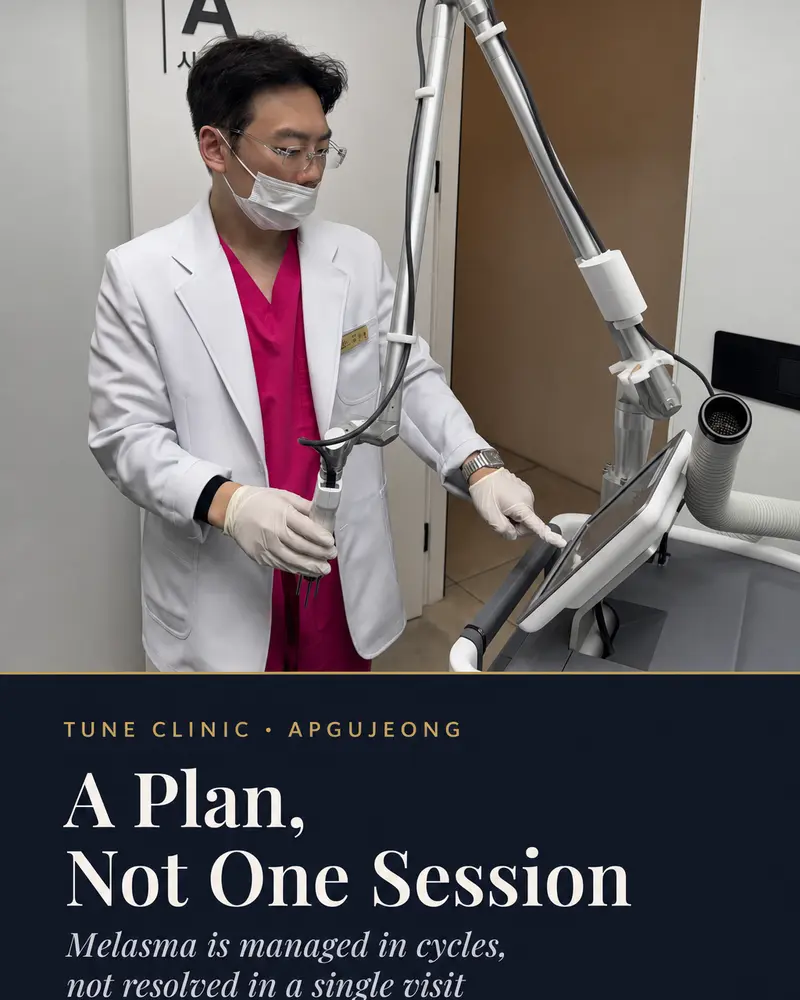

Pico toning is a low-fluence, multi-pass laser treatment that breaks down pigment particles using ultra-short pulses, and it is one part — not the whole — of a proper summer pigmentation plan. Surface sun spots often respond well to a course of pico sessions; melasma, which sits deeper and is driven by hormones and heat as much as UV, requires a longer management protocol built around the laser rather than solved by it.
You pull up a photo from spring and compare it to one from last week, and the spots are simply there now — you don’t remember them arriving. That is how summer pigment works. It accumulates quietly under sunscreen you thought was enough, and by the time it’s visible, the skin has already been building it for weeks.
Why Do Spots Show Up Suddenly In Summer?
Pigment doesn’t appear overnight — it accumulates under the surface for weeks before it becomes visible, and summer UV accelerates that process sharply. Melanocytes, the pigment-producing cells in the skin, respond to UV exposure by producing more melanin as a protective response. In early exposure, this shows up as a faint unevenness that’s easy to dismiss. By midsummer, cumulative exposure — plus heat, which independently stimulates pigment in melasma-prone skin — pushes it to a level patients suddenly notice in photos or bright bathroom lighting.
This is also why a spring skincare routine can quietly stop being enough. SPF that felt adequate in April may not account for longer days, more outdoor time, and higher UV index in July and August.
Not All Pigment Sits The Same — Why Does That Matter?
Surface pigment and melasma sit at different depths in the skin, and treating them the same way is a common reason patients feel disappointed after a single laser session. Sun spots and freckles typically sit in the epidermis, the skin’s outer layer, and respond predictably to pico toning. Melasma often extends into the dermis, the deeper layer, and behaves less like a stain to be lifted and more like a condition to be regulated.
Before recommending pico toning, we look at:
- Pigment depth and pattern — symmetric cheek and forehead distribution suggests melasma; scattered discrete spots suggest sun damage
- Skin history — prior heat exposure, hormonal changes, or recurrence after previous treatment
- Baseline skin barrier condition, since compromised skin tolerates energy-based treatment differently
A physician’s-eye read: if the pigment gets darker with heat and lighter with time off the sun, that pattern tells you more than the color itself does.
How Does Pico Toning Actually Treat Pigment?
Pico toning uses picosecond-domain laser pulses, delivered at low fluence over multiple passes, to fragment pigment particles small enough for the body to clear naturally. We use the Cutera Enlighten platform, alternating 1064nm and 532nm wavelengths depending on pigment depth and skin tone. The shorter pulse duration limits heat spread into surrounding tissue, which is part of why downtime is typically minimal — mild redness for a few hours, occasionally faint pinpoint bleeding the following day.
For sun spots, a course of four to six sessions spaced roughly two to four weeks apart is common, though the number varies with how much pigment has accumulated. For melasma, pico toning is one component of a longer regimen — it is not typically used as a standalone fix, because used aggressively or too frequently, it can trigger rebound pigmentation in melasma-prone skin. This is why session spacing and energy settings are judgment calls, not fixed protocols.
Why Is Melasma A Plan And Not A Single Treatment?
Melasma is managed across cycles because it is hormonally and thermally reactive, meaning it can return even after it visibly clears. A single laser session addresses what’s visible that week; it does nothing about the underlying tendency of that skin to re-pigment under heat, UV, or hormonal shifts. In our clinic, a melasma plan typically layers pico toning with topical regimens, strict sun avoidance, and sometimes oral agents, reassessed over months rather than judged after one visit.
What pico toning cannot do is permanently switch off a melasma-prone tendency. Patients who expect a single visible result and no maintenance are not good candidates for pico alone — they need the fuller plan, and honestly, some patients decide the maintenance commitment isn’t for them right now. That’s a reasonable choice, not a failure of the treatment.
FAQ
How many pico toning sessions are needed for melasma?
Melasma typically requires an ongoing series rather than a fixed number — often six or more sessions over several months, followed by maintenance visits. The exact count depends on depth, recurrence history, and how consistently sun protection and topical care are followed between sessions.
Can pico toning make melasma worse?
Used at inappropriate settings or too frequently, pico toning can trigger post-inflammatory pigmentation or rebound darkening in melasma-prone skin. This is why low fluence, conservative pass counts, and physician assessment before each session matter more for melasma than for simple sun spots.
How long do pico toning results last for sun spots?
For genuine sun-induced spots, results are often durable for a year or more with consistent sun protection, since the underlying cause — cumulative UV exposure — is not actively reoccurring the way melasma triggers are. New spots can still form from fresh sun exposure.
Do I need sunscreen if I’m doing pico toning?
Yes — daily broad-spectrum sunscreen is not optional during or after pico toning. Treated skin is temporarily more UV-sensitive, and without consistent protection, both sun spots and melasma commonly return faster than the treatment cleared them.
Ready to plan your treatment?
Tune Clinic Apgujeong offers English-language consultations with Dr. Ju and Dr. Cha — a structured assessment, not a sales call.
→Book an appointmentto pick a time that fits your Seoul itinerary.
→Message us on WhatsAppto ask in English before you commit.