On this page
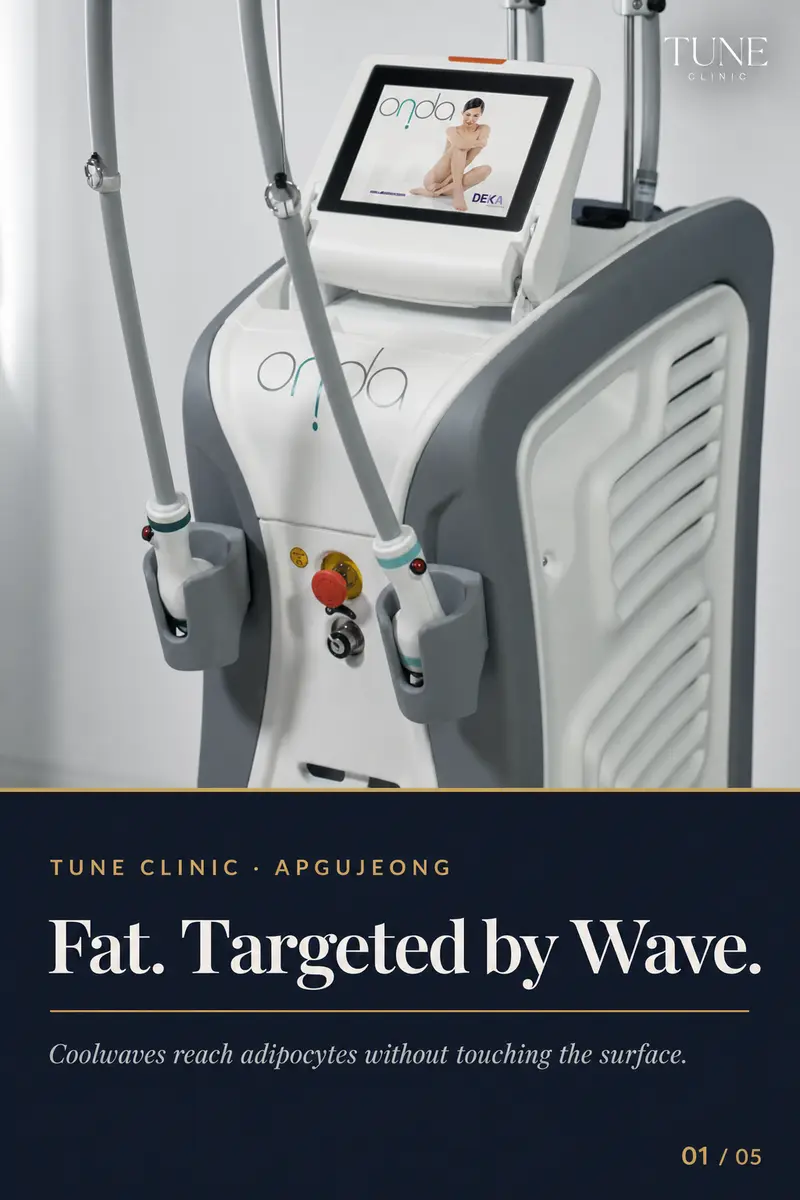

Onda Coolwaves delivers microwave-frequency energy at a wavelength that subcutaneous adipose tissue absorbs preferentially, disrupting fat cells while the overlying skin and deeper connective tissue remain largely unaffected. The result is targeted fat reduction without the thermal surface load that typically demands recovery time. It is not a replacement for every body-contouring method, but for patients with localised subcutaneous deposits and no tolerance for downtime, it occupies a clinically distinct position.
How Does Coolwave Energy Actually Work?
Conventional body-contouring devices tend to apply broad thermal or mechanical energy — cooling, high-intensity focused ultrasound, or radiofrequency — across a treatment zone and rely on the body to clear damaged tissue. Each method carries trade-offs: surface discomfort, prolonged inflammation, or a recovery window that rules out normal activity.
Onda operates differently by exploiting a biophysical property of adipose tissue. Fat cells have a dielectric profile that makes them absorb microwave energy at the Coolwave frequency more readily than surrounding structures. Skin receives a fraction of the thermal load; connective tissue and muscle are substantially spared. The adipocytes are disrupted, triggering a natural clearance process over weeks, while the patient leaves the clinic without visible redness or restriction.
The distinction worth understanding is not simply “no downtime” as a marketing claim — it follows from the selectivity of the frequency. When the energy finds its target before it disperses, you can deliver a meaningful dose without collateral thermal burden.
What Does Physician-Led Calibration Change?
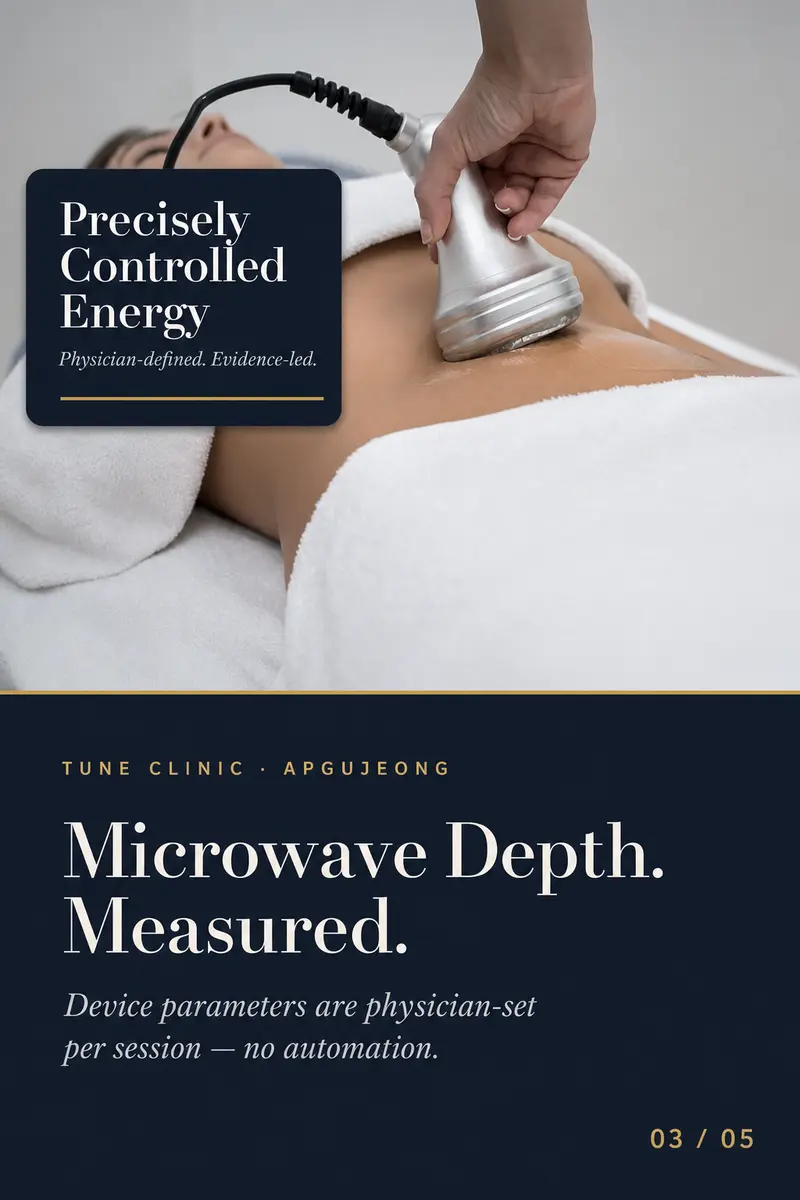
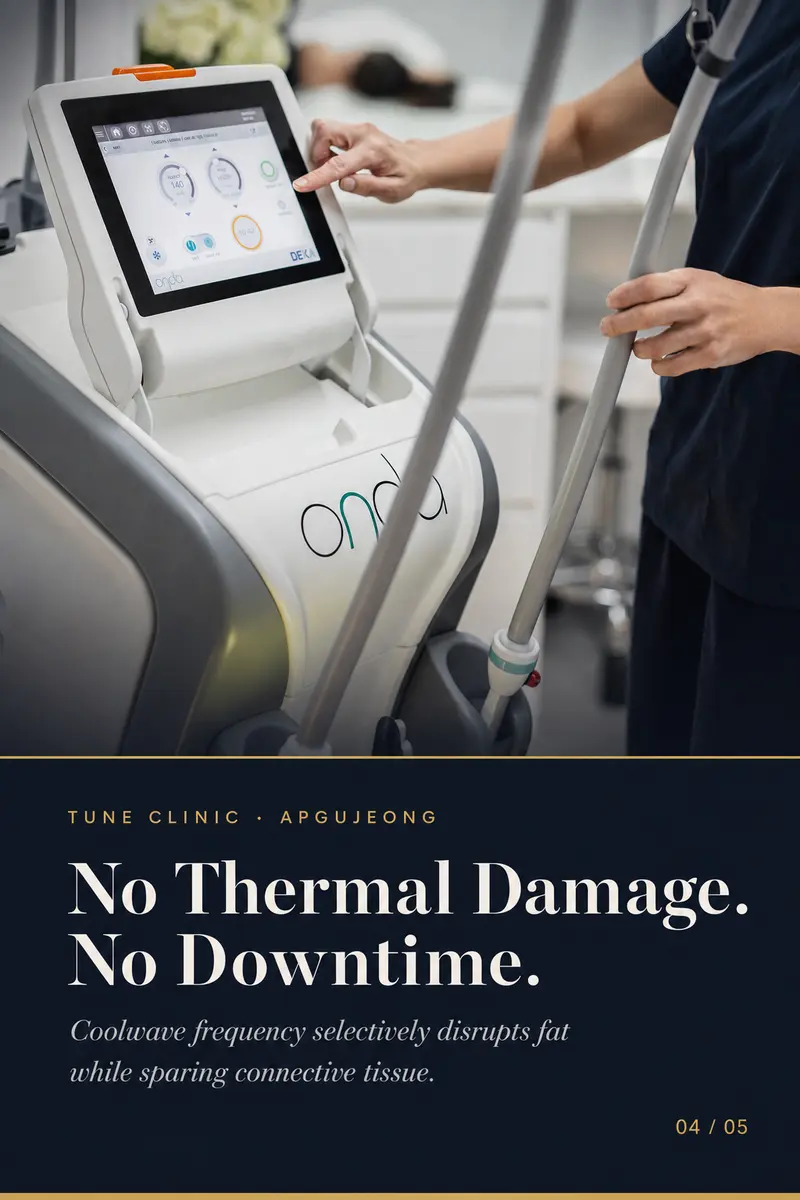
Onda is not an automated protocol device. Depth, intensity, and pass pattern are set by the treating physician before and during each session based on the individual patient’s anatomy — subcutaneous layer thickness, tissue density, and treatment area geometry.
This matters for two reasons. First, adipose depth varies considerably between patients and even between zones on the same patient. A flat parameter set applied to everyone produces inconsistent energy delivery. Second, tissue response changes across a course of sessions; a physician recalibrates rather than repeating the same settings mechanically.
What the Mapping Step Is For
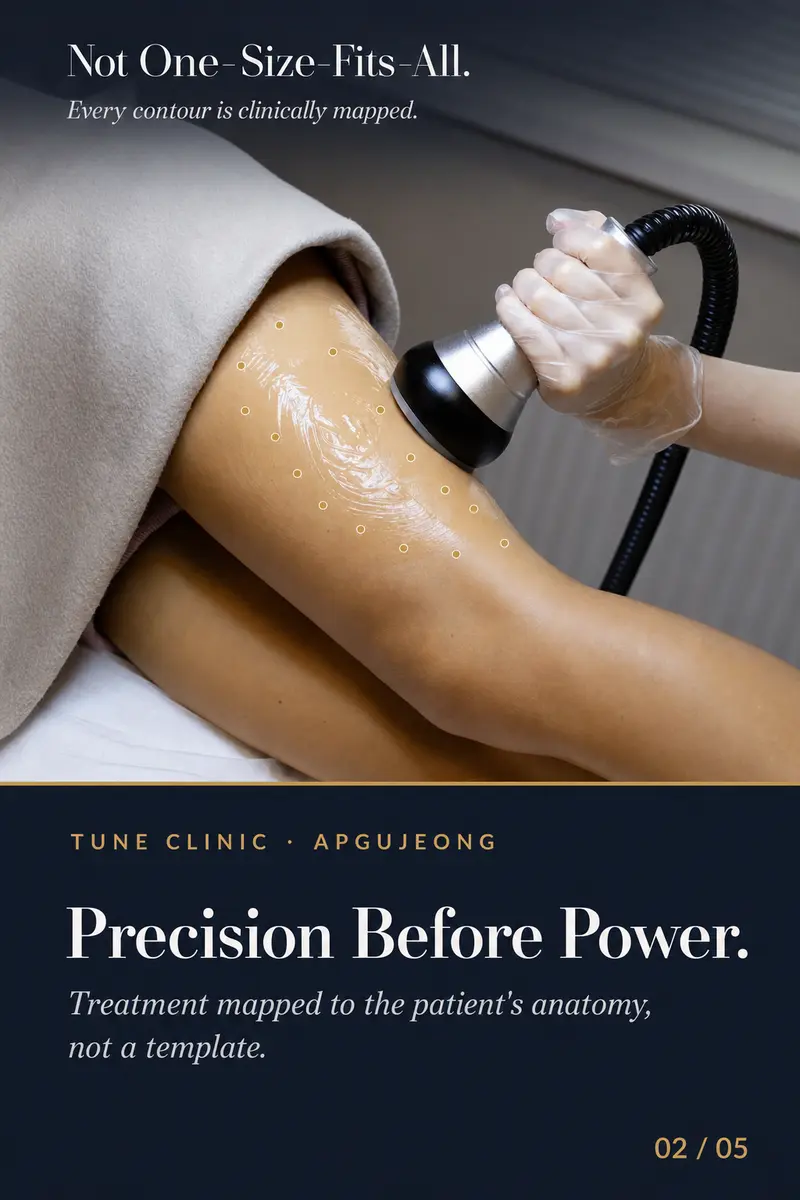
Before the first pass, the treatment area is physically assessed and mapped. This is not decorative. It determines where handpiece positioning should be adjusted, where connective tissue attachments alter energy distribution, and whether any area warrants a modified approach. Patients sometimes arrive expecting a technician to run a device across the abdomen in a fixed pattern. The mapping step is the reason that does not happen here.
Is Onda Coolwaves Right for Your Concern?
Onda is most precisely matched to localised subcutaneous fat — abdomen, flanks, inner thighs, and similar areas where the deposit is discrete and the overlying skin has reasonable quality. It is not a weight-loss treatment and is not positioned as one. Patients with diffuse excess, significant skin laxity, or visceral fat as the primary concern will be counselled differently.
For patients where skin quality is a co-concern alongside fat, Onda can be combined within a treatment plan — for example, alongside radiofrequency approaches that address dermal laxity. The physician-led design method at Tune Clinic treats these as separate variables to be sequenced correctly rather than addressed with a single device.
Patients sometimes compare Onda to cryolipolysis or high-intensity focused ultrasound. The differences are meaningful: cryolipolysis applies prolonged cold across a broad zone and frequently produces post-treatment soreness and firmness lasting several weeks; Onda’s selectivity avoids that thermal surface burden. Focused ultrasound targets a different tissue plane and mechanism. Neither is universally superior — the right tool depends on the anatomical picture, which is why assessment precedes any recommendation.
How Many Sessions Are Typically Needed?
Clinical experience suggests most patients require a series of sessions rather than a single treatment, with the number depending on the volume and distribution of the target area. Fat clearance is gradual — the disrupted adipocytes are processed over weeks — so results are not immediately visible and do not peak at the end of the first session. Realistic timelines and session intervals are discussed at the initial body-assessment consultation, where imaging or physical mapping informs the plan rather than a fixed package.
For patients considering whether body contouring should be combined with lifting or skin-tightening work, the relevant comparison is between Onda’s fat-layer action and the dermal-plane action of monopolar radiofrequency such as Oligio or Thermage FLX — these address different tissue depths and can be sequenced when both are indicated.
FAQ
Does Onda Coolwaves hurt during treatment?
Most patients describe a mild warming sensation during the pass with no sharp pain; the absence of aggressive surface cooling (as in cryolipolysis) and the limited skin thermal load account for this. Tolerance varies by area, and the physician adjusts intensity accordingly. Post-treatment discomfort is typically minimal and does not restrict normal activity.
How is Onda different from cryolipolysis (fat freezing)?
Cryolipolysis applies sustained cold across a suction cup, inducing cell death through freezing and frequently causing post-treatment soreness, firmness, or paradoxical hyperplasia in a minority of patients. Onda uses microwave energy absorbed preferentially by adipocytes rather than broad cold exposure, which generally means less surface tissue stress and no significant recovery period. The mechanisms and risk profiles are distinct.
How soon will I see results after Onda Coolwaves?
Fat disrupted by Coolwave energy is cleared gradually through the lymphatic and metabolic systems, so visible reduction typically becomes apparent over several weeks after each session rather than immediately. A full course of sessions is usually required before the final result can be assessed. Physicians set realistic timelines at the consultation based on the individual anatomy rather than fixed promotional windows.
Can Onda be combined with other body or skin treatments?
Yes, and combination planning is common. Onda addresses the subcutaneous fat layer; if skin laxity or surface quality is also a concern, radiofrequency or other skin-tightening modalities that work at a different tissue depth can be incorporated into a sequenced plan. The treating physician determines the appropriate order and interval between treatments.
Who is not a good candidate for Onda Coolwaves?
Patients whose primary issue is visceral fat, diffuse weight excess, or significant skin redundancy rather than discrete subcutaneous deposits are unlikely to be the right fit for Onda as a standalone treatment. Active skin infections, certain implanted devices, and pregnancy are standard contraindications. A physician assessment is necessary to determine candidacy, which is why the consultation precedes any treatment commitment.
Ready to plan your treatment?
Tune Clinic Apgujeong offers English-language consultations with Dr. Ju and Dr. Cha — a structured assessment, not a sales call.
→Book an appointmentto pick a time that fits your Seoul itinerary.
→Message us on WhatsAppto ask in English before you commit.