On this page

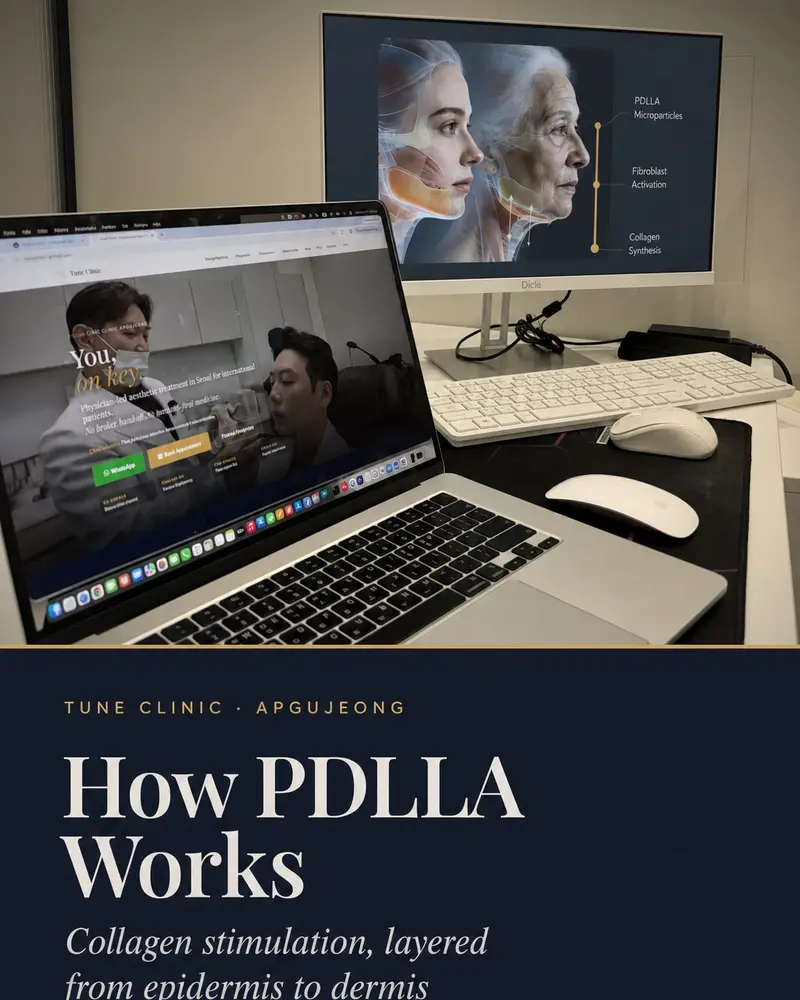

Olidia Skin is a PDLLA-based collagen stimulator — PDLLA stands for poly-D,L-lactic acid, a biodegradable material that prompts the skin to rebuild its own collagen — injected in fine, superficial layers to improve tone and texture without adding facial volume. It is not a filler and it is not designed to reshape contour. Its job is to make the skin itself look better under direct light, not to change the architecture underneath it.
You zoom into a photo before you look in the mirror, trying to work out whether the glow you’re seeing is light or skin. Filters and good lighting can fake that look for a single frame, but the surface you actually touch every morning tells the truth. That gap between the photo and the mirror is usually a texture problem, not a volume problem.
Why Do Some Faces Glow Without Looking Filled?
Because the glow is coming from the skin’s surface quality — light reflection, evenness, fine texture — rather than from added bulk underneath it. A face can be well-volumized and still look dull, or modestly volumized and look luminous, depending on how the skin itself scatters light.
Fillers and volumizers are built to restore lost structure: cheek projection, jawline definition, under-eye hollowing. They can make a face look rested and balanced. But they do very little for the epidermis — the outermost skin layer — or for the fine collagen network just beneath it, which is what actually determines whether skin looks smooth and reflective versus flat and thin. Faces that read as “glass skin” almost always have that surface quality corrected first, before or independent of any volume work.
How Does Olidia Skin Actually Work?
Olidia Skin works by depositing PDLLA microparticles in controlled layers from the epidermis down into the upper dermis, where they trigger a gradual collagen-building response over several weeks. The result is a slow, physiological thickening and tightening of the skin itself — not an immediate mechanical fill.
This is a different mechanism from a plain hyaluronic acid skin booster, which mainly adds hydration, and different from Rejuran’s polynucleotide repair, which focuses on tissue healing signals. PDLLA’s role is specifically to stimulate the patient’s own collagen synthesis. Because the particles are placed at multiple depths rather than in one bolus, the collagen response builds evenly across the treated area instead of concentrating in one spot — which is part of why the result reads as tone correction rather than swelling.
What surprises patients most is how little the face changes in the mirror immediately after treatment — the change is in how the skin behaves under light two or three weeks later, not in how it looks that afternoon.
What Does an Olidia Skin Session Actually Involve?
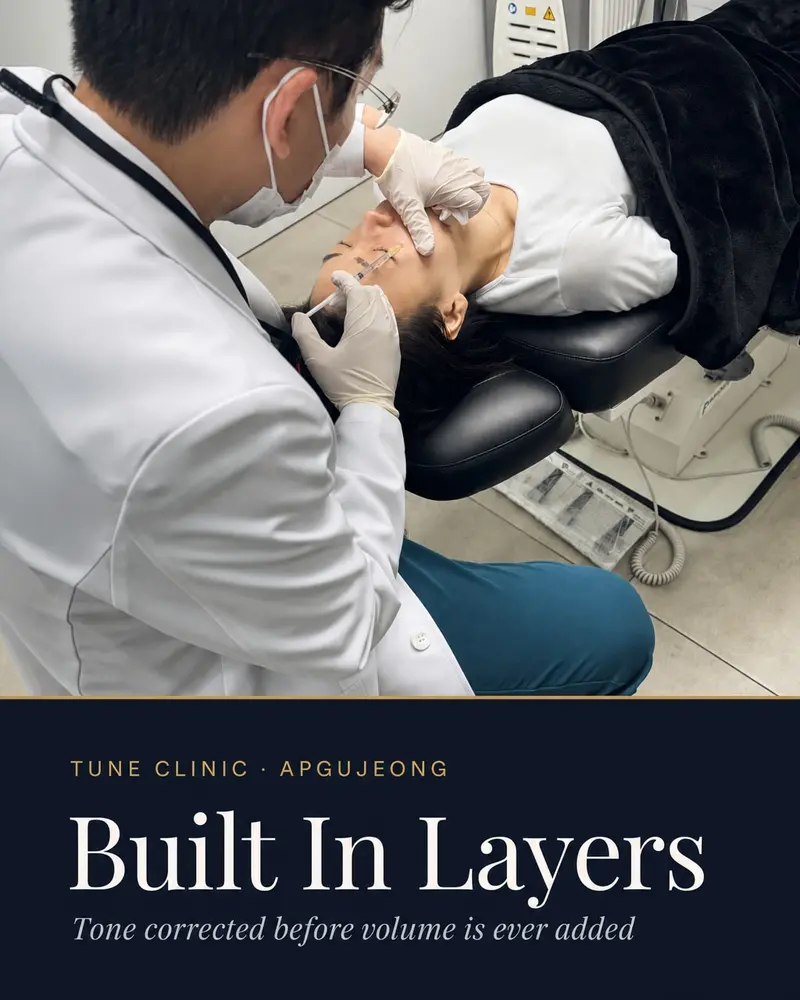
A session involves a series of fine, superficial injections across the treatment area, typically taking under 30 minutes, with mild redness or pinpoint bruising as the main immediate effect. Most patients return to normal activity the same day.
In our clinic, we typically plan Olidia Skin as a short course rather than a single visit — most protocols involve two to three sessions spaced several weeks apart, since collagen remodeling is a cumulative process. Results in most patients continue to build for one to two months after the final session and are reported to hold for several months before a maintenance session is considered, though this varies with skin quality and age.
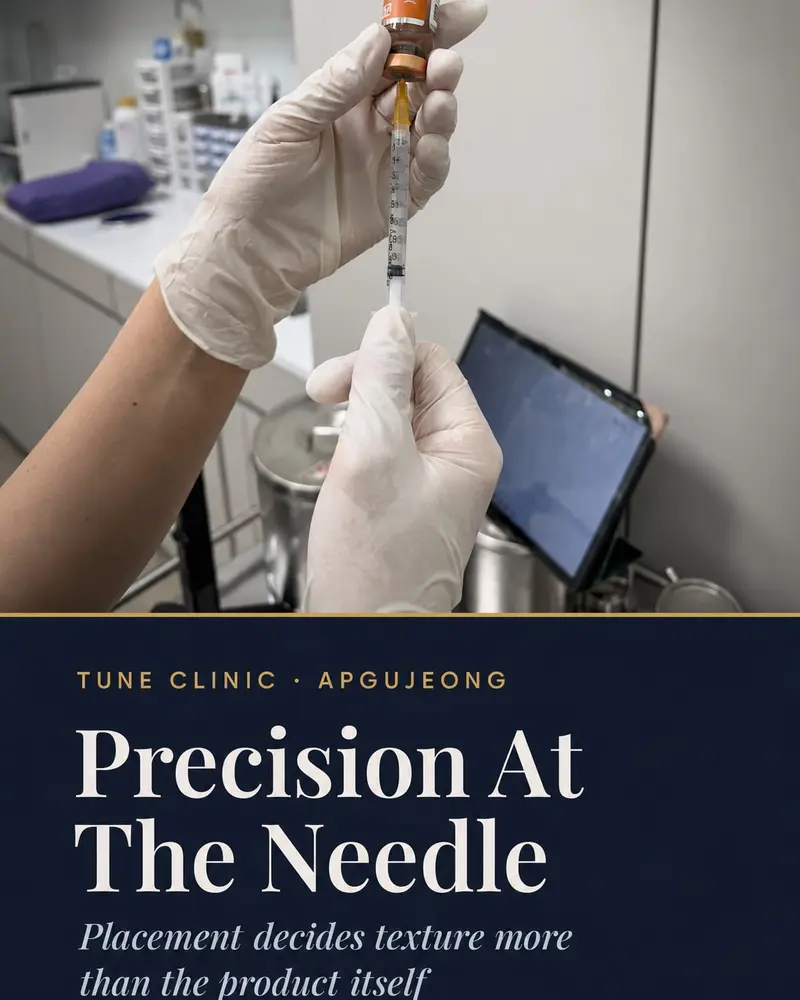
Placement Matters More Than the Product
The formula is standardized, but the injection plan is not. Depth, spacing, and how much product goes into the epidermal versus dermal layer all change the outcome — which is why we assess skin thickness and laxity before deciding the layering pattern, the same physician-led logic that guides any structural plan in our clinic, described further in our design method.
Who Should Not Get Olidia Skin?
Olidia Skin is not the right choice for patients whose primary concern is lost volume, sagging, or bone-level structural change — those cases call for a volumizer, a lifting device, or filler placed at a different depth, not a superficial collagen stimulator. It is also not appropriate for active skin infection, keloid-prone skin, or patients who are pregnant or breastfeeding.
Sometimes the honest answer is that a patient needs volume restoration first, and skin-quality treatment second — or the reverse. If contour is the concern, we discuss options like filler or a collagen-stimulating volumizer such as Juvelook Volume before considering a surface-focused product like Olidia Skin at all.
FAQ
Is Olidia Skin the same as a filler?
No. Olidia Skin is a PDLLA collagen stimulator placed superficially to improve tone and texture, while fillers add volume and structure at a deeper level. The two address different problems and are sometimes combined, but they are not interchangeable.
How many sessions of Olidia Skin are needed to see results?
Most protocols involve two to three sessions spaced several weeks apart, since collagen stimulation builds gradually rather than appearing after one visit. Visible improvement in tone and texture typically continues for several weeks after the final session.
Does Olidia Skin cause swelling like filler?
Olidia Skin is designed to avoid the puffiness associated with volumizers because it works at a superficial level and stimulates the skin’s own collagen rather than adding bulk. Mild redness or pinpoint bruising can occur right after injection but resolves within a few days.
Can Olidia Skin be combined with other treatments?
Yes, in many cases. It is commonly paired with volumizing treatments or energy-based devices, but the sequencing and spacing depend on individual skin quality, which is why we assess each case before combining protocols rather than defaulting to a package.
Ready to plan your treatment?
Tune Clinic Apgujeong offers English-language consultations with Dr. Ju and Dr. Cha — a structured assessment, not a sales call.
→Book an appointmentto pick a time that fits your Seoul itinerary.
→Message us on WhatsAppto ask in English before you commit.