On this page



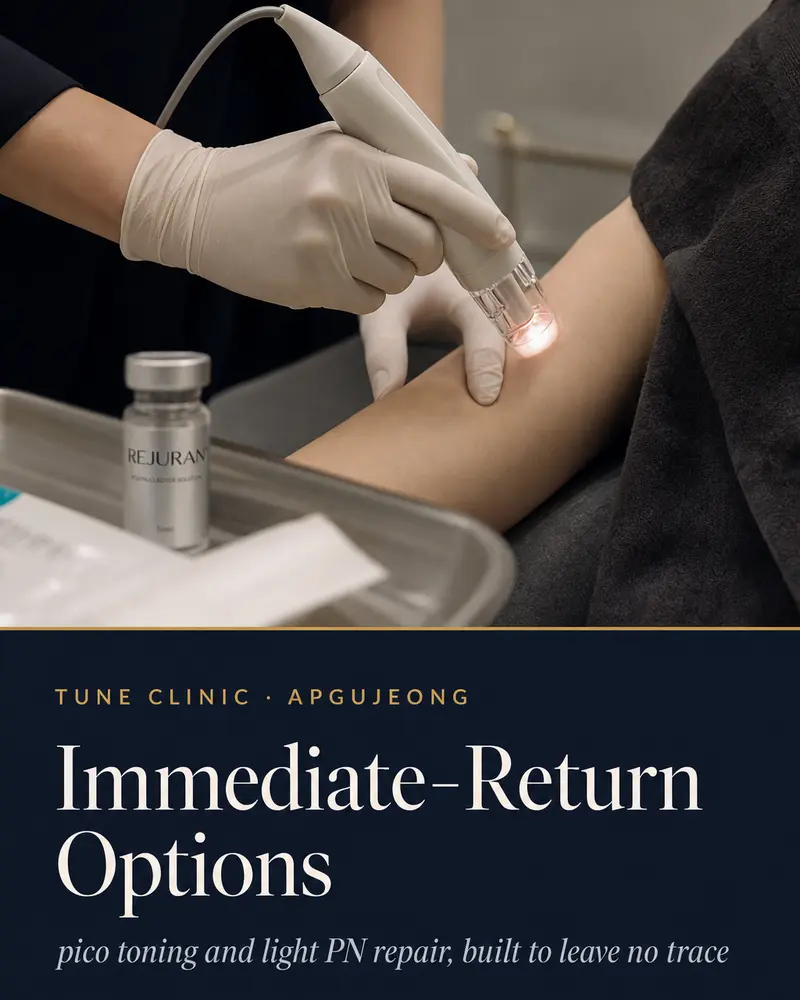

Zero-downtime treatments safe before a flight are those that avoid open skin, active peeling, or swelling that cabin pressure and dehydration can worsen — in practice, that usually means pico toning, low-setting Rejuran (polynucleotide) injections, and light Juvelook Skin sessions, not resurfacing lasers, deep peels, or aggressive microneedling. The safest options leave no visible mark within hours, not days.
You check the calendar, then check it again, counting the days between your appointment and your flight. You have read that a treatment can leave you glowing, but you have also read the fine print about redness, swelling, or peeling — and your itinerary has no room for any of it.
How Do You Know Which Treatments Are Safe Before a Flight?
The test is simple: does the treatment break the skin barrier, and does it provoke swelling that peaks after you leave the clinic? If either answer is yes, it is not a pre-flight treatment, regardless of how it is marketed.
In our clinic, we sort every option into three recovery tiers before we ever discuss which one suits a traveler:
- Immediate return — no visible downtime; you can go straight to dinner or the airport.
- Two to three days — mild redness, pinpoint marks, or light swelling that settles before it’s noticeable in photos.
- A week or more — visible peeling, bruising, or swelling that needs to fully resolve at home.
This is not a marketing tier system. It reflects what actually happens to the skin barrier and the timeline your itinerary has to absorb.
What Happens If You Fly Too Soon After a Treatment?
Flying too soon after an aggressive treatment can worsen swelling, prolong redness, and in some cases increase the risk of irritation or infection at unhealed injection or resurfacing sites. Cabin pressure changes and low humidity dehydrate skin that is already compromised, and prolonged sitting can pool fluid in a freshly treated face.
This is why we do not simply ask “when do you fly” and then pick a treatment. We ask what the skin needs first, and work backward from the departure date only after that assessment.
A treatment that looks calm on the outside can still be actively remodeling underneath. The travel question isn’t just ‘does it look fine’ — it’s whether the skin is still doing repair work that a twelve-hour flight will interrupt.
Which Treatments Fit an Immediate-Return Window?
Pico toning, light PN (polynucleotide) sessions, and superficial Juvelook Skin treatments are the three most reliable immediate-return options in our practice. Each works on the skin’s surface or shallow dermis without creating a wound that needs days to close.
Pico toning (we use the Cutera Enlighten) breaks down pigment with short pulses and typically causes only faint, hours-long redness — most patients see it fade before they leave the building. Rejuran delivers polynucleotides — salmon-derived DNA fragments that support tissue repair — through fine needles; at conservative depths and volumes, marks resolve within a few hours to a day. Juvelook Skin, the superficial layer of the Juvelook line, is dosed lightly enough for texture and tone without the deeper swelling associated with Juvelook Volume.
None of these replace what a resurfacing laser or a deep collagen-stimulating protocol can do over months. They are chosen specifically because they trade some depth of result for a return-to-boarding-gate timeline.
Why the Room Matters As Much As the Device
A treatment room built for calm — not spectacle — matters here too. Precise dosing and shallow, controlled technique are what keep these sessions in the immediate-return tier; rushed or over-dosed application can push even a “safe” treatment into the three-day category.
What Should You Skip If You’re Leaving in 72 Hours?
Skip anything that causes visible swelling, bruising, or skin breakdown that needs days to resolve — this includes deeper Juvelook Volume sessions, Sculptra, filler in mobile areas, resurfacing lasers, deep chemical peels, and RF microneedling at aggressive settings. Lifting treatments like Ultherapy or Thermage are generally low-downtime but still carry a window of transient swelling that we prefer patients observe before flying long-haul.
Sometimes the honest answer is not a treatment at all — it’s a note to come back after the trip. A patient traveling in three days with visible sun damage may be a very good candidate for a resurfacing plan, just not one that starts this week. Physician judgment here means matching the treatment to the calendar, not stretching the calendar to fit the treatment. For a longer-view plan once travel isn’t a constraint, we typically map next steps around a physician-led design consult rather than defaulting to a single device.
FAQ
Can I get Botox before flying?
Botox is generally considered low-downtime, with only occasional pinpoint redness at injection sites that resolves within hours. Most patients can fly the same day. We still recommend at least a few hours between injection and boarding so any minor swelling can settle before extended sitting.
Is pico laser safe right before a flight?
Pico laser toning, using the Cutera Enlighten, is one of the more reliable immediate-return options. Redness is typically mild and fades within hours, though we advise strict sun protection during travel since freshly toned skin is more reactive to UV exposure at altitude and on arrival.
How long before a flight should I get Rejuran?
Light Rejuran sessions at conservative depth generally clear visible marks within a day, making them workable even close to a flight. For deeper Rejuran protocols (such as Rejuran HB for volume), we recommend a minimum of several days so swelling fully resolves before travel.
Does Juvelook have downtime before travel?
Juvelook Skin, the superficial layer of the line, causes minimal visible downtime and can often fit an immediate-return schedule. Juvelook Volume, which targets deeper structural support, involves more swelling and is better scheduled a week or more before departure, not days.
What treatments should I avoid right before international travel?
Avoid resurfacing lasers, deep chemical peels, aggressive RF microneedling, and deeper filler or collagen-stimulator injections in the days before a long flight. These carry swelling or barrier disruption that needs uninterrupted rest at home — flying through that window can prolong recovery and increase irritation risk.
Ready to plan your treatment?
Tune Clinic Apgujeong offers English-language consultations with Dr. Ju and Dr. Cha — a structured assessment, not a sales call.
→Book an appointmentto pick a time that fits your Seoul itinerary.
→Message us on WhatsAppto ask in English before you commit.