On this page
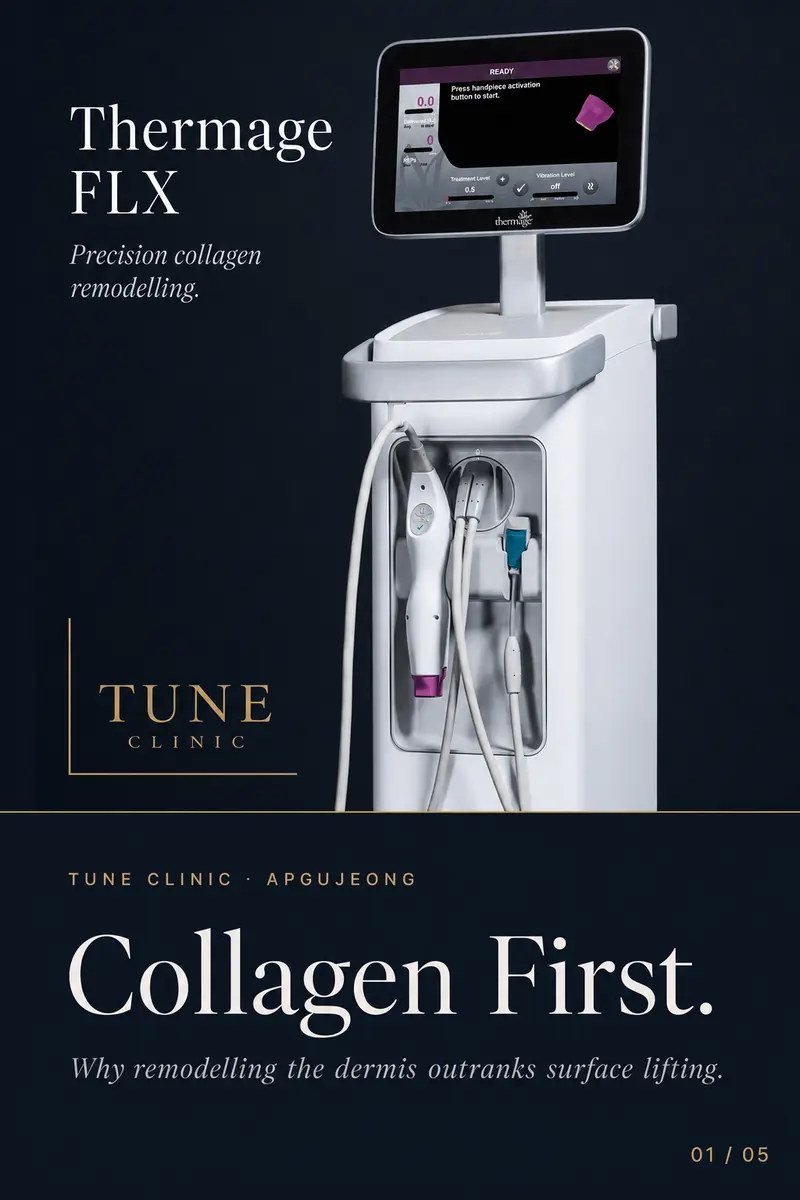

Thermage FLX uses monopolar radiofrequency to heat the deep dermis and subcutaneous tissue, triggering a sustained collagen remodelling response that unfolds over three to six months. It does not rely on surface resurfacing or mechanical lifting — it works by rebuilding the structural scaffold beneath the skin. For patients in their mid-to-late twenties through fifties who are experiencing early dermal thinning rather than frank tissue descent, that distinction matters considerably.
Why Does Collagen Loss Happen Before You See It?
Collagen synthesis begins declining measurably in the mid-twenties — roughly one percent of dermal collagen is lost per year after that point, though the rate varies by genetics, sun exposure, and lifestyle. The loss is silent at first. The dermis thins and loses its tensile organisation long before the overlying skin visibly sags or creases. By the time a patient notices laxity in the mirror, the underlying scaffold has already been compromised for years.
This is the core argument for treating the dermis early. Surface-only interventions — topical retinoids, light-based resurfacing, even some energy devices — address the epidermis and papillary dermis without reaching the deeper reticular dermis where mature collagen fibres reside. Monopolar radiofrequency is one of the few non-invasive modalities with the documented depth of penetration to reach that layer consistently.
How Does Thermage FLX Actually Remodel Collagen?
Monopolar radiofrequency works differently from ultrasound or laser. A single active electrode on the handpiece drives RF energy through the tissue toward a return pad placed elsewhere on the body. Because the current must travel through — rather than simply reflecting off — tissue, it generates volumetric heat at a controlled depth. The Thermage FLX system is calibrated to target the deep dermis and the fibromuscular layer below it.
The thermal effect has two phases:
- Immediate contraction. Heat above approximately 65°C denatures existing collagen triple-helix structures, causing the fibres to contract and shorten. This accounts for any immediate tightening sensation.
- Sustained neocollagenesis. The controlled thermal injury triggers a wound-healing cascade. Fibroblasts migrate to the zone of injury and begin synthesising new collagen over the following weeks and months. The remodelling continues for roughly three to six months post-treatment, which is why the final result is rarely visible at the two-week mark.
The question I ask before recommending Thermage FLX is not ‘does this patient need lifting?’ — it is ‘is the dermal scaffold still capable of responding to a remodelling stimulus?’ That assessment changes the entire treatment plan.
The Role of Precision Mapping
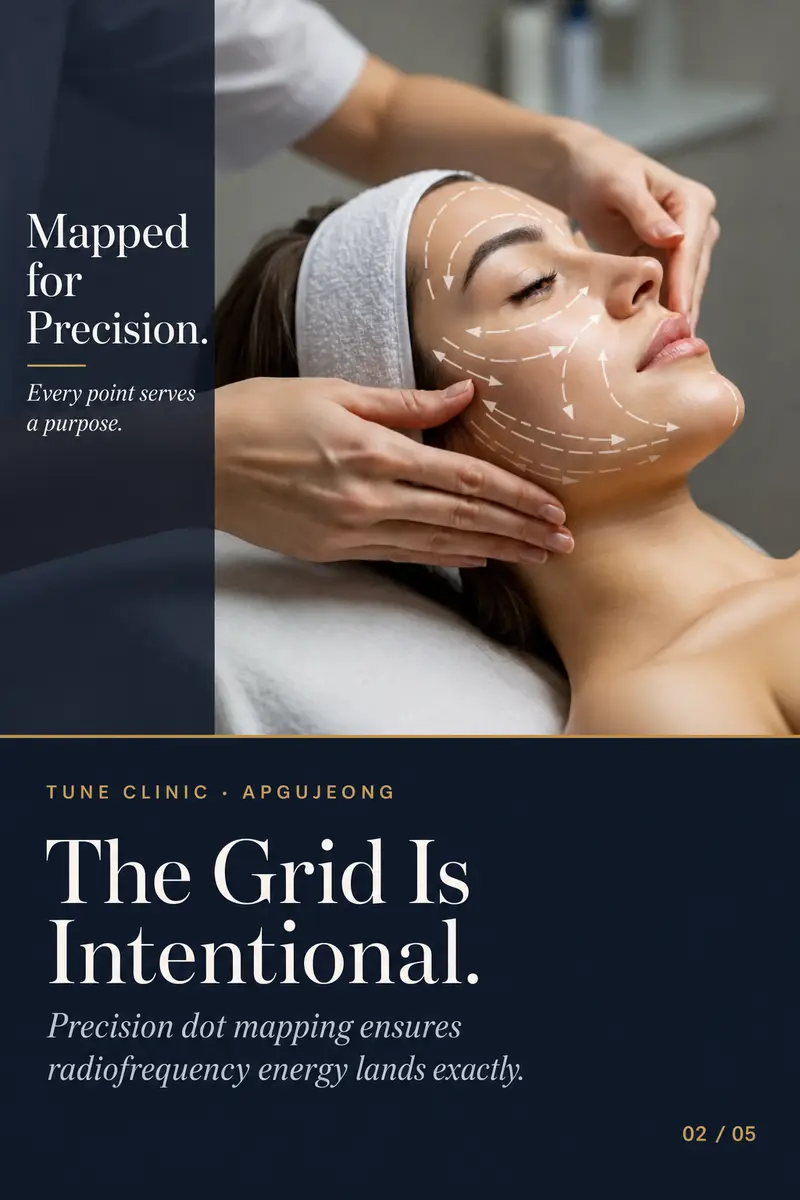
Thermage FLX uses a dot-mapping grid applied to the treatment area. This is not a formality. Radiofrequency energy that overlaps delivers cumulative heat to the same tissue zone — with monopolar RF, that carries real risk of uneven heating or inadvertent fat atrophy if the pattern is not followed precisely. A trained physician uses the grid to ensure systematic, non-overlapping coverage of the full treatment field, which is as important to safety as it is to efficacy.
Is Thermage FLX the Same as HIFU or Ultherapy?
No, and the distinction is clinically meaningful. Ultherapy and Shurink Universe use focused ultrasound energy, which creates discrete thermal coagulation points at defined depths — including the SMAS layer at approximately 4.5 mm. Thermage FLX uses monopolar radiofrequency, which generates a broader, more diffuse heating pattern across the dermis and subcutaneous tissue rather than discrete focal points.
Neither modality is categorically superior. They work through different mechanisms and suit different clinical presentations:
- Monopolar RF (Thermage FLX, Oligio) — better suited to diffuse dermal thinning, texture irregularity, and early laxity where volumetric collagen remodelling is the primary goal.
- Focused ultrasound (Ultherapy / Shurink) — better suited to patients with more defined tissue descent where SMAS-level energy deposition may produce additional lift.
For some patients, a combined approach — Thermage FLX for dermal quality, focused ultrasound for structural lift — is the most logical plan. That decision belongs to a physician assessment, not a menu selection. You can read more about how we approach that distinction on our physician-led design method page.
What to Expect: Timeline, Comfort, and Downtime
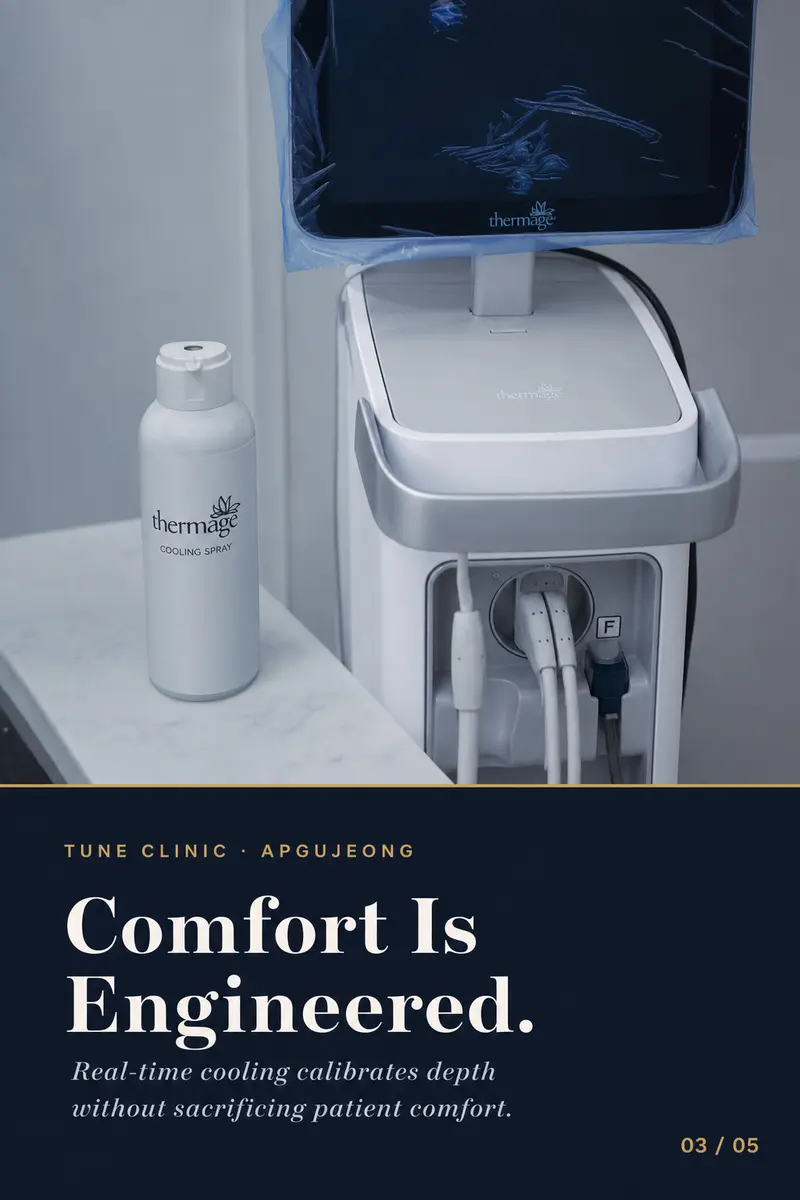
Thermage FLX is designed as a single full-face session, though treatment plans vary by patient. The system incorporates real-time cooling calibrated to the RF delivery — the surface of the skin is cooled at the moment of energy discharge, which allows therapeutic heat to be delivered to depth without causing epidermal damage or significant surface discomfort.
Downtime is minimal for most patients. Mild erythema for a few hours is common; significant swelling or crusting is not expected with standard treatment parameters. The visible result builds gradually:
- Weeks 1–4: Subtle change, if any. The remodelling process is underway but not yet visible.
- Months 2–3: Skin quality and firmness begin to improve noticeably.
- Months 4–6: The plateau of the remodelling response — typically the point of maximum visible result.
Maintenance intervals vary. Some patients sustain results well for eighteen to twenty-four months; others prefer an annual session. Physician assessment after the initial treatment informs the maintenance plan.
For patients who are also considering filler to address volume loss alongside collagen remodelling, the two approaches are not mutually exclusive — our filler overview explains how we integrate energy-based and injectable treatments when both are indicated.
FAQ
How is Thermage FLX different from other radiofrequency treatments?
Thermage FLX uses monopolar radiofrequency, which drives energy through the tissue using a single active electrode and a return pad, producing volumetric heating across the deep dermis and subcutaneous layer. Many other RF devices use bipolar or multipolar configurations that limit energy to shallower depths between closely spaced electrodes. The depth and diffuseness of the heating pattern is what distinguishes monopolar RF for deep collagen remodelling.
At what age should I consider Thermage FLX?
There is no fixed threshold, but collagen loss begins in the mid-twenties, and early treatment is generally more effective than waiting for visible laxity to establish. In clinical experience, patients in their late twenties to early forties often respond well because the fibroblast population is still robust enough to mount a strong remodelling response. That said, patients in their fifties and beyond can also benefit, particularly when the goal is improving skin quality rather than reversing established tissue descent.
Does Thermage FLX hurt?
The sensation is often described as a deep, intermittent warmth — noticeable but manageable for most patients. The device’s integrated cooling system delivers a cooling pulse at the skin surface each time RF energy is discharged, which significantly reduces surface discomfort. Tolerance varies, and a physician can adjust treatment parameters accordingly during the session.
How many Thermage FLX sessions do I need?
Thermage FLX is typically performed as a single session with results that continue developing over three to six months. Repeat sessions are generally spaced at twelve to twenty-four month intervals depending on how the individual patient’s skin responds and their baseline collagen status. A physician assessment after the initial treatment helps determine the appropriate maintenance schedule.
Can Thermage FLX be combined with other treatments?
Yes. Thermage FLX is frequently combined with focused ultrasound treatments for patients who have both dermal thinning and tissue descent, or with injectable treatments such as Rejuran or Juvelook for patients seeking simultaneous improvement in skin quality and hydration. The sequencing and combination are determined by physician assessment — the goal is to match the modality to the mechanism driving the concern, not to layer treatments arbitrarily.
Ready to plan your treatment?
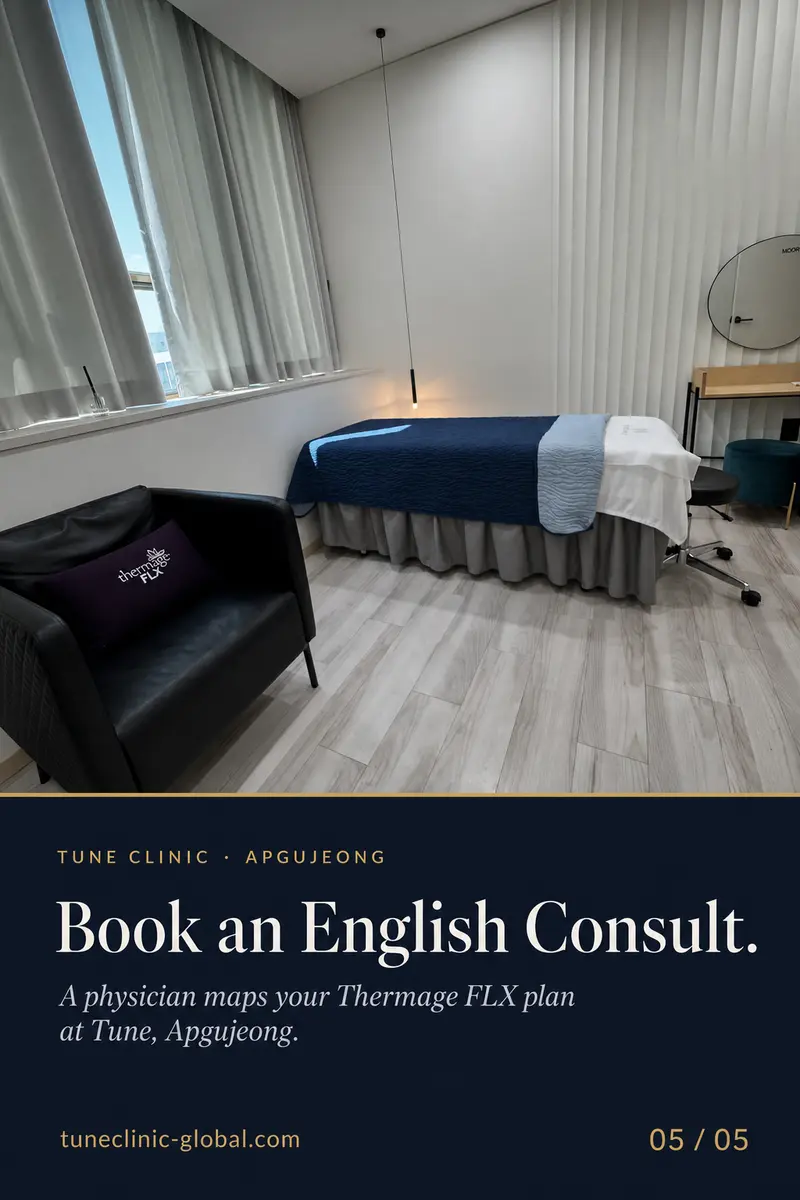
Tune Clinic Apgujeong offers English-language consultations with Dr. Ju and Dr. Cha — a structured assessment, not a sales call.
→Book an appointmentto pick a time that fits your Seoul itinerary.
→Message us on WhatsAppto ask in English before you commit.