On this page

A pico laser such as Cutera Enlighten breaks pigment into fragments the body clears over the following weeks, but the skin sitting on top of that pigment is measurably more UV-reactive for roughly fourteen days after treatment. During that window, unprotected sun exposure does not just slow fading — it can push melanin production into overdrive and bring pigment back darker than before treatment. This is why the two-week sun rule is not a suggestion; it is the variable that decides whether the procedure was worth doing.
You finally see the sunspot lightening in a photo, feel reassured, and walk to lunch without reapplying sunscreen. Nothing looks different in the mirror that afternoon, so it feels like nothing happened. That gap between what the skin is doing beneath the surface and what the mirror shows is exactly where most pigment relapses start.
Why does pigment look darker before it fades after a pico laser?
Pigment lifts to the surface before it clears, which is why the treated spot often looks more visible for the first several days, not less. This is called micro-crusting or pigment shedding, and it is expected — not a sign the laser failed.
The pico laser fractures melanin into particles small enough for the lymphatic system and skin turnover to remove. That clearance takes time. In most patients, visible improvement builds over two to four weeks, with some deeper or dermal pigment requiring a second or third session spaced several weeks apart. Judging the result at day three is judging it at the wrong moment.
What actually needs to be on your counter for two weeks?
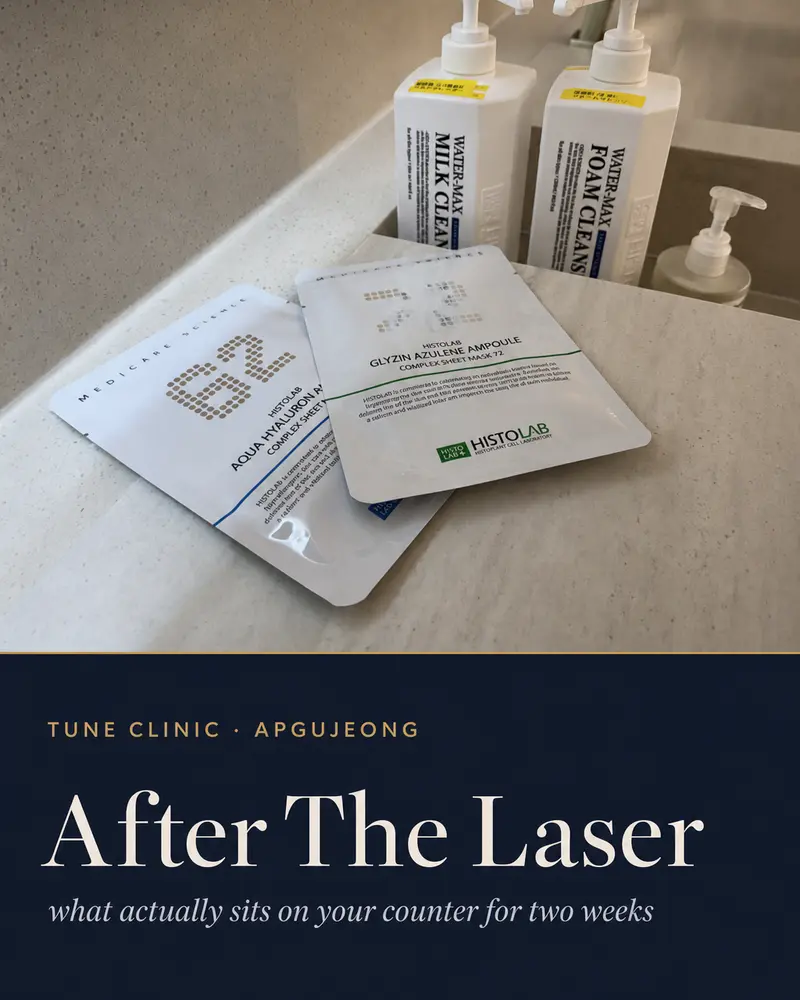
The aftercare kit that matters after a pigment laser is simple: a barrier-repair moisturizer, a mineral or broad-spectrum SPF, and a soothing mask protocol for the first few nights if the skin feels tight or warm.
- Sunscreen, reapplied — not applied once in the morning and forgotten. SPF breaks down with sweat, humidity, and time outdoors.
- A gentle, fragrance-light moisturizer to support the barrier while it recovers.
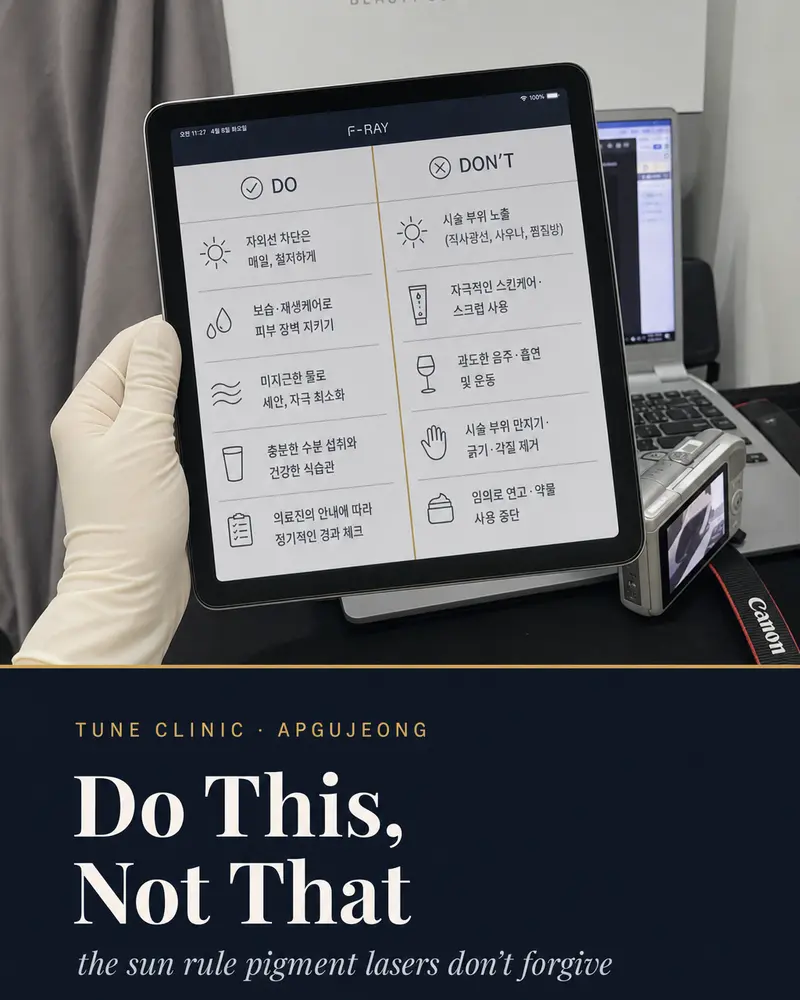
- Physical sun avoidance — a hat or shade counts for more than people expect in the first week.
- No active exfoliants (retinoids, acids) until the skin surface has fully normalized, usually about one to two weeks.
We do not hand this list over verbally and hope it is remembered correctly. In our clinic, the schedule is written down — day by day — because recall after a laser appointment is unreliable, and summer travel plans do not pause for skincare.
Why written, not verbal
Patients rarely remember spoken aftercare instructions accurately past 48 hours, and pigment lasers are unforgiving of exactly the mistakes verbal instructions fail to prevent — missed reapplication, an afternoon at the beach three days in, a retinol restarted too early.
A relapse we see is rarely dramatic. It is one unprotected afternoon, five days after treatment, when the skin still looks fine and the patient assumes the risk window has already closed.
Is a pico laser safe to get in summer at all?
Yes, a pico laser can be done in summer, but it requires stricter discipline afterward than a winter treatment does, because ambient UV exposure is simply higher and harder to avoid entirely. Summer timing is not a contraindication — it is a reason the aftercare plan needs to be more specific, not less.
What we assess first is skin tone, the depth and type of pigment (superficial sun spots behave differently than deeper melasma-pattern pigment), and how much real-world sun exposure the patient’s next two weeks will involve. A pool trip planned for day four changes our recommendation. Sometimes the honest answer is to schedule the session for after that trip, not before it.
Who should wait or choose a different approach?
Patients with active melasma, a recent deep tan, or a travel itinerary that makes strict sun avoidance unrealistic are often better served waiting, or starting with a gentler approach first. Melasma in particular can worsen with aggressive pico settings if the heat and UV exposure afterward aren’t tightly controlled — for these patients we sometimes recommend a lower-fluence toning protocol or pairing treatment with pigment-stabilizing skincare before considering a stronger session.
A pico laser also cannot address pigment sitting deep enough to be closer to a vascular or hormonal pattern than a sun-damage pattern — that distinction is why assessment comes before scheduling, not after.
FAQ
How long after a pico laser do I need to avoid the sun?
Most physicians recommend strict sun avoidance and diligent SPF reapplication for about two weeks after a pico laser like Cutera Enlighten, since the treated skin remains more UV-reactive during this period. Some patients with sensitive or pigment-prone skin are advised to extend careful sun habits several weeks longer.
Why does my pigment look darker right after the pico laser?
Pigment typically rises to the skin’s surface before it clears, a normal stage called pigment shedding or micro-crusting. This can make treated spots look darker or more visible for several days before gradual fading begins, usually over two to four weeks.
Can I get a pico laser if I’m traveling somewhere sunny soon after?
It depends on how realistic strict sun avoidance will be during the two weeks after treatment. If a sunny trip falls within that window, many physicians recommend scheduling the pico laser for after the trip rather than before it.
Does pico laser work on melasma the same way as sunspots?
Not exactly. Melasma tends to be more UV- and heat-reactive than typical sun-induced pigment, so pico laser settings and aftercare are usually adjusted, and in some cases a gentler toning protocol is recommended instead of a standard session.
What happens if I skip sunscreen a few days after treatment?
Even a single unprotected sun exposure within the two-week window can trigger renewed melanin production, causing treated pigment to return darker rather than continuing to fade. This is the most common reason results fall short of expectations.
Ready to plan your treatment?
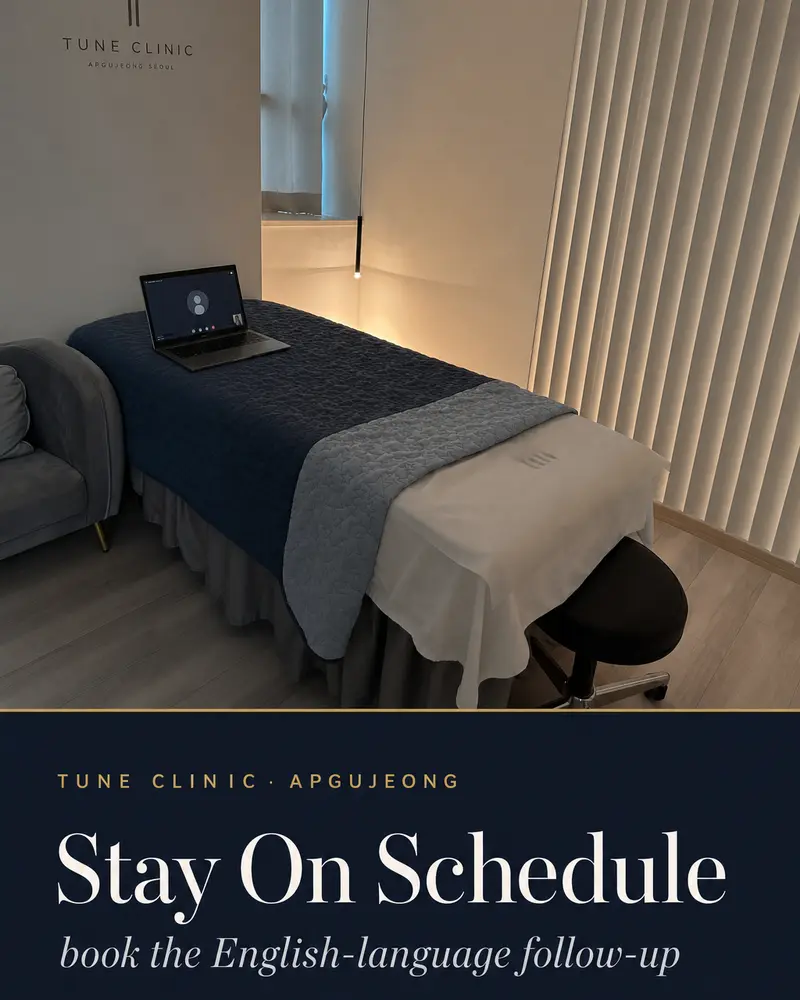
Tune Clinic Apgujeong offers English-language consultations with Dr. Ju and Dr. Cha — a structured assessment, not a sales call.
→Book an appointmentto pick a time that fits your Seoul itinerary.
→Message us on WhatsAppto ask in English before you commit.