On this page
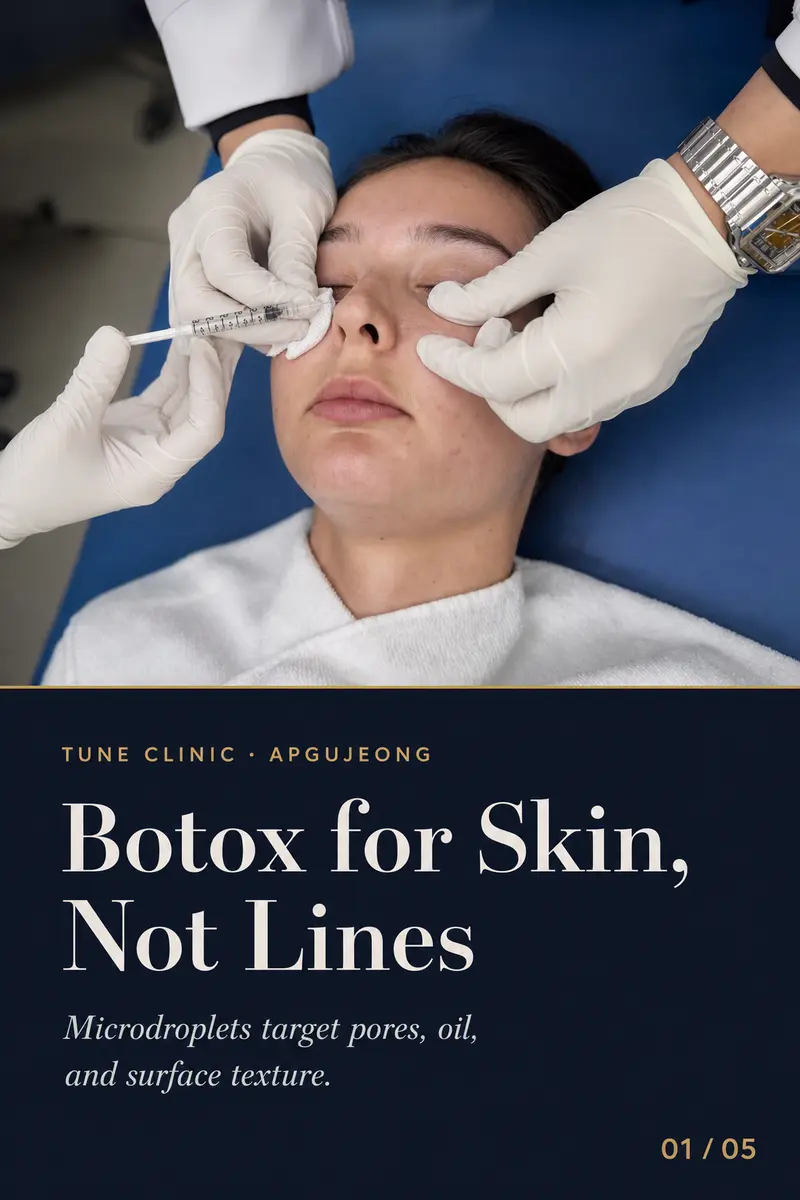
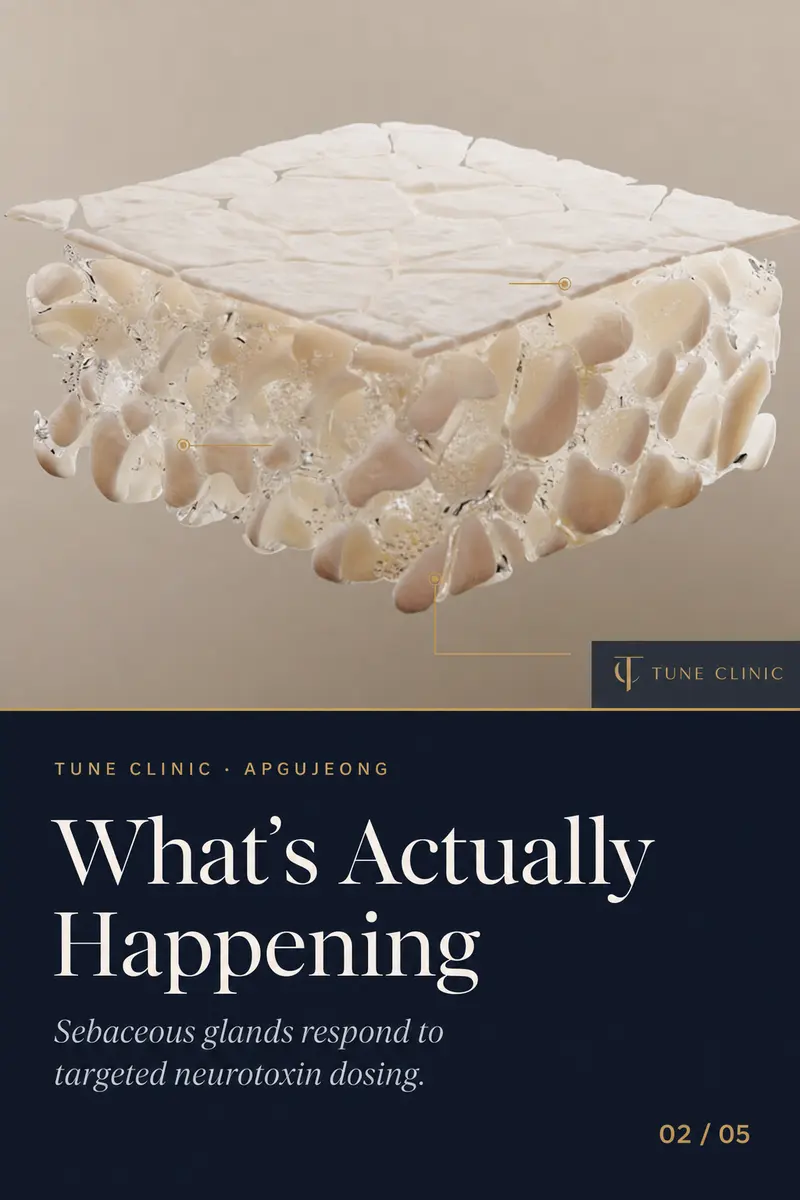
Skin Botox — also called intradermal Botox or microdroplet Botox — is a technique that delivers small amounts of botulinum toxin into the superficial dermis to suppress sebaceous gland activity and reduce pore visibility. It does not target the muscles responsible for expression lines, and it does not produce the immobility associated with conventional Botox. The mechanism is glandular, not muscular.
How Is Skin Botox Different from Regular Botox?
Conventional Botox is injected into or near a muscle belly. The toxin diffuses to the neuromuscular junction, blocking acetylcholine release and reducing muscle contraction. The depth, volume, and placement are calibrated to a specific muscle group.
Skin Botox works at an entirely different anatomical level. The injection stays within the dermis — the layer where sebaceous glands, sweat glands, and the arrector pili muscles reside. Botulinum toxin suppresses secretomotor nerve signals to sebaceous and eccrine glands, reducing both oil production and surface perspiration without any effect on the muscles below.
Because the doses per injection point are very small and the depth is superficial, the risk of the toxin migrating to underlying muscles is low when the technique is executed correctly. Depth control and the gauge of the needle matter considerably here.
From a physician’s perspective, Skin Botox is a structural intervention, not a cosmetic shortcut. We are asking: why does this patient’s skin behave the way it does, and is a neurotoxin at the dermal level the appropriate tool? Not every patient with oily skin is a candidate.
Why Do Enlarged Pores Resist Topical Skincare?
Pore size is largely determined by sebaceous gland output, the elasticity of the surrounding dermis, and genetic follicular architecture. Topical retinoids, niacinamide, and exfoliants can improve surface texture and partially regulate keratinization, but they do not reach the gland itself. The sebaceous gland sits in the mid-to-deep dermis — beyond what any topical can reliably penetrate at pharmacologically meaningful concentrations.
When glandular output is chronically high, the follicular opening stays dilated. The skin surface remains coarser, and makeup or SPF sits unevenly. For patients in this category, the limiting factor is not their skincare routine. It is an underlying glandular driver that sits below the reach of topical therapy.
This is precisely where intradermal neurotoxin becomes clinically relevant: it addresses the source rather than the surface.
Who Benefits Most?
Patients who see the most consistent improvement from Skin Botox typically share a few characteristics:
- Chronically enlarged pores primarily on the nose, cheeks, or forehead that have not responded adequately to retinoids or professional facials
- Persistent facial oiliness that returns within hours of cleansing
- Superficial skin texture irregularities without significant scarring or deep structural loss
- Baseline skin that retains reasonable elasticity — Skin Botox does not replace volume or lift
Patients with predominantly dry or sensitised skin, or those whose pore appearance is mainly driven by loss of dermal collagen rather than glandular activity, may benefit more from alternative approaches such as RF microneedling or collagen-stimulating injectables like Rejuran Healer.
What Does the Intradermal Microdroplet Technique Involve?
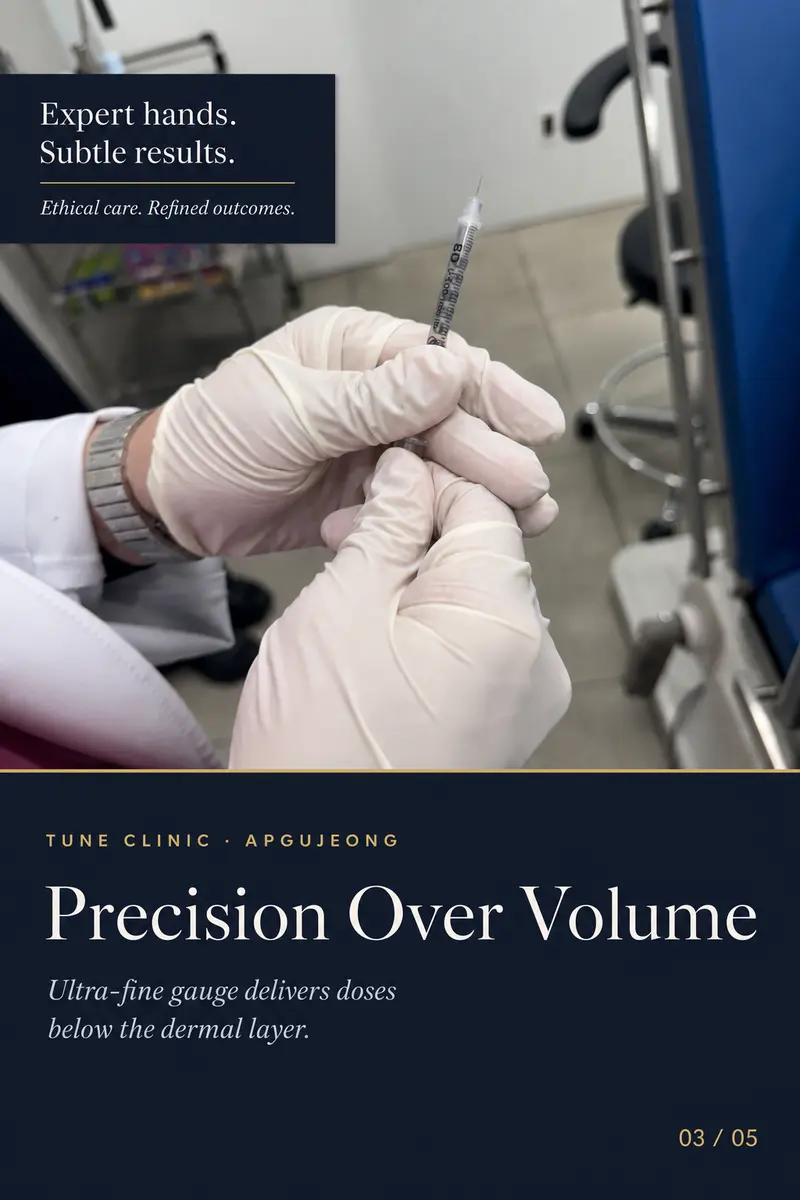
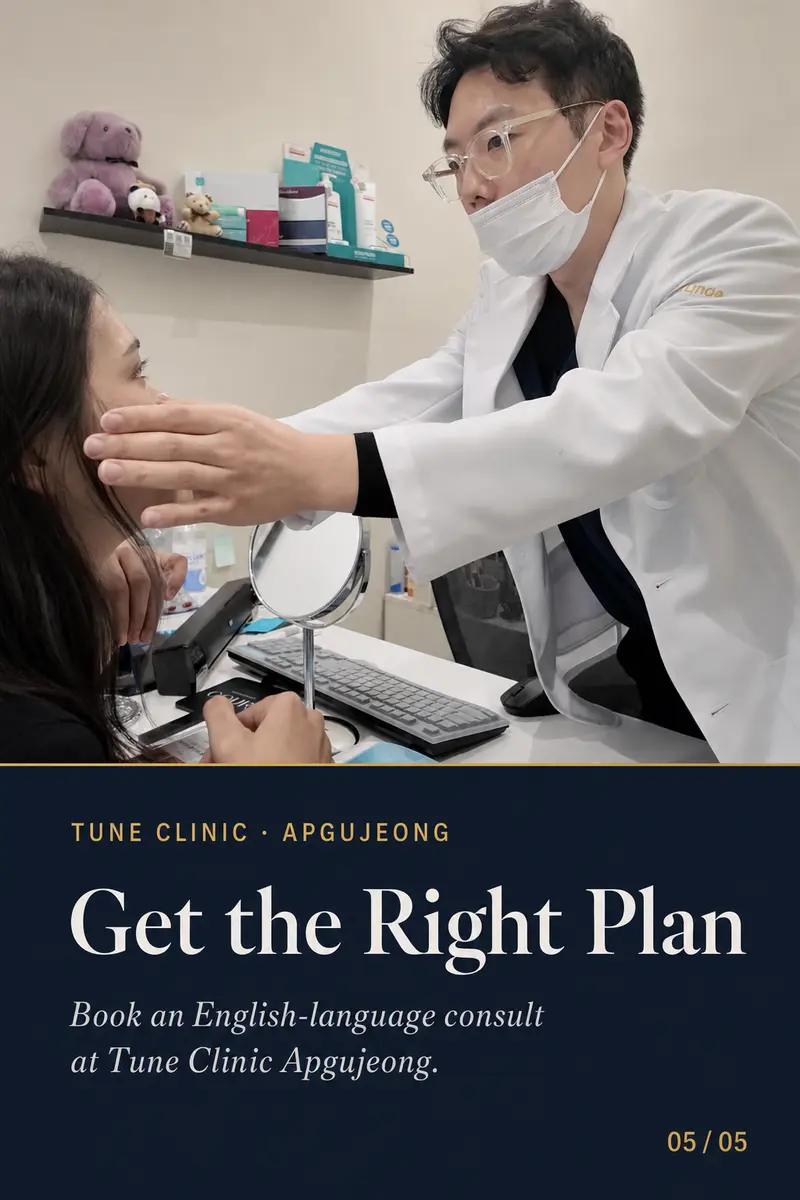
At Tune Clinic Apgujeong, Skin Botox is delivered using an ultra-fine gauge needle at multiple injection points across the treatment zone. Each deposit is a very small volume placed precisely within the dermis — not subcutaneously, not intramuscularly. The pattern is adapted to the patient’s anatomical distribution of concern areas, which the physician maps during consultation.
The session itself is relatively brief. Most patients experience mild pinpoint discomfort during injection and minimal post-procedure redness that settles within hours. There is no recovery period in the conventional sense, though sun exposure and heavy exercise are typically avoided for the remainder of the day.
Results are not immediate. Glandular suppression develops over one to two weeks as the toxin reaches its target nerve terminals. Patients generally notice reduced shine and a refinement of surface texture before they notice any change in pore geometry — which follows as sustained sebum reduction allows the follicular opening to contract gradually.
Effects are temporary. Neurotoxin is metabolised, and glandular activity returns over months. For patients with significant baseline oil production, maintenance intervals are discussed at the follow-up consultation rather than set arbitrarily at booking.
For patients considering whether injectable treatment is the right entry point — or whether a device-based approach to texture might serve them better first — the physician-led design method at Tune Clinic explains how treatment sequencing decisions are made.
If volume loss or structural descent is also a concern alongside texture, a separate assessment for filler or biostimulatory injectables would be conducted independently, not combined into a single session without deliberate clinical rationale.
FAQ
Does Skin Botox freeze your face or affect facial expressions?
No. Skin Botox is injected into the dermis, not into the muscles that control facial movement. The doses per point are small and the depth is superficial, so the toxin does not reach the underlying musculature responsible for expressions. Patients look like themselves — with calmer, less oily skin.
How long does Skin Botox last for pores and oil control?
In clinical experience, the effects typically persist for three to five months, though this varies with individual metabolism and the degree of baseline sebaceous activity. Patients with very high glandular output may notice results fading earlier. A physician review at the follow-up visit helps determine an appropriate maintenance schedule rather than a fixed interval applied universally.
Is Skin Botox the same as baby Botox?
Not exactly. Baby Botox generally refers to reduced-dose conventional Botox used for expression lines — it targets muscles, just at lower volumes. Skin Botox specifically refers to intradermal microdroplet injection aimed at sebaceous and sweat gland suppression. The depth, dosing pattern, injection technique, and clinical goal are different.
Can Skin Botox be combined with other treatments in the same session?
Sometimes, but not automatically. Whether Skin Botox is combined with another procedure — such as a laser treatment or collagen-stimulating injectable — depends on a physician’s assessment of skin condition, current treatment history, and recovery considerations. Combining treatments without clinical justification adds risk without necessarily improving outcomes.
Who is not a good candidate for Skin Botox?
Patients who are pregnant or breastfeeding are not candidates for any botulinum toxin treatment. Those with active skin infections, open wounds, or inflammatory conditions in the treatment area should wait until the skin has stabilised. Patients whose enlarged pores are primarily caused by significant collagen loss rather than excess oil production may see limited benefit, and alternative approaches would be discussed at consultation.
Ready to plan your treatment?
Tune Clinic Apgujeong offers English-language consultations with Dr. Ju and Dr. Cha — a structured assessment, not a sales call.
→Book an appointmentto pick a time that fits your Seoul itinerary.
→Message us on WhatsAppto ask in English before you commit.