On this page
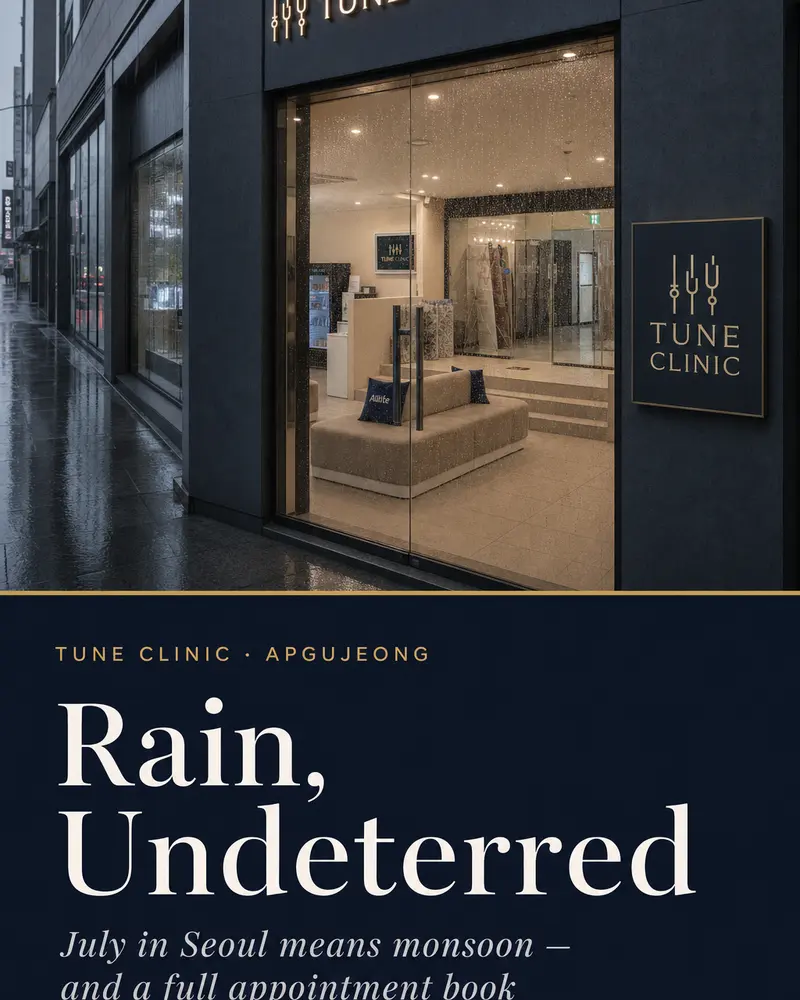
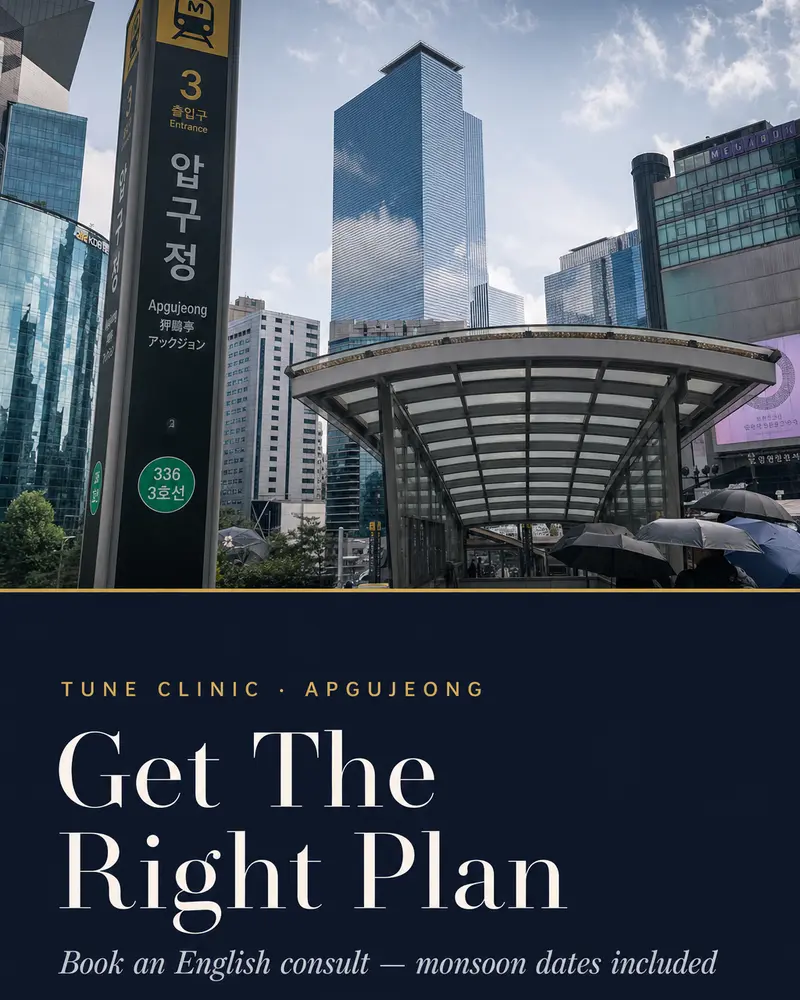
Monsoon season — roughly late June through late July in Seoul — does not make an aesthetic treatment trip riskier or less effective. It changes the order in which treatments should happen and how downtime is spent, which is a scheduling problem, not a medical one. A well-sequenced itinerary accounts for rain days, sun-exposure limits, and how much time you actually want to spend outdoors.
You check the Seoul forecast three times before booking your flight, half-convinced a week of rain will undo the plan you have been building for months. You picture swelling you cannot photograph, sightseeing days lost indoors, or a laser session timed badly against a downpour. In practice, the rain rarely touches the outcome — it touches the itinerary around it.
Does Rain Actually Affect Treatment Recovery?
Rain itself does nothing to a healing wound or a treated area — humidity and reduced UV exposure are the two variables that matter, and monsoon season affects both, usually in your favor. Direct sun is the real post-treatment risk after resurfacing lasers or peels, and a cloudy, rainy week naturally lowers that exposure compared to the dry heat of August.
What we watch instead is humidity and sweat around any open or actively healing skin — after Cutera Enlighten pico laser, Fraxel, or CO2 resurfacing, for example. Humid air keeps skin damp longer, which slightly extends the window before makeup or heavier skincare goes back on. It does not change the treatment’s outcome; it changes how we time the days immediately after.
A patient asking “should I reschedule because of the rain” is usually really asking “will this still work.” The honest answer is that weather changes your commute, not your collagen response.
How Do You Build a Schedule Around a Rainy Week?
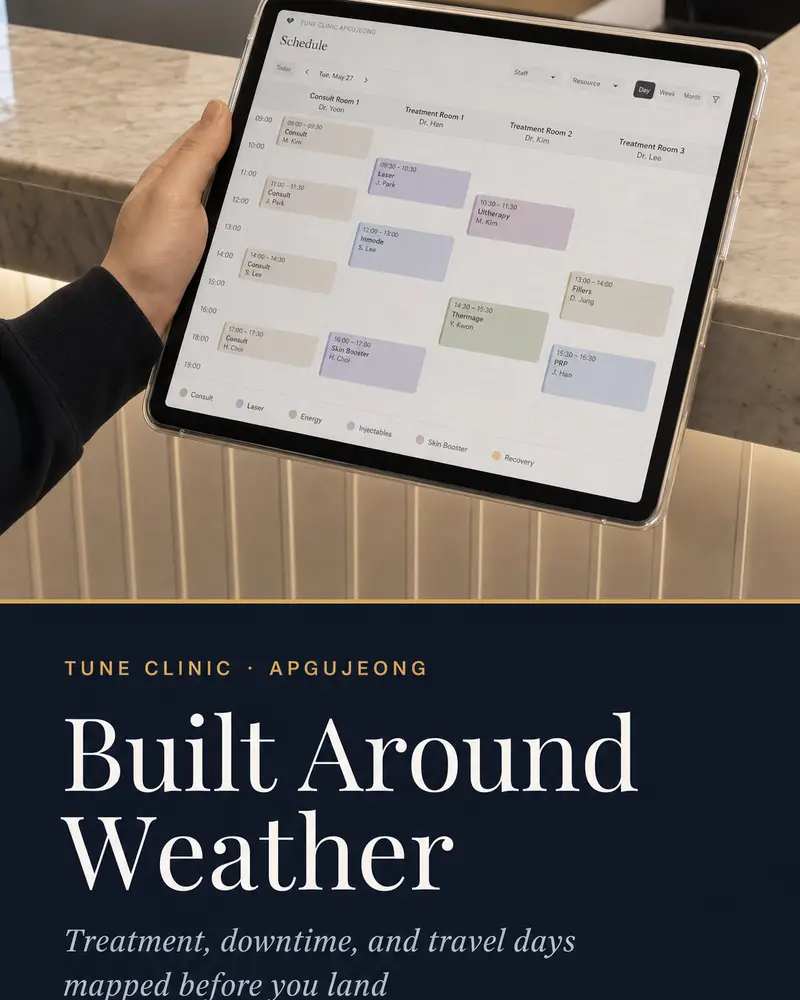
We map treatment, downtime, and travel days against the forecast before you land, so indoor-recovery days and outdoor sightseeing days are matched to whatever the week actually looks like. This is the part that genuinely changes in monsoon season — not the medicine.
A typical structure for a five- to seven-day trip:
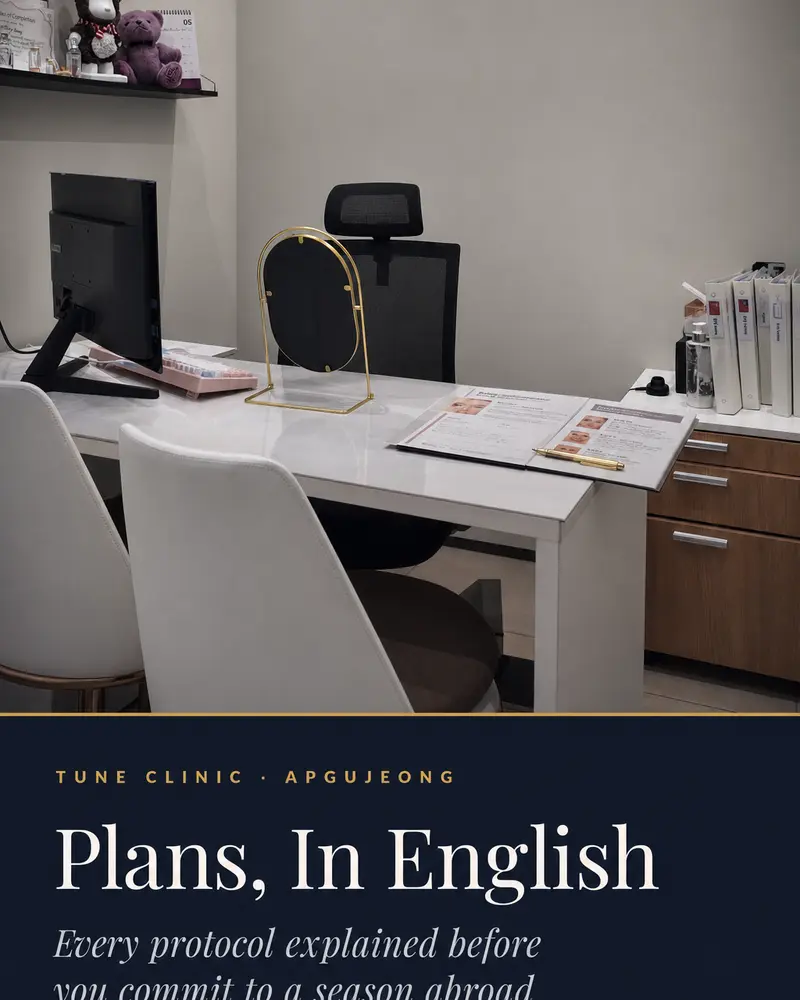
- Arrival day and first consultation — English-language intake, imaging, and a written protocol
- Higher-downtime treatment (resurfacing, RF microneedling, or an energy-based lifting session such as Ultherapy or Oligio) scheduled against the rainiest forecast day
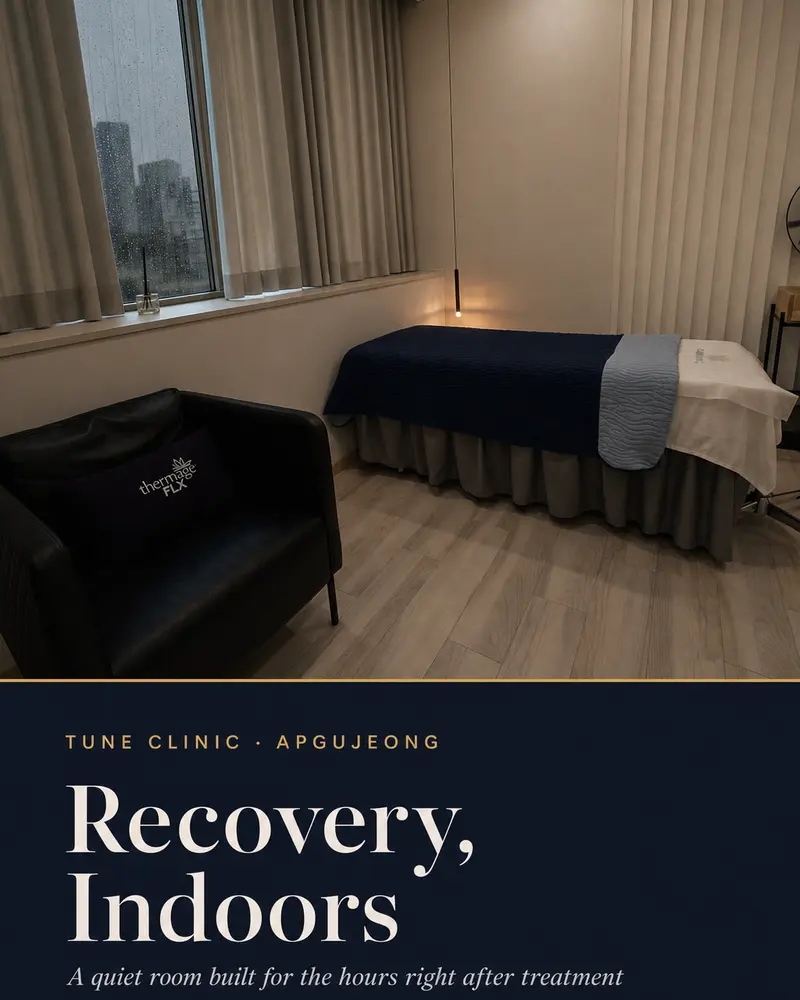
- One to two indoor recovery days, deliberately placed where rain was already expected
- Lighter treatments — Rejuran, a skin booster, or a touch-up filler consult — scheduled on drier days when a short walk afterward is comfortable
- Sightseeing clustered toward the end of the trip once swelling has settled
This sequencing is the actual deliverable of a monsoon-season plan. Nothing about the treatment protocol itself is altered for weather; only the calendar around it is.
What Should You Actually Skip During a Rainy Recovery Window?
Outdoor sweating, prolonged humidity exposure on freshly treated skin, and skipping SPF because “it’s cloudy” are the three things worth avoiding — cloud cover reduces but does not eliminate UV. Beyond that, monsoon season places very few real restrictions on recovery.
Who should reconsider timing: anyone planning heavy outdoor activity — hiking, extended walking tours — immediately after a resurfacing treatment, regardless of season. Anyone with a history of slow healing or active skin conditions should also flag this at consultation, since humidity can prolong redness slightly longer than it would in dry weather. In these cases, we sometimes advise moving the more aggressive treatment to a later, drier trip and starting with something lower-downtime this time, such as a Juvelook Skin session or Rejuran — not because monsoon season is dangerous, but because stacking recovery variables rarely serves the patient well.
FAQ
Is July a bad time to get treatments done in Seoul?
No. July’s monsoon rain does not affect how treatments heal — it mainly limits comfortable outdoor time. Most patients simply need their itinerary sequenced around forecasted rain days, placing higher-downtime treatments and indoor recovery on the wettest days and lighter activity on clearer ones.
Does humidity slow down healing after laser treatment?
Humidity does not slow healing biologically, but it can keep treated skin damp slightly longer, which affects when makeup or certain skincare products go back on. This is a comfort and timing consideration, not a change to the treatment’s expected recovery window or result.
Can I still sightsee during my recovery days in monsoon season?
Light walking is usually fine within a day or two after most treatments, but rain adds humidity that can prolong dampness on treated skin. We generally recommend scheduling indoor recovery on the rainiest forecast days and saving outdoor time for drier ones already built into the trip.
How far ahead should I book an English consultation before a rainy-season trip?
We recommend booking three to four weeks ahead so the treatment plan, downtime days, and travel schedule can be mapped against the actual forecast before you land, rather than adjusted last-minute once you arrive in Seoul.
Ready to plan your treatment?
Tune Clinic Apgujeong offers English-language consultations with Dr. Ju and Dr. Cha — a structured assessment, not a sales call.
→Book an appointmentto pick a time that fits your Seoul itinerary.
→Message us on WhatsAppto ask in English before you commit.