On this page

Pico toning is a low-fluence, picosecond-laser protocol delivered over multiple sessions that breaks pigment into fragments small enough for the body to clear naturally. It works well for superficial sun-induced spots, but melasma — pigment that sits deeper in the dermis and is driven by hormonal and vascular factors as well as UV — is not resolved by laser alone. It is managed with a combination of laser, topical care, and strict sun protection over a full season, not fixed in one visit.
You zoom into a photo from spring and notice spots that were not there before, or at least not visible. Summer sun did not create that pigment overnight — it pushed pigment that was already forming quietly upward and darker, faster than most sunscreen routines could keep pace with.
Why Do Spots That Weren’t There In Spring Suddenly Appear In Summer?
UV exposure accumulates before it becomes visible, and summer light simply accelerates the process that was already underway. Melanocytes — the pigment-producing cells in the skin — respond to UV by producing more melanin, and that response compounds with each unprotected exposure across the season.
What looks like a sudden spot in July is often months of low-grade UV signaling finally reaching the surface. This is why patients are often surprised that spots appear despite what they consider consistent sunscreen use — reapplication frequency and dose matter more than most people assume, and heat and humidity in Seoul summers make daily reapplication easy to skip.
Superficial Spots vs Melasma: Why Does Depth Change The Treatment?
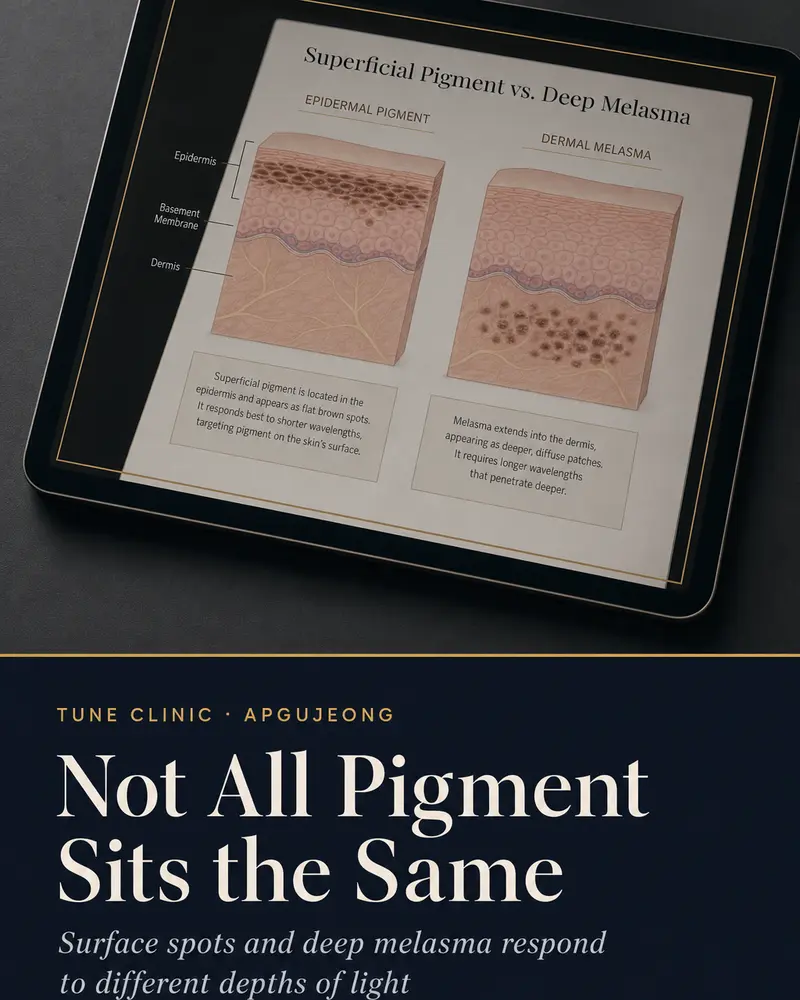
Depth determines both the laser settings and the realistic outcome, because superficial pigment and melasma do not sit in the same layer of skin. Sunspots and freckles typically sit in the epidermis, close to the surface, where a laser can target them directly with a visible, relatively fast response.
Melasma sits deeper, often in the upper dermis, and is frequently accompanied by increased blood vessel activity beneath the pigment. Treating it like a surface spot — high energy, aggressive settings, one aggressive pass — can actually worsen melasma by provoking inflammation, which is one of its known triggers.
What surprises patients most is not that pigment appears in summer — it’s that it was already present in spring, sitting below the threshold of visibility until UV pushed it forward.
What Does Pico Toning Actually Do?
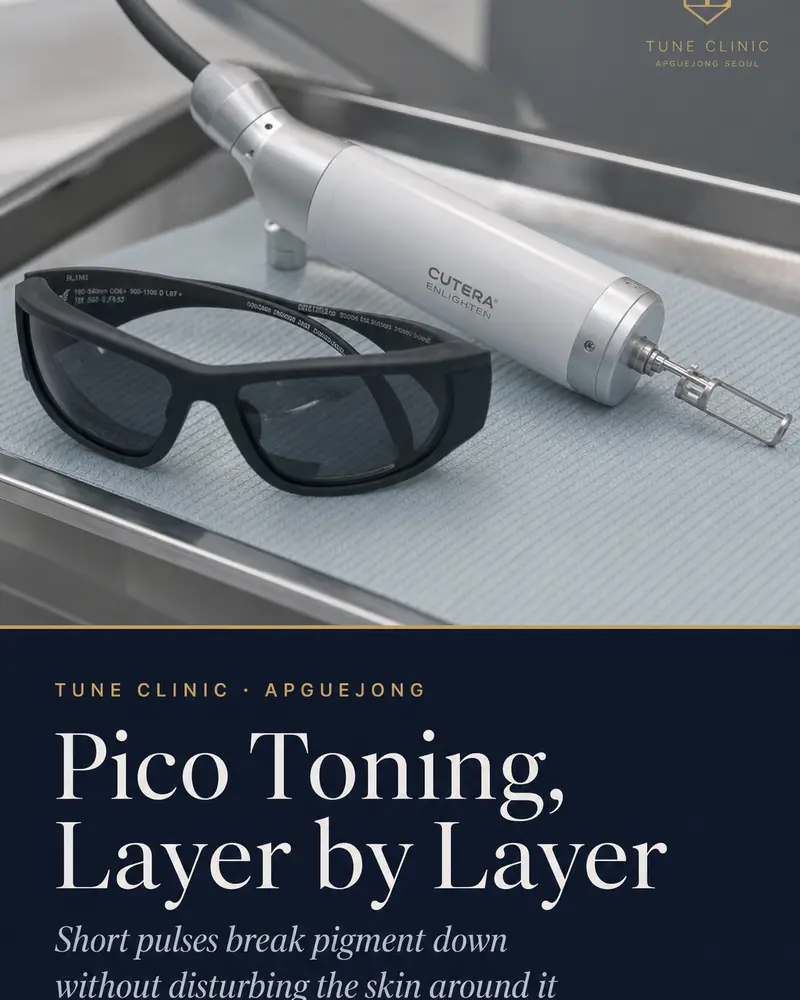
Pico toning uses a picosecond laser — in our clinic, the Cutera Enlighten — set at low fluence and passed over the skin in multiple gentle sessions rather than one high-intensity treatment. The short pulse duration fragments pigment into particles fine enough for the body’s own clearance systems to remove gradually, while minimizing heat transfer to the surrounding tissue.
For superficial spots, this often means visible fading across a small number of sessions, typically spaced a few weeks apart. For melasma, the same technology is used more conservatively and combined with other tools, because pushing for fast results in melasma-prone skin increases the risk of rebound pigmentation or post-inflammatory darkening.
What pico toning cannot do is guarantee permanent removal of melasma, and it should not be used as a standalone fix for it. Patients with active melasma who skip sun protection between sessions typically see pigment return, sometimes at the same rate it responded to treatment.
Why Is Melasma Managed In Cycles, Not One Visit?
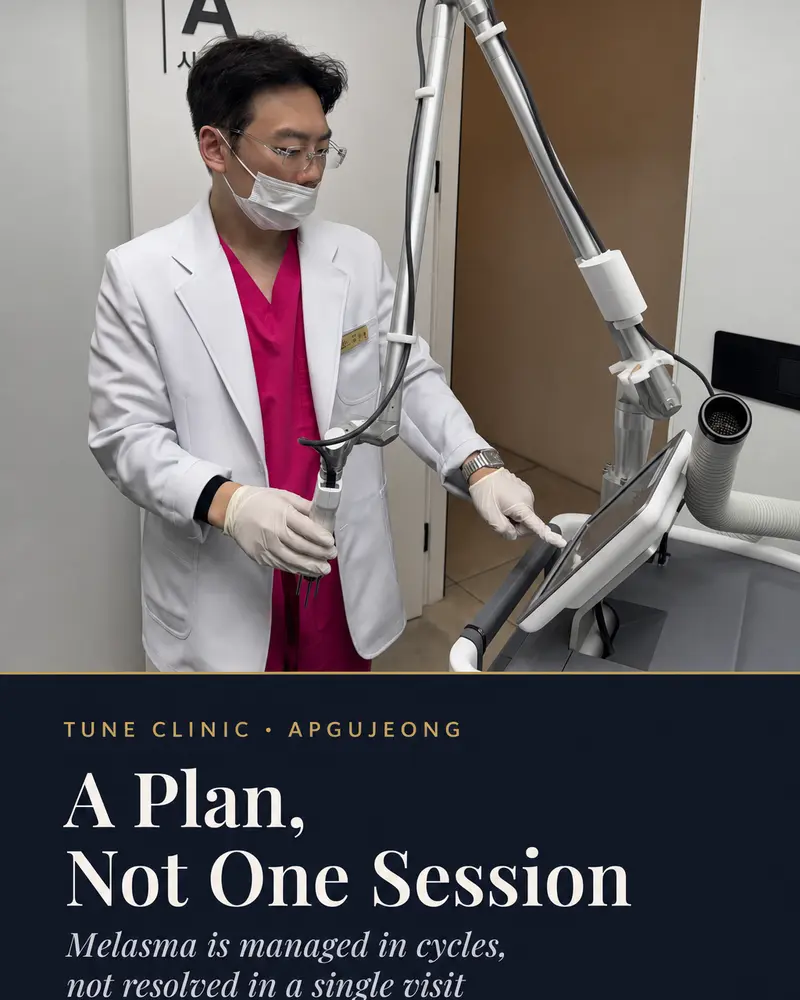
Melasma is managed across a season because its triggers — UV, heat, hormonal shifts, and sometimes friction or inflammation — are ongoing, not one-time events. A single laser session addresses the pigment visible on that day; it does nothing to prevent the next cycle of production if the underlying triggers are still active.
In our clinic, a melasma plan usually combines:
- Low-fluence pico toning sessions spaced several weeks apart
- Topical brightening agents used consistently between visits
- Daily broad-spectrum sun protection, reapplied rather than applied once
- Reassessment at intervals to adjust settings as pigment responds
Patients who are pregnant, breastfeeding, or have very reactive, easily inflamed skin are often advised to wait or to start with the most conservative topical-only approach, since laser can aggravate melasma in the wrong candidate. This is precisely why assessment comes before any device is chosen — anatomy, skin tone, and pigment depth all change the plan.
FAQ
How many pico toning sessions does melasma need?
Melasma typically requires a series of sessions spaced several weeks apart rather than a single treatment, often continuing across a season alongside topical care and sun protection. The exact number varies by pigment depth and individual response, which is why a physician reassesses progress before adding more sessions.
Can pico toning make melasma worse?
Yes, if settings are too aggressive or sessions are too frequent, pico toning can trigger inflammation that worsens melasma rather than improving it. This is why melasma is treated more conservatively than surface spots, with lower fluence and closer monitoring between visits.
Is pico toning the same as regular pico laser treatment?
No — pico toning refers specifically to a low-fluence, multi-pass protocol designed for gentle, cumulative pigment clearance, while standard pico settings target spots more directly at higher energy. The same picosecond laser platform is used for both, but the approach differs by pigment type and depth.
Do I still need sunscreen if I’m doing pico toning?
Yes, daily sun protection is not optional during a pigment treatment plan — UV exposure between sessions can undo progress and, in melasma specifically, can trigger new pigment production. Reapplication throughout the day matters more than the product itself.
Who should not get pico toning for pigment?
Patients with active skin inflammation, certain photosensitizing medications, or melasma that has recently flared are often advised to wait or start with topical management first. A physician assessment of pigment depth and skin reactivity should come before scheduling any laser session.
Ready to plan your treatment?
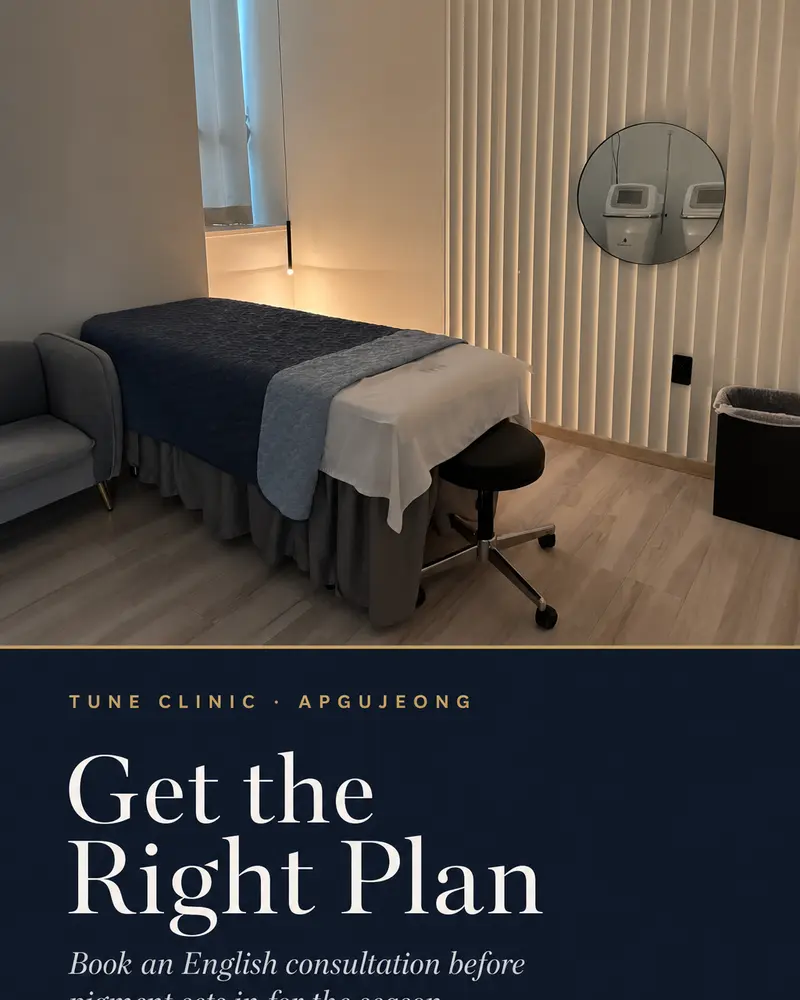
Tune Clinic Apgujeong offers English-language consultations with Dr. Ju and Dr. Cha — a structured assessment, not a sales call.
→Book an appointmentto pick a time that fits your Seoul itinerary.
→Message us on WhatsAppto ask in English before you commit.