On this page
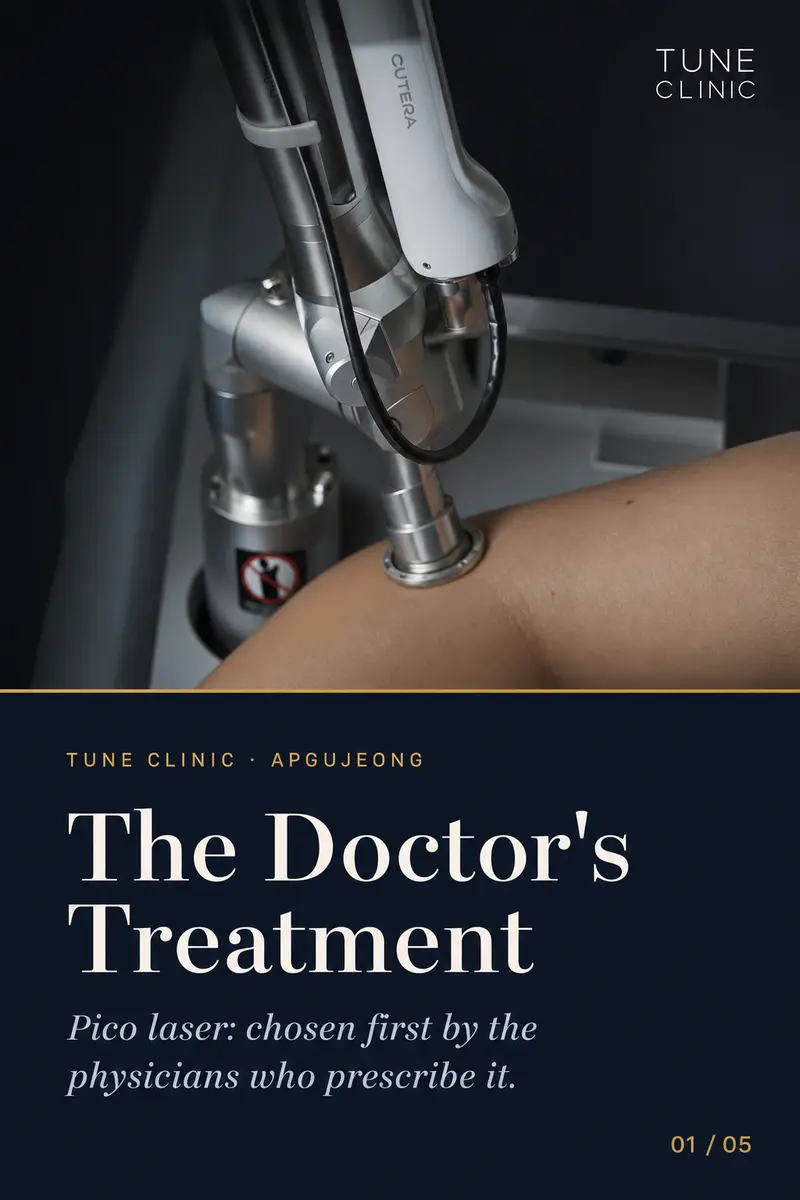
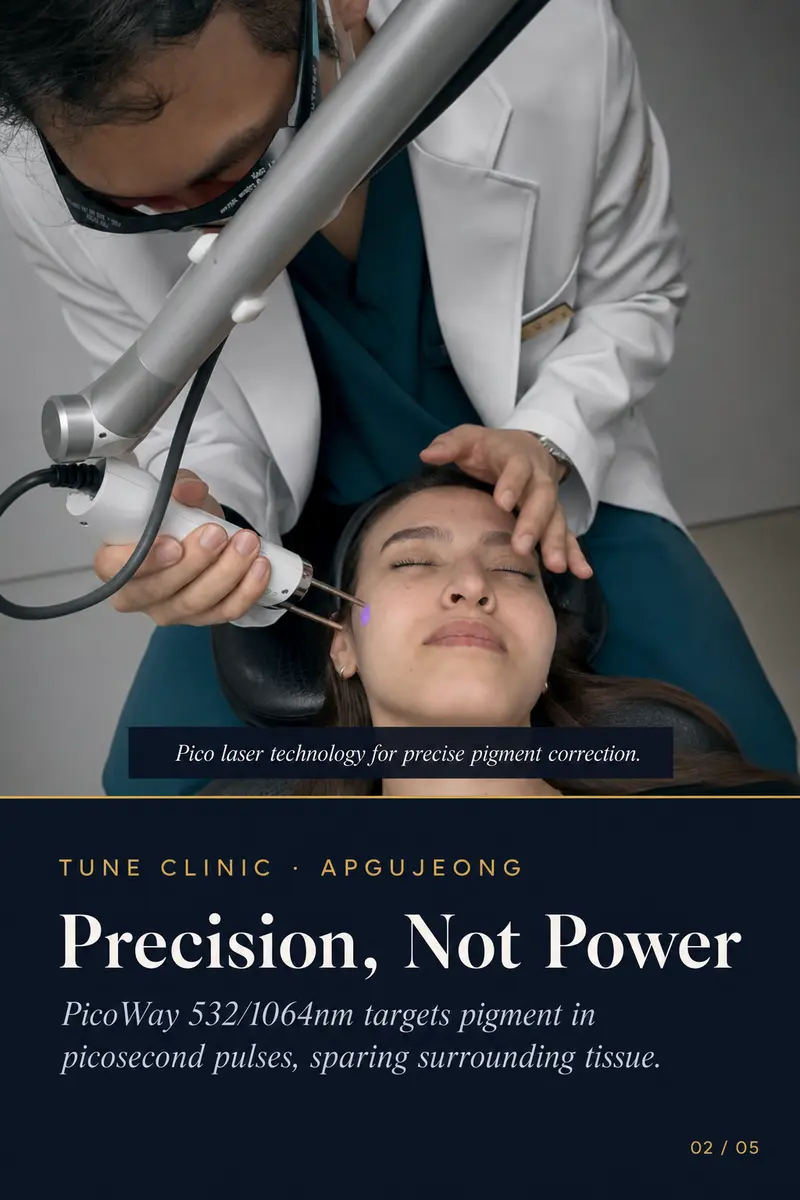

Pico laser — specifically picosecond-domain devices like the Cutera Enlighten — delivers energy in pulses measured in trillionths of a second, which allows it to shatter pigment granules and stimulate dermal remodeling while generating less cumulative heat than nanosecond predecessors. That combination of efficacy and a controlled side-effect profile is why it is the procedure aesthetic physicians in Korea most commonly schedule for themselves. When the people who prescribe a treatment also select it for their own skin, the asymmetry is worth examining.
How Does Pico Laser Actually Work?
Conventional Q-switched lasers operate in the nanosecond range. Picosecond pulses are roughly 100 times shorter, which shifts the dominant mechanism from photothermal (heat-based destruction) to photoacoustic (pressure-wave fragmentation). The difference is clinically meaningful.
- Pigment targets — melanin clusters, whether from melasma, post-inflammatory hyperpigmentation, or solar lentigines, are fractured into smaller particles that the lymphatic system can clear more readily.
- Surrounding tissue — because energy dispersal is faster, thermal spread into the dermis and epidermis is reduced, lowering the risk of post-inflammatory hyperpigmentation in higher Fitzpatrick types.
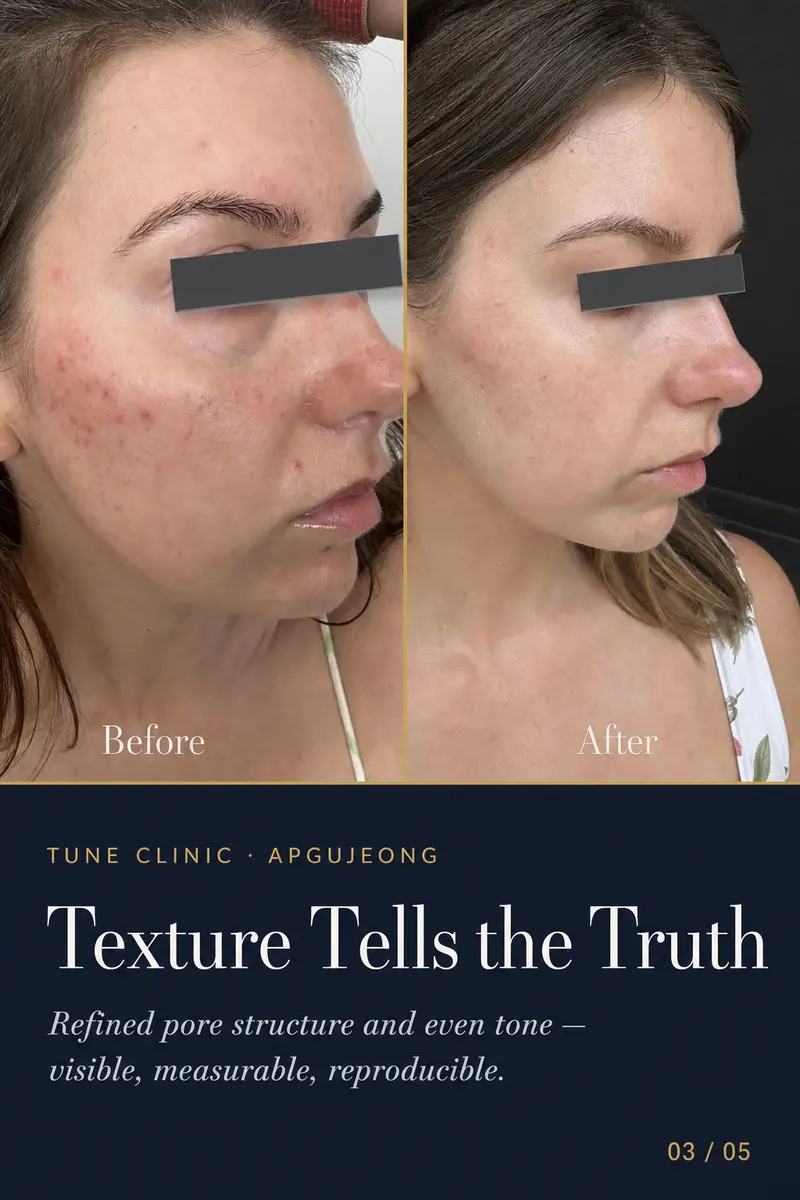
- Dermal stimulation — the acoustic wave creates a controlled micro-injury response that supports collagen and elastin remodeling, which is why patients with textural concerns — enlarged pores, acne scarring, early laxity — often see improvement beyond pigment correction alone.
The Cutera Enlighten operates at both 1064 nm and 532 nm. The longer wavelength penetrates more deeply and is better suited to dermal pigment and darker skin types; the shorter wavelength targets superficial and vascular pigment more aggressively. Selecting the correct wavelength, fluence, and spot size for a given presentation is the clinical decision — it is not embedded in a package.
Why Does Stubborn Pigment Persist After Multiple Treatments?
The most common reason is that the original protocol was not individualised. Melasma in particular is a condition with multiple inputs — UV exposure, hormonal fluctuation, vascular components, and inflammatory triggers — and treating it with a single standardised setting across visits rarely resolves it durably.
Several patterns recur in practice:
- Wavelength mismatch — using 532 nm on deep dermal pigment generates heat at the wrong tissue depth and can paradoxically worsen the lesion.
- Fluence set too high — aggressive settings on Fitzpatrick IV–VI skin increase post-inflammatory hyperpigmentation risk significantly.
- No interval adjustment — pigment depth and inflammatory state change between sessions. A fixed package delivers the same parameters regardless, which is rarely optimal.
- Concurrent triggers unaddressed — sun protection compliance, topical retinoid or hydroquinone use, and hormonal factors all affect outcome. Laser without adjunct management treats the symptom, not the system.
A physician reviewing a case of recurrent melasma is not asking which laser is “stronger” — they are asking which component of the patient’s pigment load will respond to photoacoustic disruption and which requires a different approach entirely.
What Does a Physician-Designed Protocol Look Like?
Assessment Before Treatment
Before a single pulse is delivered, the relevant variables need to be established: Fitzpatrick phototype, pigment depth (clinical examination and dermoscopy can differentiate epidermal from dermal and mixed melasma), active inflammation, recent sun exposure, and what the patient’s realistic downtime tolerance is. Patients with no tolerance for even transient erythema require different settings than those comfortable with several days of mild crusting over treated spots.
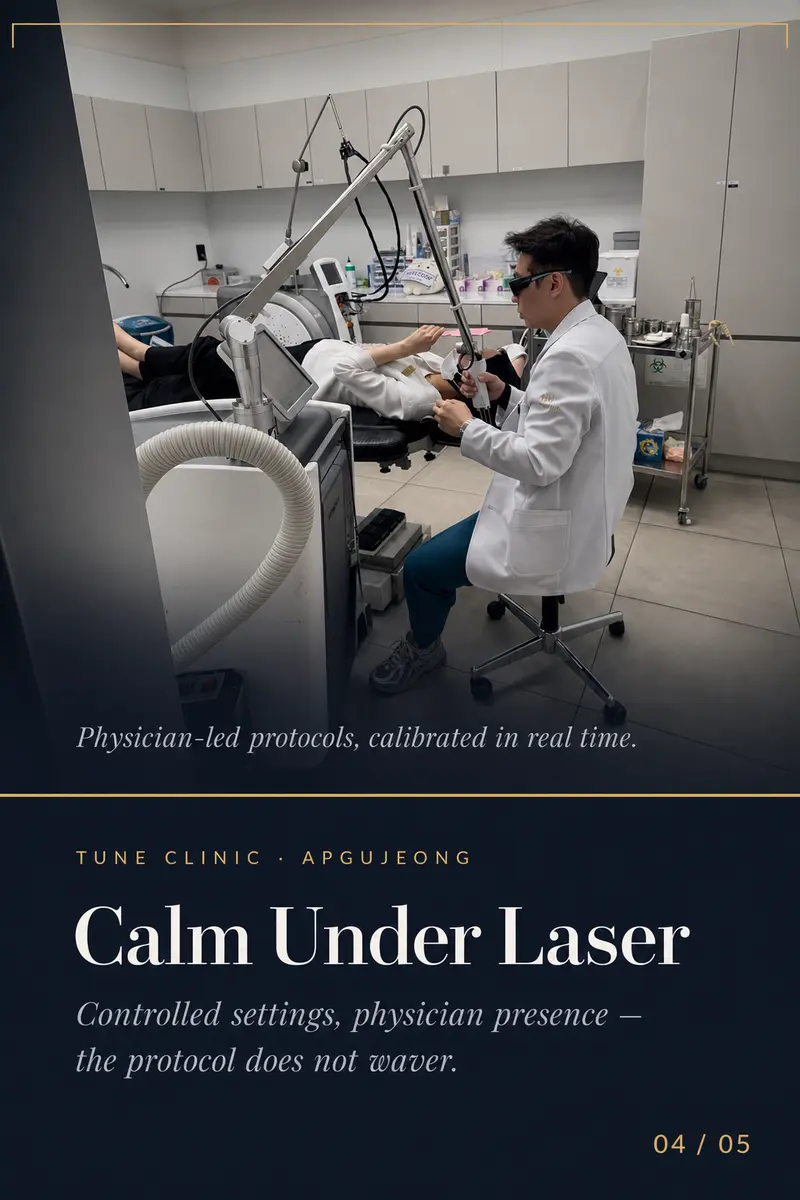
At Tune Clinic, sessions are structured around this initial assessment rather than a preset menu. The treating physician adjusts parameters per visit based on observed tissue response — not because the protocol is inconsistent, but because responsiveness to treatment is itself clinical information.
For patients whose presentation includes textural concerns alongside pigmentation, the picosecond device’s remodeling effect can be channelled more deliberately using a diffractive lens array, which distributes energy in a fractional pattern. This shifts the session toward collagen induction without requiring a separate fractional treatment. Whether that modification is appropriate depends on the patient’s skin condition on the day — another reason physician presence during treatment matters rather than being a formality.
Is Pico Laser Right for Your Skin?
Pico laser is well-suited for a defined set of indications: epidermal and mixed melasma, post-inflammatory hyperpigmentation, solar lentigines, café-au-lait-type pigment, enlarged pores, mild-to-moderate acne scarring, and overall tone irregularity. It performs less well as a primary treatment for deep dermal scarring with significant volume loss, active acne, or inflammatory rosacea — in those cases it may be one component of a broader plan rather than the lead treatment.
For patients exploring laser options more broadly, the physician-led design methodology at Tune Clinic gives context for how these decisions are structured across modalities, not just for pico-domain treatments.
Patients who have already undergone multiple pico sessions elsewhere without satisfactory results are often the most instructive cases. The question is not whether the device was capable — modern picosecond platforms are well-validated — but whether the clinical variables were read correctly on each visit.
FAQ
How many pico laser sessions are needed to see results?
Most patients notice visible improvement in tone and texture after two to three sessions, though the total number depends heavily on the specific indication. Melasma typically requires more sessions and more careful interval spacing than discrete lentigines or post-acne marks. A physician should reassess progress at each visit rather than committing in advance to a fixed number.
Is pico laser safe for darker skin tones?
Picosecond lasers have a better safety profile than nanosecond devices for Fitzpatrick IV–VI skin because reduced thermal exposure lowers the risk of post-inflammatory hyperpigmentation. That said, safe outcomes depend on correct wavelength and fluence selection — the 1064 nm setting is generally preferred for deeper skin tones, and conservative fluences are used initially, with escalation based on observed response.
What is the difference between pico laser and regular laser toning?
Laser toning typically refers to low-fluence Q-switched nanosecond treatments applied in multiple rapid passes. Pico laser operates at much shorter pulse durations, shifting the mechanism from photothermal to photoacoustic. This generally allows more targeted pigment fragmentation with less heat accumulation, which is why clinical outcomes for resistant pigmentation tend to be more consistent with picosecond platforms when correctly applied.
Can pico laser treat melasma permanently?
Melasma is a chronic condition with hormonal, inflammatory, and UV-related drivers — no laser treatment resolves it permanently if the underlying triggers remain active. Pico laser can substantially reduce visible pigment load and maintain improvement when combined with rigorous sun protection and appropriate topical adjuncts. Ongoing maintenance sessions are commonly part of a realistic long-term plan.
How is pico laser different from other pigmentation treatments available at Tune Clinic?
Pico laser targets pigment via photoacoustic fragmentation and is the primary option for diffuse tone irregularity, melasma, and post-inflammatory marks. Other modalities — such as filler-based approaches for volume-related shadow, or energy-based lifting treatments — address different structural problems. In some presentations, a combination approach is more effective than any single modality. The appropriate choice depends on a clinical assessment of what is actually driving the visible concern.
Ready to plan your treatment?
Tune Clinic Apgujeong offers English-language consultations with Dr. Ju and Dr. Cha — a structured assessment, not a sales call.
→Book an appointmentto pick a time that fits your Seoul itinerary.
→Message us on WhatsAppto ask in English before you commit.