On this page
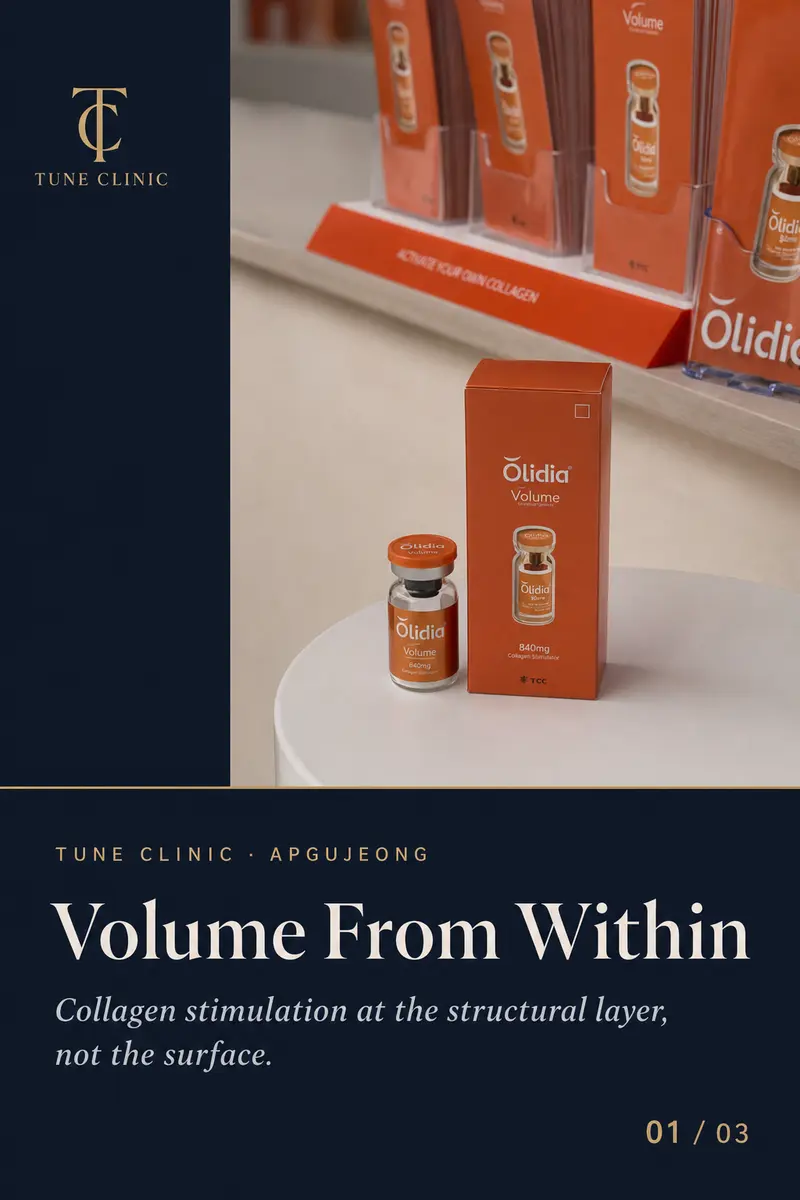
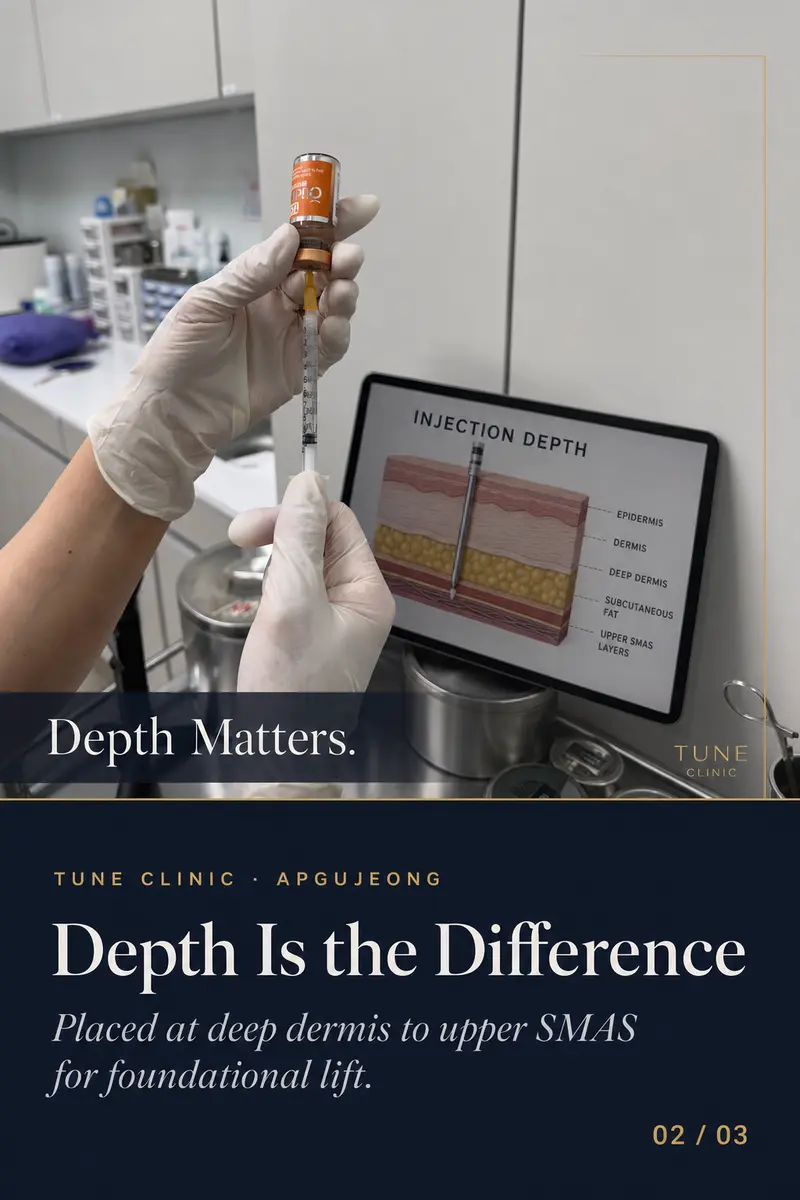

Olidia Volume is a collagen-stimulating injectable placed at the deep dermis and upper SMAS — the structural layers where age-related volume loss originates. Unlike hyaluronic acid fillers, which add immediate volume at a fixed location, Olidia Volume works by triggering the patient’s own fibroblast activity, gradually rebuilding the collagen matrix that provides foundational facial support over several weeks.
Why Surface Treatments Don’t Reach the Structural Layer
Facial aging is not a single-layer event. The skin’s surface changes — fine lines, texture shifts, pigmentation — tend to attract attention, but the architectural changes that cause a face to look genuinely deflated happen deeper. Collagen loss at the deep dermis and the upper SMAS reduces the scaffolding that once held fat compartments and overlying tissue in position. When that scaffolding weakens, topical actives, superficial resurfacing, and even many laser protocols make no contact with the problem.
This is the category of patient who has done everything correctly — consistent skincare, periodic laser maintenance, perhaps light filler — and still looks tired or hollow in a way they cannot explain. The explanation is usually structural, not superficial.
“When a patient says their skin looks deflated despite consistent treatment, the first question I ask is not which product to add but at which depth the tissue is failing them. That answer changes everything about the plan.”
What Is Olidia Volume, and How Does It Work?
Olidia Volume is a collagen stimulator formulated for deep-layer placement. Its mechanism is biostimulatory rather than volumizing in the immediate, hydraulic sense of a filler. After injection, the material initiates a controlled inflammatory and regenerative response in the surrounding tissue. Fibroblasts are recruited; new collagen is synthesized. The result is a gradual, internally generated increase in tissue density and support — volume built by the patient’s own biology rather than by a foreign substance occupying space.
Placement depth matters
The clinical distinction of Olidia Volume is not merely its formula but where it is placed. At the deep dermis and upper SMAS, the injected material acts on the layer that determines facial contour, not just surface quality. Cannula technique is commonly used at this depth to minimize trauma and allow precise distribution across structural zones — the midface, jawline, and temporal regions where support loss is most architecturally consequential.
The timeline for results reflects the biology: meaningful improvement is typically visible at four to eight weeks, with continued refinement beyond that. This is not a limitation; it is the nature of tissue remodeling, and it produces a quality of volume that tends to look proportionate and organic rather than localized.
Is Olidia Volume a Replacement for Filler?
No — and the distinction is clinically important. Hyaluronic acid fillers and collagen stimulators address different problems at different layers. Filler is appropriate when immediate volume replacement is needed in a specific, often superficial location: lip border definition, tear trough softening, a localized hollow. Collagen stimulators like Olidia Volume are appropriate when the underlying tissue architecture needs rebuilding — when what is missing is structural support, not simply displaced volume.
In practice, many patients benefit from both, sequenced deliberately. A physician-led assessment determines which deficit is primary. Adding filler to a face that is losing deep structural collagen often produces a result that looks treated rather than restored; addressing the deep layer first gives subsequent treatments something solid to build on. This sequencing logic is central to how Tune Clinic approaches facial design.
What to Expect at a Tune Clinic Olidia Volume Appointment
The consultation begins with an assessment of tissue quality, ligament laxity, and the anatomical zones contributing to the patient’s specific presentation. Not every patient who asks about Olidia Volume is an ideal candidate for it immediately; some will benefit from addressing skin quality or surface laxity first, or from combining the treatment with monopolar RF or focused ultrasound to optimize the tissue environment before injection.
When Olidia Volume is indicated, the treatment itself is typically completed in a single session, with a follow-up assessment to evaluate the tissue response and determine whether a second session adds value. Mild swelling and occasional bruising at injection sites resolve within a few days. The structural result builds gradually and is generally assessed at the six- to eight-week mark.
English-language consultations are available at Tune Clinic Apgujeong for international patients planning treatment during a visit to Seoul.
FAQ
How is Olidia Volume different from Sculptra?
Both Olidia Volume and Sculptra are collagen-stimulating injectables that produce gradual, biologically generated volume rather than immediate hydraulic fill. They differ in their specific formulation and the precise depth ranges and tissue zones for which each is best suited. A physician assessment determines which biostimulator — or which combination of approaches — matches a patient’s structural deficit and timeline.
How long does Olidia Volume last?
Because Olidia Volume works by stimulating new collagen synthesis, the results are not dependent on the longevity of a foreign substance. The collagen produced is the patient’s own and integrates into existing tissue. In clinical experience, results are typically sustained for one to two years, though individual variation in metabolism, lifestyle, and baseline tissue quality affects this. Maintenance sessions can extend and reinforce the outcome.
Is Olidia Volume suitable for patients who have had filler before?
Yes, in most cases. Prior filler does not preclude collagen stimulation; in fact, treating the deeper structural layer can improve the appearance and longevity of existing filler by providing better foundational support. The physician will assess the distribution and condition of any existing filler before proceeding and may recommend dissolving poorly placed material before adding a biostimulator.
What depth does Olidia Volume target, and why does that matter?
Olidia Volume is placed at the deep dermis and upper SMAS — the structural layer beneath the superficial fat and above the muscle. This is the zone where collagen loss most directly undermines facial contour and causes the deflated, unsupported appearance that surface treatments do not resolve. Injection at the correct depth ensures the regenerative response occurs where it produces architectural, rather than merely cosmetic, benefit.
Can Olidia Volume be combined with energy-based treatments?
Yes, and combination sequencing is often part of a complete structural plan. Monopolar radiofrequency and focused ultrasound platforms address tissue laxity and promote neocollagenesis in their own right; combining them with Olidia Volume — in the appropriate sequence — can optimize the tissue environment for both the injectable’s biostimulatory effect and subsequent surface-quality treatments. The physician determines timing based on each patient’s priorities and skin condition.
Ready to plan your treatment?
Tune Clinic Apgujeong offers English-language consultations with Dr. Ju and Dr. Cha — a structured assessment, not a sales call.
→Book an appointmentto pick a time that fits your Seoul itinerary.
→Message us on WhatsAppto ask in English before you commit.