On this page
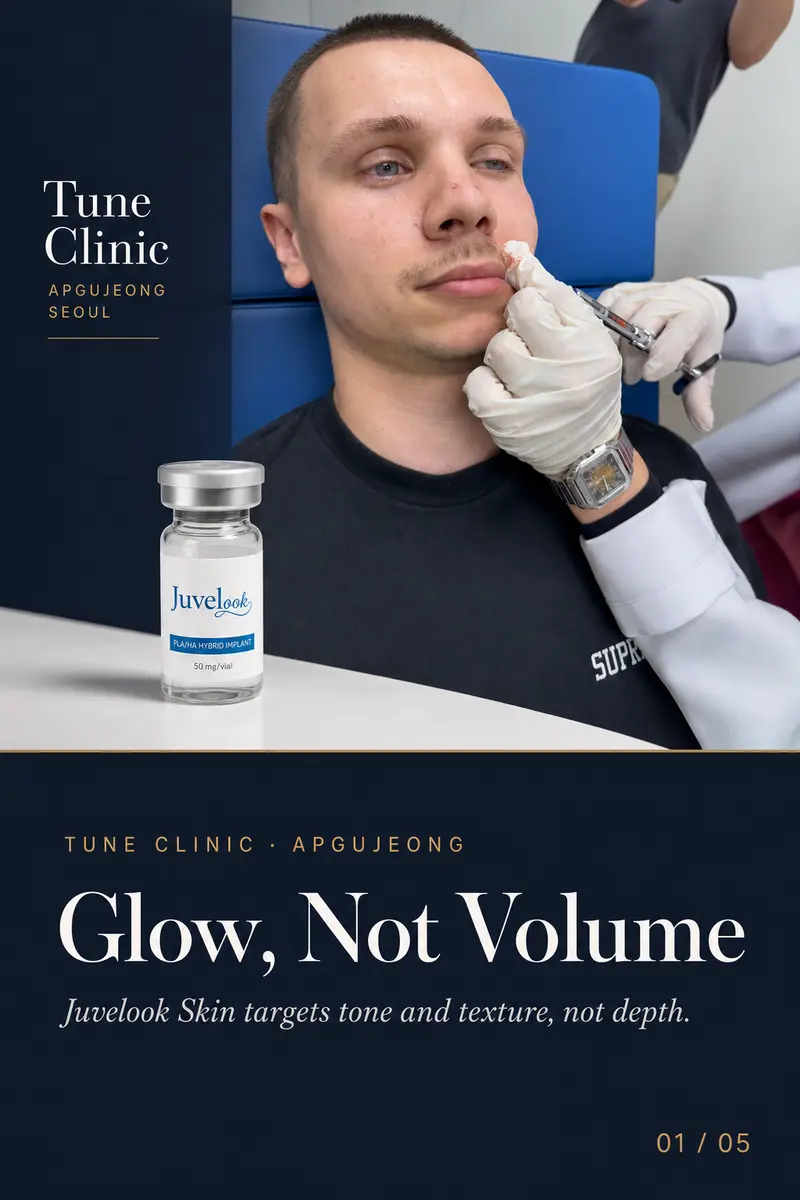
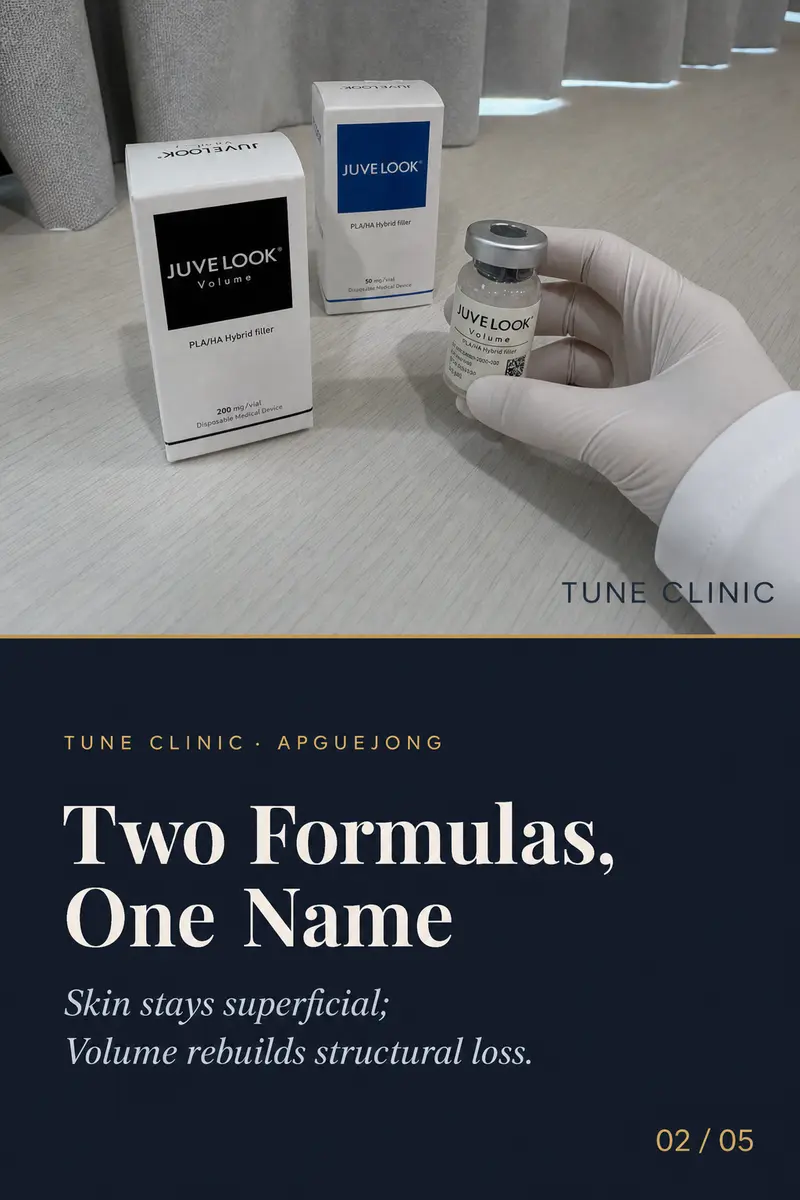
Juvelook Skin and Juvelook Volume share a name but serve fundamentally different purposes. Juvelook Skin is a superficial poly-D-lactic acid and PDLLA microparticle formulation designed to improve skin tone, texture, and luminosity through placement in the upper dermis — it does not add structural volume. Understanding that distinction changes how a physician plans treatment and how a patient should set expectations before sitting in the chair.
What Is Juvelook Skin, Exactly?
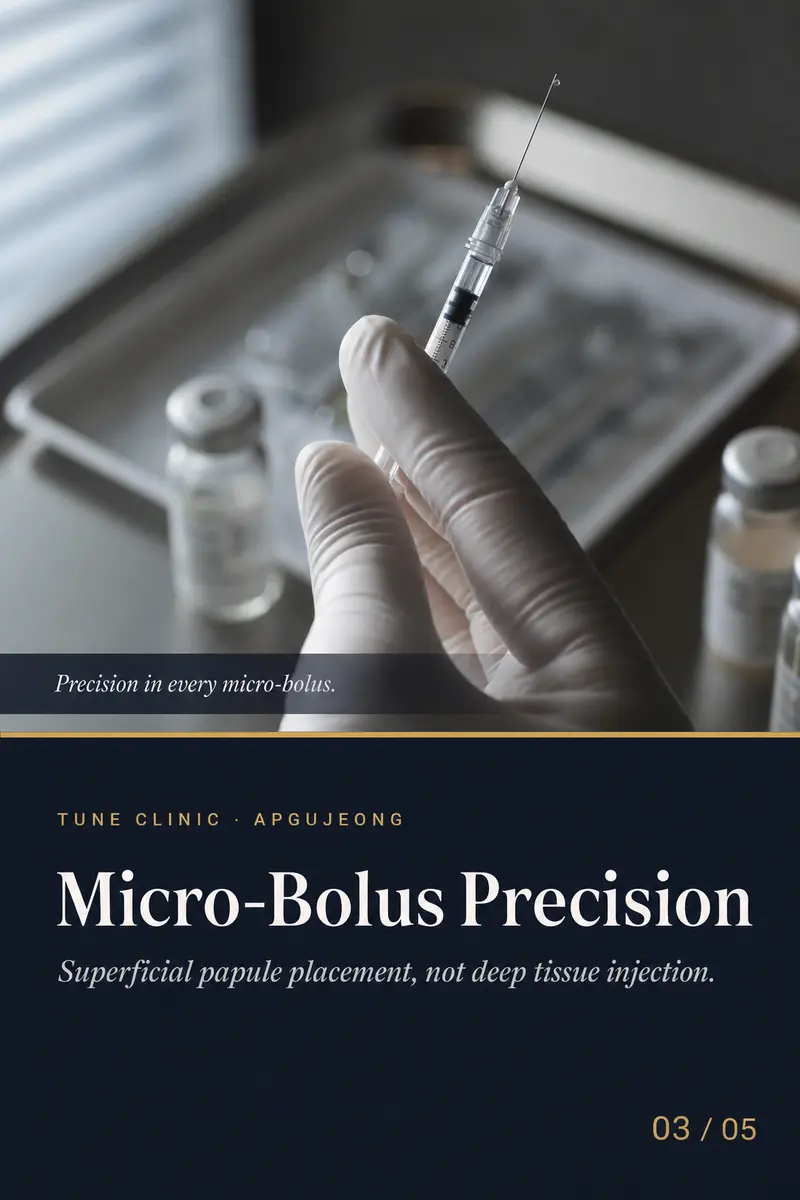
Juvelook is a product line that contains two distinct formulations. The Volume variant is the one most associated with the Juvelook name in general discussion — it targets deeper tissue planes, addresses volume loss, and works in part through collagen stimulation at a structural level. Juvelook Skin is the other formula. It is placed superficially, in the papular injection layer of the upper dermis, using a micro-bolus technique that creates small, evenly distributed depots just beneath the skin surface.
The active mechanism is collagen induction at that superficial plane, combined with the hydration effect of the co-formulated components. The result — when technique is precise — is improvement in skin tone evenness, surface texture refinement, and a quality of light reflection that patients sometimes describe as glow. It is not a volumising result. It will not lift a jowl or restore cheek projection.
The superficial papule layer is where tone and texture actually change. Placing product at depth when the complaint is dullness is a category error — it treats the wrong plane entirely.
How Does Juvelook Skin Differ from Juvelook Volume?
The two formulations differ in particle size, depth of placement, and clinical intent:
- Juvelook Skin — upper dermal placement, micro-bolus papule technique, targets tone, texture, pore appearance, and radiance
- Juvelook Volume — deeper subdermal or supraperiosteal placement depending on the anatomical zone, targets structural volume loss and contour restoration
They are not interchangeable. Using Volume in a superficial plane creates irregularity. Using Skin where structural support is needed produces no meaningful improvement. A physician assessment of which formula — or whether both are appropriate in different zones — should precede any injection decision.
When Does a Patient Need Both?
Some patients present with concurrent concerns: early structural loss in the mid-face alongside surface texture complaints across the cheeks and under-eye area. In that context, a physician may plan Juvelook Volume in the deeper structural zones and Juvelook Skin superficially, treating both planes in a coordinated session. This is a clinical judgment, not a default protocol. It is not appropriate for every patient, and adding complexity to a session requires that the physician has a clear read on tissue quality, laxity, and realistic outcome.
What Does a Juvelook Skin Session Involve?
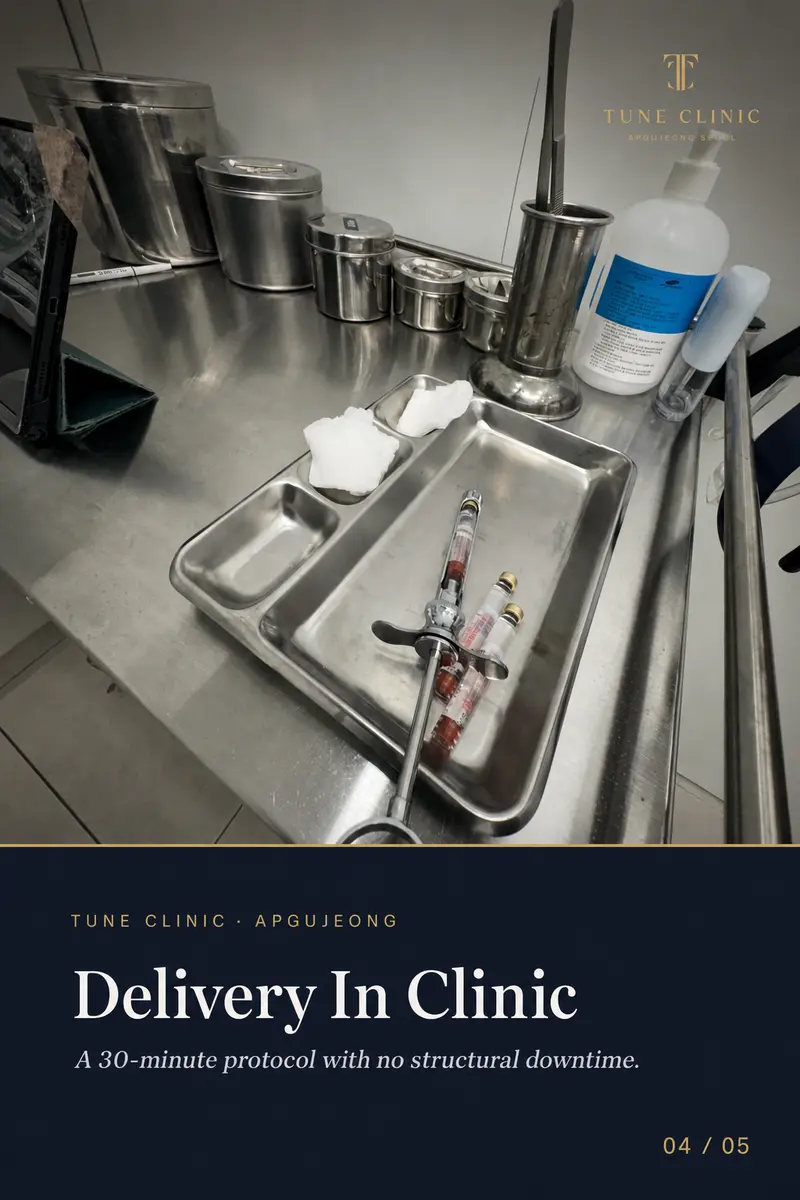
The session itself is relatively brief — typically around 30 minutes in clinic. Because placement is superficial, the injection technique differs from deeper filler work. Small papules are created at regular intervals across the treatment area using a fine needle. The result immediately after treatment is a grid of small raised points across the skin surface, which resolve within hours as the product distributes.
There is no structural downtime in the sense of bruising at depth or significant swelling. Mild redness and temporary papule visibility are expected and normal. Patients with active skin compromise, inflammatory conditions, or certain medication histories require individual assessment before proceeding — these are screening decisions the physician makes at consultation.
Results from Juvelook Skin are not immediate in the way a filler result is. The collagen induction process develops over weeks. Most patients need a short course of sessions to see the full texture and tone benefit, with the exact number depending on baseline skin condition and individual response.
Is Juvelook Skin Right for What You’re Describing?
Patients frequently arrive describing a concern that sounds like it belongs in this category — dullness, uneven tone, rough texture, fine surface lines — but the right answer is not always Juvelook Skin. A physician at Tune will assess the presenting concern against other options before recommending a path.
For surface texture and tone, relevant alternatives include Rejuran Healer or Rejuran S, exosomes, or energy-based modalities like Fraxel or picosecond laser work with a Cutera Enlighten. Each operates through a different mechanism and has a different profile of downtime, depth, and effect. The physician’s role is to identify which tool — or which combination — addresses the actual tissue need, not to default to what the patient arrived requesting.
For patients with more significant concerns involving both surface and structure, the Tune physician-led design approach considers the full picture before any single treatment is recommended.
FAQ
What is Juvelook Skin used for?
Juvelook Skin is a superficial injectable skin booster used to improve skin tone, texture, and radiance. It is placed in the upper dermis using a micro-bolus papule technique, and its effect is driven by collagen induction at that plane combined with hydration from the co-formulated components. It does not add volume or address structural concerns.
What is the difference between Juvelook Skin and Juvelook Volume?
Juvelook Skin is placed superficially in the upper dermis and targets tone, texture, and glow. Juvelook Volume is placed at greater depth — subdermal or supraperiosteal depending on the zone — and is intended to restore structural volume loss. The two formulations differ in particle size and clinical purpose and are not interchangeable.
How many sessions of Juvelook Skin do I need to see results?
Because Juvelook Skin works through collagen induction rather than immediate volumising, results develop over several weeks and typically require more than one session. The number of sessions appropriate for a given patient depends on baseline skin condition and individual response — a physician will advise on this after assessing the skin in person.
Is there downtime after Juvelook Skin?
Downtime is minimal. Immediately after treatment, small raised papules are visible across the treatment area and mild redness is common. Both typically resolve within hours. There is no significant swelling or deep bruising associated with the superficial placement technique.
Can Juvelook Skin and Juvelook Volume be done in the same session?
In some cases, yes. When a patient has both surface texture concerns and early structural volume loss, a physician may plan both formulations in a single coordinated session — Skin in the upper dermal plane and Volume at appropriate depth in different anatomical zones. This is a clinical decision that requires physician assessment of tissue quality and treatment goals, not a standard combined protocol.
Ready to plan your treatment?
Tune Clinic Apgujeong offers English-language consultations with Dr. Ju and Dr. Cha — a structured assessment, not a sales call.
→Book an appointmentto pick a time that fits your Seoul itinerary.
→Message us on WhatsAppto ask in English before you commit.