On this page
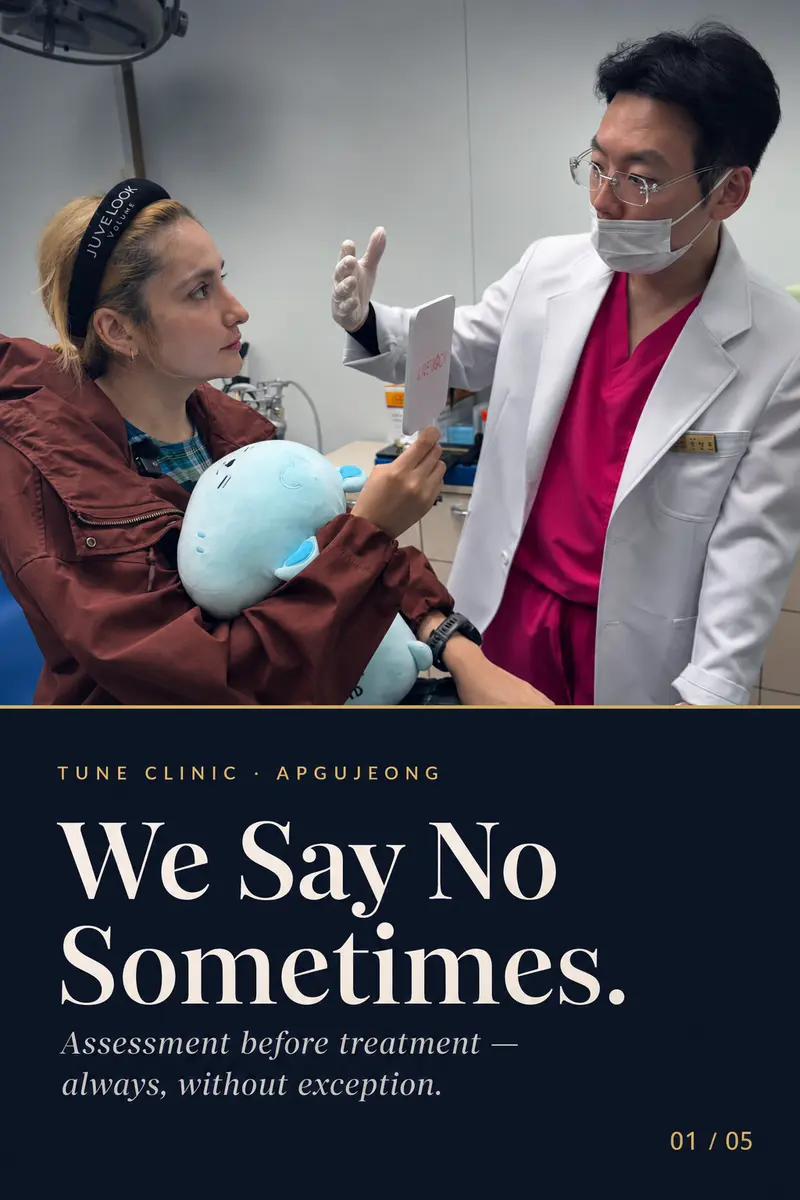
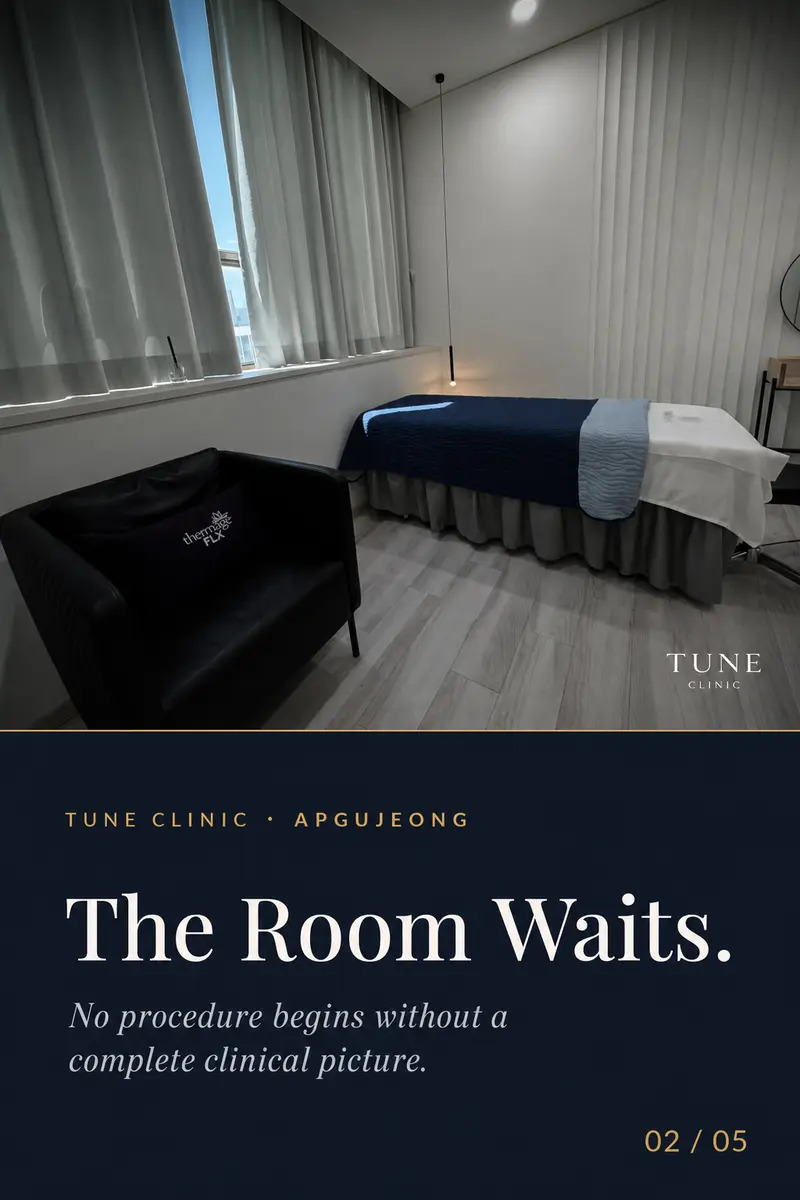

The most clinically sound outcome of a consultation is sometimes no treatment at all. At Tune Clinic, every appointment begins with a structured assessment — tissue quality, treatment history, current skin condition, and patient goals — before any procedure is discussed. If that assessment does not support intervention, the answer is not yet, or not this, and that is a complete and valid clinical outcome.
What Does an Assessment-First Protocol Actually Mean?
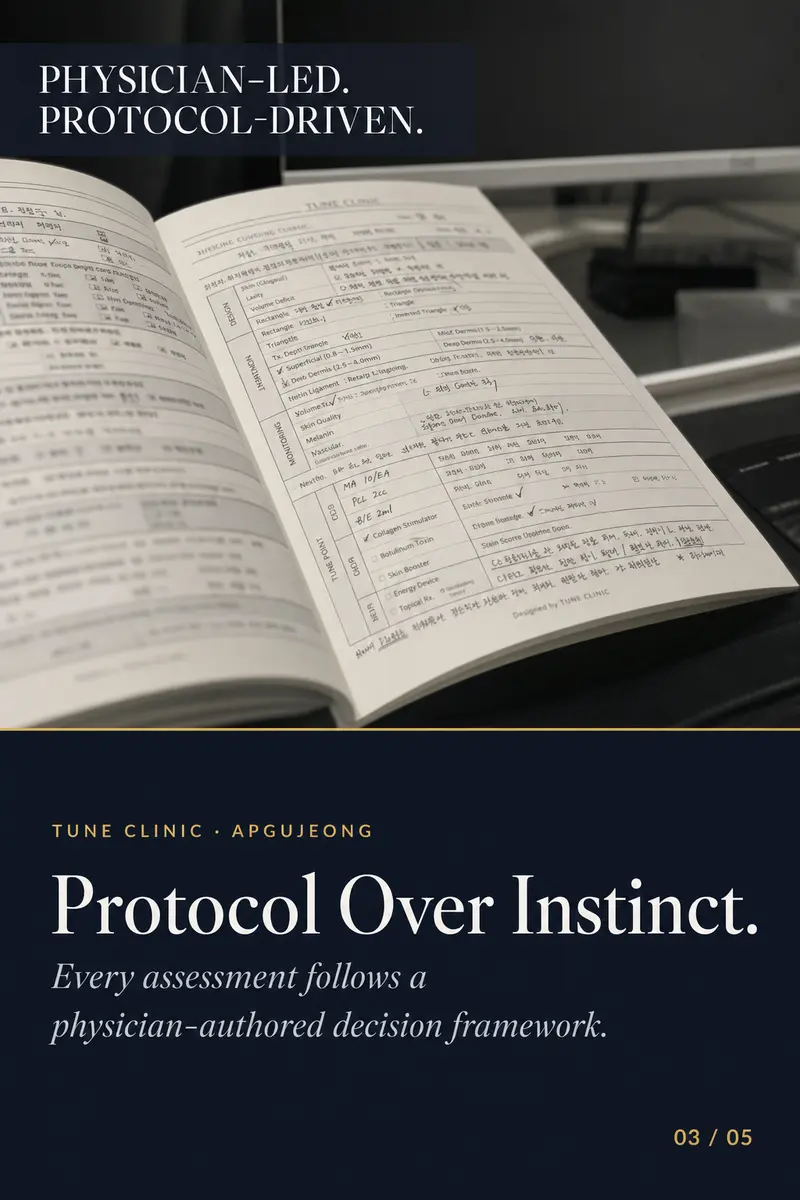
In practice, it means the clinical picture is built before the treatment menu is opened. A physician reviews a patient’s history of prior procedures — filler placements, laser sessions, threads, injectables — maps current tissue quality, and evaluates whether the presenting concern is best addressed by a new intervention or by allowing existing treatments time to settle.
This is not a philosophical stance. It is structural. The assessment framework at Tune Clinic is physician-authored and applied consistently, not adjusted based on what a patient arrives expecting or what generates the most revenue from a given appointment.
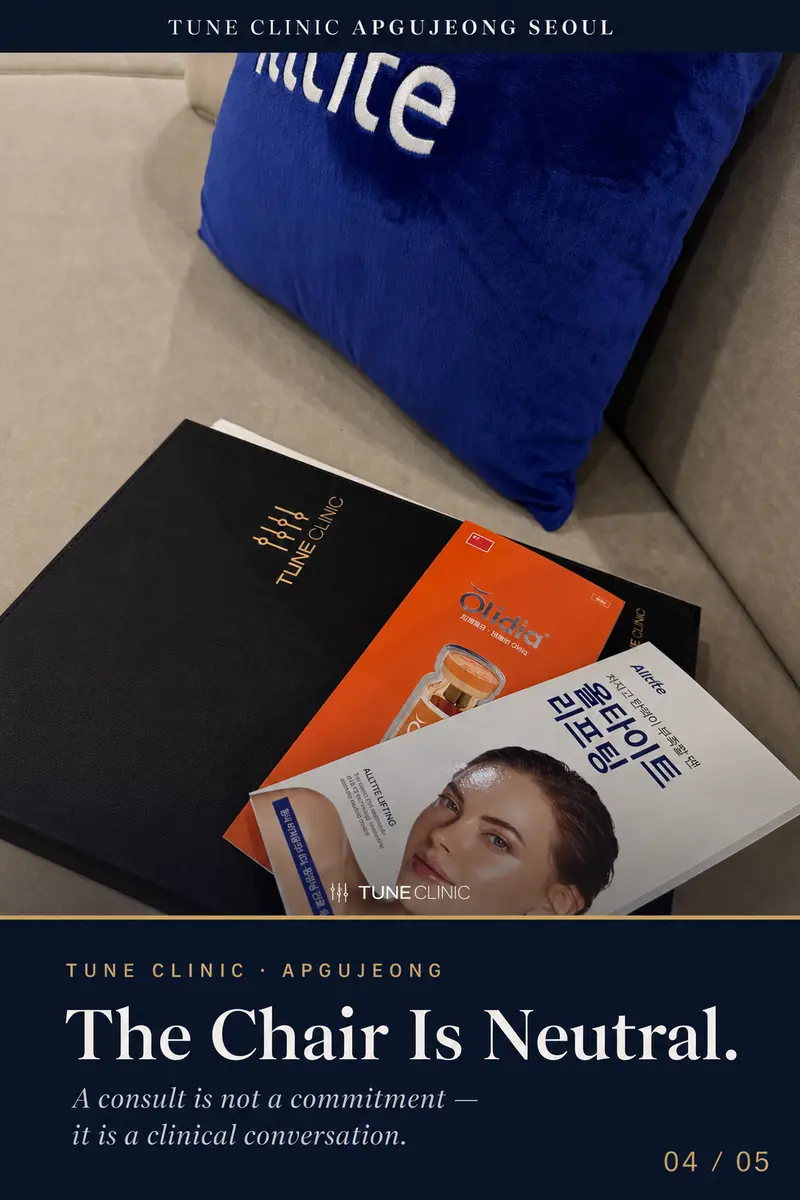
The consultation chair is neutral ground. A patient sitting in it has made no commitment, and neither has the clinic. The only obligation in the room is clinical honesty.
Why Do Patients Arrive Needing Rest Rather Than More Treatment?
A significant number of patients who consult at an aesthetic clinic — particularly those who have been active in aesthetic medicine for several years — arrive with layered treatment histories that have not fully resolved. Filler placed months or years ago may still be present and exerting soft tissue pressure. RF or laser treatments may have disrupted the barrier more than the patient realises. Threads may be resorbing asymmetrically.
Adding a new intervention on top of an unsettled foundation does not correct the underlying picture — it complicates it. In these cases, the most rigorous clinical recommendation is a period of recalibration: time, targeted skincare, and selective low-intervention treatments that support recovery rather than stack on new variables.
This is not a conservative bias. It is pattern recognition. The physician who understands what has already been done — and what the tissue is currently doing — is the physician in the best position to know when to act.
What a Full Clinical Picture Includes
- Treatment history — type, volume, placement depth, and approximate timeline of prior procedures
- Current tissue quality — skin laxity, barrier integrity, hydration, pigmentation distribution
- Bone and ligament context — particularly relevant in midface and jawline assessment before any volumising decision
- Patient goals vs. anatomical reality — whether what the patient is describing is achievable, appropriate, and consistent with their current tissue state
- Contraindications and cautions — active skin conditions, immunological considerations, healing history
How This Differs from a Standard Aesthetic Consultation
In many settings, a consultation functions as the opening of a sales conversation. The patient describes a concern; the practitioner proposes a treatment; the treatment is booked. The assessment, if it occurs, is brief and oriented toward confirming the recommended procedure.
At Tune Clinic, the consultation is the clinical event. It produces a documented picture of where the patient currently is — not a list of things to sell. Recommendations emerge from that picture, and they may include a treatment plan, a staged approach, a referral, or a clear recommendation to return in several months when conditions are more appropriate.
Patients who have consulted at multiple clinics before arriving here often note that this feels different. It is. The difference is not style — it is structure. For more on the physician-led design philosophy that underpins how treatment decisions are made, see the design method.
Is ‘No Treatment’ Ever the Final Answer?
Sometimes, yes. Not every presenting concern has an aesthetic medicine solution that is proportionate to the risk, cost, or recovery involved. A patient with mild dynamic lines and good skin quality may be told that intervention is premature and that their current trajectory, supported by appropriate skincare, is sound. A patient with significant filler accumulation in a sensitive anatomical zone may be advised that dissolution and a rest period are the right first steps before any new treatment is considered — including filler replacement.
These are not failure outcomes. They are the outputs of a protocol designed to produce accurate recommendations rather than maximum treatment volume. The clinic’s role is to give the patient a clear picture. What the patient does with that picture is their decision.
For patients considering injectable treatments and wanting to understand how a physician-led assessment shapes those decisions, the filler treatment page sets out the clinical framework in more detail.
FAQ
What happens during an assessment-first consultation at Tune Clinic?
The consultation begins with a structured review of your treatment history, current skin and tissue condition, and the goals you want to address. No treatment is recommended until that picture is complete. The outcome may be a treatment plan, a staged approach, or a recommendation to wait — all are equally valid clinical results.
Can a consultation result in no treatment being recommended?
Yes, and this is an intended and respected outcome. If your tissue quality, recent treatment history, or current skin condition does not support a new intervention, the physician will say so clearly and explain why. A consultation at Tune Clinic is a clinical conversation, not a commitment to proceed.
Why do some patients need a rest period before new aesthetic treatments?
Patients with active filler, recent laser work, or partially resorbed threads may have tissue that has not yet returned to a stable baseline. Introducing new treatments on top of unresolved prior interventions can obscure the clinical picture and compound existing issues. A period of recalibration — sometimes with supportive low-intervention treatments — allows tissue to settle before any new plan is made.
Is Tune Clinic’s assessment protocol used for all treatment types?
Yes. Whether the inquiry is about injectables, energy-based devices, threads, or skincare programs, the same assessment framework applies. The specific clinical factors evaluated will differ by treatment category, but the principle — picture first, recommendation second — does not change.
How is a physician-led assessment different from a standard aesthetic clinic consultation?
A physician-led assessment evaluates the anatomical and physiological context of your concern before any treatment is proposed. This includes bone structure, ligament laxity, soft tissue quality, and treatment history — factors that determine not only what treatment is appropriate but whether treatment is appropriate at all. In settings without this framework, recommendations are often driven by the presenting complaint alone rather than the full clinical picture.
Ready to plan your treatment?
Tune Clinic Apgujeong offers English-language consultations with Dr. Ju and Dr. Cha — a structured assessment, not a sales call.
→Book an appointmentto pick a time that fits your Seoul itinerary.
→Message us on WhatsAppto ask in English before you commit.