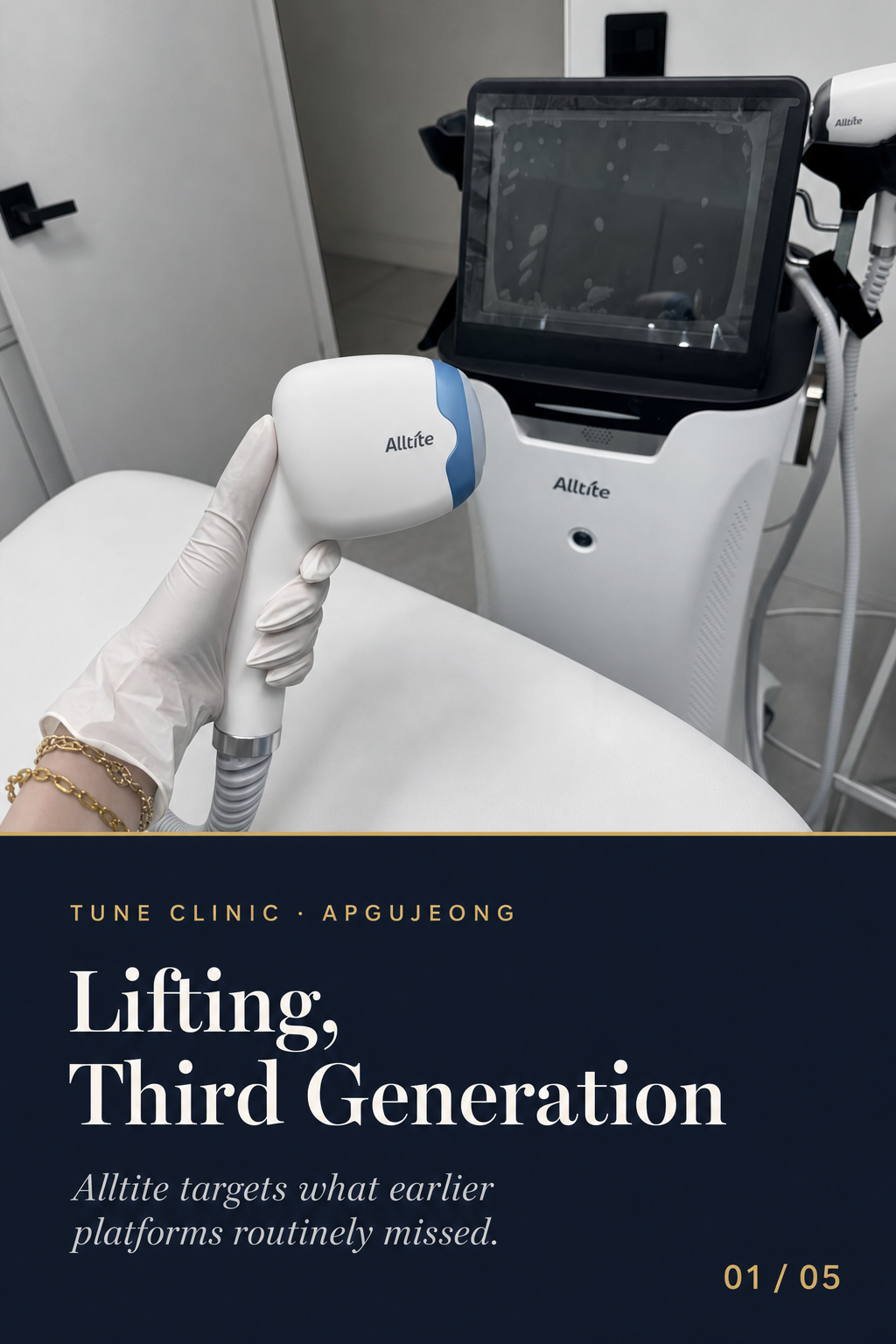

Alltite is a monopolar radiofrequency platform designed to deliver controlled thermal energy to the SMAS layer and multiple dermal depths within a single session — something earlier-generation lifting devices do not achieve in the same configuration. It is not simply a newer iteration of HIFU, and the distinction matters clinically: the energy modality, target tissue temperature, and depth selectivity differ in ways that affect who responds and why.
How Does Alltite Differ From Ultherapy and Thermage?
Ultherapy delivers micro-focused ultrasound energy to discrete focal points — typically at 1.5 mm, 3 mm, and 4.5 mm depths — creating small zones of thermal coagulation. It is well-validated for SMAS and superficial muscular stimulation and remains a strong tool for patients with good tissue conductivity at those focal depths.
Thermage FLX uses monopolar radiofrequency delivered capacitively across the full skin surface, which means it heats a broader tissue column rather than a discrete focal point. It performs well on dermal collagen remodelling and skin quality, though its energy does not concentrate at the SMAS in the same targeted way.
Alltite also uses monopolar radiofrequency — so it shares Thermage’s energy class — but its applicator design and frequency parameters allow more selective depth targeting, including the SMAS, reticular dermis, and superficial dermis, adjustable within the same session. The clinical advantage is the ability to address multiple tissue layers without switching platforms.
The question I ask before any lifting treatment is not ‘which machine is newer’ — it is ‘which layer is actually loose, and can this device reach it at the right temperature.’ Alltite changes the answer to that second question for a meaningful subset of patients.
Why Patients Who Have Had Prior Lifting Are a Specific Case
Patients who have undergone Ultherapy or Thermage and feel they did not reach their goals are sometimes advised simply to repeat the same treatment at a higher dose. In many cases the variable is not dosage — it is that the relevant tissue layer was not the primary target of the first treatment, or that the energy modality used does not interact optimally with their current tissue density. Repeating an identical protocol without reassessing anatomy tends to produce the same result.
Which Patients Are Good Candidates for Alltite?
Alltite is appropriate across a range of indications, but it is particularly useful in patients where:
- There is measurable laxity at the SMAS level that ultrasound-based devices have not adequately addressed
- The patient wants combined dermal and sub-dermal treatment in one session
- Prior monopolar RF or ultrasound treatments produced partial results and the physician suspects incomplete SMAS targeting
- Skin thickness or tissue density makes discrete focal-point ultrasound less predictable
Alltite is not universally superior to other platforms. In patients where a single tissue layer is the primary concern — for example, isolated dermal laxity with good structural support — Thermage FLX or a targeted ultrasound protocol may be more efficient. Device selection should follow anatomy, not availability.
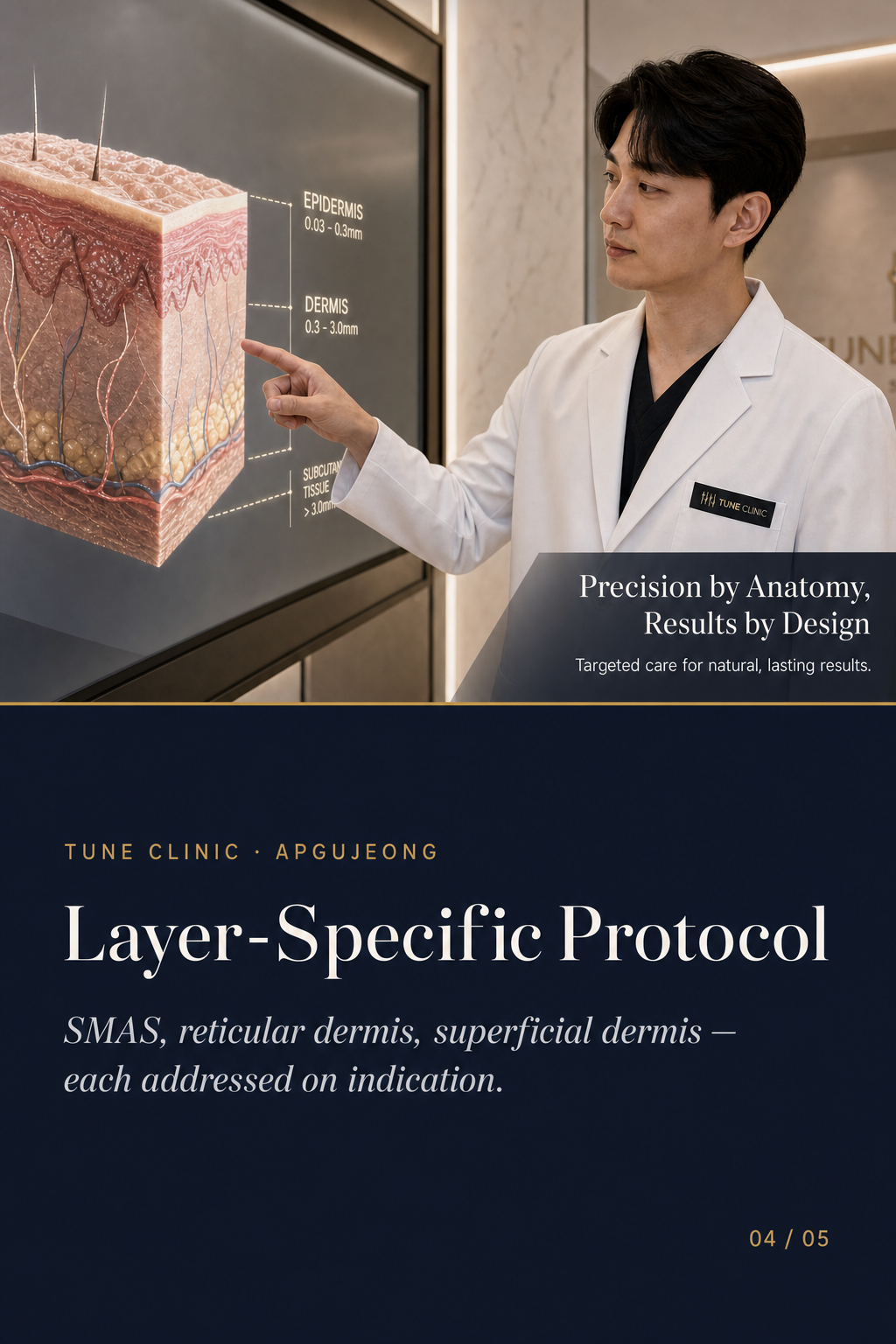
What Does Layer-Specific Protocol Actually Mean?
The phrase ‘layer-specific protocol’ describes a structured approach in which the treating physician determines — before any energy is applied — which anatomical layers are contributing to visible laxity. This requires more than a visual assessment.
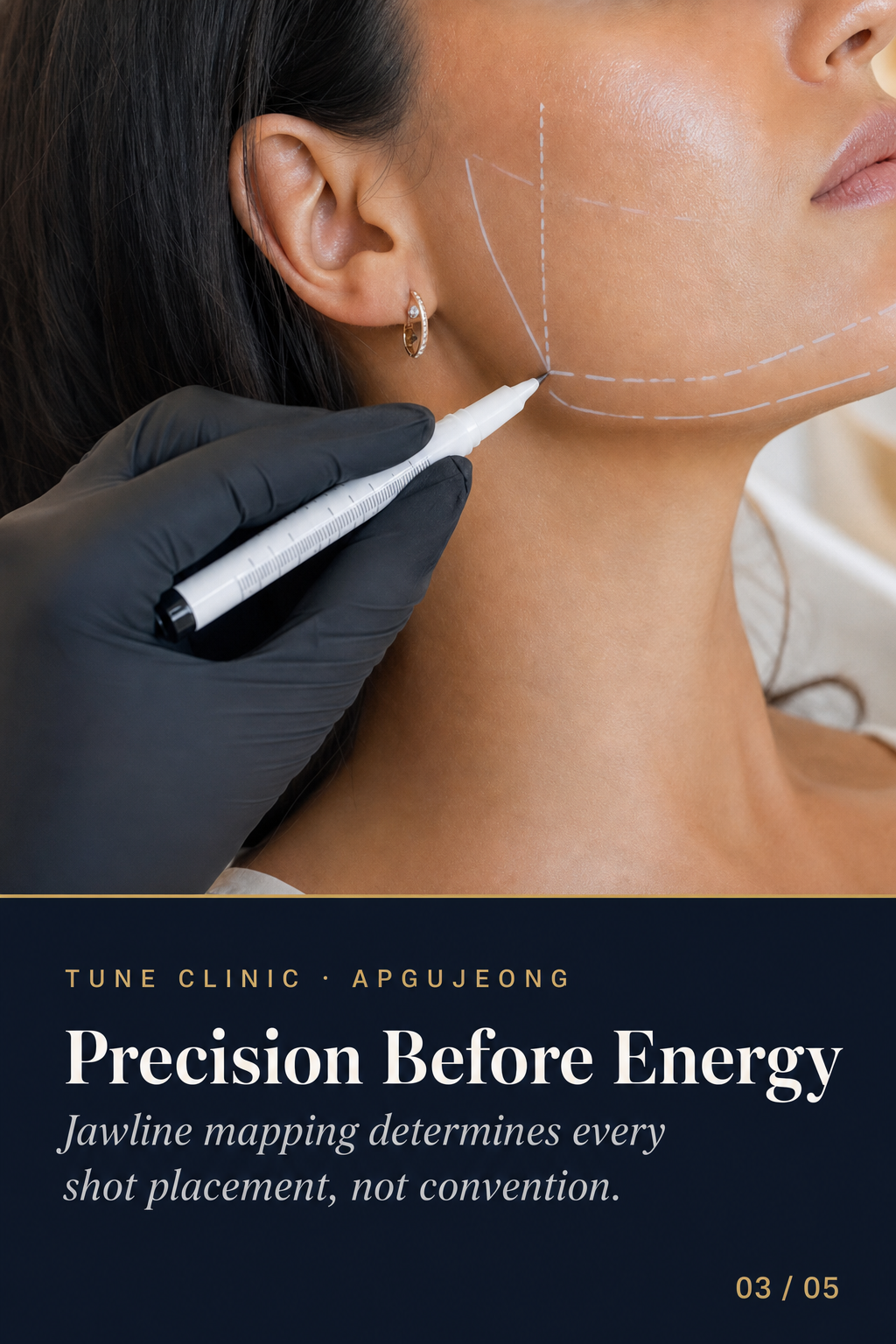
At Tune Clinic, lifting consultations begin with a tissue-depth evaluation that considers SMAS laxity, retaining ligament status, fat compartment volume, and dermal quality. The findings determine whether Alltite, Ultherapy Prime, Thermage FLX, or a combined protocol is matched to the anatomy. Shot placement is then mapped to the individual face rather than applied by convention.
This sequence — assess, map, select, treat — is what distinguishes a physician-led lifting consultation from a treatment that begins with the device already decided. You can read more about how this approach guides all injectable and energy-based decisions at Tune Clinic on our design method page.
For patients whose assessment suggests that structural volume loss is contributing alongside laxity, energy-based lifting may be combined with a biostimulator such as Sculptra or filler placed at the ligament and bone level — though these are separate decisions made only after the tissue evaluation is complete.
Is Alltite Painful, and What Is the Recovery Like?
Monopolar radiofrequency at SMAS depth produces a heating sensation that most patients describe as intense but tolerable. Alltite sessions typically incorporate topical anaesthesia applied in advance, and the depth and energy parameters are adjusted in real time based on patient feedback and tissue response. The procedure is not comfortable in the way a surface-level treatment is, and any clinic suggesting otherwise is misrepresenting the experience.
Recovery is generally low. Mild erythema and a sensation of warmth in the treated area are common for several hours afterward. Significant swelling is uncommon but possible in patients with thinner skin. Most patients return to normal activity the same day or the following day.
Collagen remodelling from monopolar RF is a gradual process. Meaningful improvement is typically visible from six to twelve weeks post-treatment, with continued change over several months. Individual timelines vary based on baseline tissue quality, treatment depth, and the body’s own regenerative response.
FAQ
Is Alltite the same as HIFU?
No. Alltite uses monopolar radiofrequency, not high-intensity focused ultrasound. HIFU devices like Ultherapy create discrete thermal coagulation points using ultrasound waves, while Alltite uses RF current to generate volumetric heating in targeted tissue layers. The two energy modalities interact with tissue differently and are selected based on which type of heating is most appropriate for a given anatomical situation.
Can Alltite be combined with Ultherapy or Thermage in the same session?
Combined protocols are possible and are used in cases where different tissue layers require different energy types. A physician evaluation is necessary to determine whether a combined approach adds meaningful benefit or introduces unnecessary treatment burden. Not every patient requires or benefits from more than one platform in a session.
How many Alltite sessions will I need?
Most patients begin with a single session, after which the tissue response is assessed before any further treatment is planned. Some patients see sufficient improvement from one treatment; others with more significant laxity may benefit from a second session several months later. Treatment decisions are made based on outcome evaluation rather than a preset package.
Who is not a good candidate for Alltite?
Patients with active skin infections, open wounds, or metal implants in the treatment area are not appropriate candidates. Those with very little subcutaneous tissue or significant prior scarring in the target zone may not respond predictably. A physician consultation is required to assess whether Alltite is suitable based on individual anatomy and medical history.
How does Alltite compare to thread lifting?
Alltite and thread lifting address laxity through different mechanisms. Alltite stimulates tissue remodelling through controlled thermal energy over several months. Threads provide immediate mechanical repositioning but do not remodel the underlying tissue in the same way. In clinical practice, energy-based treatments and threads are sometimes used sequentially — energy first to improve tissue quality, then threads for structural lift — though the sequence depends entirely on the individual assessment.
Ready to plan your treatment?
Tune Clinic Apgujeong offers English-language consultations with Dr. Ju and Dr. Cha — a structured assessment, not a sales call.
→ Book an appointment to pick a time that fits your Seoul itinerary.
→ Message us on WhatsApp to ask in English before you commit.