On this page
The question patients are really asking
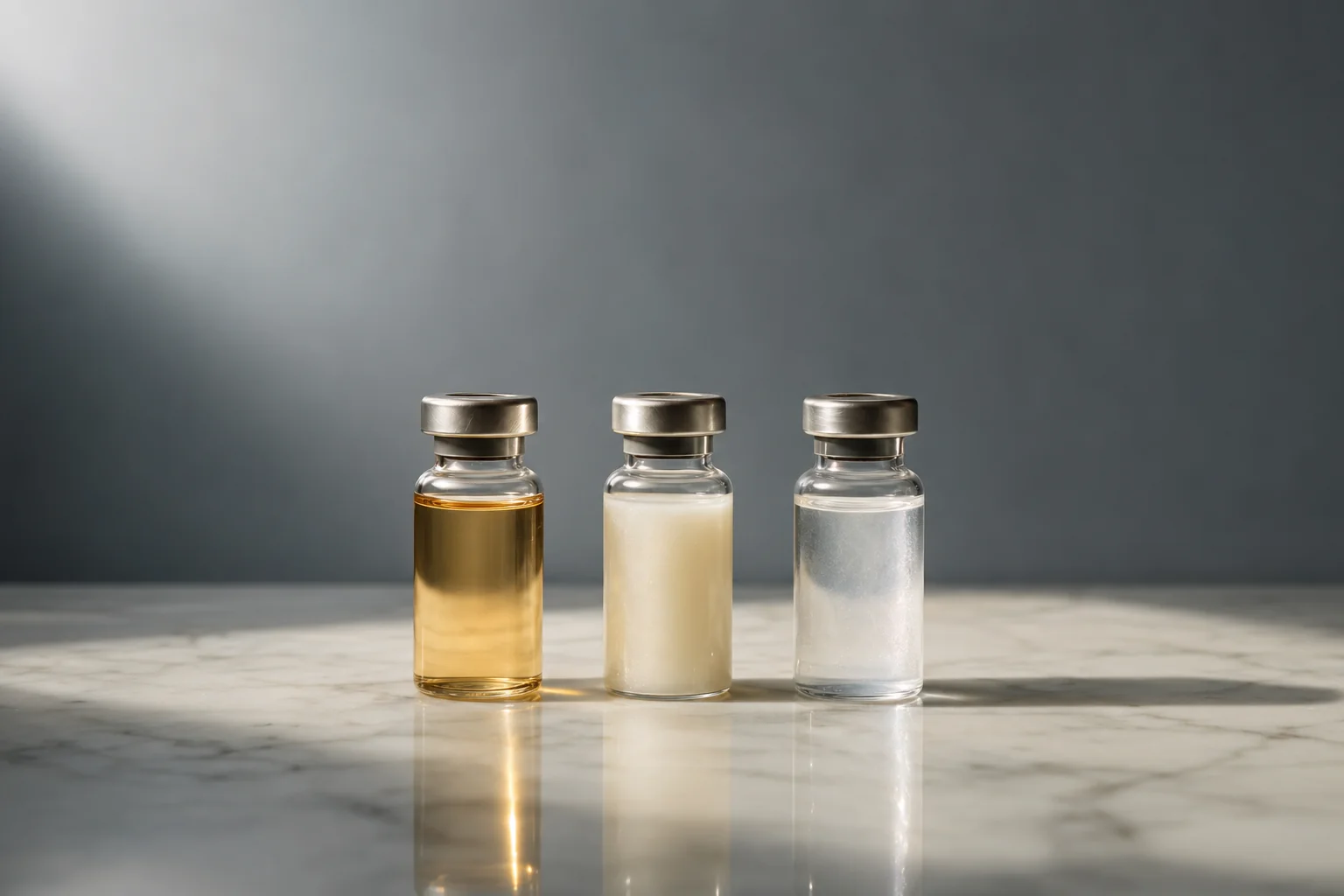
Rejuran, Juvelook, and exosomes are not three versions of the same thing: Rejuran is a polynucleotide (PN/PDRN) injectable that supports cellular repair, Juvelook is a PDLLA collagen stimulator that rebuilds dermal density over months, and exosomes are topically delivered signaling vesicles used to support regeneration after treatments like microneedling. Which one fits depends on whether your skin needs repair, structure, or post-procedure support.
You have probably searched some version of “Rejuran vs Juvelook” or “are exosomes better than PDRN” before reading this. The searches are reasonable — these three products dominate the conversation about Korean skin treatments for international patients, and the category is genuinely confusing. They all involve injections. They are all described as “skin boosters.” They all appear on similar clinic menus.
They work through entirely different mechanisms, operate on different tissue targets, produce different results on different timelines, and make sense for different patients.
The frame of “versus” is part of the confusion. These are not competing products for the same indication. They are three different tools that, depending on what your skin actually needs, may be irrelevant to each other, complementary to each other, or part of a thoughtful sequence. Understanding why requires spending a few minutes on what each one actually does.
What is Rejuran — and what is it not?
Rejuran (and the related Rejuran Healer product line) is a polynucleotide (PDRN) formulation derived from salmon DNA. The active component is a long-chain nucleotide extract — specifically, fragments of double-stranded DNA that have been purified and processed for injectable use.
What it does at the tissue level is relatively well characterized. PDRN has an affinity for adenosine A2A receptors on fibroblasts and other cells in the dermis. Activation of this receptor pathway upregulates collagen synthesis and promotes tissue repair. The practical result is an increase in dermal density, improvement in fine surface wrinkling, and a general quality improvement in the kind of skin that has lost its “plumpness” without having a significant structural problem.
What Rejuran is not: it is not a filler. It contains no hyaluronic acid and produces no immediate volumetric effect. A patient who receives Rejuran expecting their nasolabial folds to look softer the next day will be disappointed — that is not the mechanism, and it is not what PDRN does. The collagen induction response builds over four to eight weeks after injection and continues for several months. The result looks like improved skin quality, not like filling.
Rejuran is also not a lifting treatment. It does not address structural laxity. Patients who present with sagging skin expecting PDRN to reverse it are working with the wrong tool entirely.
Its sweet spot is the patient who has noticed that their skin feels thinner, less resilient, slower to recover from minor insults — the “the skin isn’t what it was” complaint that doesn’t yet involve dramatic sagging or volume loss. It is also frequently used as a collagen foundation treatment before more dramatic interventions, or as a maintenance treatment in patients whose structural architecture is in good condition but whose surface quality is the limiting variable.
The evidence base for PDRN and polynucleotide injections in skin rejuvenation is reasonably mature — it is one of the older categories in Korean aesthetic medicine. The clinical data is not perfect or comprehensive, but it is substantially more developed than for exosomes.
What is Juvelook — and what is it not?
Juvelook (and related products in the Juvelook Skin and Juvelook Volume lines) is a biostimulator that combines poly-L-lactic acid (PLLA) microspheres with hyaluronic acid (HA). This combination makes it mechanistically distinct from both PDRN and exosomes, and understanding the two components separately helps clarify what it does.
The PLLA component works as a collagen stimulator. PLLA microspheres are injected into the dermis or subdermis and trigger a foreign body response — the tissue encapsulates each microsphere in a collagen capsule, gradually degrading the PLLA over months while leaving behind new collagen. The collagen response is real, gradual, and can be substantial with repeat sessions. This is the mechanism that makes Juvelook a biostimulator rather than a simple moisturizing injection.
The HA component serves two roles: it provides an immediate hydration and mild volumizing effect that gives the skin a perceptible improvement in the short term, and it creates the hydrophilic environment in which PLLA particles disperse and distribute. Without the HA carrier, PLLA alone is less forgiving in terms of even distribution.
The result of a properly performed Juvelook series is a gradual, progressive improvement in skin quality and, particularly for the Juvelook Volume formulation, dermal and subdermal collagen density. The effect looks like skin that has gotten denser and more resilient — the visual equivalent of structural improvement from the inside, without overt filler volume.
What Juvelook is not: it is not a lifting treatment. Neither the PLLA collagen response nor the HA hydration produces architectural lift. It does not replace structural volume in a clinically meaningful way; a patient with significant mid-face volume loss and flat cheeks will not find that Juvelook Volume addresses the anatomical problem. For that, the Volume Chamaka-se protocol and the broader skin booster and regenerative context at Skin Boosters and Regenerative Treatments explain the difference.
Juvelook also requires realistic expectations about timeline. The PLLA collagen response takes months. A patient who wants dramatic improvement for an event three weeks away has chosen the wrong treatment category.
The clinical applications of Juvelook, particularly the volume formulation, are covered in more depth in Juvelook Volume Clinical Applications.

What are exosomes — and what makes them different?
Exosomes occupy a different conceptual category from the other two. Where PDRN and PLLA work by stimulating fibroblasts and collagen production through relatively well-understood receptor and foreign body pathways, exosomes operate through cellular reprogramming — a more complex and, at this stage of the science, more variable mechanism.
An exosome is a nanoscale extracellular vesicle (30–150nm) secreted by living cells. What makes exosomes clinically interesting is not any single molecule they carry but the complexity of their cargo: microRNA species, messenger RNA templates, growth factor proteins, and signaling mediators, all packaged in a lipid bilayer derived from the source cell’s membrane. When an exosome binds to a target cell, it delivers this cargo and can alter how that cell behaves — what proteins it produces, how it repairs itself, how it responds to injury.
The cellular reprogramming model is substantively different from the growth factor delivery model (which is how PRP works) or the collagen stimulation model (which is how PLLA works). In theory, this difference produces more durable downstream effects — you have changed the cell’s behavior, not just supplied it with molecules that will eventually be metabolized. The analogy used in our earlier post on Exosomes in Aesthetic Medicine holds: the difference between giving a cell a growth factor and delivering an exosome is roughly the difference between giving someone a fish and changing how their metabolism processes nutrition.
In practice, exosomes are most commonly used in two contexts in aesthetic medicine. First, as a post-procedure amplifier — applied after microneedling, laser, or other skin treatments to reduce inflammation and accelerate the tissue repair cascade. The anti-inflammatory cargo of well-sourced exosomes (particularly MSC-derived formulations) demonstrably reduces post-procedure redness and swelling and appears to enhance the collagen induction that those procedures initiate. Second, as a standalone regenerative treatment for hair follicle activation and scalp tissue health, where Wnt/β-catenin pathway signaling — a known exosome cargo effect — contributes to follicle transition from telogen to anagen.
The critical caveat here is important: exosomes have a substantially thinner clinical evidence base than either PDRN or PLLA. The randomized controlled trial data is limited. Source and production standards vary considerably between products, and there is no equivalent regulatory maturation. Batch variability — differences between production lots in cargo composition — is a real issue that complicates consistent dosing. This does not make exosomes not useful. It means that the honest position is “promising, early-stage evidence, clinically applied in contexts where risk is low and the mechanism is biologically coherent” — not “proven equivalent to the older PDRN data.” We do not overstate this in our clinical recommendations, and the literature reflects the same hedging from researchers in this space.
A natural follow-up question after the exosome discussion is whether there is a regenerative option that uses the patient’s own biology rather than donor-derived material. There is. Autologous platelet-rich plasma (PRP), particularly when activated with photobiomodulation (PBM) — controlled light wavelengths that prime cellular ATP production and improve the tissue’s response to regenerative input — is the simplest version. The mechanism is more limited than exosomes (growth factor delivery rather than cellular reprogramming), but the donor source is the patient, which sidesteps the source-and-batch standardization problem that complicates allogeneic products. This PRP-plus-PBM combination is the foundation of Tune Clinic’s Metacell Protocol, which then layers a physician-selected energy device on top. It is positioned differently from the three booster categories above: not as a “Rejuran alternative” but as a regenerative-plus-structural protocol for patients whose anatomy needs both layers addressed at once.
How do the three compare on the key variables?
| Rejuran (PDRN) | Juvelook (PLLA + HA) | Exosomes | |
|---|---|---|---|
| Primary mechanism | Fibroblast activation via A2A receptor | PLLA collagen stimulation + HA hydration | Cellular reprogramming via miRNA/protein cargo |
| Result type | Skin quality, fine lines, dermal density | Dermal density, biostimulation, mild volume | Recovery, anti-inflammation, follicle activation |
| Result timeline | 4–8 weeks, peaks 2–3 months | 3–6 months, requires series | Variable; post-procedure effect is faster |
| Evidence base | Mature, published RCT data | Mature for PLLA; growing for combination | Promising; limited RCTs |
| Indication sweet spot | Thin, quality-depleted skin; maintenance | Dermal volume building over time | Post-procedure recovery; early hair loss |
| What it is not | Not a filler, not a lifting treatment | Not structural volume, not lifting | Not a replacement for established collagen treatments |
How do they fit together in a treatment plan?
These three treatments are frequently used together, sequenced or combined depending on the clinical goal. Understanding the logic of sequencing matters more than memorizing which products exist.
Foundation before surface. Juvelook’s collagen biostimulation builds dermal infrastructure — essentially making the skin thicker and better able to support itself. This foundation is a reasonable starting point for a patient whose skin has lost dermal density. Rejuran addresses the more superficial skin quality issues — fine lines, resilience — that sit above that structural layer. In a two-step plan, Juvelook first, Rejuran at intervals, produces more coherent cumulative results than the reverse.
Post-procedure amplification. Exosomes are not typically the first treatment in a sequence; they are most effective as a complement to treatments that create micro-injury and induce repair — microneedling, pico laser, fractional devices. After such a procedure, exosome application (topically into fresh microchannels, or via intradermal injection in appropriate formulations) reduces inflammation and appears to amplify the collagen induction. In this context, exosomes are not competing with Rejuran or Juvelook — they are serving a different role in the same plan.
Individual indication matching. A patient whose primary concern is post-acne skin texture and pigmentation irregularity may benefit most from a PDRN series as their starting point, with exosomes used as a post-microneedling enhancer. A patient whose primary concern is overall skin deflation — the “less full, less resilient” look of biological aging — may be better served starting with Juvelook Volume and adding PDRN for surface quality once the dermal foundation is addressed.
For the structural aging framework that helps determine which concern to address first, Skin Aging as a Structural Change provides a useful orientation.
What none of these treatments are
Given how they are discussed online, it is worth being explicit about what this category of treatments cannot accomplish.
None of these three products is a lifting treatment. They do not address structural laxity at the SMAS layer, they do not reverse significant tissue descent, and they do not produce the architectural lift that energy-based devices or surgical approaches can. For patients whose primary concern involves structural change — softened jawline, descended cheek, submental laxity — the relevant conversation is about lifting protocols, not skin boosters.
None of these three products replaces lost structural volume. A patient with significant mid-face hollowing due to fat compartment atrophy needs volume restoration — HA filler or volume-stimulating approaches — not a regenerative treatment. The Juvelook Volume formulation can contribute to dermal density and provide mild volumetric support, but it is not a substitute for proper volumetric planning.
None of these treatments produces results in a week. Patients planning a short Seoul trip who want to see the result of their skin booster before they fly home will not see it. They will see the acute response — mild swelling, possibly some redness or pinpoint marks — but the actual result is weeks to months away. This is worth knowing before booking.
What is the right question to bring to a consultation?
Rather than arriving with a product preference, a more productive starting point is a description of what you notice about your skin and when you started noticing it. “My skin has felt thinner and less resilient over the past two years.” “I have persistent texture irregularity after acne.” “My skin looks dull and doesn’t recover quickly after I’m tired or stressed.” These observations point toward different mechanisms and different choices.
The Collagen Builder program at Tune Clinic integrates Rejuran and Juvelook in a designed sequence, with exosome application where clinically appropriate, and is planned around a complete skin quality assessment rather than a product menu. The broader range of regenerative treatment options, including how they relate to each other, is covered at Skin Boosters and Regenerative Treatments.
For the underlying clinical evidence on polynucleotide skin regeneration specifically, the PubMed literature on PDRN and polynucleotide skin rejuvenation provides a useful scientific foundation.
The framework described in Design Method applies here as it does to every treatment category: the decision follows from the anatomical assessment, not from the product catalog.
FAQ
how many Rejuran sessions do I need to see results?
Rejuran is typically given as a short series rather than a single injection, with sessions spaced a few weeks apart, because the collagen induction response builds gradually rather than appearing at once. The visible change in dermal density and surface quality usually develops over four to eight weeks after each session and continues for several months. The exact number depends on your starting skin condition and is best determined at consultation, not from a fixed package.
can I get Rejuran, Juvelook and exosomes on the same Seoul trip?
Some combinations can be sequenced within a single visit, and exosomes in particular are often applied immediately after a micro-injury procedure rather than as a separate appointment. However, none of these treatments produces a visible result within days, so you should not expect to see the outcome before you fly home. A short trip is enough to begin a plan, but the actual change develops over weeks to months.
are salmon DNA skin boosters safe if I have a seafood or fish allergy?
Rejuran and similar polynucleotide products are derived from purified salmon DNA, and patients with a known fish or seafood allergy should raise this directly before treatment so it can be assessed individually. The purification process removes most protein allergens, but a documented allergy is still a relevant factor in the safety conversation. This is a question for your physician at consultation rather than something to decide from general information online.
is there much downtime after Rejuran or Juvelook injections?
The acute response to these injections is typically mild and short-lived, and can include some swelling, redness, or pinpoint injection marks for a few days. This early reaction is not the treatment result, which develops over weeks to months. Individual recovery varies, so any specific concerns about an event or travel timing should be discussed before booking.
which skin booster is better for acne scars and texture?
Post-acne texture and pigmentation are often approached by starting with a polynucleotide series for overall skin quality, sometimes with exosomes used as an enhancer after a micro-injury procedure such as microneedling. These products work on skin quality and the repair response rather than directly resurfacing deeper scars, so they may be one part of a broader plan. The right starting point depends on your specific scar type and is best matched at clinical assessment.
This article is intended for educational purposes for patients researching skin booster treatments. It is not a treatment guide and does not replace direct physician consultation. Specific product selection and protocol design should be determined through individual clinical assessment.
Ready to plan your treatment?
Tune Clinic Apgujeong offers English-language consultations with Dr. Ju and Dr. Cha — a structured assessment, not a sales call.
→Book an appointmentto pick a time that fits your Seoul itinerary.
→Message us on WhatsAppto ask in English before you commit.